A multi-expert collection for the International Day of Plant Health, 12 May 2026
The United Nations marks 12 May as the International Day of Plant Health. The 2026 theme is Plant Biosecurity for Food Security. Across the 14 voices in this piece, the same pattern surfaces: protecting plant health is no longer separate from adapting to climate change. It is the same work, only described from different angles.
When farmers are told to "adapt to climate change," what does that actually mean once the gates close and they are alone with the field? We asked the question of agronomists, smallholder farmers, beekeepers, post-harvest specialists, and consultants working across Europe, Africa, and Asia. The answers came back grounded, regional, and unsentimental. Adaptation is not one big decision. It is a thousand smaller ones, made under pressure, with imperfect information, and with consequences that often only become visible a season later.
Pollinators arrive weaker after heat events. Pests appear earlier and in places where they were never tracked. Pathogens spread on hosts whose defenses are already compromised by stress. The 14 contributors below do not all use the language of plant health. But every one of them is doing plant health work, season after season, on terms the climate keeps redefining.
What follows is a portrait of climate adaptation as it is actually being practiced in 2026, in the words of the people doing the work.
1. Adaptation begins with investment trade-offs you did not have ten years ago
Farah Baroudy, Agriculture consultant, Lebanon
In the eastern Mediterranean, adaptation looks less like a long-term plan and more like a series of rapid decisions made under pressure. Greenhouse farmers in the region weigh impossible budget choices: heating and frost protection systems for unexpected cold spells, or shading, improved aeration, and entirely new structures to cope with intensifying heat waves. Multiple stresses now overlap in the same season, forcing farmers to balance pressures that never coincided in their parents' lifetime.
Farah describes the human reality behind the infrastructure question. Farmers near rivers or on slow-draining clay soils are now installing drainage systems that were unnecessary a decade ago. Severe weather raises pest and disease risk, demanding faster and costlier interventions. And on the operational side, growers are spending whole nights in their greenhouses to monitor whether overhead sprinklers need to be activated for frost protection.
"Small farmers are the most affected. They face all these challenges and must invest more effort, incur higher costs, and expand their knowledge to adapt while navigating volatile conditions. This underlines the need for training, improved weather forecasting, and creative decision-support tools to minimize losses."
2. The pest map is being redrawn faster than the playbook
Vasileios Papayfantis, Agronomist, Greece
In Greek agriculture, climate change is rewriting both the pest catalogue and the behaviour of pests already known. Familiar species now appear earlier in the season, pressure crops at unexpected stages, and respond to treatment windows that no longer align with their life cycles. New pests have entered Mediterranean fields entirely.
Vasileios anchors his response in Integrated Pest Management, with stronger emphasis on prevention, careful timing, and the combined use of biological and chemical methods. Beneficial macro-organisms and biostimulants with anti-stress action support sensitive crop stages such as flowering, especially during temperature extremes. Precision agriculture tools, including satellite-based monitoring, help time both irrigation and fertilization.
"Climate change favors the emergence of new pests and diseases, and shifts the behavior of those we already know. Effective response is based on Integrated Pest Management principles, with emphasis on preventive action, careful timing, and the combined use of chemical and biological methods."
3. Observation has replaced the calendar
Anastasia Thanasoula, Agronomist, Greece
In greenhouse strawberry cultivation in northern Greece, the rhythms of the last fifteen years have visibly changed. Anastasia recalls closing greenhouses through December and January nights to protect plants from cold; in recent years, that step has become unnecessary because winter temperatures no longer drop low enough to threaten the crop.
What replaces the old calendar is real-time observation. Decisions on whether to spray for powdery mildew, botrytis, or spider mites now hinge on daily wind and humidity readings. Fertilization strategy shifts with the weather as well: on sunny days, when photosynthesis and transpiration carry nutrients efficiently through the plant, fertigation is the right call; in rainy weather, foliar applications take over.
"The more we adapt to changing weather conditions and rely on keen observation, the better the outcome for our crops."
4. Adaptation is engineered, and every solution must be a win-win
Dylan Larsen, Beekeeper, Bee Oasis Innovations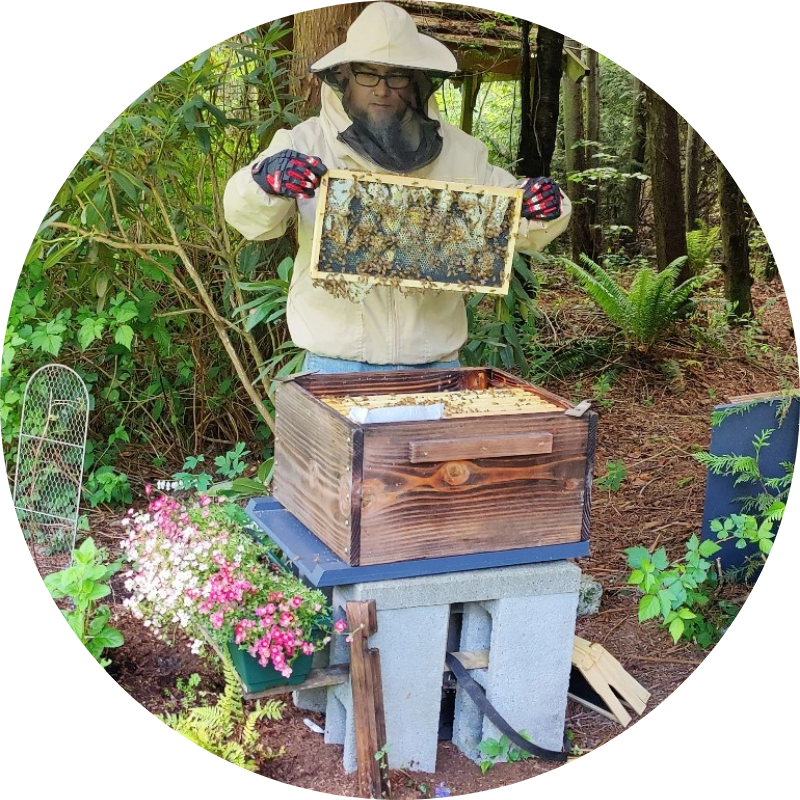
For beekeepers, adaptation is not reactive. It is a design problem. Warmer winters, erratic bloom cycles, and fluctuating moisture levels force beekeepers to rethink feeding, ventilation, and hive management. Dylan's principle: every intervention has to be a win-win for the colony and the surrounding ecosystem. A solution that improves airflow but over-dries the brood area weakens the colony in a different direction. A treatment that boosts production but increases chemical reliance fails the test.
This perspective matters more in 2026 than it did a decade ago. Pollinator health is now climate adaptation work, not a sustainability extra, because the same heat events that stress crops also reduce nectar quality and pollinator survival. The orchard plan and the hive plan have become the same plan.
"True adaptation is measured by whether the solution strengthens both the colony and the surrounding ecosystem. If it benefits bees but harms local pollinators, it is not sustainable. If it increases production but increases chemical reliance, it is not adaptive."
5. Adaptation is knowledge-driven before it is capital-intensive
Sitanshu Mohapatra, Climate-smart agriculture and agribusiness expert, India
A common misconception is that climate adaptation requires expensive technology. In Indian smallholder agriculture, Sitanshu argues, the most effective interventions are knowledge-driven rather than capital-intensive. Adjusting sowing dates, choosing short-duration or stress-tolerant varieties, mulching, cover cropping, and improving soil organic matter consistently stabilize yields under erratic monsoons.
Diversification is the strongest single strategy. Intercropping, integrating horticultural crops, and combining farming with small livestock spread risk across multiple income streams. Farmers depending on a single crop are far more exposed to climate shocks and price volatility. The harder challenge, Sitanshu says, is the gap between short-term income needs and long-term resilience. Demonstration plots, peer learning, and collective action through farmer groups close that gap better than any individual subsidy.
"Adapting to climate change means building flexibility into the farming system ecologically, economically, and institutionally so that uncertainty becomes manageable rather than devastating."
6. Bridging the gap between research and the field
Vasu G, Floriculture and landscaping specialist, India
In the Indian subcontinent, the climate has become harder to read. Irregular rainfall, wider temperature ranges, frequent dry spells, hotter summers, unseasonal rain, and inconsistent winters now sit alongside more frequent droughts and floods. Even forecasts fail often enough that farmers cannot fully rely on them. For Vasu, the role of the agriculture professional is to close the distance between what research has discovered and what reaches the field, where the gap is still wide.
The adaptation toolkit Indian farmers actually use is broad: choosing crops suited to the region, switching to short-duration or drought-tolerant varieties, and timing sowing to the actual onset of the monsoon. Drip and other micro-irrigation systems make scarce water go further. Mulching and reduced or zero tillage protect soil moisture. Protected cultivation structures like polyhouses and greenhouses shield high-value crops and extend off-season production. Vasu adds a striking crop-level example: chrysanthemum growers provide artificial night lighting in winter to delay flowering, since the plant is short-day and photosensitive and would otherwise bloom too early to carry a full crop. Each of these practices is, in his words, a way of bridging the gap between the technology in the papers and the field.
"Despite having all these technologies in our hands, farmers still face challenges. Knowledge gaps remain in remote areas. Not everyone who has the idea or knowledge has the infrastructure facilities they need."
7. The rains are not what they used to be
Chilendo Sakala, Smallholder farmer, Copperbelt, Zambia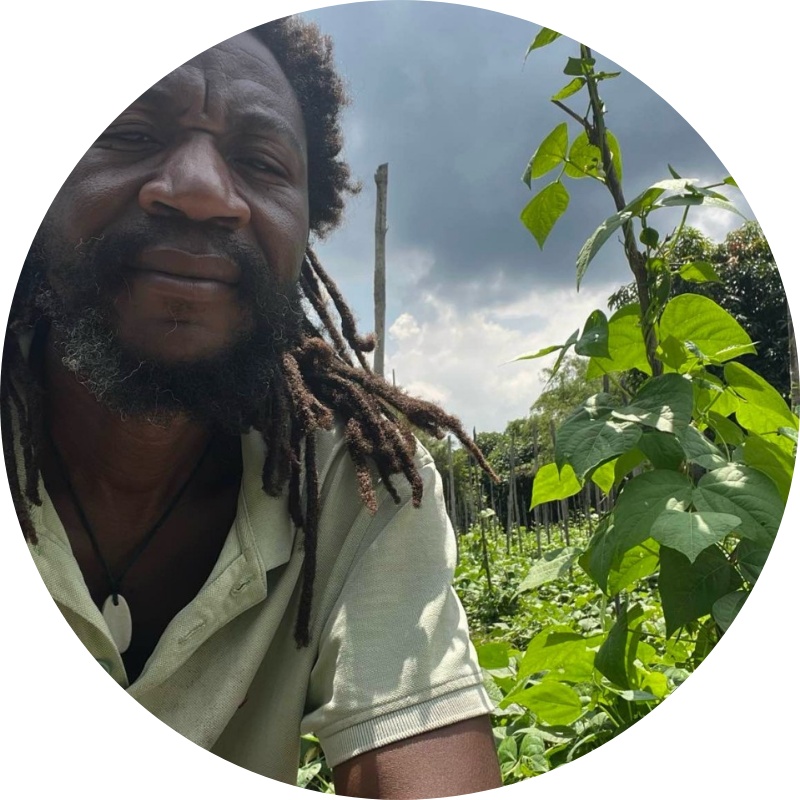
On the Zambian Copperbelt, Chilendo grows rain-fed maize, cowpeas, and kabulangeti kidney beans, plus horticultural vegetables off-season. The most visible change in his lifetime, he says, is the reduction and erratic distribution of rainfall. In the 1990s and early 2000s, rains started reliably in October or November and lasted into April or May. Now they arrive late, fall in concentrated bursts, and leave streams dry before the next season begins.
The 2024 national drought tested the system. Chilendo planted in December rather than November, switched to early-maturing varieties, and got his crop through. He has paid closer attention to soil health, leaving maize stalks to decompose, adding manure, and rotating crops to retain moisture and nutrients. Off-season production has shifted to drip irrigation to conserve water and energy.
"Adaptation to climate change for me means observing the land closely, being flexible, open-minded, and learning each season."
8. Climate adaptation is now post-harvest work too
Rhoda Angera, Post-harvest handling expert, Nigeria
In Nigerian agriculture, where rain-fed production dominates, climate adaptation now extends well beyond the field. Farmers wait for established rainfall patterns before planting, are increasingly turning to vegetable irrigation, and are asking sharper questions about crop choice, timing, and inputs. Adoption accelerates through observation: when one farmer succeeds, neighbours follow.
What Rhoda emphasises is the post-harvest layer most climate conversations skip. Heat and humidity have made loss prevention a critical adaptation strategy. In the warehouses she visits, grain moisture content is measured before purchase. Mango and orange harvesters now sort and air-cool fruit immediately to prevent rot, and shade produce from direct sun before transport. Storage houses use pallets to block moisture absorption and rotate stock on a first-in-first-out basis. The economic logic is clear: preventing one ton of loss is cheaper than producing an additional ton.
"When the right information meets the right people, and the right actions are taken, only then can we claim productivity and development in agriculture."
9. Survival has always looked like adaptation
Tumo Mmapatsi, Animal scientist, Botswana
In semi-arid Botswana, the question of "adapting to climate change" lands differently. For livestock farmers in dryland systems, adaptation is not a future concept introduced by a workshop. It is the bedrock of how the sector has always operated. Unpredictable rainfall, prolonged droughts, rangeland degradation, and disease risk shape every management decision.
In practice, Tumo says, adaptation looks like improving rangeland management, diversifying feed sources, strengthening water conservation, and adopting climate-resilient livestock production systems. Early warning information now guides decisions on stocking rates and movement. These are not framed as climate adaptation by the farmers themselves. They are survival strategies, refined across generations, that climate change has merely intensified.
"These are not always framed as climate adaptation, but they are survival strategies farmers have been developing over time."
10. Practice has caught up with the climate
Osman Chiweshe, Agriculture consultant, Zimbabwe
In Zimbabwe, increasing droughts, floods, and temperature extremes have driven a structural shift in farming practice. Smallholders are growing more sorghum and millet, both more drought-tolerant than maize. Planting moved earlier in the season to capture the start of the rains. Drought-tolerant and short-season varieties dominate seed selection.
The most distinct adaptation is pfumvudza, a zero-till conservation farming method built around hand-dug planting holes and crop residue mulching. Wetlands are being developed for double cropping, with maize on tied or open ridges and rice in the furrows between them. Digital tools to monitor weather and forecast season conditions are gaining ground, alongside greenhouse construction for high-value crops. Each tool, on its own, makes a small difference. Together, they reflect a farming system actively redesigning itself.
"Farmers plant crops early in the season to make maximum use of seasonal rainfall, and increasingly adopt drought-tolerant and early-maturing crop varieties."
11. Adaptation is now a daily survival decision
Adara Mary, Agronomist and botanist, One Acre Fund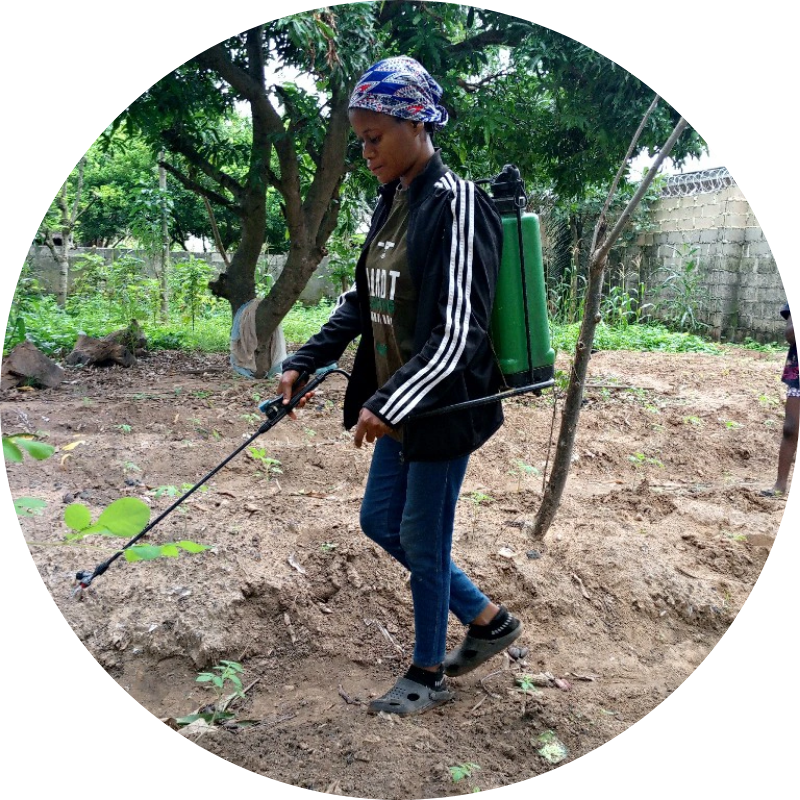
Working with smallholder farmers, Adara is clear: climate adaptation is no longer a future concept. It has become part of farmers' daily survival decisions. The most visible change is the shift in rainfall patterns. Rains arrive later than expected or stop earlier, forcing farmers who once planted in March to wait until April to avoid seed loss from false starts.
Moisture-conserving practices have spread fast in vegetable production. Mulched crops show less wilting and better yields than unmulched ones in the same conditions. Nursery management has shifted toward shade nets and more strategic watering during heat. The move toward early-maturing and drought-tolerant varieties continues, alongside increased interest in dry-season farming using residual moisture or simple irrigation. The ceiling on adaptation, Adara stresses, is access to information, inputs, and water.
"Climate adaptation, in practical terms, means helping farmers make small, daily adjustments that reduce risk, protect yield, and sustain their livelihoods despite unpredictable weather."
12. Adaptation as a seasonal learning system
Butanaziba Nsubuga, Farmer and farm manager, Uganda
Ten years of farm management have taught Butanaziba that the consequences of not adapting are real and costly. The seasons in his region have become erratic; rains arrive when they are not expected and skip when they are needed. He now treats every season as a learning session, harvesting rainwater and transplanting tree seedlings during rains so that prolonged droughts cause less damage.
Climate-resilient crops have become the safer bet on his farm. After losing tomato to severe rains and other crops to drought, he now favours lemongrass, which holds up under harsh conditions. Intercropping has become standard practice after a 2024 fire burned 20 acres, with mixed-variety plots showing far less loss than monocultures. Vegetables now grow around fire buffers, and castor plants have been added this season. Adaptation also means more frequent monitoring; the sun is hotter, and a single missed week can mean significant damage.
"Adapting to climate change is now part of our farming plan. It seems the least we can do to lessen the effects of climate change on our farming."
13. Resilience comes from small, consistent adjustments
Baraka Mzava, Youth in agriculture advocate, Tanzania
For most smallholder farmers, Baraka argues, adaptation is not about large-scale technologies. It is about small, consistent adjustments in day-to-day management. Through Shamba Spark, the initiative he works with, he sees adaptation begin with crop decisions. Fast-maturing and resilient varieties reduce the risk of total failure under unpredictable rainfall. Planting timing now follows observed weather patterns and short-term forecasts rather than traditional calendars.
Soil and water management remain central. Mulching, composting, and improving soil organic matter help retain moisture and maintain productivity under stress. Where possible, small-scale irrigation is introduced, but most farmers rely on low-cost, locally available solutions. Crop diversification spreads risk. The persistent gap, Baraka says, is between knowing the climate is changing and being able to act on that knowledge through reliable inputs, information, and finance.
"Many understand the changing climate. Translating that knowledge into action remains the challenge."
14. Three pillars hold modern crop management together
Gitai Segal, Agriculture consultant and crop optimization strategist, Israel
For commercial growers facing increasingly erratic conditions, Gitai frames adaptation as three pillars working together. The first is precision water management, where the irrigation system needs proper hydraulic design and a control system that switches automatically from routine mode into real-time response. Short irrigation cycles can protect crops during peak heat or frost events.
The second is microclimate management. In open-field agriculture, shading nets, fogging, and over-canopy sprinklers reduce canopy temperature and frost damage. In Controlled Environment Agriculture, forced ventilation, evaporative cooling, automated screen systems, and heating maintain consistent crop performance. The third pillar is execution: combining agronomy, automation, and operations through data on crop performance, fertigation, climate system operation, plant and environment sensors, and pest and disease treatments. Without that data, decisions lag the conditions they should respond to.
"Climate-smart crop management is the combination of agronomy, automation, and operations. This is what enables growers to maintain crop productivity and quality even as weather becomes less predictable."
What these 14 voices reveal together
Across nine countries and a range of agricultural systems, the same patterns surface. Adaptation rarely arrives as a single technology. It is built from small adjustments to sowing dates, varieties, irrigation, soil, and pest management, repeated and refined across seasons. The farmers and agronomists doing this work are not following a manual. They are building one in real time, with their own observations as the source material.
What separates resilience from failure, in almost every account, is access. Access to information, to peer networks, to capital, to inputs, to early warning data, and to decision-support tools that fit the local context. Where that access exists, adaptation looks like a steady accumulation of better decisions. Where it does not, even committed farmers run out of room to manoeuvre.
For 2026 and beyond, climate-smart agriculture will not be a category of farming. It will be the description of how farming actually works. The growers who shape it most will be the ones already updating their definitions while the baseline moves under them.
That is what the International Day of Plant Health is asking growers to pay attention to this year. The threats to plants are climate-driven now. So is the response.