Lemon leaves that take on an ashen grey look, starting along the midrib, and drop in large numbers from the lower branches in autumn are the typical sign of the oriental spider mite, Eutetranychus orientalis, also called the citrus brown mite. The mite prefers lemon trees, attacking both leaves and fruit, and causes most damage in autumn. It has been in the Mediterranean for years but keeps reaching new areas, as it was found in southern Spain in 2001 and in Sicily in 2024.
How to recognise the mite on the leaf
The mite lives and develops along the midrib on the upper surface of the leaves, where its eggs and the skins left after moulting are also visible. Infested leaves turn ashen grey, while the fruit shows discoloured patches.
Damage starts as yellow-grey stippled spots that spread from the midrib to the side veins, and in heavy infestations the leaf wilts and drops. The first sign of a new infestation is the eggs the female lays along the midrib, so checks are made there, with a hand lens, on the upper side of the leaf.
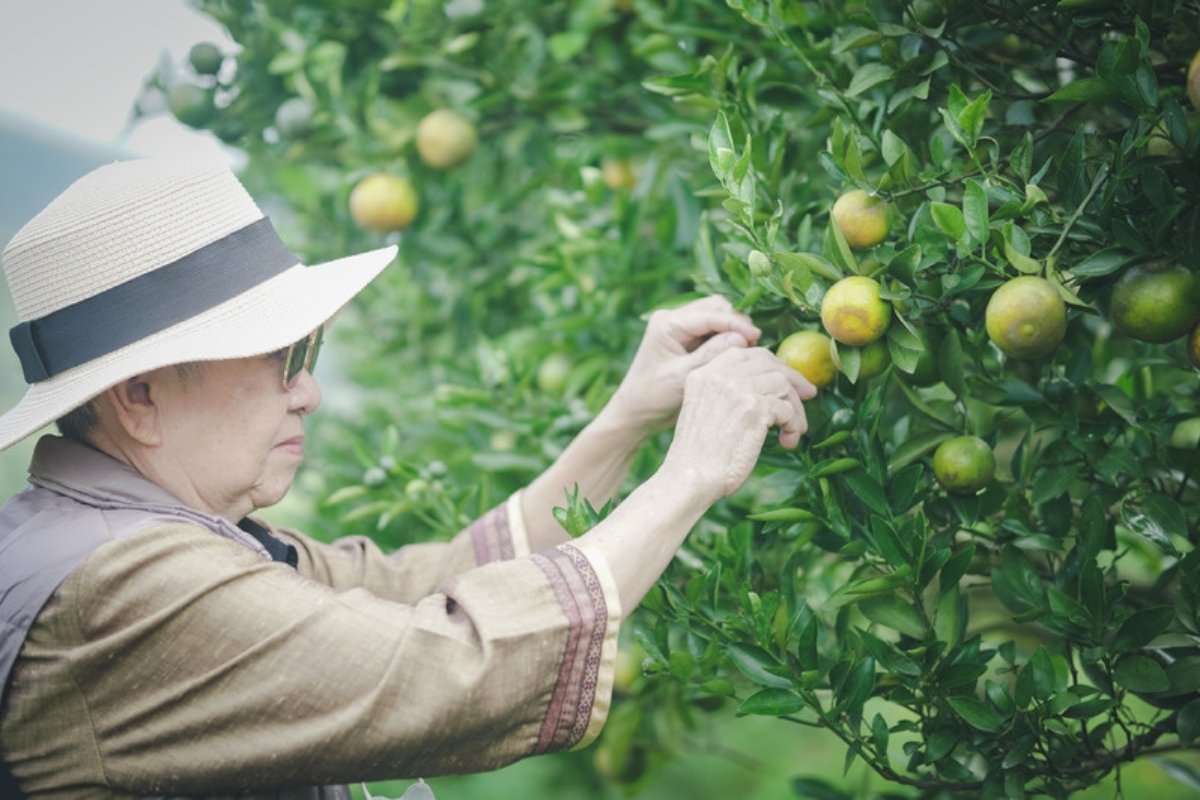
Regular checks of the upper leaf surface along the midrib show eggs and mites before the damage spreads.
What damage it causes to lemon trees
The mite causes heavy leaf drop on the lower branches, weakens the tree and reduces yield. At very high densities it can cause fruit drop and kill branches.
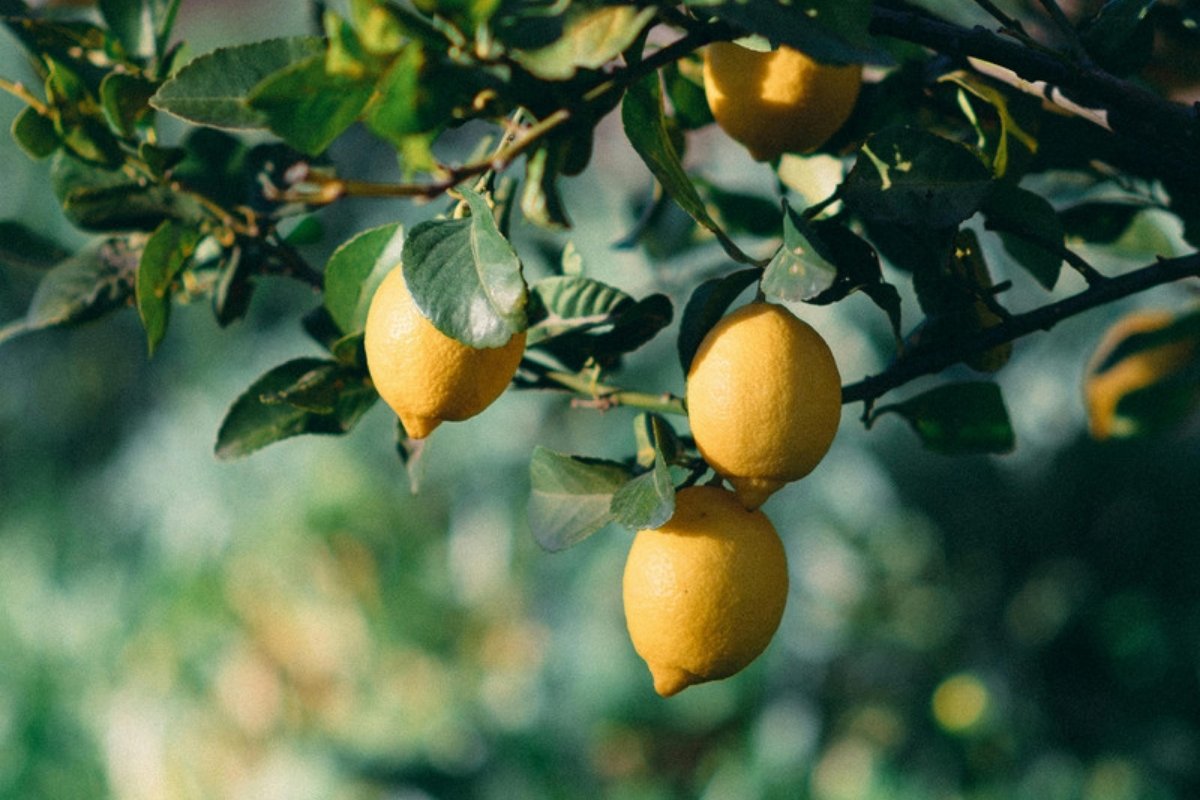
Lemon trees suffer more than other citrus, while oranges are little affected, although in other Mediterranean countries the mite attacks oranges and mandarins as well. Checks therefore start with the lemon trees in the orchard or garden, and they fit into the wider routine of commercial lemon growing.
When and where it thrives
Autumn is the mite's best season for development because of humidity, temperature and day length, and it spreads with the wind and with the movement of infested leaves and fruit.
In the Middle East the mite is considered important mainly in drier areas, where reduced irrigation increases the damage. The two sources weigh humidity differently, but they agree with the European assessment that damage increases when the tree is under stress, so correct irrigation is part of management.
Why natural enemies keep the mite in check
Because it lives on the upper leaf surface, the mite is exposed to many natural enemies, such as Scolothrips thrips, the lady beetle Stethorus punctillum, the dusty wing Conwentzia psociformis and many predatory mites of the family Phytoseiidae. In Spanish citrus groves the dominant predatory mite is Euseius stipulatus.
Natural enemies normally keep the population below the economic damage threshold, and in Australia most outbreaks were linked to intensive pesticide use. The European assessment rates the mite's impact as minor, with damage rising when sprays hit its natural enemies.
When a spray is needed
In Crete immediate treatment is recommended once symptoms appear on leaves or fruit, with lemon trees checked closely. The same bulletin asks for treatment only when the pest causes economic damage and for selective products that are gentle on beneficials, because indiscriminate spraying wipes out beneficial insects and triggers outbreaks.
Immediate treatment fits with protecting natural enemies when it is applied to a confirmed infestation and with a selective acaricide. Products authorised for lemon are checked in the national register, which in Greece is the ΥΠΑΑΤ plant protection database, and broad-spectrum insecticides applied for other pests are avoided wherever possible.
Unsprayed zones covering 15 to 20% of the trees in the orchard help keep beneficials alive and move to different trees each year. Across the orchard, scale insects such as citrus mealybug are managed with the same logic, so that a spray for one problem does not trigger an outbreak of another.
Frequently asked questions
Why are my lemon tree leaves turning grey
Often because of the oriental spider mite, which lives along the midrib on the upper surface of the leaves and gives them an ashen grey look.
Why do lemon trees drop leaves from the lower branches in autumn
The oriental spider mite causes heavy leaf drop on the lower branches, mainly in autumn. Check the upper leaf surface for mites and eggs along the midrib.
Does the oriental spider mite attack orange trees
Yes, but lemon trees suffer more and oranges less, so checks start with the lemons.
When should lemon trees be sprayed for spider mites
When symptoms appear on leaves or fruit, with a selective acaricide that spares predatory mites.
Which natural enemies eat the oriental spider mite
Predatory mites of the family Phytoseiidae, the lady beetle Stethorus punctillum, Scolothrips thrips and the dusty wing Conwentzia psociformis, which usually keep populations below the damage threshold.
How does the mite spread between trees
With the wind and with the movement of infested leaves and fruit, so plants and leaves from infested orchards are not moved to clean ones.
Important notes
Conditions vary by region, variety, irrigation and year, so the above is a general guide and a starting point for checking the orchard. For accurate identification of the mite, an agronomist gives the safest answer.
Cultural measures come first, meaning correct irrigation and protection of natural enemies. When chemical control is needed, use only products authorised for citrus, follow the label instructions and leave an unsprayed buffer of 21 metres from surface water.
Sources
- Regional Centre for Plant Protection, Quality and Phytosanitary Control of Heraklion, Plant protection in citrus, Bulletin No 4, 1 October 2026 (in Greek).
- Tropea Garzia G. et al., First report of Eutetranychus orientalis found in citrus orchards in Eastern Sicily, EPPO Bulletin, 2025.
- EFSA Panel on Plant Health, Scientific opinion on the risk to plant health posed by Eutetranychus orientalis in the EU territory, EFSA Journal, 2013.
- Navia D. et al., New mite invasions in citrus in the early years of the 21st century, Experimental and Applied Acarology, 2013.
- Effect of temperature on the biological and demographic parameters of two citrus pests, Eutetranychus orientalis and Panonychus citri, Acarologia, 2025.
- The Hebrew University of Jerusalem, Eutetranychus orientalis, Middle East pests.