
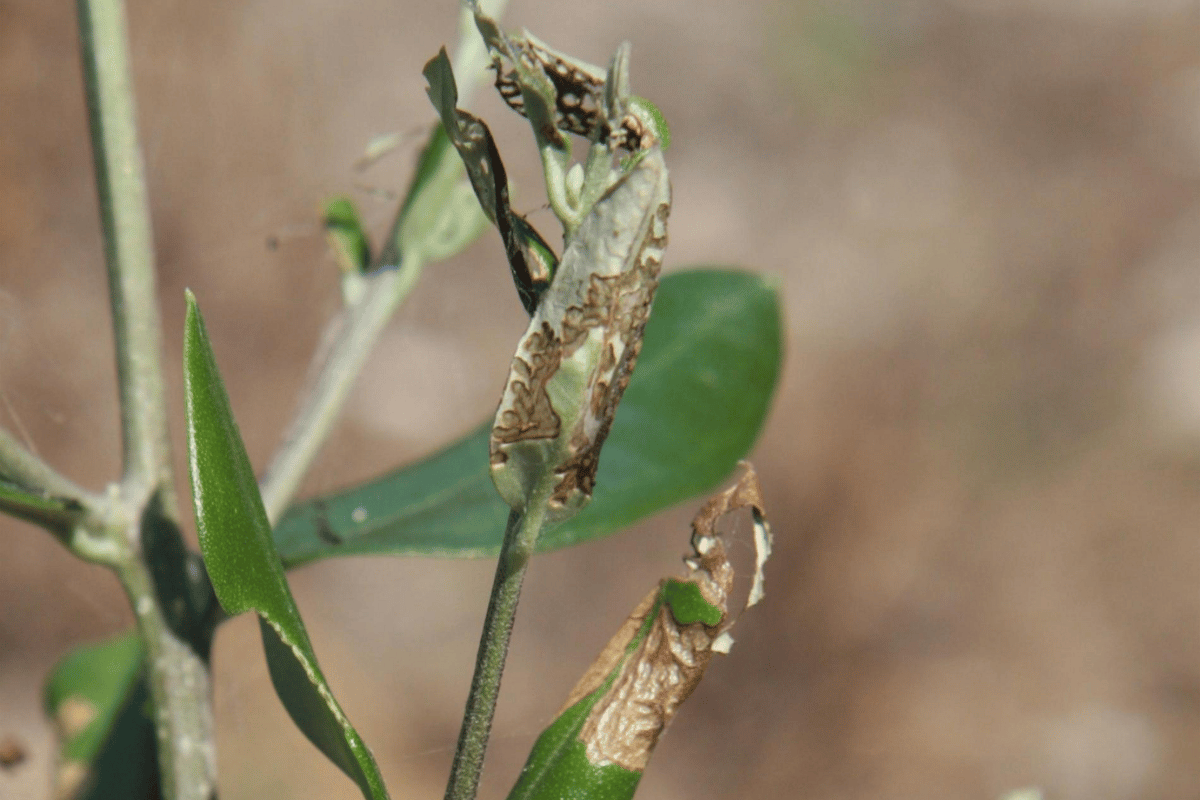
The early olive groves of north-eastern Greece are entering the start of flowering, and the flight of the anthophagous generation of the olive moth (Prays oleae) has been underway since April, with egg laying on the inflorescences in progress. According to Technical Bulletin no. 19 from the Kavala Regional Plant Protection Center (20 May 2026), the recommendation requires a more careful reading than a simple "spray," and it is far more interesting for anyone who works in olive groves.
Why the flowering generation often needs no treatment
The olive moth has three generations a year, and each attacks a different part of the tree. The anthophagous generation feeds on the flowers and inflorescences. The carpophagous generation, which comes later in summer, bores into the fruit and is the truly destructive one. The phyllophagous generation feeds on the leaves and carries the least economic weight.
In years with normal or heavy bloom, the anthophagous generation causes no significant economic loss. The olive tree produces far more flowers than it can ever set as fruit, and the natural drop of the surplus is expected. If the olive moth eats a share of those flowers, the tree simply adjusts its fruit set with no effect on the final yield.
On top of that, the moth's natural enemies are active at this time. Parasitic wasps and predators that will be needed later to keep the dangerous carpophagous generation in check are already in the grove. A spray against the anthophagous generation wipes them out, too, leaving the carpophagous generation with no natural opponent.
It seems paradoxical, but it is the right call. In groves with heavy bloom, we hold off spraying now so we have better control later, when it really matters.
When a spray is justified
There are two cases where intervention makes sense even now. One is groves with limited bloom, where the trees carry few flowers, and even a small infestation can cost the season. The other is groves with a history of heavy infestation over the previous two or three years, where the population is already high, and the accumulated pressure makes the anthophagous generation a real threat.
The timing depends on the grove's exposure. In south-facing groves, where heat speeds up egg hatching, the spray should be scheduled for the next 3 to 5 days after the bulletin's recommendation. In north-facing groves, where hatching is delayed, it is delayed by 6 to 9 days.
Why Bacillus thuringiensis rather than a broad-spectrum insecticide
The bulletin's recommendation is clear. Wherever a spray is applied, the preferred option is Bacillus thuringiensis products for two reasons. On one hand, Bt is particularly active against the larvae of the anthophagous generation, so there is no need to reach for a broad-spectrum product. On the other hand, and more importantly, Bt does not harm the natural enemies, and so it keeps the grove's ecosystem working to face the carpophagous generation later. It is the same logic that runs through integrated pest management everywhere, targeted action with the least possible collateral loss.
In organic groves, Bt is the only permitted route in any case. Reducing the population in the anthophagous generation is the key tool here for stopping the carpophagous one from getting away, since once it is inside the fruit it is practically out of reach.
For the wider context, a look at olive tree diseases and pests places the olive moth among the other threats the crop faces through the season.
Parallel threats that can be combined
The same window brings other pests that, case by case, can be handled in the same pass. The olive psyllid (Euphyllura phillyreae) shows up mainly in groves without systematic spraying, and only heavy symptoms justify treatment, with an approved paraffin-oil product alongside the olive moth. With mild symptoms, despite the visible presence of the insect, no spray is needed.
Mites, which deform leaves and fruit and downgrade quality especially in table varieties, are treated only under heavy infestation, again combined with the olive moth. As for Parlatoria oleae, sprays against the mobile crawlers of the first generation, through April and May, apply to isolated cases, mainly groves with a history of infestation and groves producing table olives.
Compliance and protection
Every application of plant protection products requires a certified professional user, strict adherence to the label dosage, and full personal protective equipment, specifically a spray suit, a mask appropriate to the toxicity class of the active ingredient, and chemical-resistant gloves. For large groves, sprayers that achieve real penetration into the canopy make the difference between an effective and a merely superficial spray.
In the spirit of the bulletin, the right move in most cases of heavy bloom is not to spray, and to save resources for the generation that genuinely threatens the fruit.
Every plant and growing environment is unique. Conditions vary considerably with region, exposure, water quality, soil pH, and overall plant health.
If you suspect a serious nutrient deficiency or disease that doesn't respond to basic practices, consult a qualified agronomist for an accurate diagnosis.
Plant protection products must be used with care and responsibility. Always try non-chemical methods first (cultural practices, insecticidal soap, summer oil). When chemical intervention is necessary, use only approved products and follow label instructions.