


Around every root grows a community of microorganisms that influence how the plant develops and feeds. Microbial biostimulants make use of this relationship by bringing selected beneficial microorganisms into the rhizosphere.
What microbial biostimulants are
These are products containing beneficial microorganisms, classified as plant biostimulants, and they include mycorrhizae, rhizobacteria such as the genera Bacillus, Pseudomonas, and Azospirillum, nitrogen-fixing bacteria, and fungi such as Trichoderma.
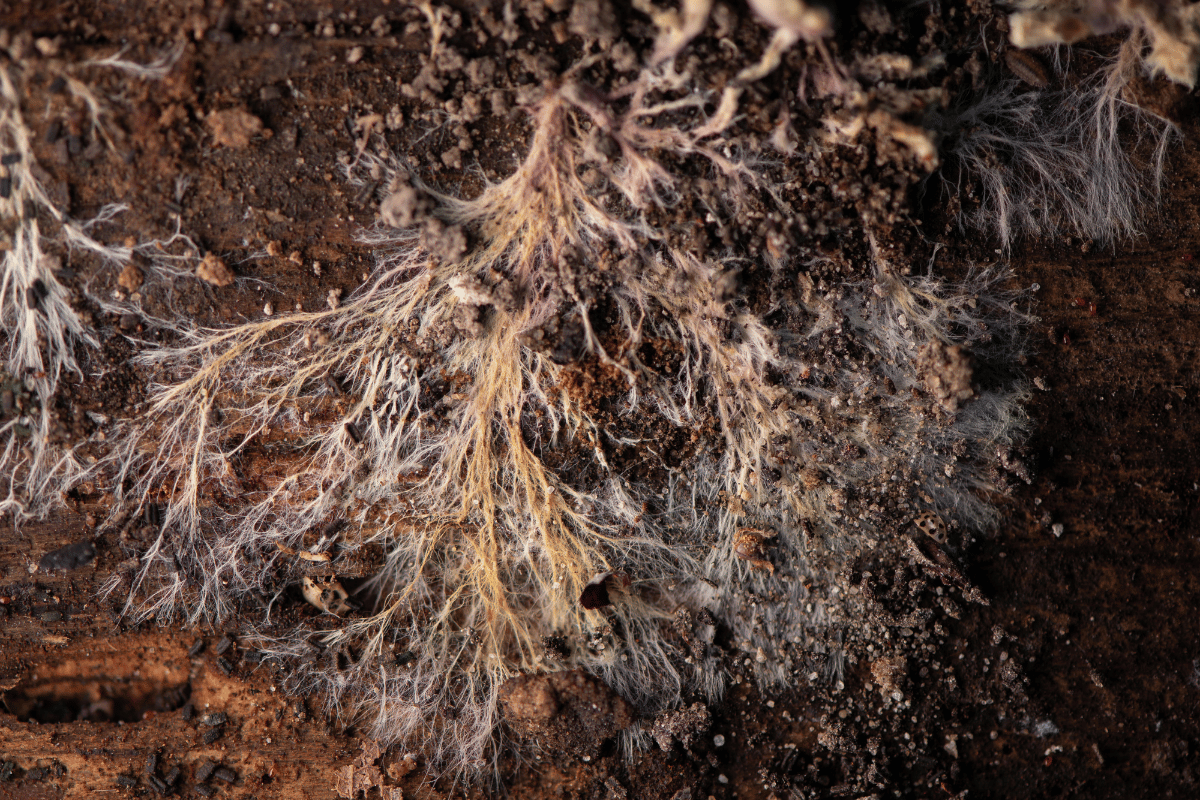
Mycorrhizae form a symbiosis with the root and extend its absorption network.
How they act on the root and nutrient uptake
Mycorrhizae extend the root's absorption network with their hyphae, leading to better uptake of water and nutrients, especially phosphorus. Rhizobacteria, in turn, produce phytohormones, solubilise phosphorus, and improve root architecture, while some fix atmospheric nitrogen and make it available to the plant.
How they build stress tolerance
Beyond nutrition, beneficial microorganisms improve tolerance to abiotic stress, such as drought, salinity, and high temperatures, through mechanisms of osmotic adjustment and activation of antioxidant enzymes. This property largely explains their usefulness under Mediterranean conditions. Microbial biostimulants do not replace fertilisation, since they do not supply nutrients directly, but they improve the plant's ability to make use of them.
When and how to apply them
They are applied mainly at planting and transplanting, when the microorganisms readily colonise the young root system, or through the irrigation system during the early growth stages. They perform better in soils with sufficient organic matter, while the simultaneous use of fungicides can reduce the effectiveness of the beneficial fungi.
| When to apply | What we aim for |
|---|---|
| Planting and transplanting | Colonisation of the young root |
| Early growth stages | Better uptake of phosphorus and water |
| Drought or salinity conditions | Greater tolerance to stress |
| Soils poor in beneficial microflora | A boost to biological activity |
Which product suits each crop is covered in our guide on choosing a biostimulant for your crop, and how to match fertiliser rates to the crop in our guide on choosing NPK fertilizers by crop.
Sources
- Backer, R. et al. (2018), Plant growth-promoting rhizobacteria: context, mechanisms of action, and roadmap to commercialization of biostimulants for sustainable agriculture, Frontiers in Plant Science.
- The application of arbuscular mycorrhizal fungi as microbial biostimulant, Sustainable Approaches in Modern Agriculture.
- Molecular communication of microbial plant biostimulants in the rhizosphere under abiotic stress conditions.
- Regulation (EU) 2019/1009 on fertilising products.