
The Mediterranean fruit fly is the most dangerous pest of ripe citrus in summer, because it lays its eggs inside the fruit and the larvae rot it from within. The advisory bulletin of the Regional Plant Protection Center of Heraklion shows rising catches in the trapping network and a high risk of infestation, with protection needed mainly on the late varieties. At the same time, the tender summer growth is under pressure from the citrus leafminer and from whiteflies. Below, we look at the life cycle of the fly, how we protect the fruit, and what to do about the other pests of the season.
The life cycle and the damage of the Mediterranean fruit fly
The Mediterranean fruit fly (Ceratitis capitata) lays its eggs under the skin of ripe fruit, and the larvae that hatch feed inside it, causing rot and dropping the fruit. Its population in an area depends on the load of fruit ripening on various hosts, such as orange, grapefruit, apricot, persimmon, and fig, and, to a lesser extent, peach and apple. In this period, the catches in the traps are high, and the risk to ripe citrus remains elevated.
How to protect the ripe fruit
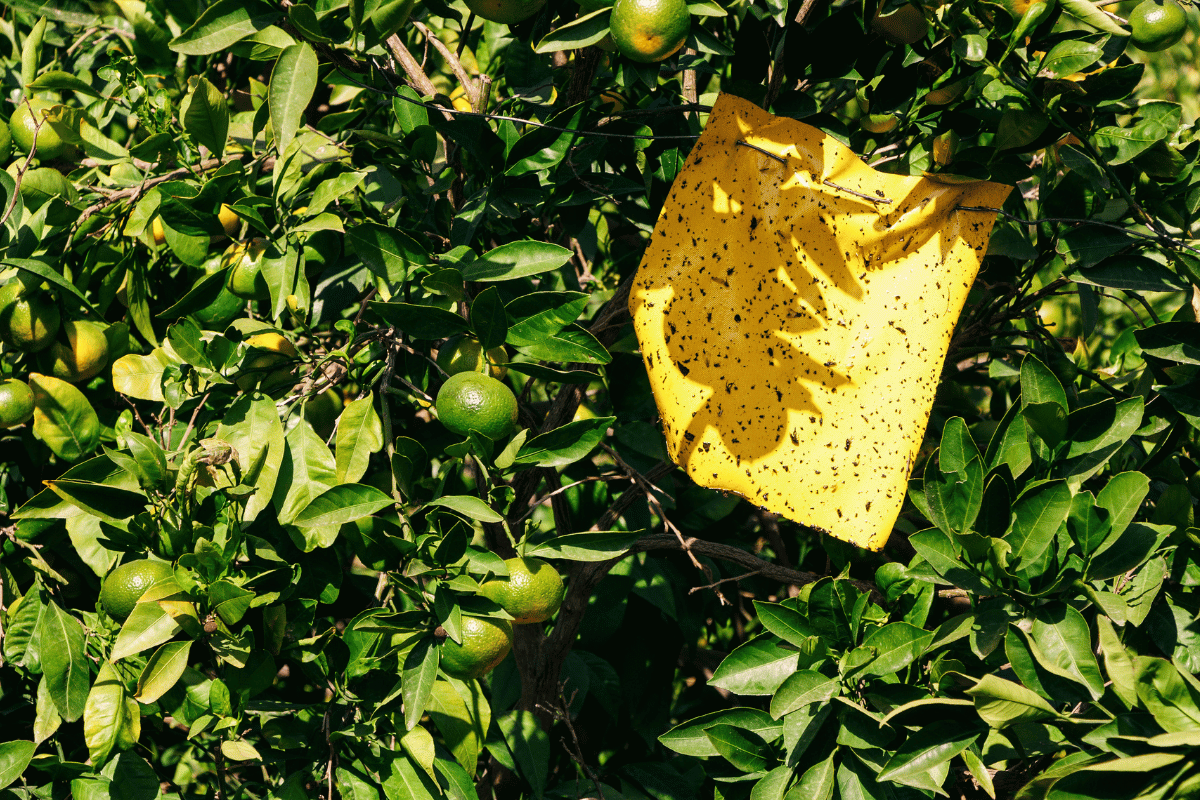
Protection continues for late citrus varieties, such as late oranges and grapefruit, which still have fruit on the tree. Orchard hygiene is just as decisive, because infested fruit left in the field acts as a foci, so we remove and destroy them. Monitoring the traps shows the population trend and the optimal timing for integrated control of the fruit fly.
| Pest | Where it strikes | Recommendation |
|---|---|---|
| Mediterranean fruit fly bulletin of 15 June, Heraklion |
Ripe and late fruit | Continue protection on late varieties, remove and destroy infested fruit |
| Citrus leafminer | Tender summer flush | Cultural practices protect young trees and grafts |
| Whiteflies | Underside of the leaves | Monitor and treat selectively after checking |
Citrus leafminer and whiteflies on the summer flush
The citrus leafminer (Phyllocnistis citrella) attacks the tender summer growth and opens characteristic serpentine mines in the leaves, which deform, curl, and dry out. It causes serious problems mainly in young trees and tender grafts, while on large bearing trees, the damage is usually tolerable. Cultural practices that limit a second flush of growth in summer, such as balanced irrigation and fertilization, help.
The whiteflies, the citrus whitefly and the woolly whitefly, settle on the underside of the leaves, where we find eggs, young nymphs, and adults. We monitor populations and intervene selectively when checks warrant it.
Choosing and applying the products
Use only products approved for citrus and the specific pest in your country, and follow the label for the dose, method, and timing of application. Since wide varieties are close to harvest, pay particular attention to the pre-harvest interval so that no residues remain on the fruit.
The information above comes from the regional bulletin and applies as a general trend. Pest pressure varies from area to area and from variety to variety, so the final decisions rest on your own traps and the most recent local bulletin. For serious or uncertain infestations, consult an agronomist, and use only approved products in line with the label and the operator protection measures.
Sources
All data come from the plant protection advisory bulletins of the Greek Ministry of Rural Development and Food (ΥΠΑΑΤ):
- Regional Plant Protection Centre of Heraklion, citrus plant protection bulletin No2 (15 June 2026).