


As October unfolds, the kiwifruit harvesting season has officially begun across European orchards, marking a critical period that determines both the quality and commercial success of the entire year's production. This comprehensive guide provides European farmers with essential knowledge and best practices for achieving optimal harvest results during this period.
Current harvest landscape in Europe
Climate events and production shifts
European kiwifruit production in 2025 is entering the harvest season under markedly different conditions from those of last year. Whereas 2024 was characterized by relative stability in Greece and ongoing disease pressures in Italy, this year the sector is confronting the disruptive force of extreme climate events. A severe frost in March devastated Greek orchards, reducing national output by an estimated 20%, and struck just as crops entered their critical flowering and fruit-set stages. At the same time, Italy, which continues to deal with the legacy of moria disease, has experienced an unprecedented acceleration of harvest timing—southern regions began picking up to ten days earlier than normal, marking the earliest Italian harvest on record. These shifts are reshaping both availability and market timing, forcing producers to adapt to an increasingly unpredictable production cycle.
Comparison with 2024 Season
In comparison, the 2024 season painted a more balanced picture. European output was estimated at around 941,000 tonnes, with Greece and Italy contributing roughly equal volumes of 311,000-320,000 tonnes each. Greece enjoyed stable production and fruit quality, while Italy grappled primarily with disease-related declines rather than climate extremes. Moreover, last year’s market benefited from favorable trade dynamics, as early season endings in New Zealand and Chile reduced Southern Hemisphere competition. By contrast, the 2025 harvest is entering the market earlier and under tighter supply from Greece, suggesting greater price volatility and potential opportunities for Italian and Portuguese growers. The year-on-year shift highlights how climate variability, more than plant disease alone, is emerging as the dominant risk factor for Europe’s kiwifruit industry.
Critical harvest timing and maturity assessment
Determining optimal harvest maturity in kiwi
The success of kiwifruit harvesting fundamentally depends on accurate maturity assessment. European regulations require fruit to achieve a minimum of 6.2° Brix soluble solids content and an average dry matter content (DMC) of 15% at harvest to ensure acceptable quality when reaching consumers. However, optimal results require more sophisticated evaluation:
DMC has emerged as the most reliable harvest maturity index, correlating directly with consumer acceptance, taste quality, and storage performance. For premium quality, aim for DMC levels between 15.9% and 19%, with higher dry matter content typically producing sweeter fruit with better storage characteristics. Research demonstrates that fruit with 18-19% DMC achieves 16% soluble solids after storage, while those with 14-15% DMC reach only 14% soluble solids.
Soluble Solids Concentration (SSC)
While minimum standards require 6.2° Brix, targeting 6.5° Brix or higher ensures fruit reaching 14% soluble solids after storage, the threshold for consumer satisfaction. A refractometer can be used to test SSC in the equatorial section of representative fruit samples.
Physical Indicators
Monitor fruit firmness, skin color transition from bright green to yellowish hue, and seed color development. Black seeds indicate physiological maturity and readiness for harvest. Size uniformity and absence of defects are equally crucial for commercial viability.
Timing considerations for european conditions
European harvest timing must account for regional climatic variations and market positioning. Begin monitoring maturity indices in early October, with systematic sampling of at least 90 fruits per orchard block. Weather conditions significantly influence harvest timing. Prioritize dry weather periods to minimize fungal disease risks and ensure optimal fruit handling conditions.
The European market structure allows for gradual harvest over 3-week periods, enabling farmers to optimize fruit maturity while maintaining labor efficiency. This extended harvest window is particularly valuable for maximizing quality across different orchard sections that may mature at varying rates.
Professional harvesting techniques and best practices
Manual harvesting
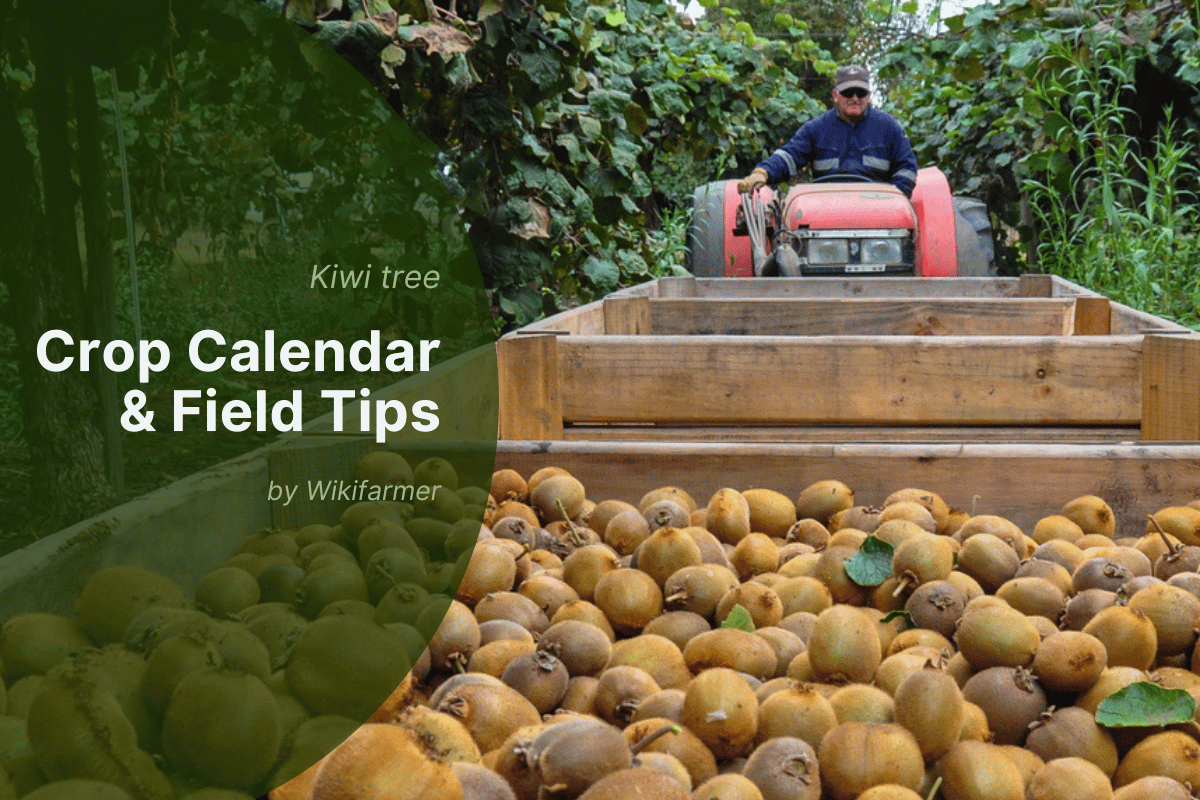
Kiwifruit harvesting remains exclusively manual due to the fruit's delicate nature and the precision required for quality selection. Implement these professional techniques for optimal results:
Proper Hand Positioning and Technique: Workers should be trained to snap stems at the base of the fruit, rather than pulling, which can damage both the fruit and the vine. Use a twisting motion when necessary, ensuring clean separation without bruising the fruit surface.
Systematic Harvesting Approach: Begin with larger fruit, allowing smaller fruit additional time for size development. Harvest systematically across vine sections, ensuring complete coverage while maintaining gentle handling throughout the process.
Quality Selection During Harvest: Workers should be trained to identify and select only fruit that meets maturity and quality standards. This field-level quality control significantly reduces post-harvest sorting requirements and improves overall pack-out rates.
Post-harvest handling and quality preservation
Immediate post-harvest actions
The period immediately following harvest is critical for maintaining fruit quality and maximizing storage potential. Implement these essential practices:
Farmers should remove harvested fruit from the field conditions (sun and heat) immediately to prevent quality deterioration. Farmers should transport bins to shaded collection areas or directly to packing facilities to minimize exposure to adverse conditions.
Kiwifruit bruises easily, and damaged fruit has a severely limited storage life. Producers must train all personnel in proper handling techniques, emphasizing the importance of avoiding drops, impacts, and excessive pressure during transfer operations.
It is necessary to begin cooling processes immediately upon arrival at packing facilities. The transition from field to controlled environment should occur within hours of harvest to optimize subsequent storage performance.
Grading and size standards
European kiwifruit must meet specific grading standards for commercial success:
- Extra Class: Superior quality fruit weighing minimum 90g, characteristic of variety, firm flesh, free from defects except very slight superficial marks
- Class I: Good quality fruit weighing a minimum of 70g, slight defects allowed in shape, coloring, and skin (maximum 1 cm² total affected area)
- Class II: Marketable quality fruit weighing a minimum of 65g, allowing defects in shape, coloring, and skin defects up to 2 cm² total affected area
Size Uniformity Requirements
Maintain size consistency within packaging, with ranges not exceeding 10g for fruit weighing up to 85g, 15g for fruit weighing between 85-120g, and 20g for fruit weighing between 120-150g.
Storage and preservation strategies
Kiwifruit's exceptional storage potential is up to 10-12 months under optimal conditions. Proper storage management is crucial for year-round market supply.
Controlled atmosphere storage
Producers can implement controlled atmosphere storage combining low temperature (0°C) with regulated CO₂ and O₂ levels to extend shelf life while maintaining quality. Research demonstrates this approach significantly reduces respiration rates and delays ripening processes.
Temperature management
Store at 0°C for optimal results, though temperatures up to 2.5°C can be acceptable for shorter storage periods. Avoid temperatures below -0.5°C to prevent chilling injury, which affects over 85% of fruit stored at these levels for extended periods.
Pre-storage conditioning
Producers should consider implementing pre-storage treatments such as conditioning at 16°C for 4-6 days before cold storage to improve firmness retention and reduce chilling injury susceptibility.
Market positioning and economic optimization
Premium variety opportunities
Golden and red kiwifruit varieties command 40-60% higher retail prices than traditional green Hayward varieties, driven by enhanced sweetness, visual appeal, and lower chilling requirements that suit changing European climatic conditions. These varieties require only 350-400 chilling hours compared to 700-800 hours for Hayward, making them increasingly viable for southern European production.
Market leadership position
Italy maintains its position as Europe's leading producer with 32.5% market share, supported by mature orchard infrastructure and extensive cold storage capacity. Spain emerges as the fastest-growing producer with 5.1% compound annual growth rate through 2030, driven by new plantings in Galicia and focus on premium golden cultivars.
Regional considerations
Greece – Frost impacts on kiwis
The 2025 growing season in Greece was severely affected by extreme frost events. From March 7th to 9th, temperatures dropped to -6°C in key northern kiwifruit-producing regions, freezing kiwi plants in sensitive vegetation stages. In Pieria, frosts reaching -3°C caused major crop losses, with some fields losing up to 90% of early-season kiwi varieties. Late-season kiwis fared better, but the overall damage represents one of the most severe frost events in recent memory for Greek kiwifruit production.
As the 2025 harvest now begins, producers and industry observers are closely monitoring how overall production will unfold and in what grade the kiwis have been affected. Early indications will provide insight into the season’s yield, fruit quality, and market implications, helping growers adapt strategies for the remainder of the harvest.
Conclusion
Successful kiwifruit harvesting in Europe requires meticulous attention to maturity assessment, professional harvesting techniques, and strategic market positioning. European producers can maximize both quality and economic returns from their harvest, if they implement comprehensive quality control measures, maintain optimal handling practices, and leverage favorable market conditions. The current market environment, characterized by reduced global competition and growing consumer demand for premium fruit, presents exceptional opportunities for producers who commit to excellence throughout the harvesting and post-harvest process. Success depends on combining traditional expertise with modern technology and maintaining unwavering focus on quality from orchard to consumer.