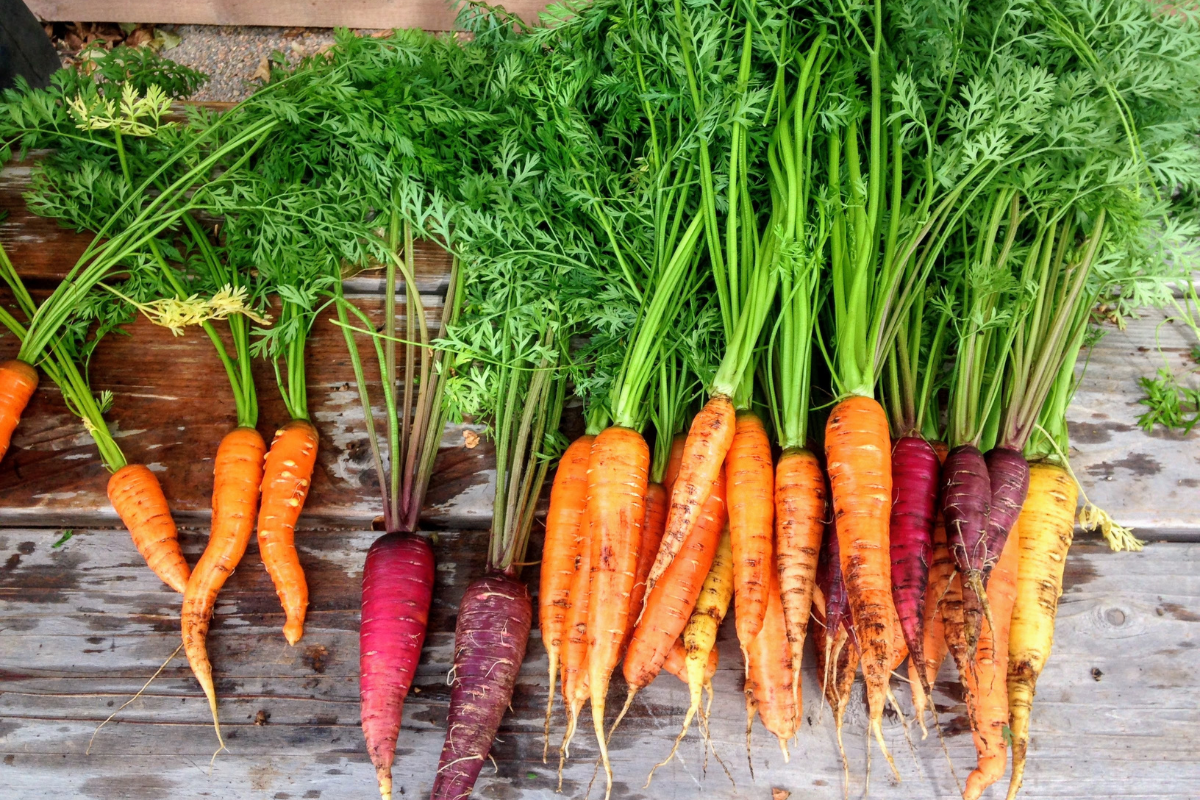
International Carrot Day approaches tomorrow (April 4, 2025), and it's the perfect moment to celebrate this staple that sustains farmers across 113 countries. Carrots’ market value is expected to reach $2.68 billion by 2030. China is the biggest carrot producer, with an impressive average yield of 18.7 million tonnes annually, representing almost 45% of the global carrot market.
So, instead of focusing on recipes and nutritional facts, let’s use this occasion to explore recent innovations in carrot farming. This way, agrifood stakeholders can stay up-to-date and improve their farming practices, processing operations, and sustainable production of this root crop.
Innovations in Carrot production
The Digital Revolution in Carrot Fields
The integration of precision agriculture is transforming carrot production in ways that directly impact profitability. The most significant advancement comes from the 2025 Carrot algorithm, which recently won the Silver prize for innovation at the LAMMA trade show in the "Arable Crop Care" category. This technology enables targeted, ultra-precise spraying that proactively eliminates weeds while facilitating cleaner harvests. During mechanical harvesting, weeds can be a significant problem, often wrapping around harvesters and causing disruptions. Due to dense planting, weeding is usually done by hand, which is labor-intensive and time-consuming. Farmers explain that with this new technology, the harvest is cleaner, which can save considerable labor costs.
Empowering Beypazarı Farmers with EU Support
Beypazarı district in Turkey is a traditional agricultural area, contributing to about 35-40% of the nation’s carrot needs. The district's farmers have increasingly adopted modern technologies to face emerging challenges in agriculture, improve efficiency, and reduce waste. One such innovation is the EU-funded Cold Storage Facility, established through the IPARD program. This facility can store up to 3,000 tonnes of carrots, helping farming reduce their losses from spoilage, particularly during winter when previous storage methods would result in freezing and waste.
Ahmet Gencer, the president of the Bostancıları Agricultural Production and Marketing Cooperative, explains that the cold storage facility was developed to prevent product loss and protect the economic stability of small farmers. With nearly 300 active members, the cooperative plays a crucial role in Beypazarı's agricultural ecosystem.
The cold storage has also improved working conditions for local employees, particularly women, who are responsible for washing and packing the carrots. Women represent 90% of the workforce in the area, and this modern facility will improve hygien standards and working environment, which will enhance end-products quality also. Additionally, the cooperative has invested in renewable energy solutions, including solar panels, to meet 95% of the facility's energy needs, highlighting its commitment to sustainability.
Climate-Resilient Varieties: The New Market Differentiator
Over the last decade, we have been facing extreme weather events worldwide, which affect agriculture all around the globe. Plant breeding innovations and genetics have always been important and valuable assets for scientists to develop resistant varieties to enhance resilience in these challenging times. The KS Kuroda variety, cultivated in the Philippines, demonstrates a remarkable ability to withstand rotting during heavy and prolonged rainfall. This characteristic makes the carrots less susceptible to microbial and fungal infections that typically devastate crops during extreme precipitation events.
Cornell University provides valuable resources for commercial carrot growers. It offers detailed lists of disease-resistant carrot varieties sourced from seed catalogs. These varieties are cataloged by their resistance to various diseases and disorders, with information on seed companies marketing them and whether organic seed options are available. Growers can access disease-resistant variety spreadsheets in Cornell’s Box folder.
In addition to Cornell’s efforts, the University of California, Davis, with a grant from the Foundation for Food and Agriculture Research (FFAR), is making efforts to breed new resistant carrot varieties. The $1 million project focuses on studying wild carrots to improve stress tolerance, particularly regarding water access and disease resistance. Alternaria leaf blight is another constant threat to carrot production, which can reduce carrot yields by 40-60%. Researchers will explore different wild carrot species that exhibit resistance to Alternaria blight, with the goal of breeding these resilient varieties with commercial carrots to enhance their resistance.
The Upcycling Opportunity: From "Ugly" and "Imperfect" Fruits to Valuable
The agri-food sector loses approximately one-third of fruits and vegetables annually. A large proportion is rejected for external defects that do affect the quality and nutritional profile of the product. The rejection happens either because commercial standards are not met, or consumer acceptance is low. Producers, retailers, and households discharge large amounts of perfectly edible food because it is considered suboptimal either through its physical appearance. Research shows that bunches that contain up to 40% imperfect carrots can be profitably marketed when accompanied by messaging that highlights both personal benefits (equal nutrition) and societal benefits (reducing food waste).
An emerging solution comes from the intersection of food science and advanced manufacturing: 3D food printing technology. Researchers have successfully converted imperfect carrots into freeze-dried powders for "food inks" that can be 3D-printed into customized snack formats. This approach extends shelf life while creating higher-value products from otherwise discarded produce.
Packaging Innovation Under New EU Regulations
The recent EU Packaging and Packaging Waste Regulation (PPWR) 2025/40, which came into force on February 11, 2025, presents challenges and opportunities for carrot producers and processors. The regulation requires all packaging on the EU market to be recyclable by 2030 and establishes waste reduction targets of 5% by 2030, 10% by 2035, and 15% by 2040. Especially for fresh fruits and vegetables, the use of single-use plastic packaging for less than 1,5 kg of prepacked product will be restricted. Additionally, all sticky labels attached to fruit and vegetables must be compostable from February 12, 2028.
Many carrot producers also choose to supply the market with minimally processed carrot products like shredded carrots or ready-to-eat pre-cut baby carrots. Innovative packaging solutions that align with these recent regulations can differentiate them in the competitive carrot market. Multifunctional biodegradable films that incorporate antimicrobial agents like potassium sorbate have shown promising results, with microbial populations increasing less rapidly in these films compared to conventional packaging. This means that the product’s shelf life will be increased, and at the same time, the producers will meet the sustainable packaging requirements that will become mandatory in the EU.
The Road Ahead
For farmers, these technologies offer real solutions to daily challenges. The rapid advancements can potentially help reshape the future of agriculture However, these solutions are not always accessible to all, either because of high implementation costs or simply because of lack of awareness. With the occasion of International Carrot Day, 2025, we would like to disseminate this information, with the belief that even if just a dozen farmers learn and implement these practices, it can make a significant difference.
References
- Carrot Powders – Researchandmarkets
- Carrot Production By Country – Worldpopulationreview
- Precision Agriculture the New 2025 Algorithm for Carrots
- Eu Helps Improve Food Security and Rural Development Beypazarı en – European Union
- Family Farming Knowledge Platform entry — FAO
- Disease Resistant Carrot Varieties – Cornell
- "Upcycling Imperfect Broccoli and Carrot to Healthy Snacks using an Inn" by Taylor Clary
- Antimicrobial, sealable and biodegradable packaging to maintain the quality of shredded carrots and pineapple juice during storage