On April 15th of this year, my great aunt Sandra — whom we call SaNA — texted me with exciting news. My aunt, a retired university professor who has spent her life shaping minds, told me that the Soil Master himself, Dr. K. Rashid Nuri, wanted to meet me because he had heard about my hydroponic work.
I was thrilled. Dr. Nuri is world-renowned and highly accomplished in urban farming and soil-based agriculture. Without hesitation, I dialed the number she gave me — even though it was after 10 p.m.
Instead of a warm welcome, I got a fiery lecture. Dr. Nuri lit into me about how hydroponics was “unnatural,” how it made crops grow too quickly, how it loaded them with sodium, and how they tasted “really nasty.” Now, I could have been insulted — after all, I’m only 15, and here was a 70-something agricultural icon scolding me. But I quickly realized something: he didn’t yet have the full picture of what modern controlled environment agriculture (CEA) can achieve.
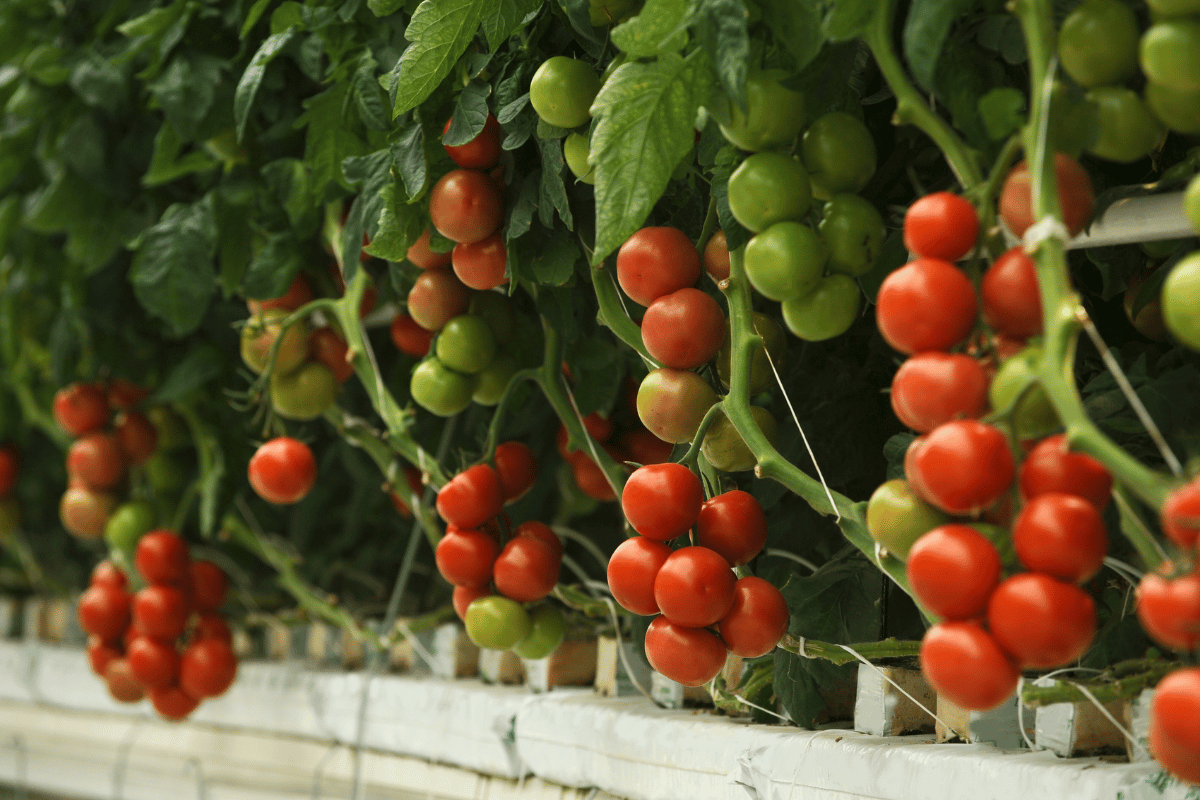
By the end of our conversation, I suggested to him that hydroponics and soil farming don’t have to compete. Instead, they can complement each other in powerful ways. He laughed, I laughed, and I promised him: “One day I’ll grow you a hydroponic tomato so good, you’ll forget it wasn’t grown in soil.”
That conversation (part critique, part comedy) reminded me that all farmers, whether in soil or in hydroponics, are working toward the same outcome: healthy plants and secure harvests.
Plants don't eat soil, they eat nutrients
One of the biggest misconceptions I encounter is that plants "need soil" to survive. The truth is simpler: plants don't eat soil; they eat nutrients.
In nature, soil acts as a reservoir of minerals and organic matter. Roots absorb those minerals after they dissolve in water. But in hydroponics, we cut out the middleman: we provide the exact same essential minerals — nitrogen, phosphorus, potassium, calcium, magnesium, and micronutrients like iron and zinc — directly through water.
Essential Macronutrients in Both Systems:
- Nitrogen (N): Responsible for promoting healthy leaf growth and protein production
- Phosphorus (P): Crucial for root development, flower formation, and energy transfer
- Potassium (K): Supports overall plant health, disease resistance, and water regulation
Critical Micronutrients:
- Iron (Fe): Essential for chlorophyll synthesis and enzyme function
- Zinc (Zn): Important for enzyme function and protein synthesis
- Boron (B): Key for cell wall formation and reproductive processes
- Manganese (Mn): Vital for photosynthesis and enzyme activation
To the plant's root system, it makes no difference whether those nutrients came from soil particles or from a carefully mixed hydroponic solution. What matters is the proper balance and availability of these essential elements.
Seed to harvest: The plant's growth Journey
Whether in soil or in hydroponics, plants follow the same biological pathway:
- Germination – Moisture, oxygen, and warmth trigger the seed to sprout. Seeds require specific conditions: proper temperature (typically 60-70°F for most crops), adequate moisture without waterlogging, and access to oxygen.
- Seedling Stage – Access to light and small amounts of nutrients helps roots and leaves establish. During this phase, seeds should be placed at optimal depths (generally 2-5 times the seed diameter) and provided with consistent moisture.
- Vegetative Growth – Increased nitrogen and strong light fuel stems and leaf expansion. Plants in this stage benefit from higher nitrogen levels and consistent environmental conditions.
- Flowering & Fruiting – Higher phosphorus and potassium guide reproduction, fruit, or seed development. This stage requires adjusted nutrient ratios and often increased phosphorus and potassium levels.
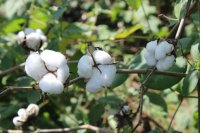
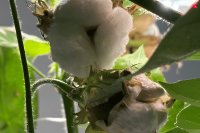
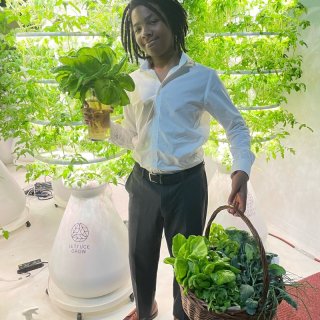
In my own research, I've grown more than 42 varieties of fruits, vegetables, and fiber crops in a secure indoor hydroponic system, including cotton. My findings show that when provided with the correct mineral balance, plants grow normally from seed to maturity, often faster and under fewer stress conditions compared to traditional fields.
Farmer tips: Myths about hydroponics vs. soil
Myth #1: Hydroponics uses chemicals; soil is "natural."
Fact: Both systems use the same essential minerals; plants don't know the source. Whether nutrients come from decomposed organic matter in soil or dissolved salts in hydroponic solution, plants absorb identical mineral ions.
Myth #2: Hydroponic produce tastes watery.
Fact: Taste depends on genetics, harvest timing, and care, not the medium. Properly managed hydroponic systems can produce crops with enhanced nutritional profiles and superior safety standards. The controlled environment allows for precise nutrient management that can actually improve flavor compounds.
Myth #3: Hydroponics is "unnatural."
Fact: Agriculture itself is human-managed. Hydroponics is simply another method. Even ancient Babylonians practiced soilless cultivation, and populations in Myanmar still cultivate on floating rafts. Modern hydroponics represents an evolution of these time-tested concepts.
Myth #4: Soil farming is always cheaper.
Fact: Hydroponics can be more cost-efficient in water-scarce or urban areas. Vertical farms can reduce transportation costs and carbon emissions by producing food closer to urban centers. The 12-month production capability and reduced pesticide needs can offset initial investment costs.
Myth #5: You must choose one or the other.
Fact: Hybrid models (soil + CEA) are emerging worldwide. Regenerative agriculture practices like cover cropping and crop rotation can be integrated with controlled environment systems to create resilient farming operations that combine the best of both approaches.
Why This Debate Matters Globally
The world's population is expected to reach 10 billion by 2050. Feeding everyone will require more than one approach. Soil farming alone cannot keep pace, especially as climate change, soil degradation, and water scarcity worsen.
CEA offers an important complement:
- Year-round production in cities and deserts. CEA systems can operate in any climate, from urban warehouses to desert environments, providing consistent food production regardless of external weather conditions.
- Reduced dependency on pesticides. Enclosed environments minimize pest and disease pressure, often eliminating the need for chemical pesticides entirely. This creates cleaner food while reducing environmental contamination.
- Controlled quality and food safety. The controlled environment allows for precise monitoring of every growth parameter, ensuring consistent quality and reducing food safety risks associated with field contamination.
Regional Applications:
In the water-scarce MENA region, CEA addresses critical challenges where more than 60% of the population lives in areas with high surface water stress. The Mediterranean region is leveraging its sunny climate for solar-powered greenhouse operations, significantly reducing greenhouse gas emissions.
But CEA alone is not the answer. Farmers must blend methods (soil, hydroponics, aquaponics, agroforestry, regenerative practices) to create resilient systems that fit local conditions.
Integrated Approaches:
- Regenerative soil practices like cover cropping and composting build long-term soil health
- Precision agriculture technologies optimize resource use in both soil and soilless systems
- Urban vertical farms complement rural soil-based production by serving local markets
Moving Forward
That late-night phone call with Dr. Nuri taught me something priceless. Even when we disagree — even when we argue about "nasty-tasting hydroponic lettuce" versus "perfect soil-grown tomatoes" — the laughter, the curiosity, and the exchange of ideas move agriculture forward.
There is no single silver bullet for food security. The future will require several viable solutions working side by side: soil-based farming to preserve tradition and biodiversity, hydroponics and CEA to push innovation and efficiency, and hybrid systems that merge the best of both worlds.
Practical Integration Examples:
- Crop rotation systems that alternate between soil and hydroponic production phases
- Integrated Pest Management (IPM) approaches that combine biological controls with physical barriers
- Agroecological practices like companion planting with pest-repellent plants such as marigolds alongside high-tech growing systems
At the end of the day, whether roots are in the soil or in a nutrient solution, plants only care about getting what they need: proper nutrition, adequate water, appropriate light, suitable temperature, and protection from pests and diseases. And if we, as farmers and innovators, can work together across methods, we will have the best chance of ensuring that every family, everywhere, has enough to eat.