

Controlled Environment Agriculture - Greenhouse
Greenhouse (GH) has the potential to be a very effective cultivation system, allowing the plants to grow in optimum conditions, protected by external stressors (e.g., temperature, etc.). A greenhouse can minimize environmental pollutants and abiotic and biotic stresses and optimize the utilization of soil, water, and energy. There are different kinds of greenhouse structures. By using greenhouse-adapted techniques for plant protection, growers can expect more sustainable production and additional payments due to their higher-quality products. There are simple soil-ground-based structures that are low-cost with medium-yield production. This kind of greenhouse structure is more common in Mediterranean countries. On the other hand, there are more modern soilless culture GHs with concrete floors, which require a high investment but aim for higher and more sustainable production. To enhance crop productivity within the greenhouse, it is necessary to adopt sustainable methods to prevent disease infections and pest infestation.
The triangle of disease concept
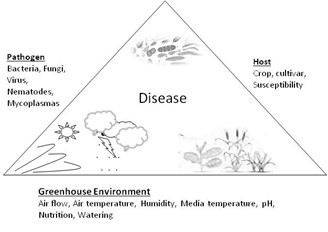 The disease triangle is a conceptual model that shows the interactions between the host/plant susceptibility, an infectious (or abiotic) agent, and the greenhouse environment. The infection can be controlled by influencing one or more of these three factors. Thus, an integrated management strategy is a holistic approach to plant protection using cultural, biological, and chemical methods.
Integrated pest and disease management (IPM)
Integrated pest and disease management (IPM) is a strategy for controlling pests and diseases (pathogens) most sustainably in the long term. That strategy uses a combination of different methods, including cultural, biological, and chemical controls, aiming to reduce pest and pathogen populations to levels that do not cause economic or environmental damage. Various pathogens (like viruses, fungi, bacteria, and phytoplasma), nematodes, and arthropod pests (such as mites, whiteflies, thrips, and aphids) are the leading causes of enormous crop losses.
Preventive strategies for keeping pests and diseases outside of a greenhouse:
The most effective way to manage diseases and pests is to prevent pathogens and insects from entering the greenhouse. IPM methods like physical barriers or sanitation practices could follow this. The following are some exclusive mechanisms:
Exclusion by the use of physical barriers
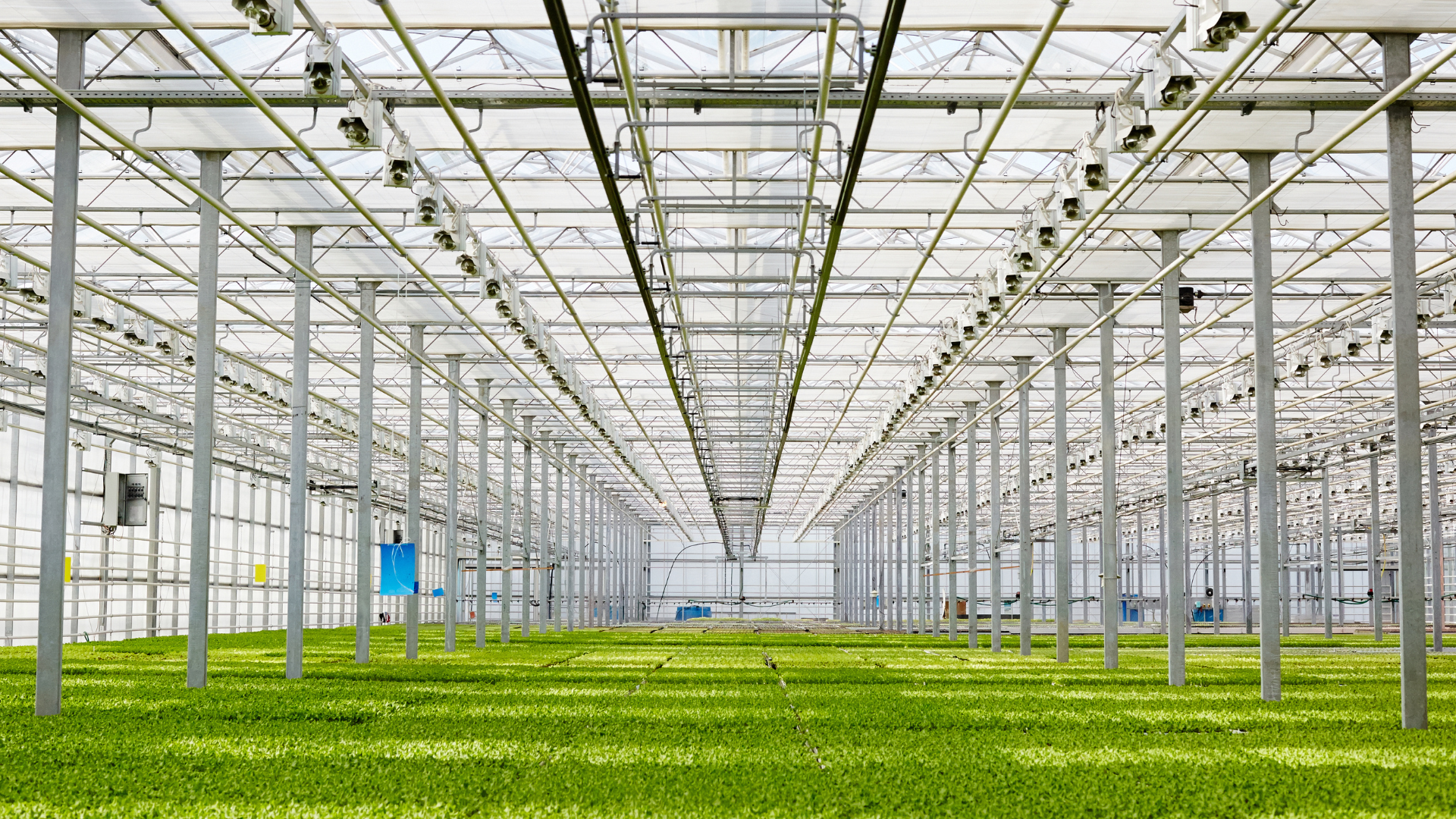
- Insect-proof nets are often used for common pests like thrips, aphids, leafminers, whiteflies, and fruit flies. Fine mesh screens function as mechanical barriers on greenhouse entrances (doors and windows) that protect the plants from pathogens, pests, and viruses they may transmit. The pores of the screens vary in size depending on the size of the pest.
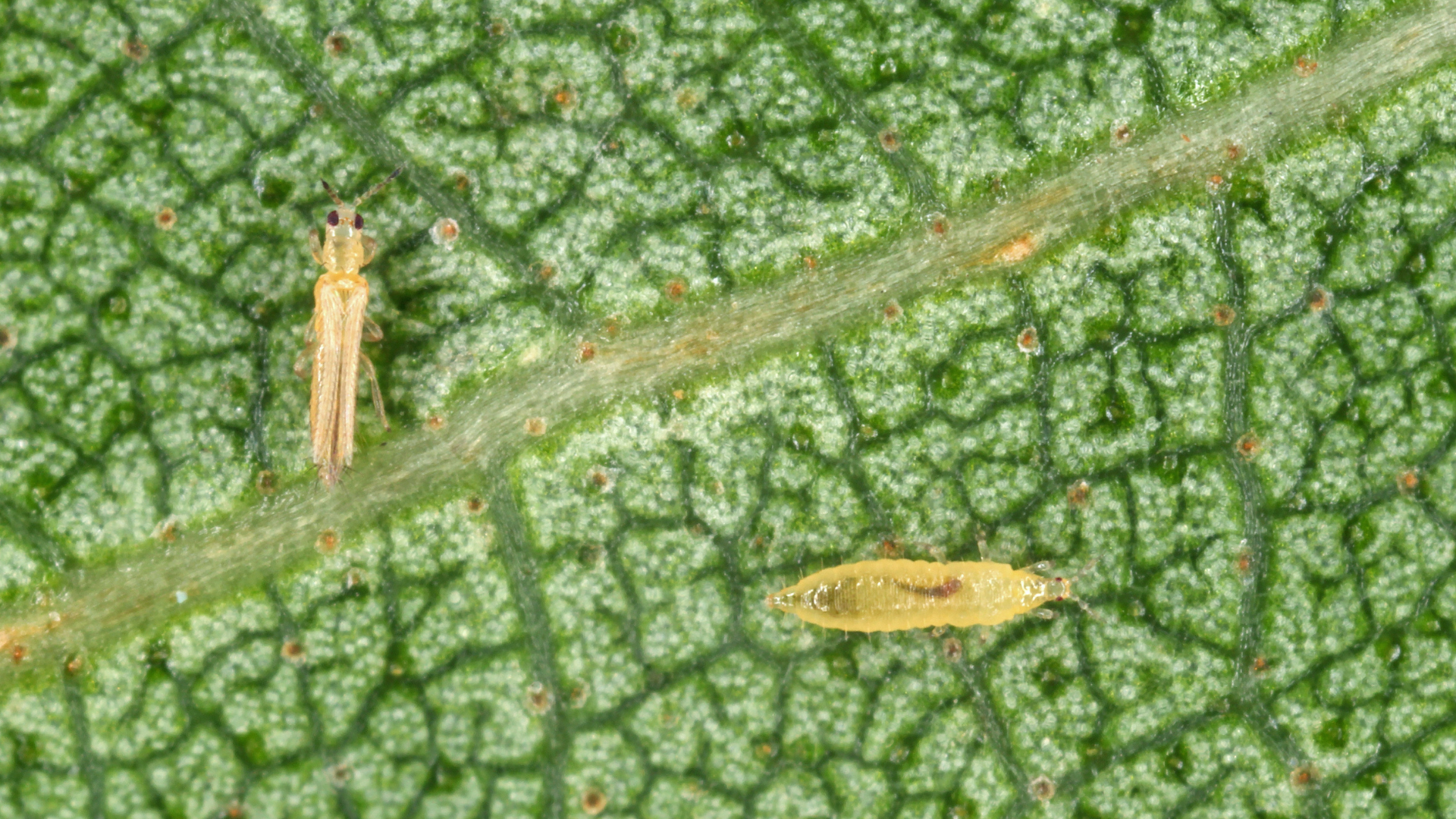
For arthropods like thrips:
- Pores smaller than 200 micrometers are the most common screen meshes.
For arthropods like whiteflies:
- Pore sizes of 10 x 20 microns are suggested for Trialeurodes vaporariorum.
- Sizes of 10 x 22 microns are suggested for Bemisia tabaci
For arthropods like leaf-miners:
- Pores size: 600 mm-diameter screening.
Using insect-proof nets is an essential technique. The most important thing is that it does not block the movement of natural predators such as Diglyphus iseaand Eretmocerus eremicus.
- Provision of middle space between the main corridor and GH rooms: By building a double door and using a screened foyer between the outside environment and the main room, we prevent the access of insects that the farmers and workers carry incautiously on the clothing or equipment.
- Use of reflective or metalized mulches: In the absence of a concrete floor, covering the soil with reflective or metalized mulches helps control weeds and prevents insects from laying their eggs in the soil by reflecting high-intensity solar UV and visible radiation.
- Use UV radiation-absorbing sheets. Some research has shown that by preventing UV wavelengths in a plastic greenhouse for tomato cultivation, there are lower populations of aphids (Aphis gossypii), greenhouse whiteflies (T. vaporariorum), thrips (Frankliniella occidentalesand and Scirtothrips dorsalis), and leaf miners (Liriomyza sp.) than grown in a conventional greenhouse.
Sanitation practices:
Sanitation involves different strategies, like the removal of infested materials or the potential sources of infestation, followed by various approaches to plant protection practices:
- For conventional GHs:
- Techniques like crop rotation are necessary.
- Practices for maintaining soil health include ensuring that weeds are removed from the soil regularly.
- Practices such as fumigation or steaming are used as specific soil treatments to sterilize the soil and encourage the growth of new seeds or seedlings.
- For soilless culture GHs:
- New sterilized hydroponic substrates (slabs, etc.).
- Disinfecting techniques for hydroponic equipment (floating tabs, canals, vertical farming racks, etc.).
- Balanced use of fertilizers.
- Propagation material:
- Use certified clean and healthy seeds to prevent diseases such as fungi, oomycetes, bacteria, viruses, viroids, and certain nematodes.
- Use healthy seedlings. It is essential to choose the correct nursery center.
- Use resistant varieties.
- Clean the area around the greenhouse to avoid invasion by pests and pathogens that survive in outdoor weeds. Some indigenous plant species provide additional sites for its persistence and multiplication, even though they a
re not directly involved in the pathogen's life cycle.
-Clean the greenhouse of previous crop residues by removing trash, old plants, and waste materials.
- After each pruning, removing the waste plant material from the greenhouse is essential to prevent the transmission of pathogens to new, healthy plants and tissues.
- Maintaining air humidity: Controlling the humidity in a greenhouse room is crucial to preventing the spread of pathogens.
- Natural Ventilation: Growers should establish side and ridge vents that run the entire length of the greenhouse structure to provide the desired temperature and airflow. This technique utilizes temperature circulation, whereby cooler air enters along the sides while warm air rises through the ridge vent. Vent size is crucial and aims to prevent humidity and the transition of pathogens' spores. Usually, the majority of these vents are operated by hand.
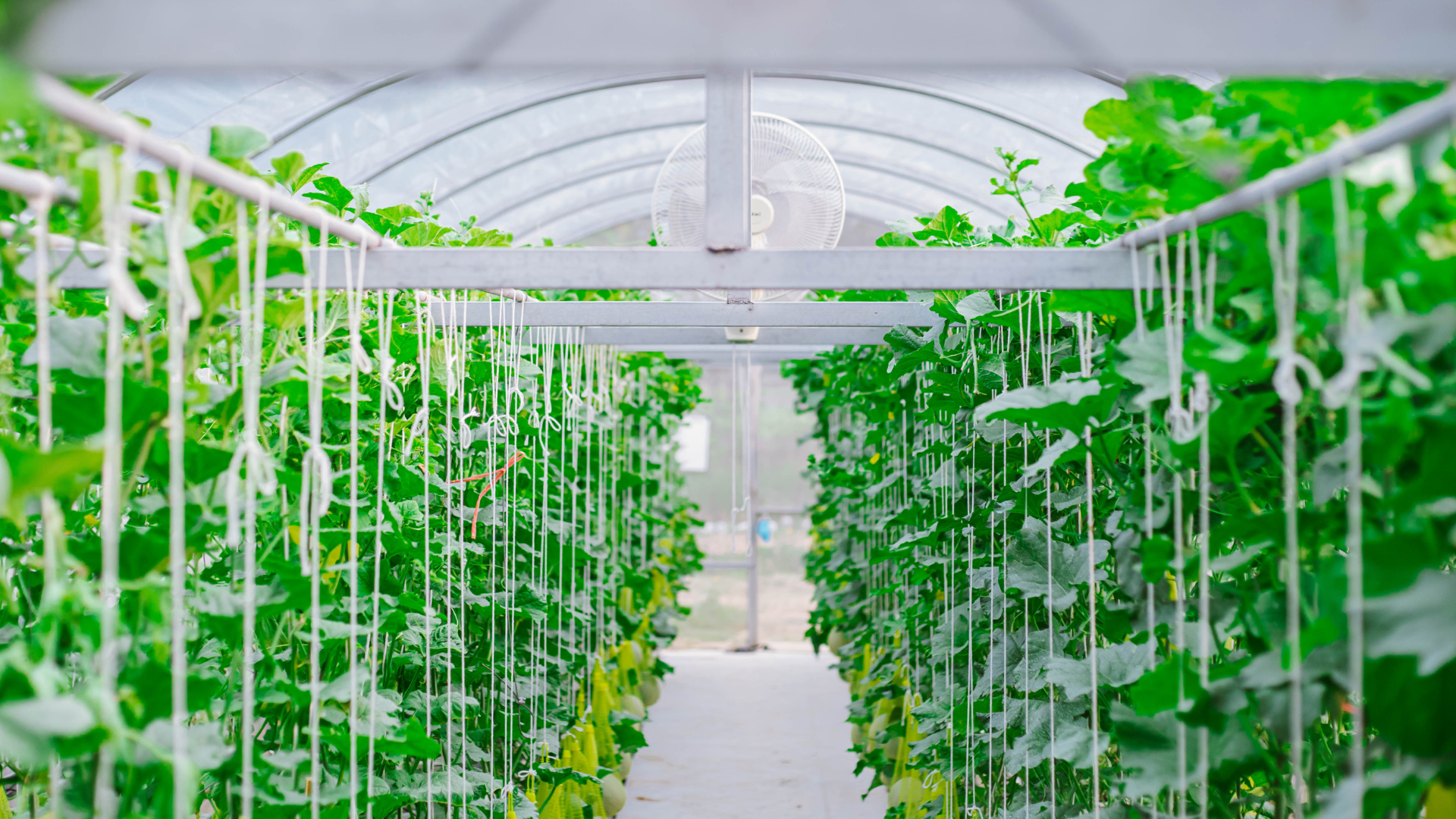
- Fan-type ventilation is used to control temperature and humidity.
- Clean or sterile soil tools, rooms, and other equipment.
- The worker should use a disinfectant solution before entering the GH.
- Prevention of smoking.
Monitoring and scouting
The frequent and careful monitoring of the plants is crucial.
- Scouting and visual observations:
For most crops grown in greenhouses, scouting techniques are crucial for estimating the pest population in a controlled setting. Daily observation is necessary to control and prevent the uniform dispersion of pests across the greenhouse. It is essential to examine the entire plant, including the soil surface, for pests. The plants must be inspected from the bottom to the top, including mature and young leaves.
- Monitoring:
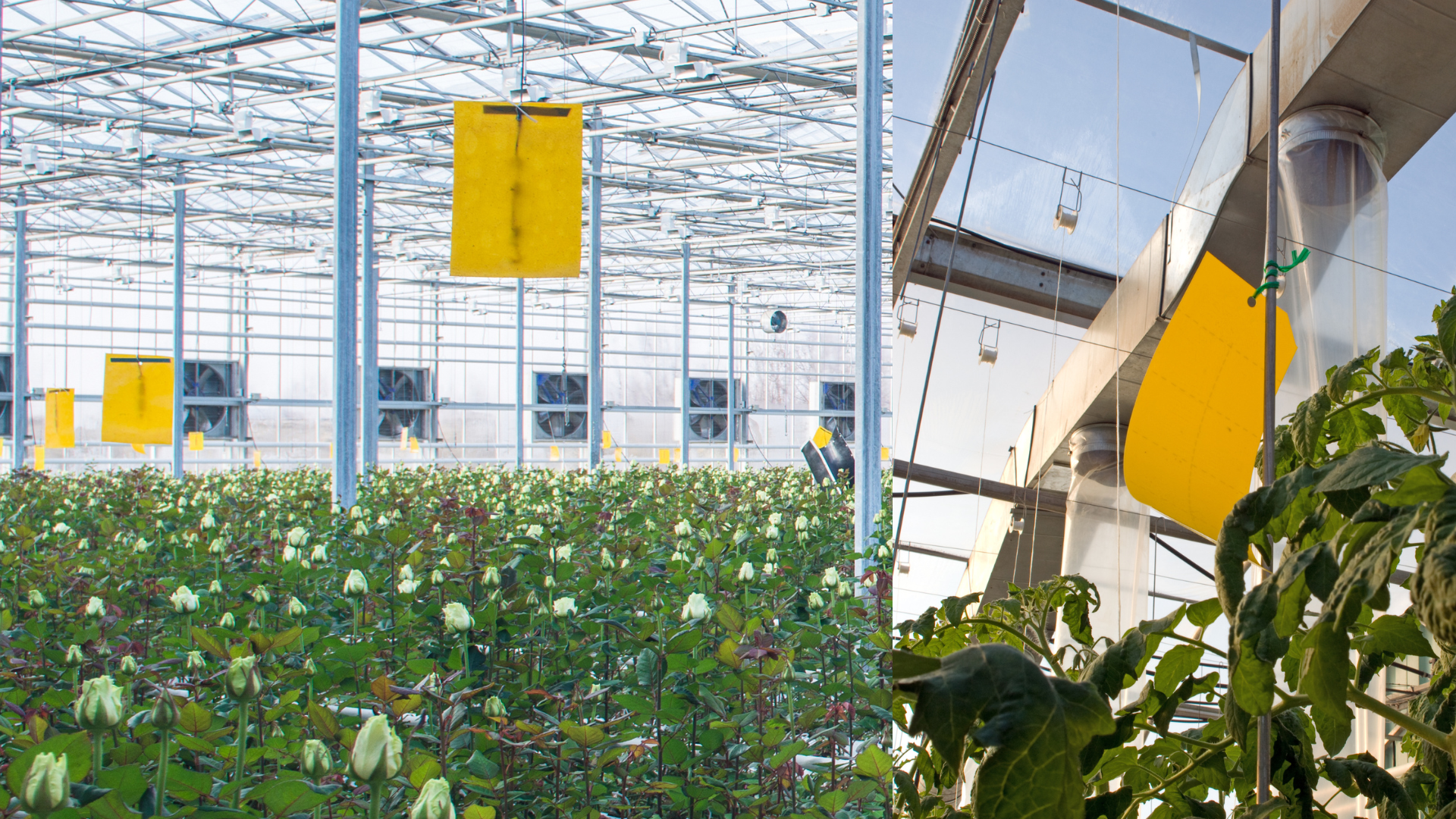
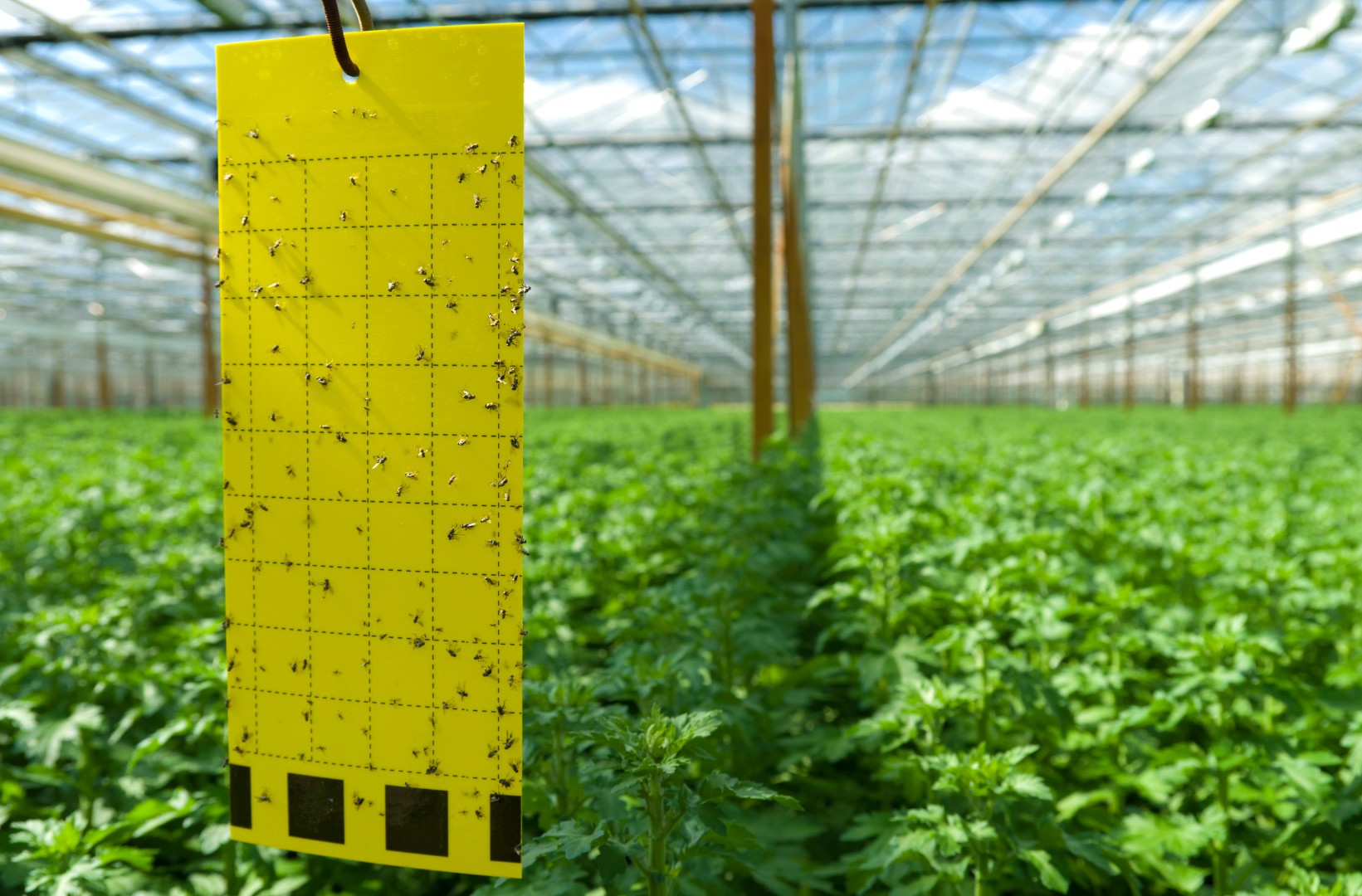
The estimation of insect populations on the plants is required. However, different colors of attractive traps are used depending on the type of pest. Some of the most common and necessary attractive traps for GH cultivation are:
- Yellow-colored sticky cards (4′′x12′′ or 8′′x12′′) are useful for adult insects such as whiteflies, aphids, thrips, and leafminers.
- Blue-colored sticky traps: can be used to catch thrips.
- Black colored sticky tape: for Lepidoptera like Tuta absoluta
- Moth Delta type traps: most common for Tuta absoluta, Phthorimaea operculell, etc.
Typically, the sticky traps hang vertically just above the crop canopy at a density of about 1–2 traps or a grid of traps per 100 m2. It is common to use a group of five or more if the goal is mass trapping. Hang the yellow sticky cards or traps by threads in the crop 4 to 6 inches above the top of the plant canopy. Cards can be pushed forward or up as the crop increases. It is a good idea to check the sticky cards twice a week. Count the whiteflies, thrips, winged aphids, or leaf miners on each card and enter the totals on the field data sheet. When caught insects cover more than 60–70% of the area, it would be important to swap the cards.
Balanced use of fertilizers
For example, increasing the NH4-N/total N ratio in the nutrient solution increases the sensitivity of plants to certain soil diseases, such as Fusarium sp. and Pythium sp. Hydroponic cultivation is more sensitive to this.
Producers have numerous options to manage these diseases and pests before they get inside the greenhouse. It's crucial to prevent insects and insect-transmitted pathogens from entering the greenhouse. The available options for growers to manage pathogens and pests once they enter the greenhouse are limited. It is necessary to create and widely adopt integrated methods that use botanicals, microbes, and biological control agents with minimal use of chemical pesticides that are safe for the environment and do not harm non-target organisms. Specific laboratory control measures are required for soil-borne pathogens, foliar pathogens, bacteria, viruses, phytoplasmas, etc. Harmful insects like aphids, whiteflies, mites, and thrips are just a few of the pests of greenhouse crops that need special control measures due to their potential to spread viruses to plants. To manage diseases caused by pathogens and insects, greenhouse growers must employ as many Integrated Pest Management (IPM) exclusion methods as possible.
References:
- Ayalew, G. (2016). Comparison of biological and chemical control methods against whiteflies and thrips in green house herbs in the central rift valley of Ethiopia. Asian Res Publ Netw J Agric Biol Sci, 11(1), 9-17.
- Barreca, F. (2024). Sustainability in Food Production: A High-Efficiency Offshore Greenhouse. Agronomy, 14(3), 518.
- Baxevanou, C., Fidaros, D., Bartzanas, T., & Kittas, C. (2018). Yearly numerical evaluation of greenhouse cover materials. Computers and electronics in agriculture, 149, 54-70.
- Bethke, J. A., & Paine, T. D. (1991). Screen whole size and barriers for exclusion of insect pests of glasshouse crops. Journal of Entomological Science, 26(1), 169-177.
- Boiteau, G., & Vernon, R. S. (2001). Physical barriers for the control of insect pests. In Physical control methods in plant protection(pp. 224-247). Berlin, Heidelberg: Springer Berlin Heidelberg.
- Choab, N., Allouhi, A., El Maakoul, A., Kousksou, T., Saadeddine, S., & Jamil, A. (2019). Review on greenhouse microclimate and application: Design parameters, thermal modeling and simulation, climate controlling technologies. Solar Energy, 191, 109-137.
- Galanti, R., & Lutgen, H. (2021). Greenhouse and nursery sanitation. Tools, equipment, workers, and visitors. Trop. Agric. Hum. Resour. Univ. Hawaii Manoa. Extension Publication OF-54, 1-7.
- Goncharova, N., Van der Vlist, A., & Verstegen, J. A. A. M. (2004, August). Changes in the Horticulture Sector in the Netherlands. In XV International Symposium on Horticultural Economics and Management 655 (pp. 319-331).
- Jarvis, W. R. (1989). Managing diseases in greenhouse crops. Plant Disease, 73(3), 190-194.
- Marcelis, L. F. M., Raaphorst, M., Heuvelink, E., & Bakker, M. (2007, October). Climate and yield in a closed greenhouse. In International Symposium on High Technology for Greenhouse System Management: Greensys2007 801(pp. 1083-1092).
- Papaioannou, C., Katsoulas, N., Maletsika, P., Siomos, A., & Kittas, C. (2012). Effects of a UV-absorbing greenhouse covering film on tomato yield and quality. Spanish Journal of Agricultural Research, 10(4), 959-966.
- Pokhrel, A. (2021). Role of individual components of disease triangle in disease development: a review. Plant Pathol. Microbiol, 12, 573.
- Reddy, P. P., & Reddy, P. P. (2016). Selective pesticides in IPM. Sustainable crop protection under protected cultivation, 121-131.
- Sabir, N., Deka, S., Tanwar, R. K., Singh, B., Raj, S., Adhikari, S., & Sindhu, S. S. (2012). Comparative evaluation of pesticides and biorationals against key pests of greenhouse chrysanthemum. Indian Journal of Horticulture, 69(01), 101-105.
- Savvas, D., & Gruda, N. (2018). Application of soilless culture technologies in the modern greenhouse industry—A review. J. Hortic. Sci, 83(5), 280-293.
- Scholthof, K. B. G. (2007). The disease triangle: pathogens, the environment and society. Nature Reviews Microbiology, 5(2), 152-156.
- Topliff, L. A., Schnelle, M. A., Pinkston, K. N., & von Broembsen, S. (2003). IPM-Scouting and monitoring for pests in commercial greenhouses. Oklahoma Cooperative Extension Service.
- Van Lenteren, J. C., & Nicot, P. C. (2020). Integrated pest management methods and considerations concerning implementation in greenhouses. Integrated Pest and Disease Management in Greenhouse Crops, 177-193.
Greek literature:
- Σάββας Δ. (2016). Γενική λαχανοκομία. Εκδόσεις Πεδίο, ISBN: 978-960-546-782-1.
- Σάββας Δ. (2012).Καλλιέργειες εκτός εδάφους: υδροπονία, υποστρώματα. Eκδόσεις ΑγροΤύπος ISBN: 978-960-7667-44-1.
Further reading
Pest, Disease and Weed Management
Natural Pollination in greenhouse crops using bumblebees and other beneficial insects
Biological control of greenhouse pests using natural enemies
Important Beneficial Insects as Natural Enemies of Crop Pests
Integrated management of Pythium in Hydroponic Lettuce
Integrated Pest Management (IPM): Sustainable Solutions for Healthy Crops and Ecosystems
10 Advanced Tips for Effective Crop Monitoring and Early Pest and Pathogen Detection