Beyond Pesticides: Rethinking Agriculture for a Sustainable and Pollinator-Friendly Future
Modern agriculture has greatly benefited from the use of pesticides, fertilizers, and mechanization. These tools have helped increase food production, reduce pest infestations, and support global food supply chains. But as fields grow greener, ecosystems grow quieter, and farmers bear silent costs for even their lives.
Behind the convenience and quick wins that synthetic pesticides offer, lies a deeper story, one of declining soil fertility, struggling pollinators, poisoned farm workers, and shrinking biodiversity. Smallholder farmers, who make up over 84% of the world's farms and produce nearly a third of global food crops, are at the heart of this complex reality. Yet, they often lack access to safe, sustainable alternatives.
It’s time we shift from fighting nature to working with it. This is where agroecology comes in, not just as an alternative but as a pathway to sustainable and transformational Agriculture.
The Promise and Peril of Pesticides
Pesticides, including herbicides, insecticides, fungicides, and rodenticides, are commonly employed to protect crops against pests and weeds. In Nigeria, widely used chemicals such as Glyphosate, Paraquat, Furadan (Carbofuran), and Chlorpyrifos are routinely applied on farms, especially among smallholder farmers.
While effective in the short term, the long-term effects are raising concerns. A study found that over 70% of Nigerian farmers used pesticides without having any training on personal protective equipment (PPE) or safety practices, exposing them to significant health risks (Akinneye et al., 2020).
Residues from these chemicals persist on crops and in the environment. Over 60% of soil samples from vegetable farms in southwestern Nigeria contained unsafe levels of Glyphosate, raising concerns about food safety, groundwater contamination, and damage to soil biodiversity (Adeleye & Ogunmodede, 2022). Non-target species, including pollinators and aquatic life, are also affected, disrupting ecological balance.
Invisible Danger: The Human Cost
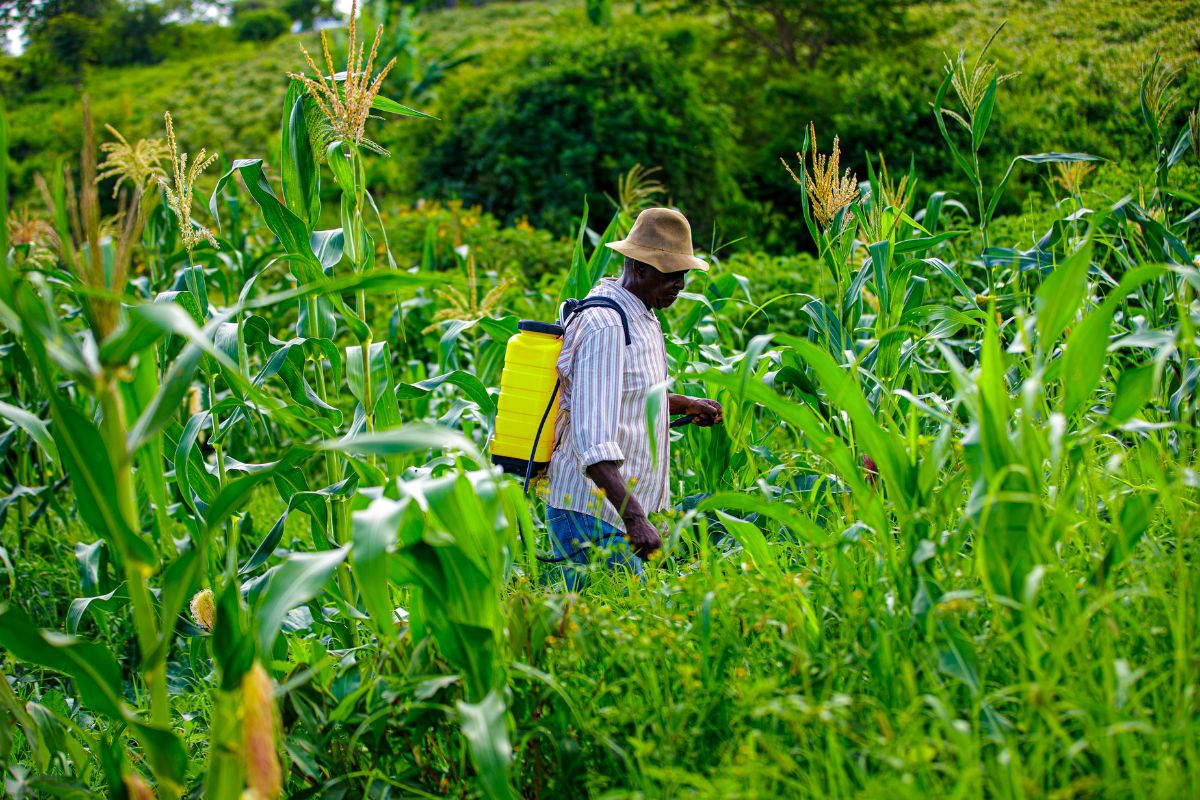
The people most exposed to pesticides, such as farmers and farm workers, are often unaware of the long-term damage these chemicals can cause. Exposure can occur through inhalation, skin absorption, or accidental ingestion, especially when Personal Protective Equipment (PPE) is unavailable or unused.
Acute effects include vomiting, dizziness, skin irritation, blurred vision, and respiratory issues. More concerning are the chronic effects, which develop over time and include cancer (carcinogenesis), congenital disabilities (teratogenesis), and permanent genetic damage (mutagenesis).
Pesticides such as organophosphates (e.g., Malathion, Dimethoate) and carbamates (e.g., Carbaryl, Carbofuran) have high toxicity levels and can cause neurological damage even at low doses over extended periods.
Unfortunately, many farmers are unaware of re-entry periods, harvest intervals, and safe storage practices.
The Environmental Ripple Effect
Pesticide residues don’t just disappear. They seep into the soil, contaminate water bodies, and leave behind long-lasting traces on crops. Some, like organochlorines, can persist in the environment for years, accumulating in the food chain and harming both wildlife and humans.
Beyond chemical pollution, pesticide use disrupts the delicate balance of ecosystems. Non-target organisms, including beneficial insects, birds, and soil microorganisms, are often casualties. This not only weakens biodiversity but can also destroy natural pest control mechanisms, further increasing chemical dependence.
Wild Pollinators: Silent Victims of Chemical Farming
One of the most devastating but overlooked impacts of pesticide use is the harm caused to wild pollinators. These include native bees, butterflies, beetles, moths, and flies that play a critical role in the success of over 75% of food crops.
Studies have shown that wild pollinators are often more effective than honeybees in improving crop yields. Yet their populations are in decline, largely due to habitat loss, pesticide exposure, and monoculture farming.
For example, intensive fertilizer use in the UK led to a fivefold decrease in flower diversity and a 50% drop in pollinator insect populations. Wild bees and butterflies foraging on treated fields have been found with residues of fungicides, insecticides, and herbicides, affecting their health and pollination efficiency.
When we lose pollinators, we risk losing the ability to produce many fruits, vegetables, and nuts that require their help.
Re-imagining Pest Control: Sustainable Alternatives
If pesticides are a necessary evil, then alternatives must offer both protection and sustainability. Fortunately, several eco-friendly solutions are proving effective around the world:
1. Nature-Based Pest Management: Pest-Resistant Plants and IPM
Rather than eliminate pests entirely , which is an often impossible task, Integrated Pest Management (IPM) focuses on balancing pest populations using ecological methods:
- Crop rotation and inter-cropping
- Natural predators like ladybugs feeding on aphids
2. Bio-pesticides and Natural Pest Controllers
Natural products like neem oil, Bacillus thuringiensis (Bt), and other bio-control agents offer effective pest management with minimal harm to non-target organisms. These can replace synthetic chemicals while preserving soil and water health.
3. Insect Growth Regulators (IGRs)
IGRs such as methoprene or hydroprene mimic insect hormones, disrupting pest development without harming humans, animals, or pollinators.
Farmers can also adopt practices like crop rotation to break pest life cycles, as well as companion planting, such as maize intercropped with legumes.
4. Insect-repellent plants, like marigolds
A core strength of agroecology lies in using biological control agents and insect-resistant plants to naturally deter pests. One of the most effective examples is the use of marigold (Tagetes spp.), a humble yet powerful flower known for its pest-repellent properties.
Marigolds release natural compounds that repel harmful insects such as aphids, nematodes, and whiteflies when planted alongside crops. Their scent deters pests from approaching the main crop, reducing the need for synthetic insecticides. Additionally, marigolds attract beneficial predatory insects, like ladybugs and parasitic wasps, that feed on pests.
Incorporating marigolds into intercropping systems or border planting is a low-cost, eco-friendly strategy ideal for smallholder farmers. It fits seamlessly into Integrated Pest Management (IPM) approaches and has been shown to enhance the overall health of agroecosystems.
Beyond marigolds, farmers can also strategically include other pest-resistant or companion plants like basil, lemongrass, garlic, and mint to improve pest control and biodiversity on their farms.
Also, push-pull Technology, such as maize intercropped with Desmodium and bordered by Napier grass, can help smallholder farmers control stem borers while enriching the soil.
5. Pollinator-Friendly Farming
Native flower strips also called prairie strips planted along field edges provide food and shelter for pollinators. These have been shown to reduce soil erosion by 95% and significantly boost pollinator numbers.
Preserving natural habitats and reducing pesticide use ensures wild pollinators continue their essential work. Also diversified cropping systems also create a healthier, more balanced ecosystem.
Towards a Greener Future: What Can Be Done?
Transitioning away from harmful pesticides isn't just a farmer's responsibility; it requires coordinated action, which includes but is not limited to:
- Farmers need training on safe pesticide use, identification of fake products, and adoption of sustainable practices.
- Consumers can support organic and IPM-based produce, creating market demand for safer food.
- Policymakers should regulate highly toxic chemicals, subsidize biopesticides, and invest in farmer education.
- Researchers and students can play a role by exploring Indigenous alternatives and engaging in awareness campaigns.
Conclusion: Healing the Land and Its People
Agriculture must feed the world, but not at the cost of its caregivers or the planet. Rethinking pesticide use is not about abandoning crop protection; it’s about protecting life in all its forms. By embracing eco-friendly alternatives and respecting the role of wild pollinators, we can create food systems that are productive, resilient, and just.
References
1. Ali, I. I. (2024). The Role of Agroecology in Food Security in Developing Countries. International Journal of Advanced Natural Sciences and Engineering Researches, 8(9), 455–462.
2. Geiger, F., Bengtsson, J., Berendse, F., Weisser, W.W., Emmerson, M., Morales, M.B., Ceryngier, P., Liira, J., Tscharntke, T., Winqvist, C. and Eggers, S., 2010. Persistent negative effects of pesticides on biodiversity and biological control potential on European farmland. Proceedings of the Royal Society B: Biological Sciences, 277(1688), pp.717-726.
3. Akinneye, J.O., Adesuyi, A.A., & Olufemi, B.A. (2020). Knowledge and Practices of Pesticide Use among Vegetable Farmers in South-West Nigeria. International Journal of Environmental Health Research, 30(5), 537–549.
4. Adeleye, A.O., & Ogunmodede, A. (2022). Persistence and Bioaccumulation of Glyphosate Residues in Nigerian Farmlands. Journal of Agricultural and Food Chemistry, 70(1), 89–97.
Navdanya. Community Seed Banks
5. Javed, M. A., Arif, M. S., Ali, S., et al. (2022).
Biopesticides and Their Role in Sustainable Agriculture: A Review.
Biological Control, 176, 105082.
6. Dutta, S. et al. (2017).
Tagetes spp. as a Companion Plant: A Natural Tool for Sustainable Insect Pest Management.
International Journal of Agricultural Research, Innovation and Technology, 7(1), 67–73.
NDC Partnership. (2020). Farmer Managed Natural Regeneration in Niger
7. Khan, Z. R., Midega, C. A. O., Amudavi, D. M., Hassanali, A., & Pickett, J. A. (2008).
"On-farm evaluation of the 'push–pull' technology for the control of stemborers and striga weed on maize in western Kenya."
Field Crops Research, 106(3), 224–233.
Further reading
Guidelines for safe and effective use of chemicals in agriculture for crop protection
Greenhouse Whitefly (Trialeurodes vaporariorum): Biology, Damage & Control Methods
Harnessing the Power of Natural Enemies: Biological Control in Almond Tree IPM
Prescribed Fires: A Farmer's Introduction to Controlled Burning
Pest and Weed Management in Lemon Orchards
What is Glyphosate (RoundUp)? Understanding Its Role, Controversies and Alternatives
Bioherbicides: Sustainable Alternatives to Chemical Herbicides
Management Strategies to Avoid Insecticide Resistance
The problem of pesticides overuse and the need for change
The Push-Pull Strategy: Controlling Stemborers and Striga to Increase Corn Yields