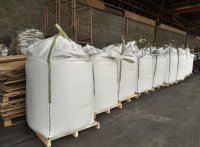


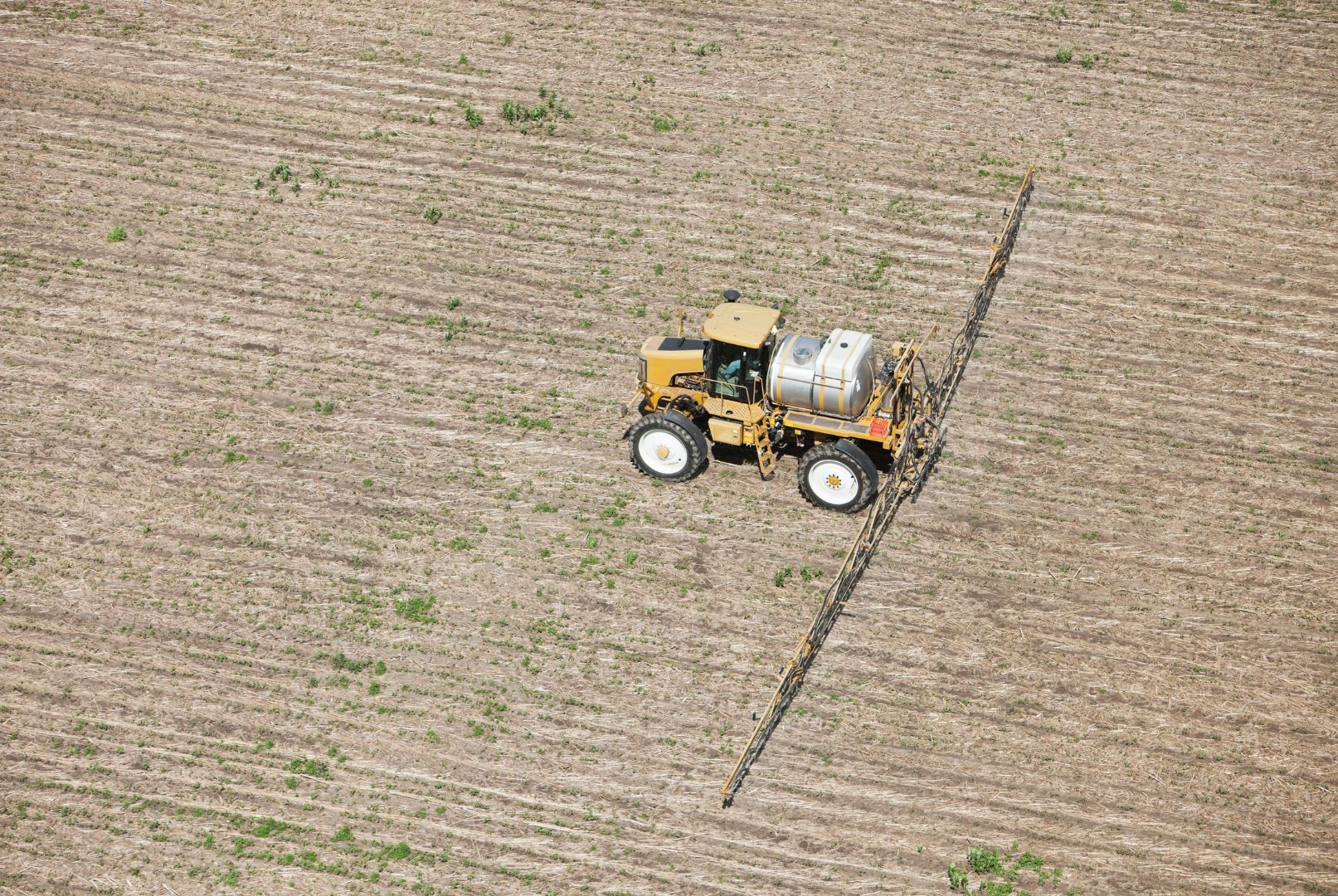
RoundUp is a well-known systemic herbicide with glyphosate as its primary active ingredient. Originally developed by Monsanto (now owned by Bayer), RoundUp has significantly contributed to the company's multi-billion-dollar profits. In 2014, it accounted for one-third of Monsanto's sales, with profits surging by €1 billion compared to the previous year. RoundUp reached its peak popularity in 1996 when Monsanto introduced the genetically modified RoundUp-Ready crops, resistant to the herbicide, leading to its widespread use worldwide. In the United States alone, the specific herbicide is applied to over 298 million acres annually.
What is Glyphosate and Its Chemical Synthesis?
Glyphosate is a synthetic compound that mimics the amino acid glycine. It is water-soluble and its chemical behavior (solubility) is highly pH-dependent. The synthesis of glyphosate involves the reaction of phosphorus trichloride with formaldehyde, followed by hydrolysis. This process yields a phosphonic acid, which reacts with glycine to produce glyphosate. The name "glyphosate" is derived from its components: glycine and phosphonic acid. First synthesized in 1950 by Swiss chemist Henry Martin, glyphosate was later patented by Stauffer in 1964 as a chelating agent. Monsanto's chemists discovered its herbicidal properties in 1970, and it was marketed as RoundUp in 1974.
How Does Glyphosate Work?
Glyphosate disrupts essential biochemical pathways in plants, particularly those involving amino acids like phenylalanine, tyrosine, and tryptophan, which are crucial for plant growth. It does this by inhibiting the enzyme 5-enolpyruvylshikimate-3-phosphate synthase (EPSPS), which plays a key role in these pathways. The interference leads to the accumulation of shikimic acid in plant tissues, causing necrosis and, ultimately, plant death. Glyphosate is a non-selective, broad-spectrum, systemic herbicide with little or no soil residue. Most farmers prefer to apply it to their fields before sowing their crops to manage the diverse population of weeds, with more precise applications between tree/crop rows or in Round-Up-ready crops.
Though the plant's death is swift, visible symptoms like yellowing leaves may take days to appear. Glyphosate is typically applied to well-grown plants, where it is absorbed through the foliage and transported throughout the plant, leading to its destruction.
How Safe is RoundUp?
RoundUp is a widely used herbicide favored for its affordability and effectiveness. The introduction of RoundUp Ready seeds in 1996, which produce genetically modified crops resistant to glyphosate, significantly boosted its popularity. However, its safety has been a subject of ongoing debate. In 2022, the Environmental Protection Agency (EPA) stated that, when used as advised (by the production company – check the product label), glyphosate poses no significant risk to human health and the environment. This view is supported by several international organizations, including the European Food Safety Authority (EFSA), the World Health Organization (WHO), and the producing company, which cited over 800 studies affirming glyphosate's safety.
On the other hand, there are studies and evidence suggesting that the use of glyphosate may come with some risks. Critics argue that glyphosate can accumulate in plants, necessitating higher doses over time, which may lead to adverse effects on human health and the environment. For instance, studies have shown that glyphosate contaminates water and is toxic to various aquatic organisms, causing biochemical, physiological, and behavioral changes. More specifically, it has been found that the active compound can disturb soil health and biology by harming soil microbiome and earthworms.
The extensive use of RoundUp-ready crops and the constant and incautious use of the product have led to the development of glyphosate-resistant weed species. Until today, more than 48 weed species have been documented to have evolved glyphosate resistance. Some widely spread and common weeds that glyphosate resistance has been reported are the Amaranthus palmeri (Palmer Amaranth) (in many crops such as cotton, soybean, and corn), Ambrosia artemisiifolia (Common Ragweed), Lolium rigidum (Rigid Ryegrass), Conyza canadensis (Horseweed or Marestail) (a very hard to control weed), Ambrosia trifida (Giant Ragweed), Sorghum halepense (Johnsongrass), Amaranthus tuberculatus (Waterhemp), Eleusine indica (Goosegrass), Echinochloa crus-galli (Barnyardgrass), Chenopodium album (Common Lambsquarters) and many more (check local lists). For the management of such weeds and reducing the risk of herbicide resistance development, farmers are advised to adopt an integrated weed management strategy with a variety of control measures (presented in the following section.
Concerns about glyphosate's impact on human health have also been raised. The International Agency for Research on Cancer (IARC) classified glyphosate as a probable human carcinogen in 2015, linking it to cancer in humans, tumor formation in animals, and DNA damage. A study by the University of Washington in 2019 found a 41% increased risk of non-Hodgkin's lymphoma associated with heavy glyphosate exposure. These findings have led to over 11,000 lawsuits against Bayer, with the company paying out €11 billion in damages so far.
However, the controversy surrounding this active compound and its importance for agricultural production is leading to continued renewal of approval for use (with the latest approval in the European Union in 2023). However, some European countries, including Austria, France, Germany, and Greece, have imposed bans or restrictions on its use. Elsewhere, countries like Sri Lanka, Argentina, Colombia, and Brazil have also implemented bans, albeit with some exceptions.
Precautions When Using Glyphosate
To minimize risks when using the herbicide (and other similar agrochemicals), the Agency for Toxic Substances and Disease Registry (ATSDR) advises keeping children and animals away from treated areas, using recommended dosages, and wearing protective gear such as long-sleeved shirts, long pants, goggles, and a P95/P100 mask. After applying glyphosate, farmers and workers are advised to avoid the treated area for 24 hours and wash their clothing separately. If exposure occurs, you are advised to wash your skin and eyes thoroughly and seek medical assistance immediately. Symptoms of exposure may include nausea, vomiting, respiratory distress, and skin irritation. Washing fruits and vegetables thoroughly is essential to remove any potential glyphosate residues.
Best Practices and Alternatives of Glyphosate for Efficient Weed Management
To decrease the risk of herbicide resistance development and environmental pollution. Farmers are advised to avoid making more than two glyphosate applications to the same field over two years. At the same time, mixing glyphosate with other herbicides, especially during burndown treatments, ensures that weeds are exposed to multiple control methods simultaneously. This strategy should be used before planting and during the growing season. Additionally, applying a residual herbicide before glyphosate can extend weed control, reducing the number of glyphosate applications needed. Finally, alternating between Roundup Ready crops and conventional crops is crucial. This rotation disrupts the life cycles of weeds, reducing their chances of developing resistance.
For those seeking alternatives to glyphosate (to reduce or avoid its use but still efficiently control the weeds), there are numerous alternatives to choose from. Organic herbicides based on vinegar, essential oils, soap salts, iron, and corn gluten are viable options.
Incorporating cultivation and other mechanical weed management practices, such as tillage or mowing, can physically remove weeds and reduce reliance on chemical controls. At the same time, a false seedbed technique can be very helpful for pre-planting management. For fields under a no-tillage system, farmers can use cover crops and crop rotation to efficiently control weed populations. Solarization could also be an efficient way to control weeds between crop seasons, especially during the warmest periods of the year.
Farmers should scout fields regularly to identify weed species and monitor resistance development. Mapping weed populations allows for targeted interventions and helps adjust management strategies promptly.
Conclusion
Glyphosate has played a significant role in modern agriculture, but its safety remains a hotly debated issue. While some studies and authorities deem it safe when used correctly, others point to potential health and environmental risks. As the debate continues, it's crucial for consumers and farmers to stay informed, take appropriate precautions, and consider alternative weed control methods.
References
- Appendix B (PDF) – epa.gov
- Are There Alternatives to Glyphosate for Weed Control in Landscapes – Ncsu.
- Herbicide Glyphosate: Toxicity and Microbial Degradation
- Glyphosate - Food Safety - European Commission.
- Evolution of Glyphosate-Resistant Weeds
- GWC (PDF) – Purdue
- 4+1 αλήθειες για το «πιθανώς καρκινογόνο» ζιζανιοκτόνο της Monsanto — Greenpeace Ελλάδα
- Γλυφοσάτη - Βικιπαίδεια
- Roundup to Zizanioktono Pou Dixazei Tin Eiropi Kai I Thesi Tis Elladas – Newmoney
- Roundup: Controversy, Health Risks & Industry Failures
- Glyphosate: Health Risks and Cancer Concerns
- Effects of the herbicide glyphosate on fish from embryos to adults: a review addressing behavior patterns and mechanisms behind them
- Η Αυστρία γίνεται η πρώτη χώρα της ΕΕ που απαγορεύει τη γλυφοσάτη — BankingNews
- Glyfosati Ygeia Apagoreusi – Euronews
- I Meiosi Ton Fitofarmakon Kai I Stratigiki Apo to Agroktima Sto Piato – Euronews
- Diplasiastike I Chrisi Fytofarmakon Apo to Symfona Me Nea Ekthesi – Cibum
Further reading
Phytotoxicity: Environmental & Health Hazards of Herbicides
Bioherbicides: Sustainable Alternatives to Chemical Herbicides
Hormesis: How Low-Dose Insecticides Can Enhance Pest Control
Solarization: A Comprehensive Guide to an Eco-Friendly Soil Treatment