Overview
Hydroponics, the practice of growing plants without soil, is emerging as one of the most effective tools for addressing hunger, improving sustainability, and supporting household-level economic independence. From ancient innovations in Mesopotamia to modern urban farms, this approach demonstrates how science, simplicity, and self-reliance can transform food systems.
An underestimated opportunity in the fight against hunger
Global hunger continues to grow, and millions of hardworking families face difficulty accessing fresh and affordable food. According to the United Nations Food and Agriculture Organization (FAO, 2023), more than 735 million people worldwide experience food insecurity. Many of them live in cities, where high food prices, limited space, and a lack of arable land make traditional farming difficult or impossible.
This reality motivated me to dedicate my work to promoting hydroponics. It is a cultivation method that uses water enriched with nutrients to grow plants in places where soil is either unavailable or unreliable. To me, hydroponics represents more than a technique. It is a pathway to self-sufficiency, economic resilience, and healthier living. It allows individuals to control what they eat and how they earn, regardless of their environment.
The origins of hydroponics
The earliest known example of soil-less agriculture appears in the stories surrounding the Hanging Gardens of Babylon, one of the Seven Wonders of the Ancient World. Built around 600 BCE in ancient Mesopotamia, the gardens were described as layered terraces filled with flourishing plants in an otherwise arid landscape.
Historical accounts suggest that engineers used pulley systems and screw pumps to lift water from the Euphrates River. Channels then guided this water across the terraces, providing nutrients directly to the roots. Although they did not use modern terminology, the principles resemble today’s hydroponic systems. The gardens showed that even ancient civilizations understood how to combine engineering and plant science to overcome environmental limitations.
From inspiration to action: The story of Diane in Brooklyn
One of the most inspiring stories I have encountered comes from Diane, a follower from Brooklyn, New York. She spent two years watching my online posts about hydroponics, food sustainability, and simple systems that families can build at home. During that time, she worked as a home health aide and struggled to stretch her income to cover rent, bills, and food for her children.
Instead of accepting her situation, she decided to begin growing food at home. She started with a small setup for microgreens and bok choy, using a simple hydroponic unit in her apartment. Within weeks, she harvested her first greens. What began as a practical decision soon became a source of pride and hope.
“My kids don’t get cash from me because I don’t make enough money,” she told me. “That is why I started farming. I love it.”
Today, Diane uses hydroponics to feed her family and is preparing to sell her produce to restaurants and small shops in her area. Her business, Brooklyn Green Farm, is becoming a local example of how families with limited space and limited means can reclaim food production.
Why hydroponics represents the future of sustainable food production
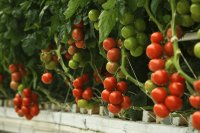
Through years of research and field work, I have learned that hydroponics is one of the most efficient farming systems available. Plants need light, water, nutrients, and oxygen, not soil. By delivering these elements directly to the root zone, hydroponic systems create ideal conditions for growth.
The benefits are clear and measurable:
- Water use is reduced by nearly 90%compared to soil-based farming
- Plants grow 30 to 50% faster with balanced nutrient distribution
- Production is possible year-round in almost any climate
- Pest pressure is lower, and crops grow in cleaner, pesticide-free environments
For cities with limited land and rising food insecurity, hydroponics is one of the most practical solutions available.
My work in hydroponic education and community empowerment
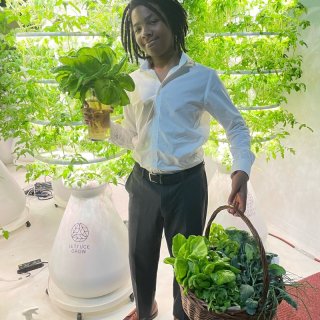
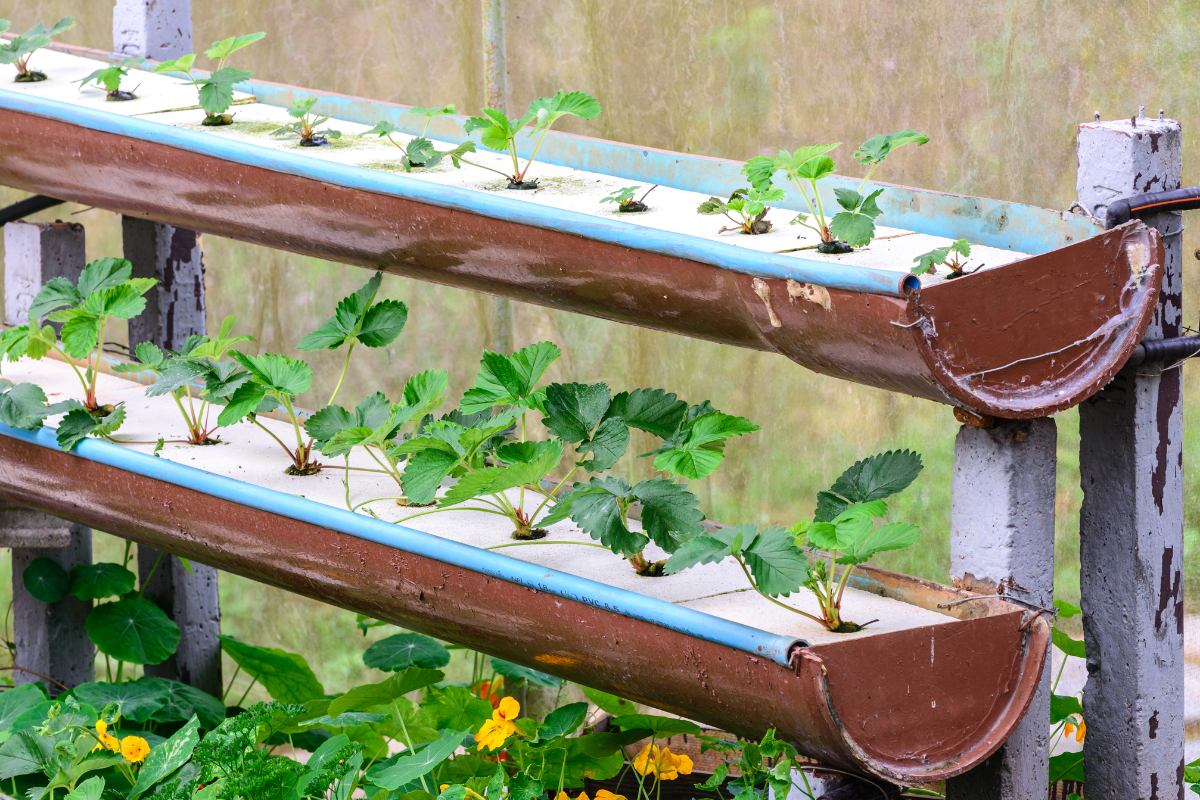
My mission has always been to make hydroponics accessible to everyone. I have spent years showing people how to build low-cost systems using materials that can be found locally. Through community projects, online teaching, and hands-on demonstrations, I have helped families and small groups in the United States, the Caribbean, Africa, and Asia learn how to produce fresh food for themselves.
I have witnessed people move from dependency to self-reliance. Some began growing food to feed their families and eventually expanded into small businesses that supply neighbors, local shops, or school programs.
When people learn to grow their own food, they remove the uncertainty of relying on external supply chains and unstable markets.
How hydroponics is used around the world
Hydroponics is becoming a global tool for food sovereignty and economic resilience.
- In Kenya, young growers are establishing hydroponic greenhouses that supply vegetables to schools and markets.
- In India, vertical farms near Mumbai are shortening supply chains and reducing transport emissions.
- In the Middle East, hydroponic systems allow reliable food production in desert conditions.
- Throughout the Caribbean, families use small home systems to replace expensive imported produce.
These examples show that hydroponics is more than a trend. It is a practical solution for communities facing climate stress, rising prices, and limited space.
The economic opportunity behind small-scale hydroponics
Hydroponic farming is not only a tool for food security. It offers clear economic benefits. Crops such as microgreens, herbs, and lettuces reach maturity quickly and have strong market demand. In many urban areas, a pound of microgreens sells for 12 to 18 dollars, depending on quality and variety.
For people like Diane, this income can help cover bills, support families, or even grow into a full business. The model is simple, accessible, and scalable.
Empowerment comes from knowledge and the ability to create value from small spaces.
How hydroponics reduces risks linked to food recalls
Food recalls remain a major challenge in global trade. Many of them are linked to mycotoxins, fungal contamination, or pesticide residues that exceed legal limits. Hydroponics addresses these issues by creating a clean environment where contamination risks are significantly lower.
1. Prevention of mycotoxin contamination
Mycotoxins such as Ochratoxin A develop when crops are exposed to fungi like Aspergillus during poor drying or storage.
Hydroponics reduces this risk because:
- There is no soil that can harbor fungal spores
- Humidity and airflow can be controlled precisely
- Water is sanitized through filtration and ultraviolet or ozone treatments
- Harvest and post-harvest handling are immediate and controlled
As a result, the conditions that encourage mycotoxin formation are nearly eliminated.
2. Reduction of pesticide residue violations
Traditional farms often depend on herbicides and broad-spectrum pesticides. These chemicals can leave residues that exceed maximum residue limits, especially in markets with strict regulations.
Hydroponic systems reduce these risks because:
- There are no weeds and no need for herbicides
- Pest intrusion is limited, allowing biological controls instead of chemical sprays
- Plants grow under optimal conditions and are less susceptible to stress-related pest outbreaks
- There is no pre-harvest interval to manage
This creates produce that complies naturally with strict regulations, including updated EU limits on compounds such as acetamiprid.
3. Improved traceability and compliance
Field-grown crops often mix sources during storage and transport, which complicates traceability.
Hydroponics solves this through:
• Digital monitoring of nutrient levels, temperature, humidity, and harvest dates
• Isolated batches that allow rapid identification of any issue
This improves compliance and reduces the scale of potential recalls.
Taking control of food production
Hydroponics is more than a farming method. It is a movement built around independence, resilience, and community strength. From my own experience to stories like Diane’s in Brooklyn, I have seen how this approach can change lives and restore confidence.
We can feed our families, support our local communities, and create new opportunities for income. At the same time, we conserve water, cut waste, and reduce our dependence on unpredictable supply chains.
When we grow our own food, we nourish both our bodies and our independence.
References
Food and Agriculture Organization (FAO). The State of Food Security and Nutrition in the World 2023