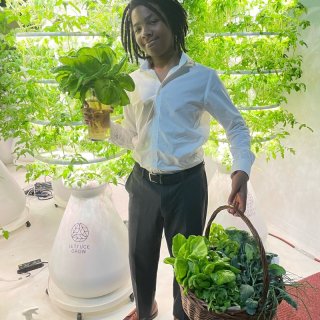
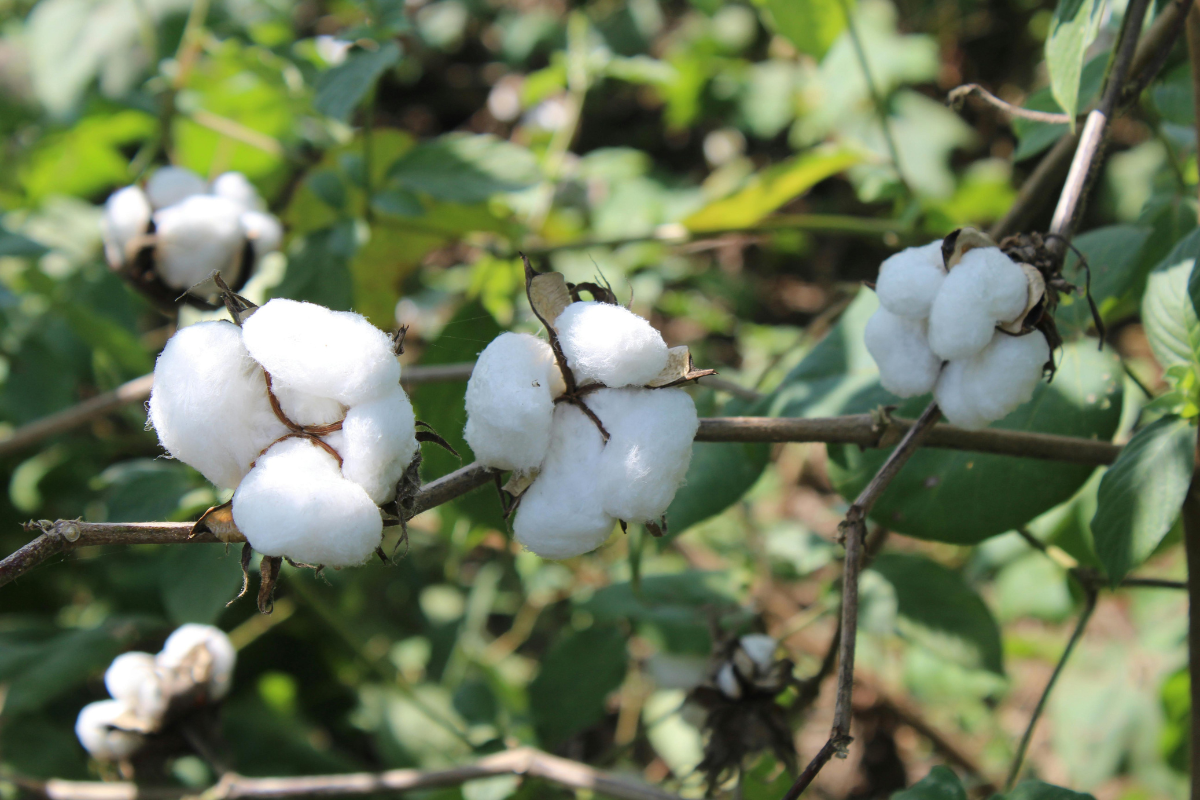
Before I set out to grow anything in hydroponics, I take time to understand its history, where it began, what it needed, and why people kept choosing it again and again. Cotton is not just a crop. It is a thread that keeps showing up whenever humans build trade, cities, and everyday comfort.
A plant that followed people across oceans
Cotton shows up early in places that had two things in common: warmth and skilled hands.
The earliest chapter of cotton cultivation begins in the sun-drenched coastal regions of Peru around 6000–5000 BCE. Here, the Gossypium barbadense species, what we now call long-staple cotton, was first domesticated by ancient peoples who recognized its potential for creating breathable, comfortable textiles in warm climates. Archaeological evidence, including remarkably preserved cloth fragments and seeds, tells us these early farmers were cultivating not just white cotton but naturally colored varieties, creating textiles that would survive millennia in desert tombs.
Meanwhile, on the other side of the world, another cotton story was unfolding. By 3000–2000 BCE, the Indus Valley civilization had mastered Gossypium arboreum, the Old World cotton species. Archaeological sites reveal sophisticated spun and woven fabrics, evidence of a thriving textile trade that would eventually connect continents.
The Egyptians and peoples of the Near East adopted cotton alongside their traditional linen around 2000–1000 BCE. Through expanding trade networks, cotton textiles began circulating across the ancient world, each culture adding its own techniques and traditions to the growing global cotton story.
The global exchange of cotton
When Alexander the Great invaded India in 327 BCE, he didn't just bring back military conquests. He introduced cotton to the Greek world and, eventually, to Europe. This moment marked cotton's transformation from a regional crop to a global commodity.
Across the Sahara and Indian Ocean trade routes, cotton spread through Africa during the first millennium BCE. African communities integrated Gossypium arboreum into their local textile traditions, creating unique weaving patterns that influence fashion to this day.
In the Americas, pre-Columbian societies had independently cultivated both G. barbadense and G. hirsutum across Mesoamerica and South America. These varieties supported diverse Indigenous textile practices, from the intricate patterns of Andean weavers to the soft fabrics of Caribbean cultures.
The 16th–18th centuries witnessed European powers introducing cotton cultivation worldwide through colonial systems. This period transformed cotton from a valued textile into an engine of global commerce, setting the stage for the industrial revolution that would change everything.
The species behind the story
Cotton’s global success today rests on a few main species:
Upland cotton
Gossypium hirsutum is the workhorse. It dominates global production because it performs well across many environments and fits modern supply chains.
Long-staple cotton
Gossypium barbadense is grown for premium fiber quality. This is where names like Pima and Egyptian cotton enter the conversation.
Old World cottons
Gossypium arboreum and Gossypium herbaceum still matter in parts of Asia and Africa, often tied to local traditions and specific growing conditions.
When cotton became a machine
Cotton was always valuable, but the scale changed dramatically once processing and manufacturing sped up.
In 1793, Eli Whitney's cotton gin revolutionized cotton processing by mechanically separating fibers from seeds. This single invention made short-staple cotton (G. hirsutum) immensely profitable, fueling massive expansion in the American South and fundamentally altering global trade patterns.
The 19th–20th centuries brought mechanized harvesting, selective breeding, and eventually biotechnology. Bt cotton, engineered for resistance to bollworms, and herbicide-tolerant varieties transformed cotton into one of the world's most important cash crops, with global production reaching unprecedented levels.
This is the part of cotton’s history that feels less like a travelogue and more like a factory floor. And it is exactly why cotton is now being reimagined again, this time inside controlled environments.
Cotton production today in one glance
If you want a quick snapshot of where cotton is grown at scale, USDA data for 2024/2025 (480 lb bales) puts the top producers as: China (about 32 million bales), India (about 24 million), and Brazil (about 17 million).
Those numbers matter for one reason: they show how cotton is tied to climate risk, water, pests, labor, and policy across very different systems. Which brings me back to the question that started this whole thing for me.
If cotton has always adapted to new tools and new trade routes, what happens when you remove soil from the equation?
Cotton in hydroponics feels like a plot twist
Inside a biosecure facility, cotton stops behaving like the “open field” crop we think we know. The usual pest narrative changes first.
In a controlled, isolated system, many pests simply do not have an easy way in. That does not mean risk disappears, but it shifts from emergency spraying to system design: hygiene, exclusion, monitoring, and decision-making that happens early, not late.
And once pest pressure changes, everything else starts to feel negotiable too:
- nutrient delivery becomes measurable, repeatable, adjustable
- water use becomes trackable, often far more efficient than field conditions
- growth becomes less dependent on the “good year versus bad year” lottery
This is not magic. It is control. And cotton, historically, has always followed control.
What innovations change, and what they do not
Cotton in controlled environments does not erase agronomy. It compresses feedback loops.
In the field, you can do everything “right” and still lose weeks to weather, pest flights, or timing mismatches. In controlled environments, the grower pays for stability, but gets faster learning in return. That can be especially useful for research trials, breeding work, and exploring new production models.
At the same time, it is worth staying honest about limits. Cotton is not lettuce. It has a longer cycle, a bigger canopy, and a different economic logic. So the goal is not to replace cotton fields overnight. The realistic goal is to open a new lane: contained production, rapid experimentation, and higher control where it matters.
From ancient fields to Mediterranean greenhouses
The Mediterranean region offers compelling examples of cotton's high-tech future. In Greece, Controlled Environment Agriculture is becoming an increasingly vital tool for addressing agricultural challenges such as water scarcity, climate change, and limited arable land. With a rocky and dry landscape, traditional farming methods struggle to thrive in many areas, making CEA particularly valuable.
Spain's advanced greenhouse systems and Italy's growing vertical farming projects demonstrate how CEA is proving to be a transformative force throughout the region. These innovations address pressing challenges like water scarcity, climate change, and food security while creating new economic opportunities.
A note on pest management across countries
Even in open-field cotton, there is no single “best” pest strategy. Systems differ.
International approaches to cotton pest management reflect local conditions and priorities. India and China employ Integrated Pest Management (IPM) using pheromone traps, beneficial insects, and targeted pesticides. Australia maintains strict biosecurity and quarantine controls, while Brazil combines chemical and biological strategies, including widespread Bt cotton adoption.
These diverse programs highlight the importance of locally tailored pest management based on environmental and agricultural conditions—a principle that hydroponic systems address through their inherent pest reduction advantages.
Closing
When I read cotton’s history, I do not see a straight line. I see reinvention.
Cotton moved from hand-spun thread to industrial engine because humans kept building new systems around it. Hydroponics and controlled environments are simply the newest systems we are testing.
And if cotton has taught us anything over 8,000 years, it is this: the crop does not just grow in a field. It grows inside the choices we make about how farming should work.