
Common mistakes and how to avoid them
Winter can be a challenging season for indoor gardeners. Shorter days, dry indoor air, and fluctuating temperatures all affect plant growth and well-being. Understanding how these factors influence your houseplants and avoiding a few common mistakes can make the difference between stressed and thriving plants during the colder months.
The science behind winter plant stress
As temperatures drop and daylight hours decrease, most houseplants naturally slow their growth. Research shows that this seasonal change triggers a reduction in metabolic activity, meaning plants absorb less water and nutrients and produce less new growth.
At the same time, indoor heating systems lower humidity and warm the air, creating a much drier environment. Together, these factors change how plants handle water, light, and nutrients—their care requirements differ considerably from those in spring and summer.
Mistake 1: Keeping summer watering habits
One of the most common winter mistakes is watering as frequently as in summer. When plants grow slowly, they absorb less water. If the soil stays constantly wet, roots can suffocate and rot.
Agronomists emphasize checking soil moisture before watering. A simple method is the finger test: insert your finger one to two inches into the soil—if it feels dry at that depth, it’s time to water. Many plants only need watering every two weeks or even once a month during the winter.
Mistake 2: Inadequate light management
Light deficiency represents another critical winter challenge that many home gardeners fail to address appropriately. During the winter, the sun sits lower in the sky and daylight hours are shorter. Even the sunniest windows provide much less light than in summer. This reduction often causes more problems than any other winter factor.
When plants don't receive enough light, they may stretch toward windows (a process called etiolation), lose lower leaves, or appear weak and pale. Moving plants closer to brighter windows, ideally those facing south or west, can help. For homes with limited sunlight, LED grow lights offer an effective supplement. Position plants near light sources, but protect them from cold window drafts.
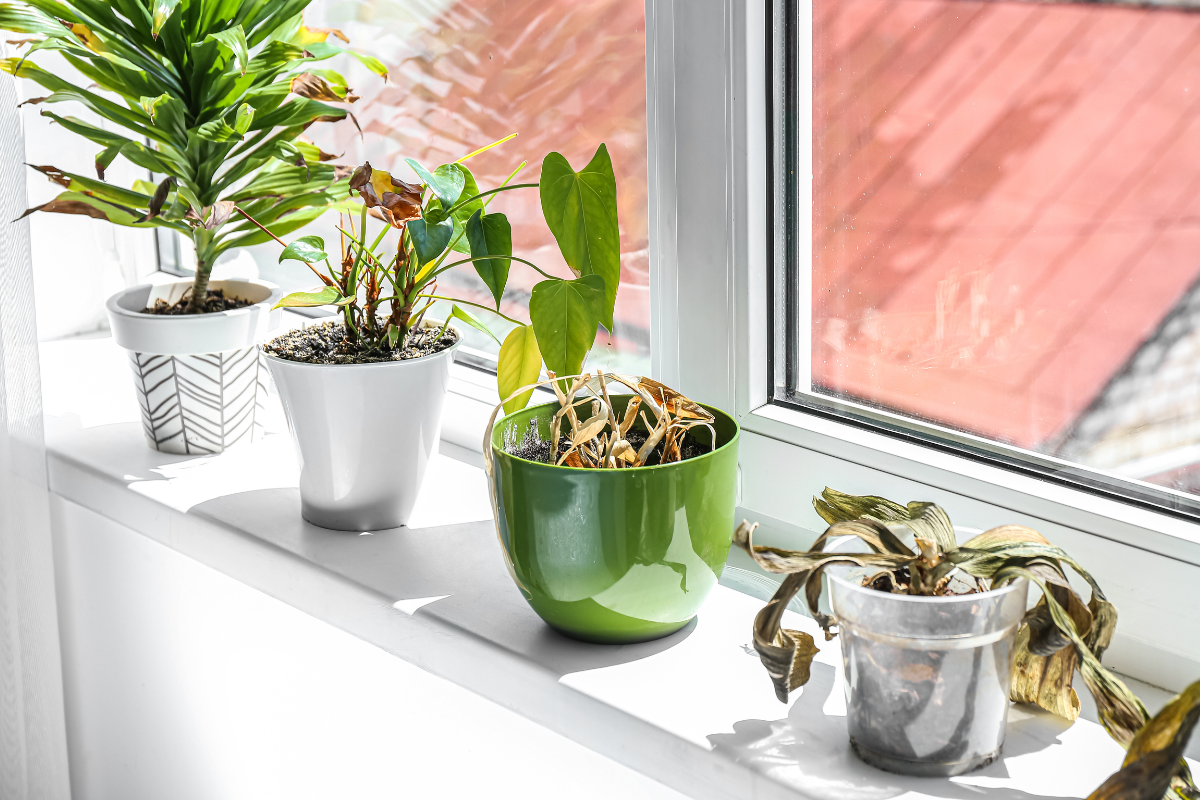
Mistake 3: Inappropriate humidity levels
Indoor heating often reduces humidity to below 20 percent, while most houseplants prefer 40–50 percent. Low humidity can cause leaf edges to brown and increase pest problems.
It is a very common practice to mist leaves with water to increase humidity, but this is not enough. Better options include:
- Grouping plants so their transpiration increases local humidity,
- Using a humidifier near plant areas, or
- Growing humidity-loving plants in terrariums or glass enclosures.
Bathrooms with natural light can also be suitable spots for plants that require higher moisture levels.
Mistake 4: Fertilizing during dormancy
One of the most counterintuitive winter care mistakes involves continuing regular fertilization schedules. Fertilizing dormant houseplants can cause significant damage rather than providing benefits. During winter's reduced growth periods, plants cannot effectively utilize additional nutrients, leading to salt accumulation in soil and potential root burn.
The symptoms of winter over-fertilization mirror those of several other problems, making diagnosis challenging for home gardeners. Plants may exhibit browning or yellowing leaf tips, premature leaf drop, stunted growth, and wilting despite adequate moisture levels. In severe cases, roots become blackened and damaged, and crusty fertilizer residues appear on the soil surface.
If fertilization is necessary, use a highly diluted solution and apply sparingly. In most cases, it’s best to stop fertilizing entirely from late November through February. Plants will naturally resume stronger growth and nutrient uptake when light and temperature increase in spring.
Mistake 5: Ignoring temperature fluctuations
Houseplants generally prefer stable indoor temperatures between 18–24°C (65–75°F) during the day, with a slight drop at night. However, winter heating and drafts can create extremes that stress plants.
Plants should not be placed near radiators, heating vents, or fireplaces, as this can dry them out. Conversely, keep them away from cold windows or doors, where temperatures can suddenly drop. Using a small digital thermometer helps monitor the actual temperature around your plants rather than relying on the home thermostat.
Mistake 6: Neglecting cleanliness and pest control
Warm, dry indoor air favors pests such as spider mites, one of the most common winter issues. At the same time, dust can build up on leaves, reducing light absorption and providing hiding places for insects.
Regularly wiping leaves with a damp cloth helps keep them clean and makes it easier to spot early pest infestations. For larger collections, giving plants a gentle lukewarm shower can remove both dust and small pests. Yellow sticky traps can also help monitor flying insects, like fungus gnats or whiteflies.
Creating a successful winter care routine
Winter houseplant care focuses on maintaining health rather than encouraging growth. The key lies in observation and moderation rather than frequent watering or feeding. Checking plants weekly for moisture, pests, and environmental changes allows for timely adjustments.
Keeping notes on watering dates, room conditions, and plant responses can also help refine your care routine for future winters.
By understanding that dormancy is a natural phase—not a sign of decline—you can avoid overreacting with unnecessary interventions. Plants that receive proper winter care typically emerge stronger in the spring, ready to grow and flower more vigorously.
Caring for your houseplants throughout the winter is an investment in their long-term health. With a few mindful adjustments, your indoor garden can remain vibrant, resilient, and ready to flourish when warmer days return.