Stone Fruit Market Digest | Week 24, 2026
In Week 24, the Mediterranean stone fruit season is in full swing, with high volumes flowing into European markets. After a month of falling prices, the Spanish campaign is finding a floor: cherries barely moved, while nectarines, yellow peaches and plums all firmed. At the German market, the cherry campaign broadened, with Italian, German, Turkish and North Macedonian fruit joining Spanish and Greek supply. At Rungis, French stone fruit is now firmly established, while Greek domestic fruit eased a little further.
This report covers fresh fruit activity in four major EU wholesale markets: Mercamadrid (Spain), Rungis International Market (France), the Federal Office for Agriculture and Food (BLE) market reporting system (Germany), and Athens Central Market (OKAA) in Greece.
Stay up to date with our weekly Fresh Fruit Market Digests
Mercamadrid prices flatten
Spanish stone fruit prices steadied this week after four straight weeks of decline. Cherries barely moved, easing to €4.00/kg (from €4.09), and apricots and red peaches dropped to €2.00/kg each.
Surprisingly, some categories increased in price. Yellow-flesh nectarines firmed to €2.70/kg (from €2.53), yellow peaches to €3.30/kg, and purple plums to €3.10/kg. After the steep price declines since mid-May, it seems that this market is finding its price floor.
.jpg)
Cherry supply widens
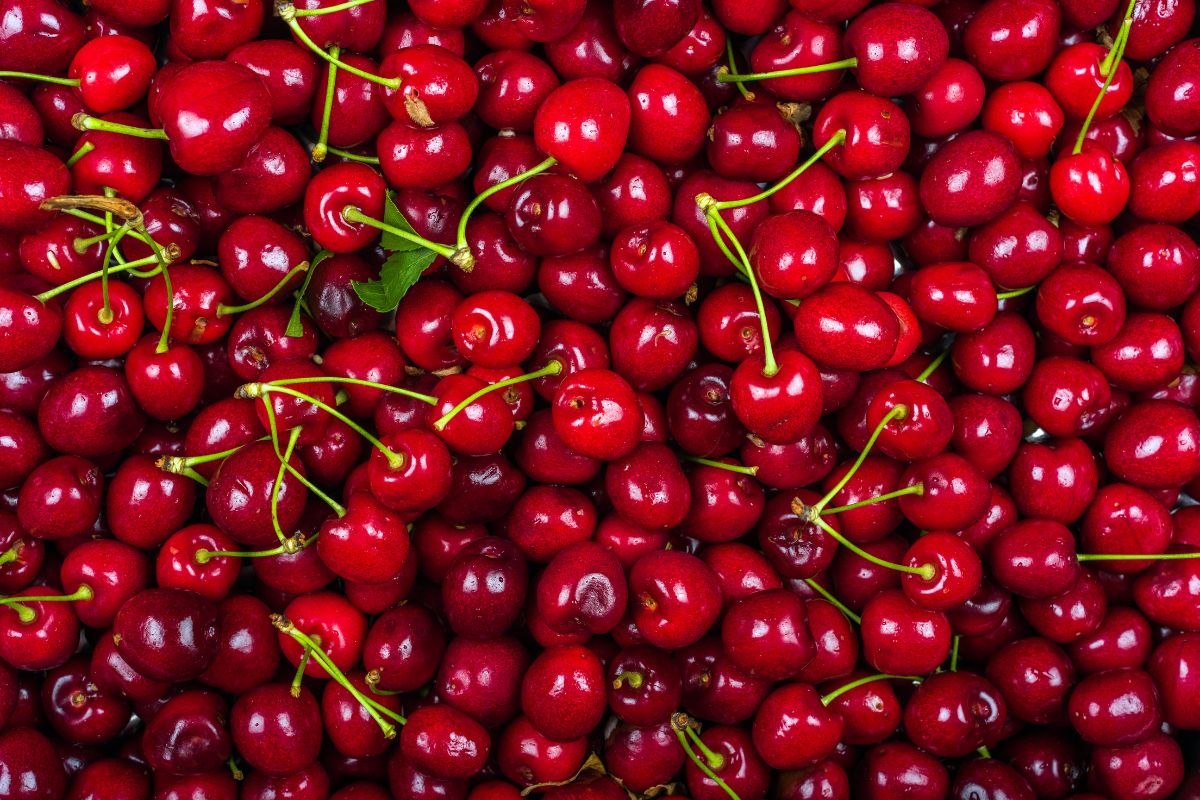
Cherry prices stabilized in Week 24 and origins broadened, indicating increased production across various regions.
At Mercamadrid, the most frequent price held at €4.00/kg (range €1.50–7.00), with Cáceres supplying 358 tons and Zaragoza 291 tons. Greece (OKAA, Athens) held domestic cherries at €2.50/kg, about half the year-ago level.
The real movement was in Germany. Spanish supply still dominated, and Greek-origin firmed to €8.23/kg, but BLE reported brand-new arrivals from Italy, Germany, Turkey, North Macedonia and France. Large-fruited Spanish cherries were priced at €8.61/kg, Italian at €9.68/kg and the first German Regina near €9.60/kg, while small-fruited Spanish cherries eased to €5.56/kg. Quality was uneven across the board (colour, calibre and taste all flagged), so the price range widened in both directions. Exclusive lots cost more than the week before.
France (Rungis, week 23) saw heavy cherry volumes push prices down across all varieties; the premium Rainier variety eased from its recent high, while the common French cherry held stable but high.
.jpg)
Cherry prices have stopped decreasing this week. The German market now has Italian, German and Balkan supply. The premium tier stays firm.
Rungis sees premiums
At Rungis, French stone fruit is now available alongside Spanish fruit and commands the highest prices. Demand grew through the week, but disappointing taste quality kept a lid on prices, which eased slightly. French apricots have overtaken Spanish apricots on price, around €3.50/kg, but easing during the week. French peaches and nectarines command a premium of €4.42/kg, while Spanish peaches trade at just €2.38/kg.
.jpg)
Apricots
Apricot prices continued to decrease in Week 24. At Mercamadrid, common apricots fell to €2.00/kg (€1.00–6.00), mainly supplied by Murcia, although less this week with 213 tons.
In Greece, domestic early apricots decreased to about €1.50–1.70/kg.
At Rungis, French apricots overtook Spanish apricots at the start of the week at €3.50/kg while Spanish apricots eased to €2.00–2.30/kg.
In Germany, the BLE had French apricots priced at €4.34/kg, Italian apricots at €3.65/kg, Greek apricots at €3.45/kg, Spanish apricots at €3.38/kg, and Turkish apricots at €2.85/kg. The first domestic German apricots opened the season, but quality was uneven, while AA/AAA calibres saw good demand and increased prices.
Peaches and nectarines
At Mercamadrid, early red peaches decreased in price to €2.00/kg, while yellow peaches rose to €3.30/kg, and yellow-flesh nectarines rose to €2.70/kg, both up for the second week in a row.
In Greece, the domestic peach prices lowered to €1.70–2.00/kg.
At Rungis, French and Spanish peaches and nectarines are in high volume. French peaches and nectarines traded at €4.42/kg, much higher than Spanish peaches at €2.38/kg, due to reported lower taste quality.
In Germany, Spanish yellow-flesh stone fruit continued to lead but eased in price from last week: Nectarines AA were priced at €3.81/kg, extra-large peaches at €4.17/kg. Meanwhile, French peaches AA were priced at €4.19 and nectarines AA at €4.38. Italian AA fruit arrived and took the premium tier, priced at €4.25–4.27. Small Spanish fruit was discounted to as little as €1.50/kg.
Flat peaches and flat nectarines
Spanish flat fruit volumes were down this week, which in turn lowered prices. Paraguayos (flat peaches) at Mercamadrid decreased in price to €2.50/kg on 170 tons.
In Germany, Spanish Paraguayos were priced at €4.04/kg (down from €4.50), while platerinas (flat nectarines) from Spain were priced at €5.20/kg, down sharply from €6.11. Turkish platerinas arrived this week, priced at €4.25/kg.
Plums
The plum season is slowly augmenting. Mercamadrid’s domestic purple plums firmed to €3.10/kg (from €3.01) on 134 tons from Badajoz and Murcia.
For the first time this season, Spanish plums reached German wholesale markets, quoted at €3.91/kg.
Key factors to keep an eye on
- Potential price floor forming: Mercamadrid’s month-long slide has flattened this week, with nectarines, yellow peaches and plums increasing in price. If the price stays flat or continues to increase, the seasonal low has already been reached.
- Cherries boom: The German market saw Spanish, Greek, Italian, German, Turkish, and North Macedonian cherries last week. High French domestic cherry volumes lowered Rungis prices. Supply is now arriving from a variety of destinations, but the quality is uneven, so the premium for clean large-calibre fruit is widening.
- Premium trends: French and Italian peaches and nectarines are now commanding premium prices at both Rungis and the German market, while Spanish fruit is easing beneath them.
- Quality inconsistency: Uneven colour, calibre, and taste have been flagged this week for cherries and apricots across origins, and Rungis reports a disappointing peach taste.
- Plums slowly expanding: Spanish plums increased in price this week and reached German wholesale for the first time this season.
Buy and sell fresh fruit on the Wikifarmer Marketplace and track real-time prices with Wikifarmer’s Price Insights
Disclaimer: The information provided on this website, including market prices, insights, and projections, is for general informational purposes only. While we strive to ensure accuracy and timeliness, we make no guarantees regarding the completeness, reliability, or suitability of the information presented. Users are solely responsible for independently verifying the data and assessing its relevance to their specific circumstances before making any decisions. Wikifarmer and its operators shall not be held liable for any losses, damages, or consequences arising from the use of the information provided herein.