
Hibiscus is one of the most spectacular flowering plants you can grow, with large trumpet-shaped blooms in colours that catch the eye instantly. You'll find it in gardens, on balconies, in courtyards and along streets.
There's a confusion, though, that trips up a lot of people. Two very different plants are sold under the name "hibiscus", and they need completely different care. On one side is tropical hibiscus (Hibiscus rosa-sinensis), tender and cold-sensitive, usually grown in a container and needing protection in winter. On the other is hardy hibiscus or Rose of Sharon (Hibiscus syriacus), a deciduous shrub that stays in the garden all year and shrugs off the cold. Before you care for your hibiscus, it's worth knowing which of the two you have, because everything else depends on it.
This guide covers how to tell the two apart and how to care for each one properly, from watering and feeding to pruning and winter protection.
The types of hibiscus
Before anything else, work out which of the two plants you have, because their care differs significantly. The genus Hibiscus includes more than 200 species, but two dominate gardens and balconies.
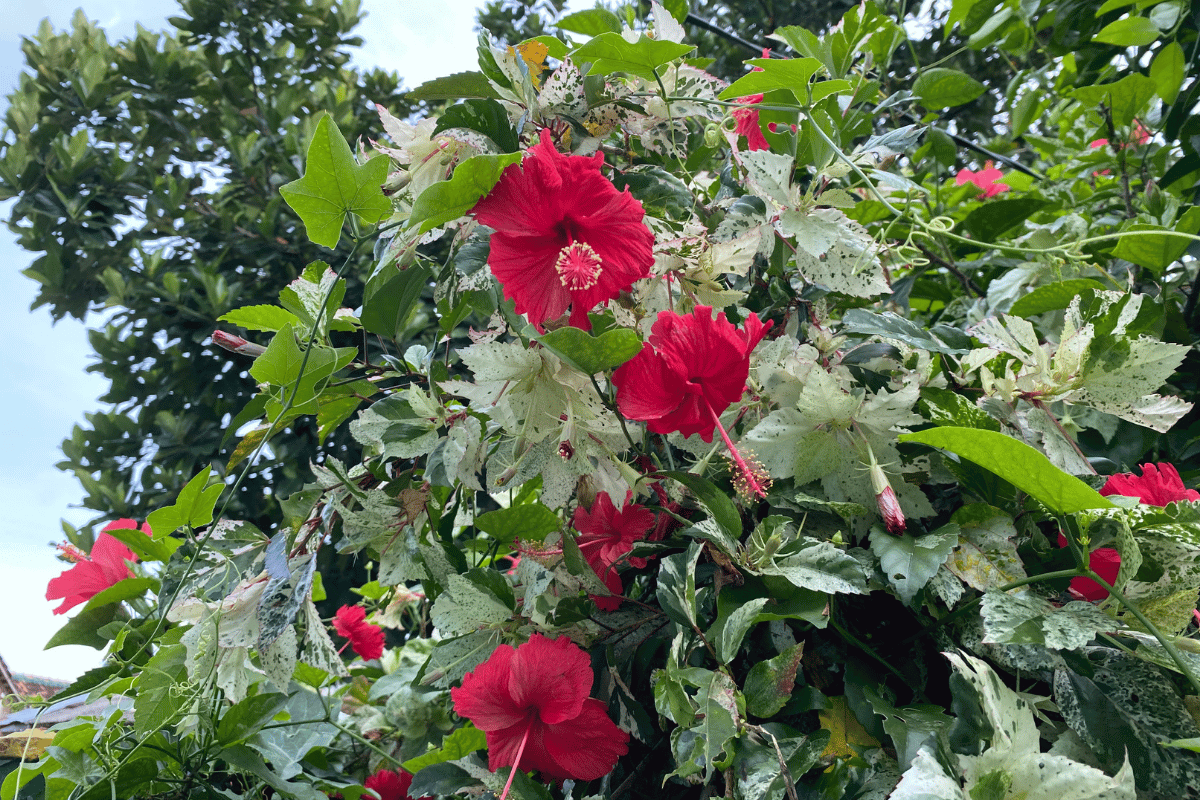
Tropical hibiscus (Hibiscus rosa-sinensis), also called Chinese hibiscus or Chinese rose, is evergreen, with glossy dark green leaves and large, bright blooms in vivid colours, from red and orange to yellow, pink and apricot. It's usually sold as a patio or container plant. It's sensitive to cold and won't tolerate frost.
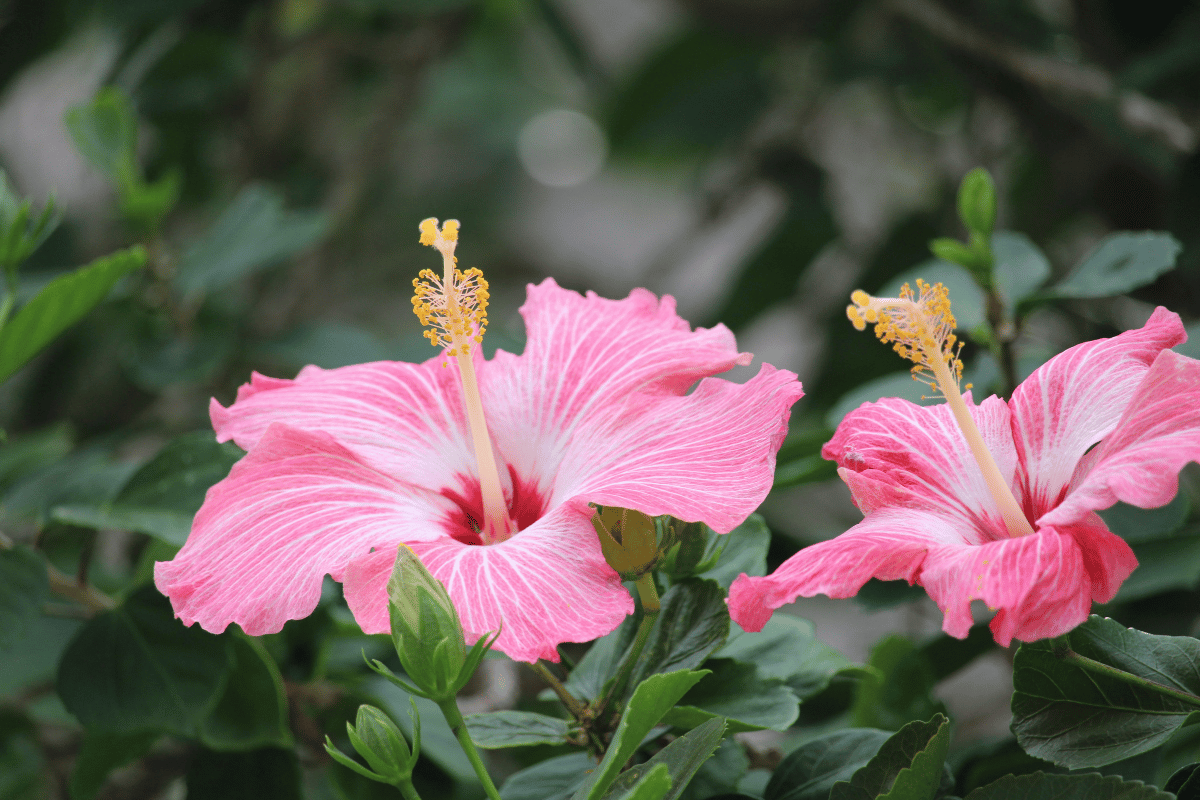
Hardy hibiscus or Rose of Sharon (Hibiscus syriacus), also known as shrub althea, is a deciduous shrub and the most widely grown type for ornamental use in temperate gardens. It drops its leaves in winter and leafs out again slowly in spring, often not until May. Its flowers are smaller, usually in white, pink, mauve and lavender-blue, and it blooms in late summer. This is the classic shrub you see in gardens, hedges and along streets.
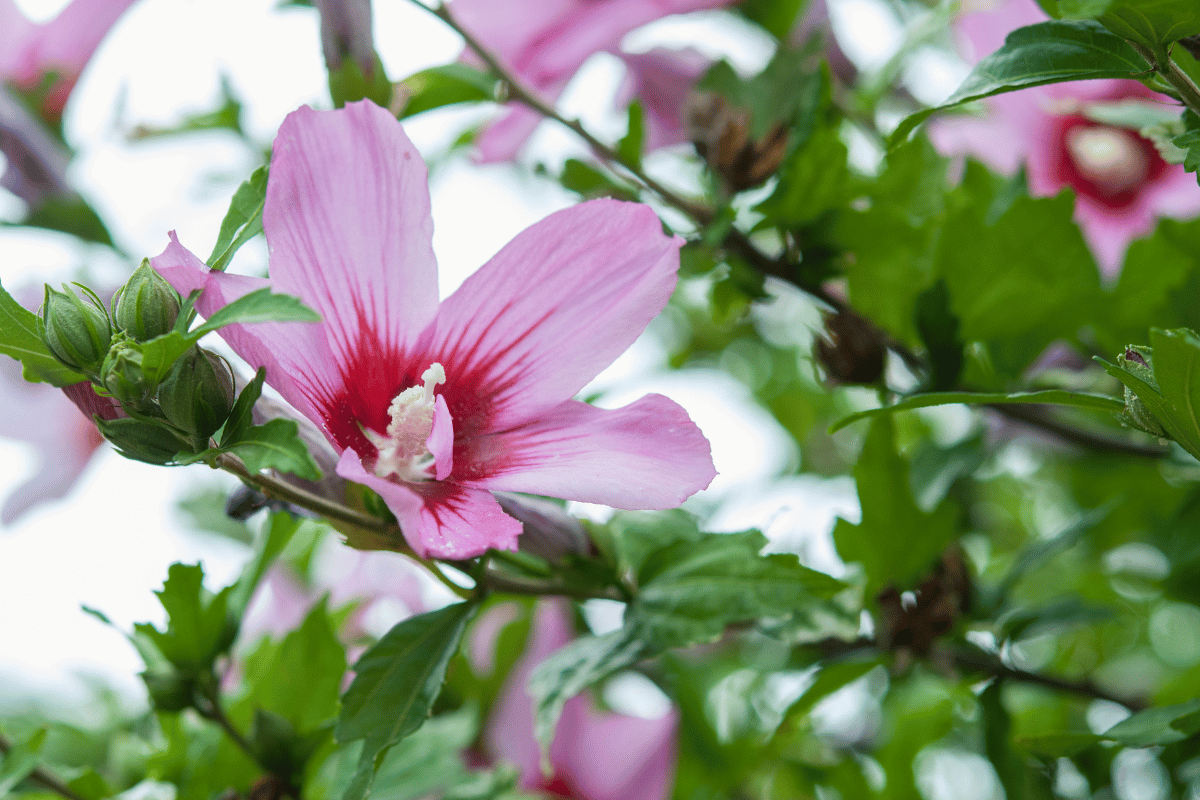
A third species, Hibiscus sabdariffa (roselle), is grown for its calyces, which are used to make the red hibiscus tea known as karkade.
A simple way to tell the two main types apart. If the plant drops its leaves in winter and stands as a bare shrub in the garden, it's Rose of Sharon. If it keeps its leaves and was sold as a container plant, it's tropical hibiscus.
Where to grow hibiscus
Both types want plenty of sun to flower well, at least 5-6 hours of direct sun a day. In shade they produce few flowers. In very hot regions, a little shade during the most intense midday hours protects the blooms and reduces stress on the plant.
This is where the differences begin.
Tropical hibiscus won't tolerate temperatures below 7°C. In mild, frost-free climates it can stay outdoors year round in a sheltered spot, but in colder regions it's grown in a container that moves indoors or under cover before the first cold. It also wants shelter from strong, drying winds.
Hardy hibiscus withstands winter well and stays in the garden all year across temperate regions (roughly USDA zones 5 to 9). It needs no special protection, and the loss of its leaves in winter is perfectly normal.
Soil
Both types want fertile soil with very good drainage. Neither tolerates waterlogged roots, which lead to root rot.
Hardy hibiscus isn't particularly demanding and adapts even to poorer soils, as long as they drain. Tropical hibiscus, in a container, wants a good-quality potting mix enriched with perlite or sand for drainage. On heavy clay garden soils, work in coarse sand or grit.
Planting
The best planting time is spring, after the last frosts.
Planting in the ground
- Dig a hole twice the diameter of the rootball and the same depth
- Loosen the soil at the bottom and work in well-rotted compost
- Position the plant so the top of the rootball sits level with the surrounding soil
- For a hedge of Rose of Sharon, leave 1-1.5 metres between plants
- Backfill with soil, firm gently and water in well
- Apply a layer of compost or bark mulch around the base to retain moisture
Growing hibiscus in a container
Tropical hibiscus is grown mostly in containers, especially in regions with cold winters, since that lets you protect it.
- Choose a pot with plenty of drainage holes
- Use a good-quality potting mix with added perlite for drainage
- Place the container in the sunniest spot you have
- In summer the pot dries out fast and needs frequent watering, sometimes daily in the heat
- Before the first cold, move the container into a bright indoor or sheltered spot
Watering
Hibiscus, especially tropical hibiscus in bloom, has high water needs. The soil should stay moist but never soggy or waterlogged.
Tropical hibiscus in a container may need watering every day in summer when it's in full bloom and the weather is hot. As the weather cools, reduce watering gradually, and in winter water very sparingly, only when the surface soil has dried out.
Hardy hibiscus in the garden needs regular watering in its first year until it establishes. Once established, it copes well with heat and drought and mainly needs water during long rainless spells.
Feeding
Hibiscus flowers heavily, and that flowering demands nutrients. During the flowering season, in spring and summer, feed regularly with a water-soluble fertiliser for flowering plants, every one to two weeks for tropical hibiscus in a container.
Choose a fertiliser higher in potassium than nitrogen. Too much nitrogen produces lush foliage at the expense of flowers. For hardy hibiscus in the garden, a single feed in spring with a balanced slow-release fertiliser is usually enough. Stop feeding both types in winter.
Pruning
Pruning is done differently in the two types, and getting it wrong is the most common reason a hibiscus doesn't flower well.
Hardy hibiscus (Rose of Sharon) flowers on new wood, the stems it produces in the same year. That's why it's pruned in late winter or early spring, before new growth begins. A hard prune at that point, removing up to a third of the plant and shortening the stems, gives more and larger flowers in summer. Also remove dead, weak or crossing branches.
Tropical hibiscus needs a lighter prune to keep its shape. Prune it in early spring, removing dead branches and lightly shortening the stems to encourage bushier growth.
Propagation
Both types are easily propagated from cuttings.
- In late spring or summer, take 10-15 cm cuttings from healthy current-season stems
- Strip the lower leaves and leave a few at the top
- Dip the base in rooting hormone
- Insert into a mix of peat-free compost and perlite
- Keep in a bright, warm spot with steady humidity until they root
Hardy hibiscus can also be grown from seed, though the plants may differ from the parent. Older varieties of Rose of Sharon self-seed readily in the garden, and the seedlings that come up on their own can be transplanted in spring.
Common problems
- No flowers: the most common cause is wrong pruning timing on Rose of Sharon, or insufficient light. Other causes are too much nitrogen fertiliser and irregular watering
- Buds dropping before they open: usually from sudden changes, too little or too much water, or a sudden change of position. Tropical hibiscus is especially prone to this
- Yellowing leaves: often from overwatering and poor drainage, or a lack of nutrients. Check drainage and feeding
- Leaf drop in winter on Rose of Sharon: perfectly normal, it's deciduous. The leaves return in spring
Pests and diseases
Hibiscus can attract common pests, especially when it's stressed.
- Aphids: small sap-sucking insects on tender shoots and buds. Rinse off with a strong jet of water or spray with insecticidal soap
- Whitefly: tiny white insects on the undersides of leaves that fly up when you touch the plant. Treat with insecticidal soap and yellow sticky traps
- Spider mites: in dry, hot air. Leaves develop fine yellow stippling and thin webbing on the undersides. Raise humidity and spray with water under pressure
- Scale insects and mealybugs: on stems and leaf bases. Remove them with a cotton bud dipped in rubbing alcohol or spray with horticultural oil
- Root rot: from overwatering or poor drainage. Prevent it with the right soil and careful watering
Is hibiscus toxic?
Hibiscus is not a toxic plant. According to the ASPCA, Hibiscus rosa-sinensis is not toxic to dogs and cats, although eating a large quantity may cause mild stomach upset, as with any plant.
Several hibiscus species are in fact edible. The flowers of Hibiscus rosa-sinensis are used in salads and infusions, while Hibiscus sabdariffa gives the well-known red hibiscus tea, karkade. If you plan to eat the flowers, make sure the plant hasn't been sprayed with chemicals.
Frequently asked questions
Why isn't my hibiscus flowering? If you have Rose of Sharon, the most common cause is wrong pruning, since it flowers on new wood and needs pruning in late winter. Other causes for both types are insufficient light, too much nitrogen fertiliser, and irregular watering.
Why do the buds drop before they open? Usually from stress, too little or too much water, a sudden change of position, or a sharp temperature swing. Tropical hibiscus is especially sensitive, so avoid moving it around when it's full of buds.
My hibiscus lost its leaves in winter. Is it dead? If it's Rose of Sharon (Hibiscus syriacus), no, it's perfectly normal. Rose of Sharon is deciduous and leafs out again in spring, often slowly, not until May. If it's tropical hibiscus, leaf drop after cold is a sign it got chilled and needs protection.
How long do hibiscus flowers last? Each flower usually lasts one or two days, but the plant keeps producing new buds throughout the flowering season, so it looks continuously in bloom.
Can I grow hibiscus in a container on a balcony? Yes, especially tropical hibiscus. It wants plenty of sun, regular watering and feeding in summer, and protection from cold in winter.
Important notes
Every garden and every plant is unique. Conditions vary significantly depending on the type of hibiscus, your region, sun exposure and soil drainage. The guidance above is general and a starting point rather than a strict rule.
If you suspect a serious nutrient deficiency or disease that doesn't respond to the basic practices, consider consulting a horticulturist for accurate diagnosis.
Use plant protection products with care, especially if you intend to eat the flowers. Try non-chemical methods first wherever possible, such as cultural practices, insecticidal soap and horticultural oil. When chemical intervention is needed, use only approved products, follow the dosage on the label, and avoid spraying when bees are active, as hibiscus attracts them.
References
- Royal Horticultural Society. Hibiscus rosa-sinensis growing guide.
- BBC Gardeners' World. How to grow hibiscus.
- Gardener's Path. How to Grow and Care for Tropical Hibiscus.
- North Carolina State University. Hibiscus syriacus.
- ASPCA Animal Poison Control. Toxic and Non-Toxic Plants: Hibiscus.