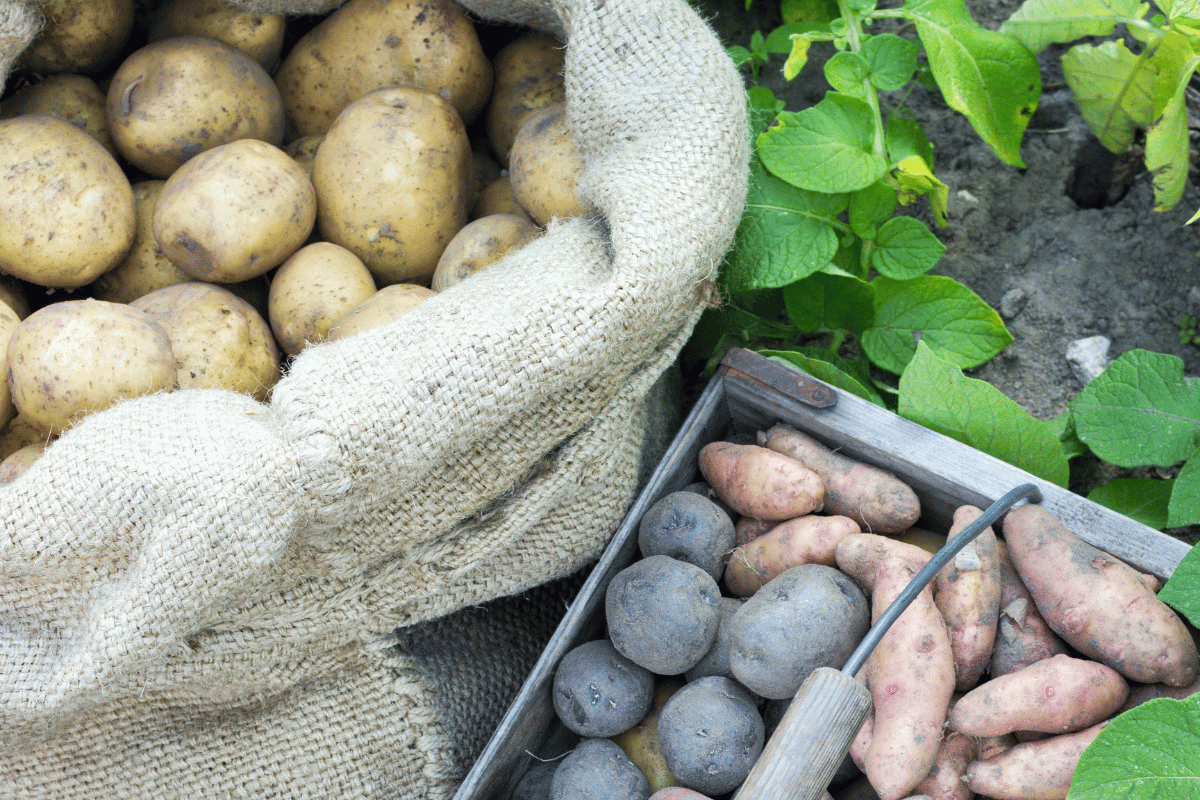
Seed potato is the certified tuber planted to produce new potato plants, and its variety decides maturity, yield, flesh colour and use, from frying to boiling and salads. The right variety is chosen based on the purpose of the crop, the local climate and the market the grower is aiming at. What follows breaks down the most widespread varieties and the criteria that lead to a deliberate choice.
How potato varieties are grouped
Potato varieties are separated by three main criteria. The first is maturity, the time from planting to harvest, which generally ranges from 10 to 20 weeks depending on the variety and the conditions. Early varieties reach harvest quickly and suit the fresh market, while late varieties yield more and store better. The second criterion is flesh type, split into waxy, which holds its shape when boiled and suits salads, and floury, which turns fluffy and suits mash and frying. The third criterion is the end use, that is whether the crop is meant for fresh consumption, for frying and crisps, or for industrial processing.
The most widespread varieties
The table below gathers the varieties that dominate the European and international market, with their main characteristics.
| Variety | Maturity | Flesh | Main use |
|---|---|---|---|
| Spunta | Early | Light yellow, slightly waxy | Fresh market, all-purpose |
| Agria | Mid-early | Deep yellow, floury | Frying and crisps |
| Kennebec | Mid-late | White | Fresh market and crisps |
| Desiree | Mid-late | Yellow, waxy, red skin | All-purpose, drought tolerant |
Spunta is an early variety with high yield, good heat and virus tolerance, long tubers, shallow eyes and light yellow flesh. Agria stands out for its floury, deep yellow flesh and is one of the leading European varieties for frying and crisps. Kennebec, of American origin from 1941, is mid-late with white flesh, high yield and good storage behaviour. Desiree, of Dutch origin from 1962, has red skin and yellow waxy flesh, holds its shape when cooked and is known for its drought tolerance. In many markets Marabel, an early variety with yellow flesh, also appears frequently.
Certification and seed potato categories
Seed potato is not ordinary market potato, but certified material produced under controlled conditions and carrying an official label. The certification system distinguishes three main categories. The pre-basic category comes from tissue culture propagation and is meant for further multiplication. The basic category, also known as Elite, is used mainly to produce seed. The certified category is meant for the production of ware potatoes and carries a blue label, while the higher categories carry a white one. Choosing certified seed secures varietal purity and freedom from diseases carried by the tubers.
Tuber sizes and what they mean for planting
Seed potato is supplied in graded sizes, with the minimum permitted tuber size being 25 mm under European standards. The two most common ranges are 28 to 35 mm and 35 to 55 mm. Smaller tubers, around 28 to 35 mm, are planted whole and suit early crops, while larger ones can be cut into pieces with at least one eye each. Size directly affects the seed quantity per area, as covered in potato planting seeding rate and plant spacing.
When each variety is planted
Planting time depends on the region and the maturity of the variety. In lowland areas the spring crop is planted from late winter to spring, once soil temperature is steadily above 5 degrees Celsius. In warmer regions a second, autumn crop is planted at the end of summer, while in mountainous and semi-mountainous zones planting moves to spring because of the cold climate. Early varieties reach harvest in about 10 to 12 weeks, while late ones need up to 20 weeks, which also affects the choice depending on when the grower wants to reach the market.
Which variety suits each case
The choice is made based on the goal and local conditions. For an early fresh market, early varieties such as Spunta are preferred, since they reach harvest quickly. For frying, crisps and industrial use the floury Agria is chosen, with its high dry matter content. In mountainous areas with a cool climate, late varieties with good storage behaviour do well. For dry or difficult conditions, Desiree offers reliable yield thanks to its tolerance. Beyond the variety, fertilisation is decisive, since the potato is a demanding crop, as described in potato fertilizer requirements.
How the crop starts after the choice
Once the variety and size are chosen, the seed is prepared and planted. Large tubers are cut into pieces with at least one eye and left for two days in a dry place to form a protective skin, while many growers pre-sprout the tubers by placing them eyes up in a well-lit spot. Soil preparation and the conditions the crop needs are covered in soil preparation and soil requirements for potatoes.
Frequently asked questions
Which potato variety is best for frying
For frying and crisps, floury varieties with high dry matter are preferred, with Agria being one of the most widespread choices, since it gives a crisp result.
Which variety holds its shape when boiled
Waxy varieties hold their shape, so they suit salads and boiling. Desiree and Spunta belong to this group.
What is the difference between seed potato and ordinary potato
Seed potato is a certified tuber, checked for varietal purity and freedom from disease, while ordinary market potato has no such checks and can carry pathogens into the field.
Which tuber size do I choose
Tubers of 28 to 35 mm are planted whole and suit early crops, while larger ones, 35 to 55 mm, can be cut into pieces with at least one eye.
When do we plant seed potatoes
In lowland areas the spring crop is planted from late winter to spring, with soil temperature above 5 degrees Celsius, while warmer regions also allow an autumn crop. In mountainous zones planting takes place in spring.
Which variety tolerates drought best
Desiree stands out for its drought tolerance and gives reliable yield in more difficult conditions.
Sources
- UNECE, Standard S-1 concerning the marketing and commercial quality control of seed potatoes.
- PotatoPro, Spunta and Agria.
- Europotato, Kennebec.
- Agriculture and Horticulture Development Board, Desiree variety profile.