A mulberry is one of the most generous fruit trees for a garden, giving deep shade, fast growth and heavy crops of sweet, blackberry-like fruit with very little care. The berries are too soft to travel well, so they are almost never sold fresh, which makes a mulberry tree the only real way to enjoy them. This guide covers how to grow and care for a mulberry tree at home, from choosing a type and planting to harvesting the fruit, along with a note on the toxicity of the unripe berries and sap.
Mulberries are fast-growing, long-lived and easy, but they do drop a lot of staining fruit, so where you plant one matters as much as how you grow it.
What is a mulberry
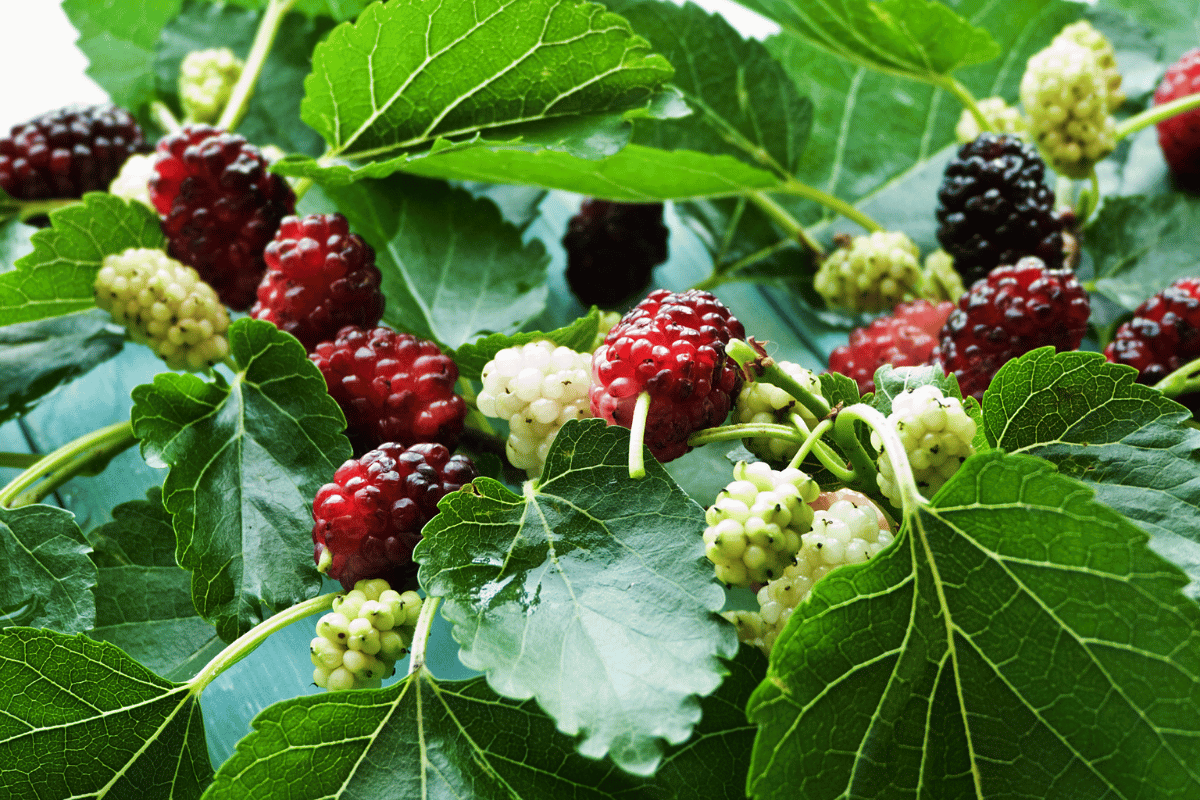
The mulberry is a deciduous tree in the genus Morus, part of the fig family (Moraceae). Its fruit is an aggregate berry that looks much like a blackberry, ripening from green through red to deep purple-black, or staying white or pink in some types. Mulberry leaves are famous as the food of the silkworm, and the tree has been grown for centuries for silk as well as for fruit, shade and timber. Its leaves are also a valuable animal feed rich in protein.
One important point from the start is that only the ripe fruit is edible. The unripe fruit and the milky white sap found throughout the tree can cause stomach upset and are best avoided, a point covered in full in the safety section below.
Types of mulberry
Three species cover most mulberries grown for fruit, and choosing the right one matters for both flavour and mess.
Black mulberry (Morus nigra): the best for flavour, with large, richly sweet-sharp dark fruit, and an exceptionally long-lived, slow-growing tree that suits a Mediterranean climate.
.png)
White mulberry (Morus alba): the classic silkworm tree, fast-growing with milder, sweeter white to pink or purple fruit, though it can self-seed and become weedy.
.png)
Red mulberry (Morus rubra): a North American species with dark, flavourful fruit.
.png)
Fruitless ornamental forms are also grown purely for shade, avoiding the mess of dropped fruit, and hardy hybrids such as 'Illinois Everbearing' crop heavily over a long season.
Where and when to plant a mulberry
Plant a mulberry in full sun in well-drained soil. Mulberries tolerate heat, drought, poor ground and even alkaline soil once established, which makes them well suited to warm, dry gardens. Position matters more than usual, because the fruit stains heavily and the roots are vigorous, so keep a mulberry well away from paths, patios, driveways and the house, and clear of water and drainage pipes.
Plant bare-root trees while dormant in winter, or container-grown trees in spring or autumn. Dig a hole wider than the root ball, set the tree at the same depth it was growing, firm the soil and water well.
Watering and feeding
Water a young mulberry regularly through its first couple of summers while the roots establish. After that the tree is markedly drought-tolerant and needs watering only in prolonged dry spells. Mulberries need little feeding, and rich soil or heavy feeding is unnecessary. A mulch of compost around the base in spring is enough for a mature tree.
Pruning a mulberry tree
Mulberries need only light pruning, and the key point is timing. Prune in late winter while the tree is fully dormant, because a mulberry pruned in leaf bleeds sap heavily from the cuts. Remove dead, damaged or crossing branches and thin out congested growth.
To keep a mulberry small and the fruit within reach, you can cut the central leader of a young tree at about 1.5 metres to form a low, branching bush, or train established trees by pollarding. For detailed guidance on choosing a variety and on maintenance pruning, a dedicated approach helps for productive, well-shaped trees.
Harvesting and eating mulberries
Mulberries ripen gradually over several weeks in early to midsummer, and a fruit is ready when it is fully coloured and soft and comes away with the gentlest pull. The easiest way to harvest a large tree is to lay a clean sheet on the ground and shake the branches, letting the ripe fruit fall.
The berries are delicious eaten fresh, and also make excellent jams, pies, cordials and sorbets, or can be frozen or dried like raisins. They are rich in vitamins and antioxidants, including resveratrol. Bear in mind that ripe mulberries stain hands, clothes and paving deeply, so pick and handle them with that in mind.
Growing mulberry in a container
In a small garden or on a patio, a mulberry can be grown in a large container if you choose a dwarf variety or keep a normal one pruned as a compact bush. Container trees dry out quickly, so they need regular watering through summer and an annual top-dressing of fresh compost, and they benefit from pruning each dormant season to keep them to size.
Pests, diseases and the mess factor
Mulberries are largely trouble-free and rarely need spraying. The main nuisances are practical rather than serious. Birds strip the fruit enthusiastically, dropped berries stain hard surfaces, and white mulberry in particular self-seeds and can become weedy, so pull up unwanted seedlings while young. Occasional problems include bacterial blight and, in some regions, popcorn disease, which distorts the fruit; affected fruit should be removed and cleared away.
Is a mulberry tree toxic
The ripe fruit is safe, nutritious and, according to the ASPCA, non-toxic to cats, dogs and horses. The rest of the plant is a different matter. The unripe fruit and the milky white sap present throughout the leaves, stems and green parts contain compounds that can cause stomach upset, and in quantity, nervous stimulation and mild hallucinations. The sap is also a skin irritant.
In practice this means only ever eating fully ripe berries, keeping children from grazing on green fruit, and wearing gloves when pruning or handling cut stems, then washing hands and tools afterwards.
Frequently asked questions
How long does a mulberry tree take to fruit? Many mulberries begin fruiting within two to three years of planting, and some fast hybrids such as 'Illinois Everbearing' can crop even sooner.
When should I prune a mulberry tree? In late winter while the tree is fully dormant, since a mulberry pruned in leaf bleeds sap heavily from the cuts.
Are mulberries safe to eat? Ripe mulberries are safe and delicious. Unripe fruit and the milky sap can cause stomach upset, so eat only fully ripe berries.
Why is my mulberry so messy? The soft fruit falls and stains heavily, which is normal. Plant well away from paths and paving, or choose a fruitless ornamental variety for shade only.
Can I grow a mulberry in a pot? Yes, using a dwarf variety or a normal one kept pruned as a compact bush, with regular watering and dormant-season pruning to control its size.
Important notes
Every garden is different, and conditions vary with your climate, soil and space. The guidance above is a general starting point rather than a strict rule.
Because the unripe fruit and sap can cause stomach upset and the sap irritates skin, eat only ripe berries, keep children away from green fruit, and wear gloves when pruning. If your tree shows persistent problems, consult a horticulturist or your local nursery.
References
- Royal Horticultural Society. Mulberry.
- NC State Extension. Morus alba.
- ASPCA Animal Poison Control. Toxic and Non-Toxic Plants.