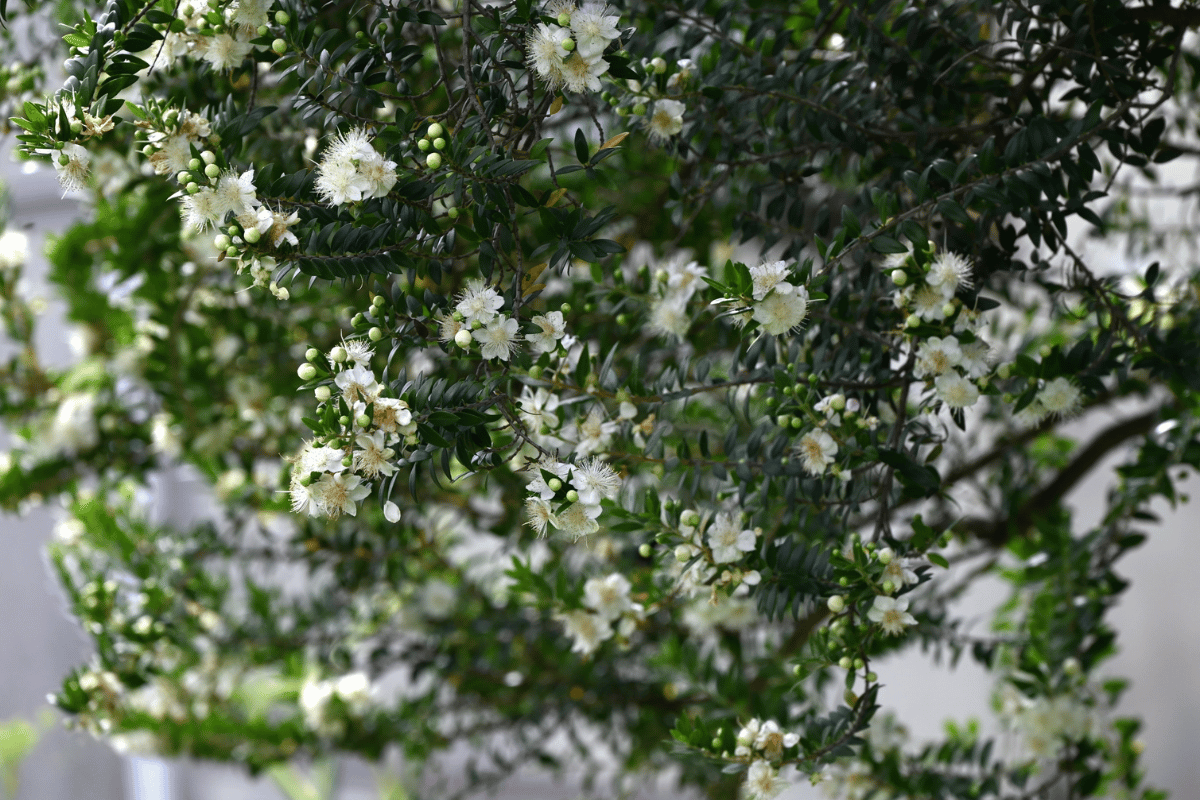
Myrtle (Myrtus communis) is one of the most beautiful evergreen shrubs of the Mediterranean, with a history that stretches back to antiquity. Its small glossy leaves are fragrant when crushed, its white flowers fill the garden with scent in midsummer, and its dark berries decorate the shrub in autumn. It's tough, low-maintenance, and ideal for hedges, topiary, and containers.
Botanically, it belongs to the myrtle family (Myrtaceae) and comes from the Mediterranean and western Asia. It grows wild across the region on dry scrubland and has been cultivated for centuries as an ornamental and aromatic plant.
This guide covers how to grow myrtle in the garden or in a container, how to look after it, and how to shape it into a hedge or form.
Myrtle in history and symbolism
In ancient Greece, myrtle was the sacred plant of Aphrodite, goddess of love and beauty. According to the myth, when Aphrodite rose from the sea off the coast of Cyprus, she hid behind a myrtle to cover herself. From then on, the plant was linked with love, beauty, and youth.
Brides in ancient Greece wore myrtle wreaths on their wedding day, a custom that survived around the Mediterranean and beyond for centuries. Myrtle has appeared in the wedding bouquets of British royal brides since Victorian times, and remains a traditional symbol of love. Dioscorides, the great physician of antiquity, described its medicinal uses, and its leaves and berries are still used in folk medicine and cooking.
In Sardinia and Corsica, the berries are used to make the traditional liqueur mirto, while the aromatic leaves are used much like bay to flavor meat.
Types and varieties
The genus Myrtus has very few species, and gardens grow almost exclusively the common myrtle (Myrtus communis) and its varieties.
Myrtus communis: the common myrtle, an upright bushy shrub reaching 2-3 meters. It holds the RHS Award of Garden Merit.
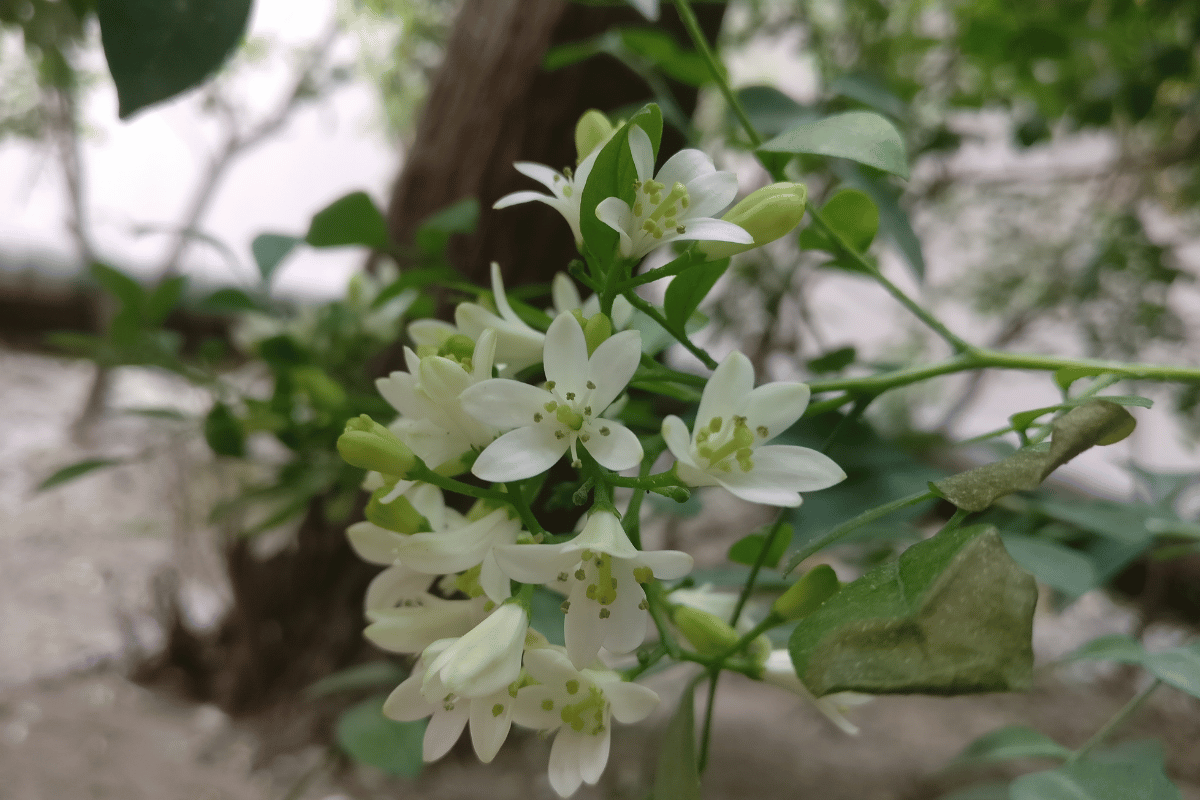
Myrtus communis subsp. Tarentina (Tarentum myrtle): more compact, with smaller leaves and white berries. Ideal for low hedges and containers.

Myrtus communis 'Variegata': with creamy leaf edges, for more color in the garden.
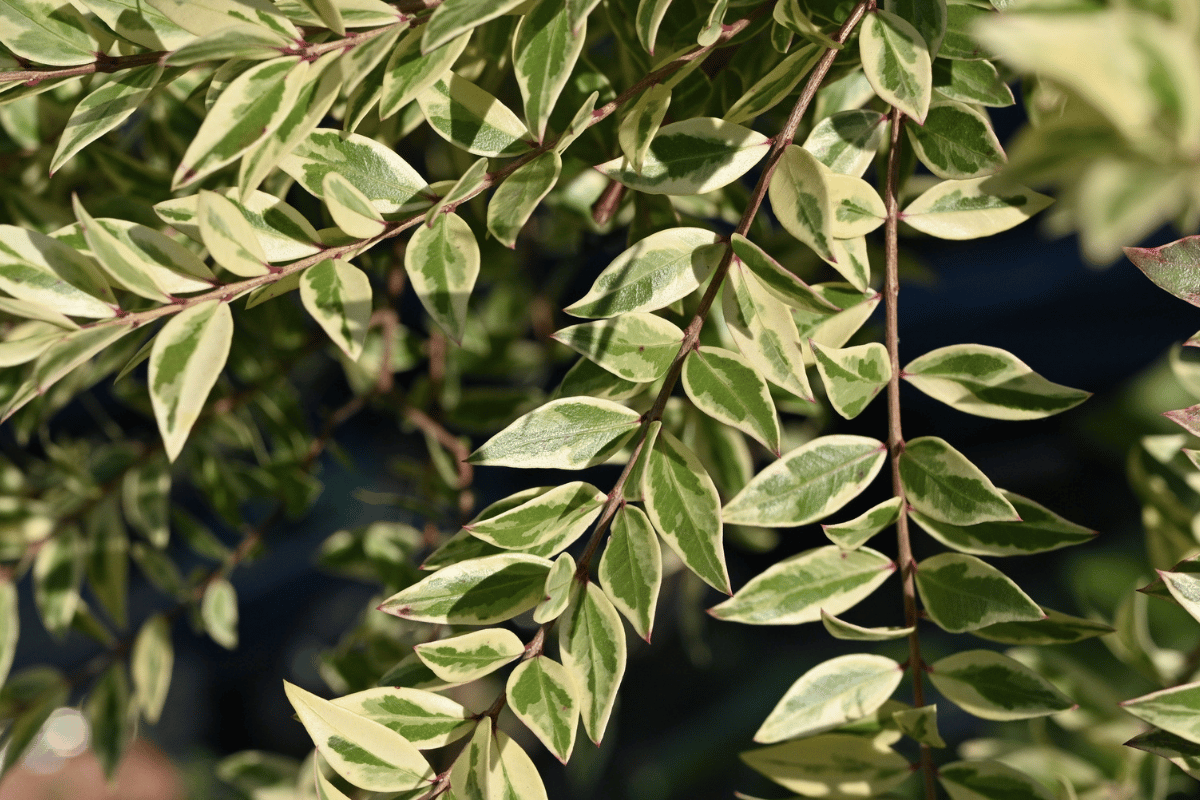
Myrtus communis 'Compacta': a dwarf variety that stays low, suited to small spaces and formal shaping.
Where to grow myrtle
Myrtle is a Mediterranean plant and thrives in warm, sunny conditions. It wants plenty of sun and shelter from cold, dry winter winds.
You can choose a sunny spot. Myrtle flowers best in full sun; in shade, it produces fewer flowers and grows sparser. In very hot regions, it tolerates light shade during the most intense hours.
As for cold hardiness, myrtle is moderately hardy. Mature plants tolerate brief drops to around -10°C, as long as they're sheltered from freezing wind. In mild, coastal areas (roughly USDA zones 8 to 11), it grows happily in the open garden. In colder regions, plant it in a sheltered position against a south-facing wall, or keep it in a container that can move under cover for winter.
Myrtle is an excellent choice for coastal gardens, since it stands up well to sea wind and salt.
Soil
Myrtle adapts to a range of soils, as long as they drain well. It prefers fertile, well-drained soil, but also does well on poorer, stony ground.
It won't tolerate waterlogged roots. On heavy clay, work in coarse sand or horticultural grit to improve drainage. The ideal pH is neutral to slightly acidic, but myrtle tolerates slightly alkaline soils too.
Planting
The best time to plant is spring, after the last frost so that the plant can establish before winter. In mild regions, you can also plant in autumn.
Planting in the ground
- Dig a hole twice the diameter of the rootball and the same depth
- Loosen the soil at the bottom and work in a little well-rotted compost
- Position the plant so the top of the rootball sits level with the surrounding soil
- For a hedge, space plants 60-80 cm apart
- Backfill with soil, firm gently, and water in well
- Apply a layer of compost or pine bark mulch around the base to retain moisture
Growing myrtle in a container
Myrtle does well in a container, making it ideal for balconies, terraces, and courtyards. A container also lets you move the plant under cover for winter in colder regions.
- Choose a pot with plenty of drainage holes, large enough for the roots to develop
- Use a good-quality compost with added perlite or sand for drainage
- Place the container in the sunniest spot you have
- In a container, myrtle needs more regular watering than in the ground, as the compost dries faster
Watering
In the first year after planting, water regularly so the roots establish, without letting the soil get soggy. Once established, myrtle copes well with drought and mainly needs water during long hot spells in summer.
In a container, water when the top few centimeters of compost feel dry. In summer, this can mean fairly frequent watering, while in winter, far less. In all cases, avoid waterlogging, which leads to root rot.
Feeding
Myrtle isn't particularly demanding. In the garden, an annual mulch of well-rotted compost around the base in spring is usually enough. For richer flowering, you can add a balanced fertilizer in spring.
In a container, use a liquid feed every two to four weeks during the growing season. Stop feeding in winter.
Pruning and shaping
Myrtle takes pruning extremely well, which makes it ideal for hedges, edging, and topiary. In Mediterranean and courtyard gardens, it's often used for low aromatic hedges.
The best time to prune is in the spring. You can also lightly prune after flowering to keep the shape. If you want to enjoy the autumn berries, don't prune after flowering, as you'll remove the spots where the berries form.
For hedges, prune regularly to keep them dense. For a free-growing shrub, a light annual prune to remove dead or untidy branches is enough.
Propagation
Myrtle is propagated from cuttings or seed.
From cuttings
This is the most reliable method and preserves the characteristics of the parent variety.
- In late summer, take semi-ripe cuttings 8-10 cm long from healthy current-season shoots
- Strip the lower leaves and leave a few at the top
- Dip the base in rooting hormone
- Insert into a mix of peat-free compost and perlite
- Keep in a bright, warm spot with steady humidity until they root
From seed
Sow fresh seed from ripe berries in autumn, in a well-draining mix. Germination is slow, and the plants take several years to reach flowering size. Seed-grown plants may differ from the parent variety.
Pests and diseases
Myrtle is one of the toughest shrubs and rarely runs into serious trouble. Now and then, it may show the following.
- Root rot: the most serious problem, almost always from overwatering or poor drainage. Prevent it with the right soil and careful watering
- Scale insects: small brown scales on the stems and leaves. For small infestations, remove them with a cotton bud dipped in alcohol; for larger ones, spray with horticultural oil
- Aphids: small sap-sucking insects on the tender new growth. Rinse off with a strong jet of water or spray with insecticidal soap
- Sooty mould: a black film on the leaves that grows on the honeydew left by sap-sucking insects. Deal with the insects first, then clean the leaves
Is Myrtle toxic?
Myrtle is not a toxic plant. Its berries are edible and traditionally used in liqueurs and cooking, while its leaves are used as a flavoring much like bay. It isn't listed as toxic to pets.
As with any plant, eating large quantities of leaves or the essential oil isn't advised, particularly during pregnancy, but in normal use, myrtle is considered a safe plant.
Frequently asked questions
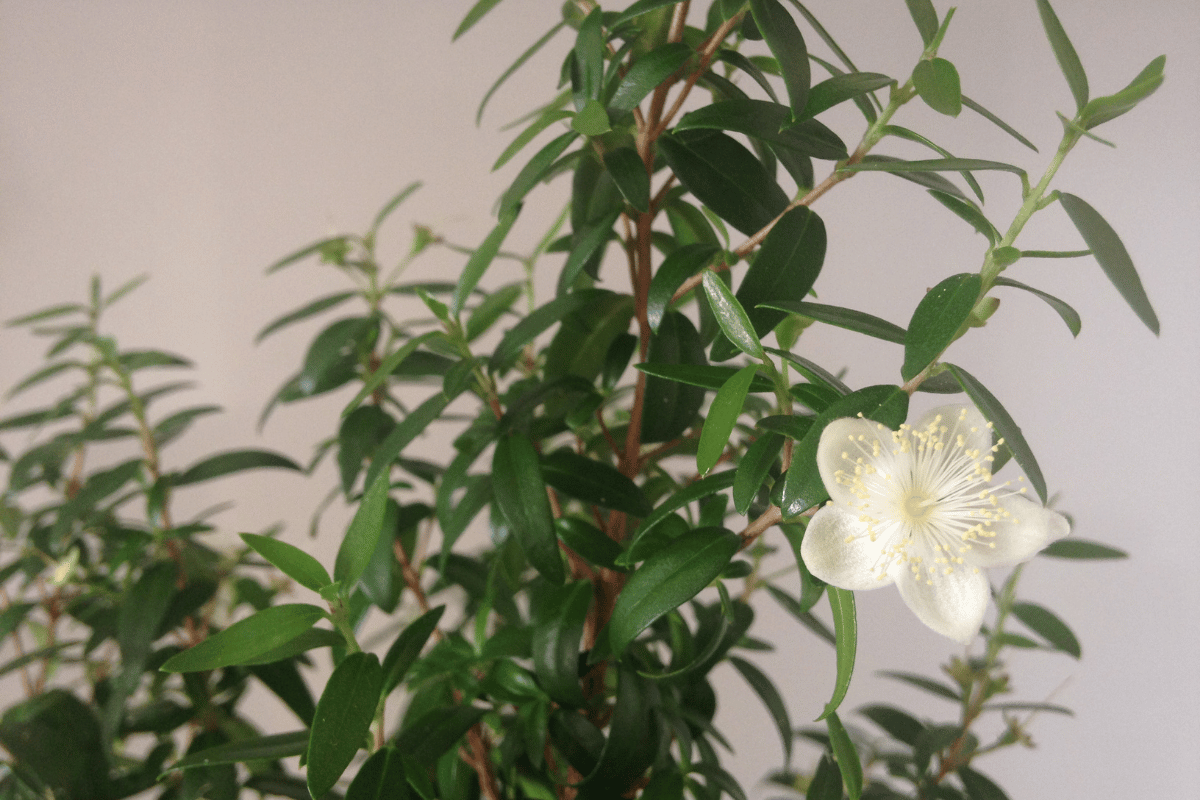
When does the myrtle flower? In mid to late summer, it has white, fragrant flowers with distinctive long stamens, giving a fluffy appearance. After flowering, the dark berries form.
Are myrtle berries edible? Yes, the ripe berries are edible. They're traditionally used to make liqueurs such as mirto and as a seasoning. They have an astringent, aromatic flavor.
Does myrtle make a good hedge? Excellent. It takes pruning very well, stays evergreen year-round, and smells wonderful. It's a classic choice for low- to medium-aromatic hedges in Mediterranean gardens.
Can I grow myrtle in a container? Yes, myrtle does well in a container on a sunny balcony or terrace. It needs more regular watering than in the ground and good drainage. In cold regions, a container makes it easy to protect over winter.
Is it cold-hardy? It's moderately hardy. It tolerates brief drops to around -10°C in a sheltered spot, but prolonged frost and freezing wind will damage it. In cold regions, prefer a container or a sheltered position.
Important notes
Every garden and every plant is unique. Conditions vary significantly depending on your region, exposure, soil type, and drainage. The guidance above is general and a starting point rather than a strict rule.
If you suspect a serious disease or problem that doesn't respond to basic practices, consider consulting a horticulturist for an accurate diagnosis.
Use plant protection products with care, especially if you intend to use the leaves or berries. Try non-chemical methods first wherever possible, such as cultural practices and insecticidal soap. When chemical intervention is needed, use only approved products, follow the dosage on the label, and avoid spraying when bees are active, as myrtle attracts them.
References
- Royal Horticultural Society. Myrtus communis (common myrtle).
- Royal Horticultural Society. Myrtle plant guide.
- Royal Horticultural Society. Myrtus communis subsp. tarentina.
- BBC Gardeners' World. How to grow a myrtle tree.
- Better Homes & Gardens. How to Plant and Grow Myrtle.