

The ficus (Ficus) is one of the most popular indoor plants, with striking foliage, architectural presence and considerable resilience. It belongs to the mulberry family (Moraceae), the same as the edible fig, and includes hundreds of species, of which a few are widely grown as houseplants.
The name ficus actually covers several different species, with the same basic needs but some differences in care. This guide covers how to tell the three most common indoor ficus species apart and how to care for each, from light and watering to dealing with leaf drop, which is the most common problem.
The indoor ficus species
The three species you'll meet most often share the same basic care but differ in how easy they are to grow.
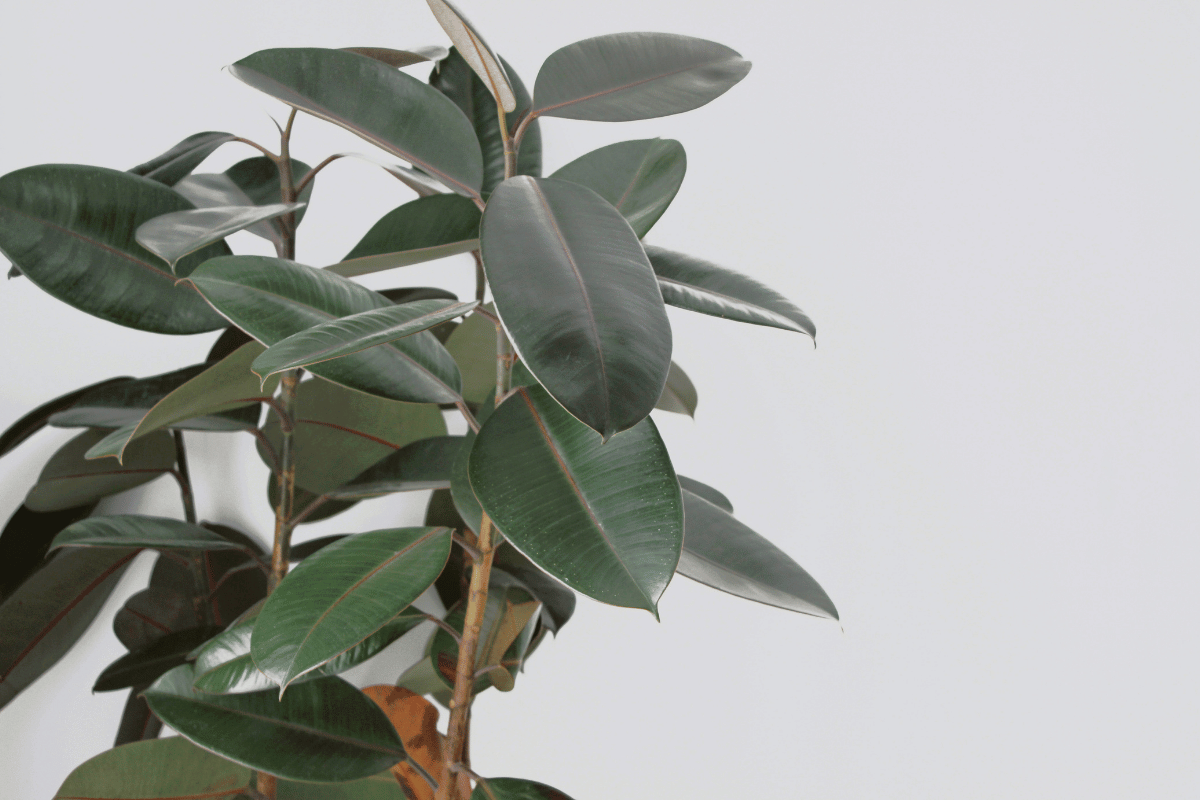
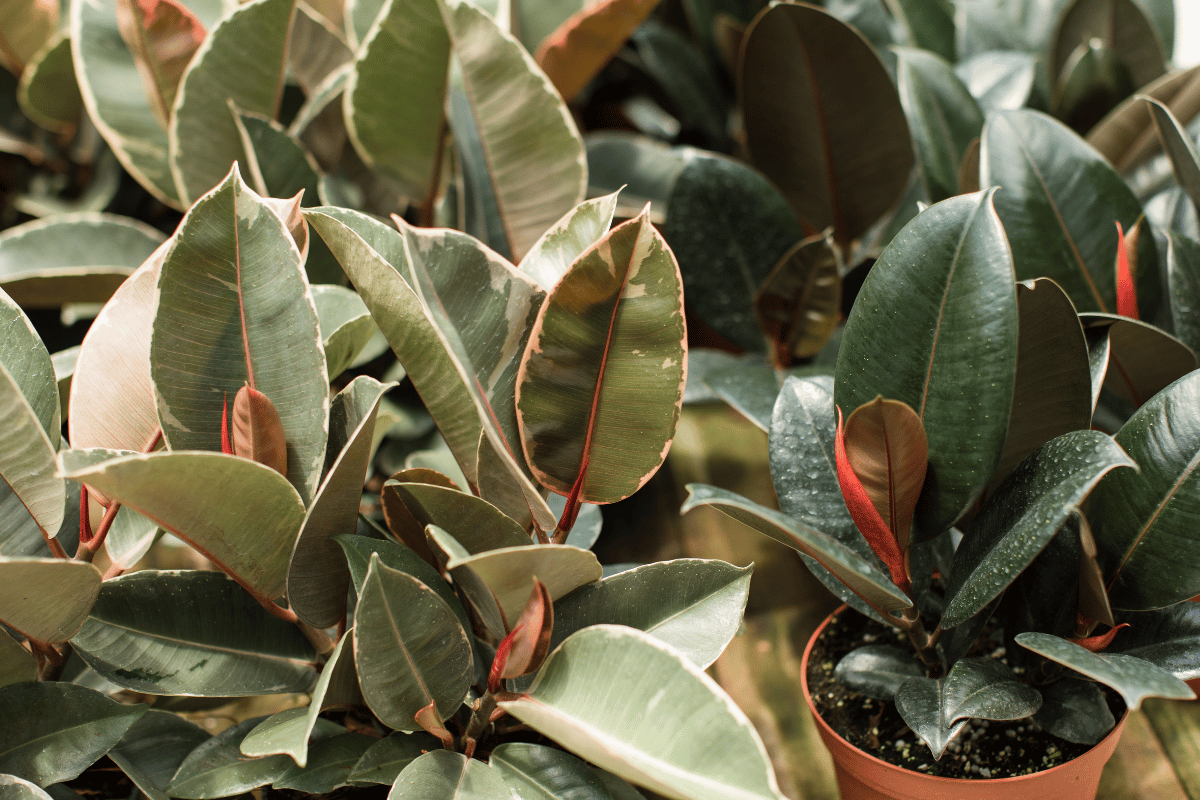
Rubber plant (Ficus elastica), also known as the rubber tree or rubber fig: the toughest and most forgiving of the three, with large, thick, glossy leaves in shades of deep green, burgundy or variegated. Ideal for beginners
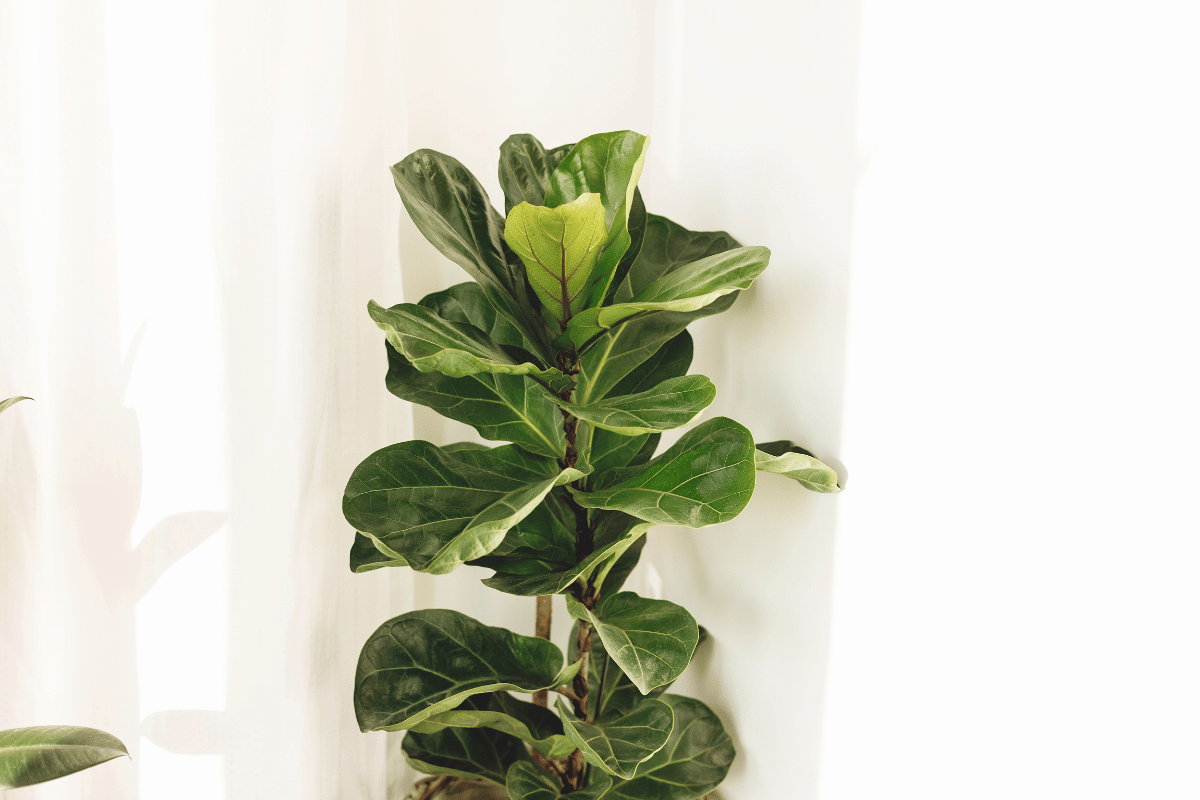
Fiddle-leaf fig (Ficus lyrata): with large, violin-shaped leaves and a strong decorative presence. More demanding, as it needs a stable environment and careful watering
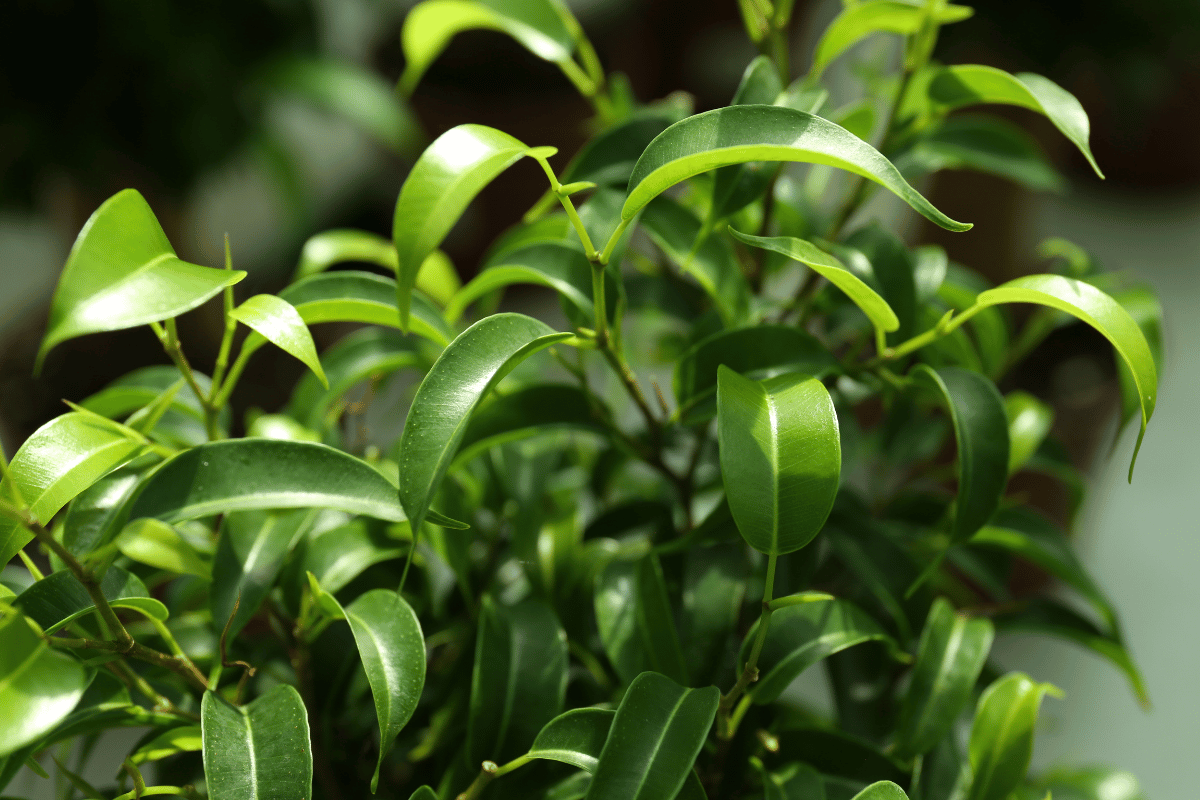
Weeping fig (Ficus benjamina): with small, oval leaves and dense, fine branching. Striking, but known for its tendency to drop leaves whenever its environment changes
Where to put a ficus
All ficus species need a bright spot with plenty of indirect light. Direct, strong sun scorches the leaves, while insufficient light leads to sparse foliage and leaf drop. A position near a bright window, but out of the path of the midday rays, is ideal.
The fiddle-leaf fig and the weeping fig are more demanding about light than the rubber plant, which tolerates lower light levels.
A stable environment
The ficus values stability and reacts badly to sudden change. The ideal temperature is between 15 and 24°C. The plant is sensitive to cold, to draughts, and to being close to radiators or air conditioning.
Choose a good spot and leave the plant there. Frequent moving is one of the most common reasons a ficus drops its leaves, since it needs time to adjust to each new environment.
Soil
The ficus needs a light, well-draining mix that doesn't hold excessive moisture. A quality houseplant potting mix, amended with perlite or coarse peat for drainage, is suitable. The pot must have drainage holes.
Watering
Watering is the most delicate part of ficus care. Water only when the top three to five centimetres of soil have dried out, checking with your finger. Water thoroughly so it runs from the holes, then empty the saucer, since the ficus will not tolerate waterlogging at the roots.
Overwatering is more dangerous than underwatering, as it leads to yellowing leaves and root rot. In winter, when growth slows, reduce watering.
Humidity and cleaning the leaves
As a tropical plant, the ficus appreciates atmospheric humidity, especially in rooms with dry air from heating. Misting the leaves or standing the pot on a tray of moist pebbles both help.
Wipe the large leaves regularly with a damp cloth, to remove the dust that hinders photosynthesis and dulls their appearance.
Feeding
From spring to autumn, during the growing season, feed every two to four weeks with a liquid fertiliser for foliage plants. In winter, reduce feeding to once a month or stop altogether.
Leaf drop in ficus
Leaf drop is the most common problem in growing ficus and mainly affects the weeping fig, which is the most sensitive. It is the plant's natural response to any change or stress.
The main causes are moving to a new spot, a change in light, draughts, sudden temperature swings, and over- or underwatering. A ficus often drops leaves in the first days after purchase or after being moved home, as it adjusts to its new environment.
The remedy is mainly preventive. Keep conditions stable, avoid frequent moving, and give the plant time to acclimatize. Once conditions stabilize, the ficus usually recovers and resumes growth.
Pruning and the milky sap
The ficus is pruned in spring to maintain its shape, control its height, and encourage denser growth. Remove dead or yellowed leaves and shorten overly long stems.
At every cut, the ficus exudes a white, milky sap, the latex. This sap is irritating to the skin and eyes, so wear gloves when pruning and avoid contact with your eyes. Wipe the sap off floors, as it stains.
Propagation
The ficus is propagated by stem cuttings, in spring or summer. Cut a healthy cutting with two or three leaves, let the sap dry for a moment, and place it in water or a light mix until it roots. Keeping it warm, bright and humid speeds up rooting.
For larger plants, air layering is also used, a technique where the stem roots while still attached to the parent plant.
Common problems
- Yellow leaves that drop: usually from overwatering or root rot. Let the soil dry out and check the drainage
- Brown, dry leaf edges: from dry air, underwatering or overfeeding
- Brown spots and leaf drop: from cold, draughts or a sudden change of environment
- Scorched leaves: from exposure to direct, strong sun. Move the ficus to a spot with indirect light
- White dots on the leaf surface: on the rubber plant these are often natural leaf structures and are not a disease
Pests and diseases
- Scale and mealybugs: small insects that attach to the stems and undersides of leaves, leaving a sticky residue. Clean with cotton dipped in an alcohol solution or spray with a suitable product
- Spider mite: appears in dry conditions, with fine webbing and stippling on the leaves. Raise the humidity and rinse the leaves
- Whitefly: tiny white insects on the undersides of leaves. Treat with insecticidal soap
- Root rot: from overwatering and poor drainage. Prevent it with the right mix and careful watering
Is ficus toxic?
The ficus is toxic to pets. According to the ASPCA, the weeping fig and related species contain the compounds ficin and ficusin in their milky sap, which cause dogs and cats oral and digestive irritation, drooling, vomiting and skin irritation.
Poisoning is rarely serious, but it's best to place the plant away from pets that chew leaves. The same sap causes skin irritation in people too, which is why care is advised when pruning. If a pet ingests part of the plant, contact your veterinarian.
Frequently asked questions
Why is my ficus dropping leaves? The most common cause is a change of environment, such as moving it to a new spot, draughts, or a change in light and watering. The weeping fig is especially sensitive. Keep conditions stable and give the plant time to adjust.
How often do I water a ficus? Water only when the top three to five centimetres of soil have dried out. Overwatering is the most common cause of yellowing and rot.
Does a ficus need sun? It needs plenty of indirect light, but not direct, strong sun that scorches the leaves. The rubber plant tolerates lower light than the fiddle-leaf fig and the weeping fig.
Is it dangerous to pets? Yes, its milky sap is toxic to dogs and cats and irritating to the skin. It's best to keep it out of their reach.
Important notes
Every home and every plant is unique. Conditions vary significantly with the ficus species, the light, the temperature, the humidity, and the air quality of the room. The guidance above is general and a starting point rather than a strict rule.
Given the ficus's toxicity to pets and its irritating sap, place the plant somewhere animals can't easily reach, and in case of ingestion, contact a vet.
If the plant shows persistent problems that don't respond to the basic practices, it's worth consulting a horticulturist or your local nursery. For pest control, try non-chemical methods first, such as insecticidal soap. When a product is needed, use only those approved for indoor plants and follow the label instructions.
References
- Royal Horticultural Society. Ficus elastica rubber plant.
- Royal Horticultural Society. Houseplants to grow.
- New York Botanical Garden. Fiddle-leaf fig (Ficus lyrata).
- ASPCA Animal Poison Control. Toxic and Non-Toxic Plants: Fig.