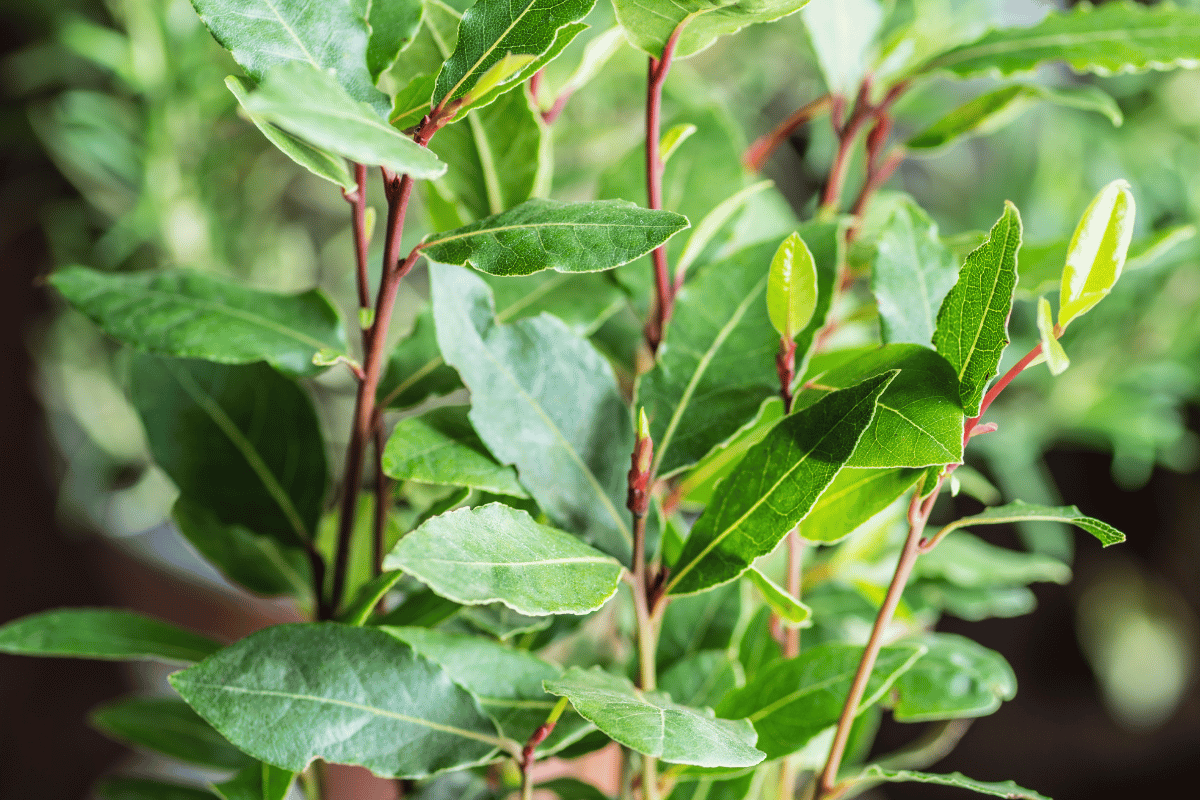
Bay laurel (Laurus nobilis) is one of the most rewarding plants you can grow at home. An evergreen shrub or small tree from the Mediterranean, it gives you a constant supply of aromatic leaves for the kitchen, looks beautiful in a pot by the door, and can live for decades with very little fuss. The Greeks called it daphne after the mythical nymph, and its leaves famously crowned poets, athletes and emperors.
This guide covers everything you need to grow bay successfully in a garden or in a container, from planting and watering to propagation and dealing with the most common pests.
What bay laurel looks like
Bay belongs to the laurel family (Lauraceae), alongside cinnamon and avocado. It is evergreen, keeping its glossy, dark green leaves year-round. Outdoors in the ground it usually reaches 2-5 metres, though in the right spot it can grow into a tree of 7-8 metres or more. In a container it stays much smaller, especially with regular clipping.
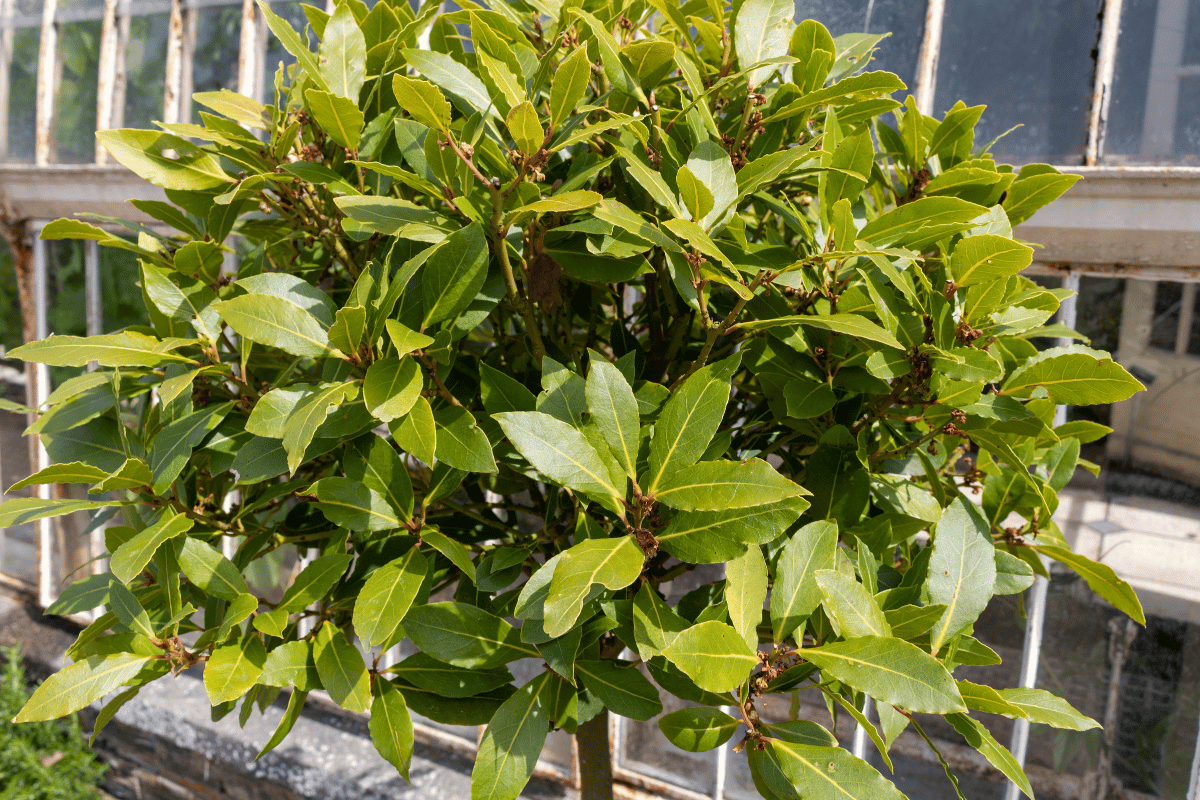
The leaves are leathery, lance-shaped and pointed, with a wavy edge that curls slightly inwards. Crush one between your fingers and you get the unmistakable warm, slightly spicy aroma. Small yellow flowers appear in spring. Bay is a dioecious species, meaning male and female flowers grow on separate plants, and only the females produce the small black berries you sometimes see in autumn. The berries are not edible.
Where bay grows best
Bay is native to the Mediterranean and is naturally hardy in mild coastal climates. It does well across USDA zones 8 to 10, and in cooler regions can be grown in containers and brought under cover for winter.
A few general rules:
- Warm Mediterranean climates: thrives outdoors year-round
- Mild temperate climates: plant in the garden against a sheltered south- or west-facing wall, which stores daytime heat and offers protection from cold winds
- Cold winters: grow in a container that can be moved indoors or into a greenhouse during the coldest months
Mature plants in the ground can handle short frosts down to around -5°C, sometimes a few degrees lower in sheltered positions. Young plants and containers are more vulnerable and benefit from fleece wrap or a sheltered porch when hard frost is forecast.
Bay enjoys full sun but tolerates partial shade. In very hot climates a bit of afternoon shade protects the leaves from scorching.
Soil
Bay is easy-going about soil as long as it drains freely. It grows in everything from sandy to lightly clay soil, and prefers a neutral to slightly acid pH (6.0-7.0).
The single most important thing, especially for container plants, is drainage. Waterlogged roots are the most common cause of bay laurel failure by some distance. If your garden soil is heavy clay, mix in plenty of horticultural grit when planting.
Planting bay laurel
The best planting window is from April to September, when the soil is warm and the plant has time to establish before winter. In very hot regions, spring or early autumn are kinder than mid-summer.
Planting in the ground
- Dig a hole twice the diameter of the rootball and the same depth
- Loosen the soil at the bottom of the hole and mix in some well-rotted compost or manure
- Position the plant so the top of the rootball sits level with the surrounding soil
- Backfill with soil and firm gently around the base
- Water in thoroughly
Growing bay in a container
Bay is one of the most popular container plants for entrances and patios, often grown as a lollipop standard or clipped into a cone or pyramid.
- Choose a pot at least 40-50 cm across for a mature plant. Terracotta is ideal because it allows the compost to breathe
- Use a soil-based, peat-free potting mix with extra horticultural grit or perlite (around 20-30%) for drainage
- Make sure the pot has plenty of drainage holes
- Repot every two years in spring. In the years in between, scrape off the top 5 cm of compost and replace with fresh
Watering
Newly planted bay needs regular watering during its first growing season to establish. Once settled in the ground, mature plants are quite drought-tolerant.
Container-grown bay needs more attention. The general rule is to water when the top 2-3 cm of compost feels dry. Check with your finger before reaching for the watering can.
Signs you're watering wrong
- Yellow leaves dropping off: usually too much water and waterlogged compost. Hold off for a few days and check drainage
- Crispy leaf edges or wrinkled leaves: usually too little water, particularly in containers during hot weather
Hard tap water can leave salt deposits that scorch the leaf edges of container plants. If you see this happening, switch to rainwater or filtered water, or leave tap water standing for a few hours so the chlorine evaporates.
Feeding
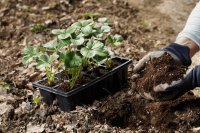
In the garden, an annual mulch of well-rotted compost or manure around the base in spring is all bay really needs.
Container-grown bay benefits from a slow-release granular fertiliser in spring, or a balanced liquid feed every two weeks from mid-spring through to late summer. Don't feed in winter when the plant is dormant.
If the leaves stay pale despite normal care, the plant is probably hungry or short of trace elements. For container plants this usually means it's time to refresh the compost.
Pruning and shaping
Bay laurel takes pruning extremely well, which is why it's so popular for topiary. You can shape it into balls, cones, spirals or lollipop standards, or simply keep it as a tidy bush. In Mediterranean homes you often see matched pairs flanking a doorway.
The best time to prune is from mid-spring to late summer. A few practical tips:
- Use secateurs rather than hedge shears. Shears slice through leaves and leave brown ragged edges
- Formal topiary shapes typically need two or three light clips a year to stay sharp
- A neglected bay can be cut hard back in spring and will regenerate, though it takes a year or two to look its best again
How to propagate bay laurel
There are three ways to propagate bay. Here are the trade-offs.
From semi-ripe cuttings
The most reliable method, and the one that keeps the characteristics of the parent plant.
- In late summer or early autumn, take 10-15 cm semi-ripe cuttings from healthy current-season growth
- Strip the lower leaves, leaving 2-3 pairs at the top
- Dip the cut end in rooting hormone if you have it
- Push the cuttings into a free-draining mix of peat-free compost and perlite
- Cover with a clear plastic bag or place in a propagator to keep humidity high
- Keep in a bright but shaded spot at around 20°C
The first roots appear in about a month and the cutting needs another 2-3 months before it can be potted on.
From layering
A slow but very reliable method. Bend a flexible low branch down to the ground, scrape the bark lightly with a knife where it meets the soil, peg it down with a stone or wire hoop and cover with soil. It will form its own roots in 6-12 months, after which you can cut it free from the parent plant.
From seed
The hardest method and one that asks for patience. Bay seeds have a stubborn dormancy. Cold-stratify them in damp peat in the fridge at around 4°C for 2-3 months before sowing in a well-drained mix at around 20°C. Germination takes anywhere from one to six months and is usually patchy. A seedling needs 6-10 years to reach a mature size, though you can pick a few leaves once it is properly established after the first couple of years.
Pests and problems
Bay laurel is generally robust, but there are a few common issues worth knowing about.
Bay sucker (Trioza alacris). The most distinctive pest of bay. You'll know it immediately: the edges of the young leaves curl tightly inwards, forming swollen, pouch-like galls that often turn yellow or pale. The grubs of the insect develop inside these galls. The pest also secretes a sticky honeydew that attracts ants and encourages sooty mould.
What to do: Pick off and bag any affected leaves and shoots as soon as you spot them. Don't compost them. For heavier infestations, spray with insecticidal soap (potassium soap) or a horticultural summer oil. A natural predator, the bug Anthocoris nemoralis, feeds on the larvae and helps keep populations down in established gardens.
Scale insects. Small brown or whitish bumps along stems and leaf undersides. They weaken the plant and produce honeydew. Treat by pruning out badly affected stems, wiping leaves with a cloth, or spraying with insecticidal soap or horticultural oil.
Sooty mould. A dark, sooty film on the surface of leaves. It doesn't attack the plant directly but grows on the honeydew left by sap-sucking insects. Deal with the underlying pest first, then wash the leaves with soapy water.
Root rot. The most serious problem, almost always linked to overwatering or poor drainage. Leaves go yellow in large numbers and the stem can become soft at the base. Once it sets in, root rot is hard to reverse. Prevention through proper potting mix and careful watering is everything.
Leaf spot. Dark patches on leaves, usually appearing when the roots sit in waterlogged compost or after long wet spells. Improve drainage and refresh the potting mix in spring.
Peeling bark. Sometimes seen on the lower stems of established plants after a harsh winter. The exact cause isn't fully understood but it's usually linked to cold damage and fluctuating soil moisture. Plants normally recover.
Harvesting and storing bay leaves
You can pick bay leaves all year round, but the flavour is at its strongest just before flowering, in late winter or early spring.
Take mature leaves from stems at least one year old. Fresh leaves can be used straight away in cooking, or dried for long-term storage.
To dry bay leaves, lay them in a single layer on a tray and leave them somewhere shaded and well ventilated for one to two weeks. Avoid direct sunlight, which oxidises the essential oils and weakens the aroma. Once they are completely dry and snap cleanly, store them in airtight glass jars in a cool, dark place. Home-dried bay keeps its aroma for around a year, and is usually much more flavourful than supermarket packets.
Uses for bay laurel
In the kitchen. The classic use. Bay leaves go into soups, stocks, stews, beans, lentils, slow-cooked meats, tomato sauces and fish dishes, and they're an essential part of a bouquet garni. Add them whole at the start of cooking and remove them before serving. Two or three leaves are plenty for a family-sized pot.
Ornamental. Bay's slow growth and tolerance of clipping make it perfect for topiary and entrance plants. The yellow-leaved cultivar Laurus nobilis 'Aurea' adds colour contrast in formal schemes. The willow-leaved form L. nobilis f. angustifolia has narrower leaves that are still usable in the kitchen. Both have the Royal Horticultural Society's Award of Garden Merit.
Aromatic and traditional. Bay branches are often hung in kitchens for fragrance and traditionally to ward off pantry moths. Bay essential oil and bay berry oil are widely used in soaps (most famously traditional Aleppo soap), massage oils and cosmetics.
Frequently asked questions about bay laurel
How long does it take to grow a bay tree? Bay is a slow grower. A nursery plant takes 3-5 years to reach a decent size in the garden. From seed, expect 6-10 years to reach mature size. Cuttings are faster than seed but still need patience.
Can I grow bay laurel indoors? Yes, provided you can give it plenty of light. A sunny conservatory, a south-facing window or a bright porch all work well. The dry air of central heating can stress the plant, so an occasional mist of the leaves in winter helps. Bay prefers a cool room in winter to a warm one.
Why are my bay leaves curling and thickening at the edges? Almost certainly bay sucker (Trioza alacris). Pick off the affected leaves and bag them, and treat heavier infestations with insecticidal soap or horticultural oil.
Is bay laurel poisonous? The leaves of true bay laurel (Laurus nobilis) are safe to use in cooking and have been used that way for thousands of years. Be careful not to confuse it with other plants sometimes called "laurel" that are toxic: cherry laurel (Prunus laurocerasus), oleander (Nerium oleander), mountain laurel (Kalmia latifolia) and California bay (Umbellularia californica) are all unrelated and should never be used in cooking. True bay berries are also not edible and should be considered ornamental only.
When should I harvest my bay leaves? You can pick leaves whenever you need them for cooking. For drying and storing, the best time is late winter to early spring, just before flowering, when the leaves are at their most aromatic.
My bay tree doesn't produce berries. Why? Bay is dioecious, meaning male and female flowers are on separate plants. Only female plants produce berries, and they need a male nearby to be pollinated. For culinary use, it doesn't matter whether your plant ever flowers or fruits.
Can I leave my potted bay outside in winter? In mild climates, yes. In colder regions, move the pot to a sheltered porch, unheated greenhouse or cool indoor room. Wrap the pot itself with bubble wrap or hessian to protect the roots, which are more cold-sensitive than the foliage.
Important notes
Every plant and every garden is unique. Conditions vary significantly depending on your region, exposure, water quality, soil pH and the overall health of the plant, so the guidance above is general and a starting point rather than a strict rule.
If you suspect a serious nutrient deficiency or disease that doesn't respond to basic remedies, consider talking to a horticulturist, local garden centre or a qualified agronomist for accurate diagnosis. For persistent problems, a simple soil test can identify the actual issue and save you time and money on trial-and-error treatments.
Use plant protection products with care. Try non-chemical methods first wherever possible (cultural practices, insecticidal soap, horticultural oil, beneficial insects). When chemical intervention is needed, use only products approved for ornamental and edible herb use, follow the dosage on the label exactly, and avoid spraying when pollinators are active in the garden.
References
- Royal Horticultural Society. Bay tree (Laurus nobilis): RHS Advice Guide.
- Caputo, L., Nazzaro, F., Souza, L. F., Aliberti, L., De Martino, L., Fratianni, F., Coppola, R., & De Feo, V. (2017). Laurus nobilis: Composition of Essential Oil and Its Biological Activities. Molecules, 22(6), 930.
- Chatzopoulou, P. et al. (2022). Bay Laurel (Laurus nobilis L.) Essential Oil as a Food Preservative Source. Foods, 11(5), 752.
- Konovalov, D. A., et al. (2022). A Review of the Botany, Volatile Composition, Biochemical and Molecular Aspects, and Traditional Uses of Laurus nobilis. Plants, 11(9), 1209.
- Ben Halima Kamel, M., Zouari, S., Adouani, R., Mdellel, L., & Ouvrard, D. (2021). First report of the bay sucker Trioza alacris Flor in Tunisia. EPPO Bulletin, 51, 290-292.
- CABI Compendium. Laurus nobilis (sweet bay) datasheet.
- Purdue University, Center for New Crops. Bay Laurel factsheet.
- McCormick Science Institute. Bay Leaf.