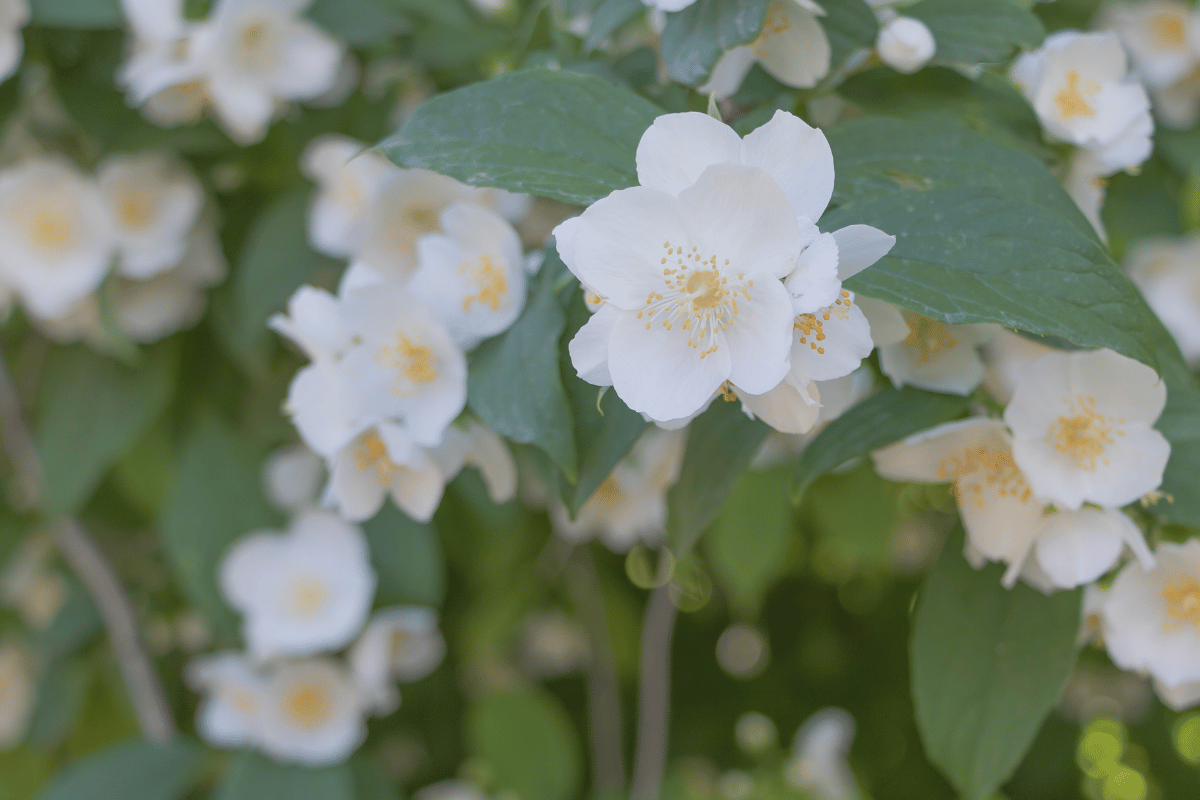
How to grow and care for jasmine
Jasmine is probably the most beloved fragrant climber of the Mediterranean and beyond. On warm summer nights, its sweet scent drifts through courtyards, gardens and balconies across southern Europe and far beyond. It's one of those plants that becomes part of the experience of summer itself.
When we say "jasmine", we mean any of several species in the genus Jasminum. All true jasmines belong to the olive family (Oleaceae), the same family as the olive tree. It shouldn't be confused with night-blooming jasmine (Cestrum nocturnum), which despite the similarly intense fragrance belongs to an entirely different botanical family.
This guide covers the species you'll find in shops and garden centres, planting, watering, pruning, propagation, and the most common problems.
What jasmine symbolises
In Mediterranean tradition, jasmine has long been associated with pure love, beauty and sensuality. In the language of flowers it represents tenderness and grace. In poetry and folk songs across the region it often appears as an image of romantic longing.
In Syria, Indonesia and Pakistan, different species of jasmine are national flowers. In India and the Arab world it's traditionally used in wedding ceremonies as a symbol of purity. In France and Italy, jasmine is a key ingredient in the perfume industry, with Spanish jasmine (J. grandiflorum) commercially grown in Calabria and southern France specifically for that purpose.
Common jasmine species
Although we tend to say "jasmine" as if it were one plant, there are several species you'll come across in gardens and on balconies. Each has slightly different requirements and a different flowering season.
Jasminum officinale (common jasmine): the most widely grown. A deciduous or semi-evergreen climber with small white star-shaped flowers and a strong scent. Flowers from June to September. One of the hardiest jasmines.
.png)
Jasminum grandiflorum (Spanish jasmine, also known as Catalonian or royal jasmine): closely related to officinale but with larger flowers tinged pink at the petal edges. Holds an RHS Award of Garden Merit. More cold-sensitive, best in warm regions.
.png)
Jasminum polyanthum (pink jasmine, Chinese jasmine): an extremely vigorous climber with very heavy flowering. Pink buds open into highly fragrant white flowers. Less hardy, usually grown in a container or in sheltered positions.
.png)
Jasminum nudiflorum (winter jasmine): the odd one out. An arching shrub with yellow unscented flowers that appear on bare stems from January through March. The hardiest of all jasmines, ideal for colder regions.
.png)
Jasminum sambac (Arabian jasmine, sambac): a highly fragrant species with round white double flowers, less common in gardens but popular in containers. This is the jasmine used to flavour jasmine tea.
.png)
Where to grow jasmine
Most jasmines love warmth, which makes them well-suited to most parts of Europe and the warmer parts of North America. Their cold-hardiness varies considerably by species, though.
By climate.
- Warm Mediterranean and subtropical regions: every species thrives outdoors. Grandiflorum and sambac do especially well here
- Mild temperate climates: officinale and nudiflorum are hardy enough for the open garden. Grandiflorum and polyanthum are best against a south- or west-facing wall
- Cool temperate and cold climates: nudiflorum is the safest choice for the garden. Other species are better grown in containers that can come indoors for winter
All jasmines want plenty of sun and shelter from strong wind. In the hottest regions, a bit of afternoon shade keeps the leaves from scorching in summer.
Because the fragrant jasmines (all but the winter one) have a strong scent, it's worth thinking carefully about location. Near a patio, garden seating area or bedroom window, the fragrance becomes a daily pleasure. For very scent-sensitive people, though, it can feel intense when the plant is right inside or very close to the house.
Soil
Jasmines aren't particularly fussy about soil, as long as it drains well. They prefer fertile, moderately moist soil with a neutral pH (6.0-7.5). Waterlogged roots are one of the few things that genuinely trouble them.
Before planting, work some well-rotted compost or manure into the soil. On heavy clay, add coarse grit to improve drainage.
Planting
The best planting times are spring (March-April) and autumn (September-October). Autumn planting gives the roots time to settle in before spring.
Planting in the ground
- Dig a hole twice the diameter of the rootball and the same depth
- Loosen the soil at the bottom and work in well-rotted compost or manure
- Position the plant so the top of the rootball sits level with the surrounding soil
- For climbing species, leave at least 30-45 cm between the plant and any wall or fence
- Backfill with soil, firm gently and water in well
- Tie the stems into the support (pergola, trellis or wires) straight away
Growing jasmine in a container
Almost all jasmines do well in containers, which makes them perfect for balconies and patios, especially for the more tender species like polyanthum and sambac.
- Choose a pot at least 40-50 cm in diameter with plenty of drainage holes
- Use a good-quality compost with about 20% perlite or coarse grit for drainage
- Put the support in the pot from the start, so you don't disturb the roots later
- In cold regions, container culture gives you the option to move the plant under cover for winter
Watering
In the garden, water young plants regularly during their first year until they establish. Mature jasmines cope well with dry spells and mainly need water during prolonged rainless periods in summer. One thorough soaking once or twice a week is better than a little water every day.
In a container, water when the top 2-3 cm of compost feels dry. In the hottest summer months, container plants may need watering every single day.
Water thoroughly until you see water draining from the holes. Don't leave the saucer full of water under the pot. Root rot is one of the most serious causes of loss in container-grown jasmines.
Feeding
In the garden, an annual mulch of well-rotted compost or manure around the base in spring usually covers a jasmine's needs. For richer flowering, add a balanced fertiliser for flowering plants in early spring and a second feed in midsummer.
For container plants, use a liquid feed every two weeks during the growing and flowering season. Choose a formulation with higher potassium relative to nitrogen. Too much nitrogen pushes leaf growth at the expense of flowers.
Stop feeding in winter.
Pruning
Pruning is important to keep jasmine in shape and flowering well. The timing depends on the species.
Summer-flowering jasmines (officinale, grandiflorum, polyanthum, sambac). Prune straight after flowering, usually in late summer or early autumn. Remove dead stems, shoots that have flowered, and lightly tip-prune to encourage bushier growth and new flowering shoots for next year.
Winter jasmine (nudiflorum). Prune straight after flowering, in spring. Cut back any stems that have flowered to a pair of healthy buds at the base. Winter jasmine flowers on old wood, so pruning at the wrong time means losing the next year's flowers.
On established plants, every few years it's worth a harder renewal pruning, removing up to a third of the oldest stems at the base. This keeps the plant youthful and productive.
Propagation
Jasmines are easy to propagate from cuttings or by layering.
From stem cuttings
- In late spring or early summer, take 10-15 cm semi-ripe cuttings from healthy current-season stems
- Strip the lower leaves and leave 2-3 pairs at the top
- Dip the base in rooting hormone
- Insert into a mix of peat-free compost and perlite
- Cover with a clear plastic bag to keep humidity high
- Keep in a bright but shaded position at around 20°C
Rooting takes 4-8 weeks.
From hardwood cuttings
Winter jasmine roots best from hardwood cuttings taken in winter. Cut 20-25 cm sections of woody stem from the previous season's growth and insert them directly into a sheltered spot in the garden.
From layering
A very reliable method for all climbing jasmines. Bend a low, flexible stem down to the ground, nick the bark lightly where it touches the soil, cover with soil and weight it down with a stone. It will root in 3-6 months, after which you can sever it from the parent plant.
Common problems
Jasmine not flowering: the most common reason is pruning at the wrong time. If you prune a summer jasmine in spring, you remove the flower buds. Other causes are insufficient light, too much nitrogen fertiliser, or a young plant that simply needs more time to establish.
Yellowing leaves: often caused by overwatering or poor drainage. On alkaline soils you may also see interveinal chlorosis from iron deficiency, which is treated with chelated iron.
Leaves dropping in winter: this is natural for the deciduous species (officinale, nudiflorum, and grandiflorum in cooler areas). New leaves will appear in spring.
Dieback and frost damage: tender species can suffer after hard winters. Cut affected sections back to the first pair of healthy buds in spring, and the plant will usually recover from the base.
Pests and diseases
Aphids: small green or black insects on tender shoots and flower buds. Rinse off with a strong jet of water or spray with insecticidal soap.
Scale insects: small brown or whitish scales along the stems. For small infestations, remove them with a cotton bud dipped in rubbing alcohol. For heavier ones, spray with horticultural oil.
Mealybugs: white cottony patches in leaf joints and stem crotches. Treat with a cotton bud dipped in rubbing alcohol or spray with insecticidal soap.
Spider mites: in dry, hot conditions, particularly on plants grown indoors. Leaves develop fine yellow stippling and thin webbing appears on the undersides. Raise humidity and spray with water under pressure.
Sooty mould: a black film on the leaves that grows on the honeydew left by sap-sucking insects. Deal with the underlying pest first, then wipe the leaves with mild soapy water.
Root rot: the most serious disease, caused by overwatering or poor drainage. Very difficult to reverse once established. Prevention through proper potting mix and careful watering is everything.
Is jasmine toxic?
True jasmines of the genus Jasminum are not toxic to humans or pets. According to the ASPCA, Jasminum isn't listed as toxic to dogs or cats. This is an important distinction from night-blooming jasmine (Cestrum nocturnum), which despite its common name is a completely different plant and is toxic.
A word of caution, though. Several plants commonly called "jasmine" aren't true jasmines, and some of them can be toxic. Star jasmine or false jasmine (Trachelospermum jasminoides) is a different plant entirely, and oleander (Nerium oleander) has nothing to do with jasmine but is sometimes sold under confusing labelling.
Frequently asked questions
Why isn't my jasmine flowering? The most common reason is pruning at the wrong time. If you have a summer-flowering jasmine and prune it in spring, you remove the flower buds. Prune after flowering instead. Other causes are insufficient light, too much nitrogen in your fertiliser, or a plant that simply isn't established yet.
How fast does jasmine grow? Climbing jasmines are vigorous. Officinale and polyanthum can put on 60-100 cm a year once established. In 3-4 years they easily cover a pergola or wall 3-4 metres in size.
When does jasmine flower? It depends on the species. Summer-flowering jasmines (officinale, grandiflorum) bloom from June to September. Polyanthum flowers earlier in spring. Winter jasmine (nudiflorum) flowers from January to March. Arabian jasmine (sambac) flowers almost continuously through its active growing period in warm climates.
Can I grow jasmine indoors? Yes, particularly the more tender species like polyanthum and sambac. Place in a bright spot near a south- or east-facing window. Indoors, though, the strong fragrance can occasionally feel overpowering.
Is night-blooming jasmine the same as true jasmine? No. Despite the common confusion, night-blooming jasmine (Cestrum nocturnum) belongs to the nightshade family (Solanaceae, with tomato and potato), while true jasmines belong to the olive family (Oleaceae). The only thing they share is a strong night-time scent.
Is star jasmine a true jasmine? No. Star jasmine (Trachelospermum jasminoides) is a climber in the family Apocynaceae. Although the flowers look and smell similar, it isn't botanically related to true jasmines.
How do I increase flowering? Light, the right pruning timing, and a fertiliser higher in potassium. Also, avoid overwatering during the flowering period, and give the plant time to establish well for its first year or two before expecting heavy flowering.
Important notes
Every plant and every garden is unique. Conditions vary significantly depending on your region, exposure, water quality, soil pH and the overall health of the plant. The guidance above is general and a starting point rather than a strict rule.
If you suspect a serious nutrient deficiency or disease that doesn't respond to basic remedies, consider talking to a horticulturist or local garden centre for accurate diagnosis. For persistent flowering problems, a simple soil test gives you a clear picture of pH and nutrient availability.
Use plant protection products with care. Try non-chemical methods first wherever possible (cultural practices, insecticidal soap, horticultural oil). When chemical intervention is needed, use only products approved for ornamental garden use, follow the dosage on the label exactly, and avoid spraying when bees and other beneficial insects are active in the garden.
References
- Royal Horticultural Society. How to grow jasmine.
- Royal Horticultural Society. Jasminum officinale plant details.
- Royal Horticultural Society. Jasminum grandiflorum plant details.
- Royal Horticultural Society. Jasminum nudiflorum plant details.
- Royal Horticultural Society. Jasminum polyanthum plant details.
- Missouri Botanical Garden. Jasminum officinale plant finder.
- ASPCA Animal Poison Control. Toxic and Non-Toxic Plants: Jasmine.
- Kew Science. Plants of the World Online: Jasminum grandiflorum.