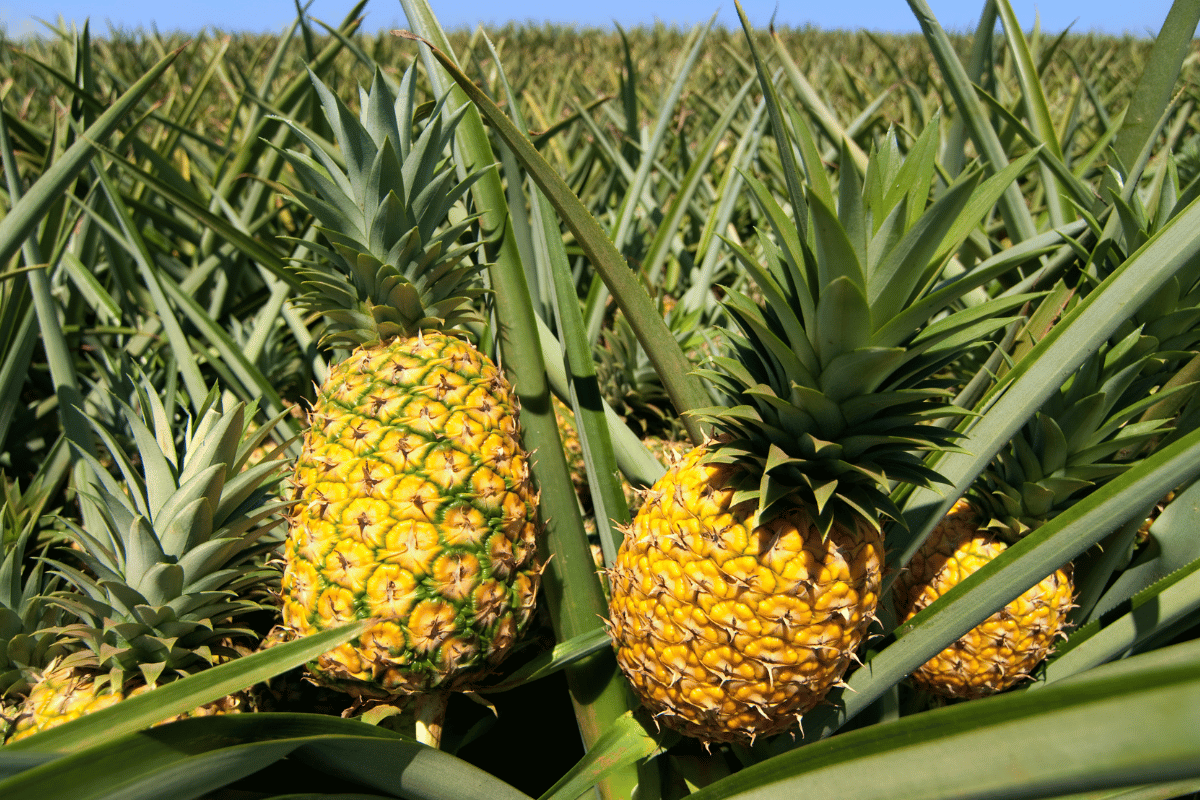
Pineapple (Ananas comosus) cultivation has transformed from a colonial curiosity into a thriving international business. Whether you're a new grower or an established producer, this guide provides everything you need to successfully plan, grow, manage, and export pineapples at a commercial scale. From land preparation to post-harvest handling and export standards, this guide answers the key questions that farmers, agronomists, and agro-exporters search for.
Understanding pineapple as a commercial crop
Pineapple Plant Characteristics and Growth Requirements
Pineapples (Ananas comosus) belong to the Bromeliaceae family and are perennial plants with unique morphological characteristics that influence commercial cultivation practices. The plant features a central stem with sword-like leaves arranged in a rosette pattern, and under optimal conditions, develops an extensive adventitious root system extending up to 1-2 meters laterally and 0.85 meters in depth. This shallow root system makes pineapples particularly sensitive to soil conditions and water management, requiring careful attention to drainage and soil preparation.
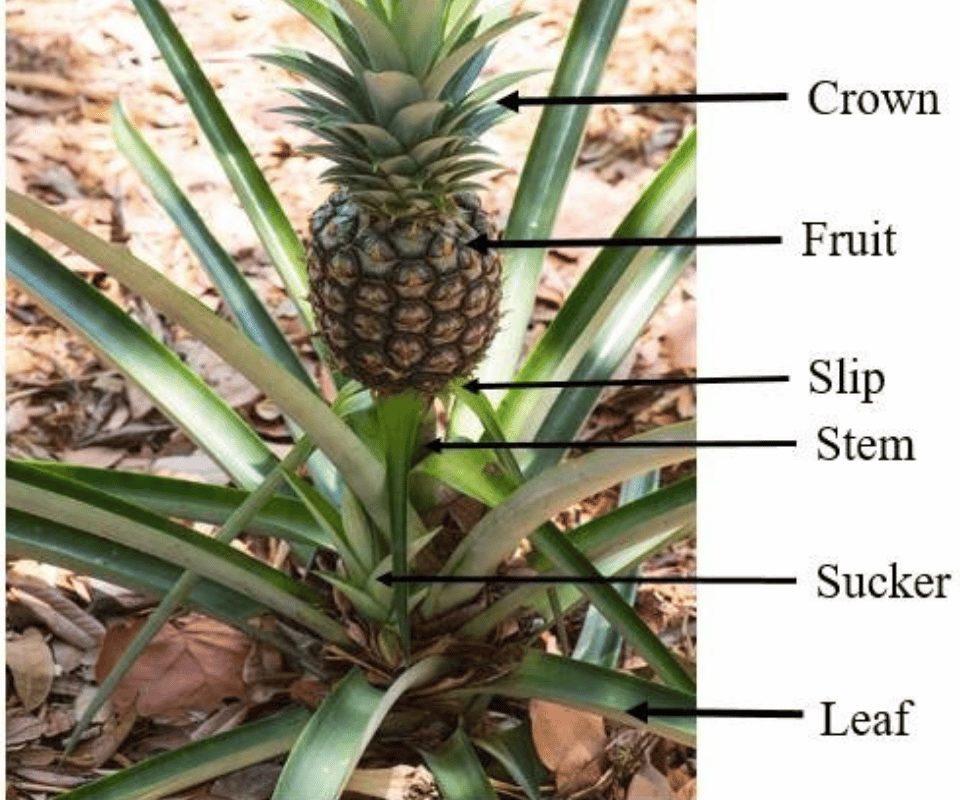
Image 1: Pineapple plant parts
The plant's growth cycle typically spans 18-24 months from planting to harvest, depending on the variety and growing conditions. Pineapples possess a unique photosynthetic adaptation called Crassulacean Acid Metabolism (CAM), which allows them to photosynthesize during the day while opening stomata for gas exchange only at night. This adaptation makes pineapples remarkably water-efficient compared to other tropical fruits, enabling cultivation in areas with limited rainfall when properly managed.
Commercial pineapple cultivation benefits from the plant's hermaphrodite flowers and parthenocarpic fruit development, meaning pollination is not required for fruit formation. This characteristic eliminates concerns about pollinator availability and allows for consistent fruit production. However, growers must avoid cross-pollination with different varieties, as this leads to seed formation and reduced fruit quality.
Each farming environment is unique. While this guide provides general best practices, growers should always consult local agronomists or extension services, particularly when planning fertilizer programs and pest management strategies.
Global market and production trends
The international pineapple market demonstrates strong growth potential, with Europe and North America consuming over 50% of all fresh fruit imports worldwide. European demand for pineapples has increased significantly, creating opportunities for tropical countries to expand production and export capabilities. Major exporting countries include Costa Rica and the Philippines, while primary importing nations are the United States, Netherlands, and Germany.
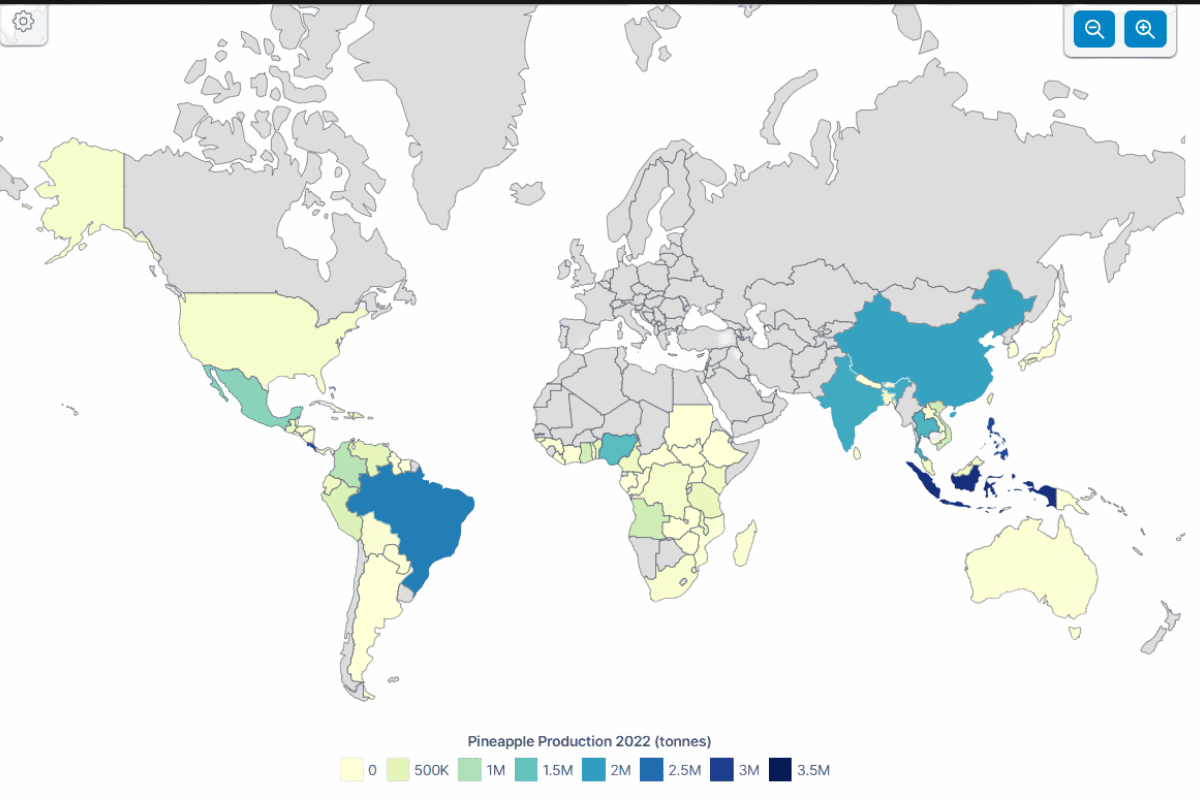
Image 2: Map of pineapple global production
Market preferences vary significantly between fresh consumption and processing applications. Fresh fruit markets typically prefer larger fruits (3-5 kg), while processing operations favor medium-sized fruits (1.3-1.5 kg) for optimal canning and juice production. Understanding target market requirements is essential for determining appropriate varieties, planting densities, and cultivation practices that align with commercial objectives.
The global quality standard for international trade requires pineapples to have a Total Soluble Solids (TSS) level greater than 12°Brix and maximum acidity of 1% as established by CODEX and FAO/WHO. These standards ensure consistent quality expectations across international markets and provide clear benchmarks for harvest timing and post-harvest management.
Which pineapple varieties are best for commercial farming?
|
Variety |
Key Traits |
Main Use |
|
MD-2 |
Golden flesh, sweet (17° Brix), long shelf life |
Fresh export market |
|
Smooth Cayenne |
Cylindrical, 12–16° Brix, high acid |
Canning, local trade |
|
Queen |
Aromatic, deep yellow, less fiber |
Fresh consumption |
|
Red Spanish |
Barrel-shaped, sweet, fibrous |
Local and regional |
|
Abacaxi |
Very sweet, juicy, soft flesh |
Local markets |
|
Sugarloaf |
Conical, juicy, non-transportable |
Specialty markets |
Want to Go Further?
Take our Tropical Fruit Cultivation & Trade course and master pineapple farming from seed to market. Includes 6 modules, expert insights, and a premium certificate.
👉 Start learning now – the first module is free
What are the ideal conditions for growing pineapple?
Pineapple thrives in warm, humid climates with well-distributed rainfall (760–1,000 mm annually), average temperatures of 20–30 °C (68–86 °F), and sandy or loamy soils with good drainage. It grows best between latitudes 30°N and 33°S, up to 1000 m altitude.
Key soil requirements:
- pH: 4.5 to 5.6
- Depth: At least 45–60 cm (18–24 inches)
- Rich in potassium and organic matter
- Avoid heavy clay or saturated soils
How to prepare land for pineapple cultivation?
Land preparation ensures strong root growth and high productivity. Steps include:
- Deep plowing (60–75 cm) and repeated harrowing
- Organic matter incorporation (e.g., compost, manure)
- Soil pH correction using lime or sulfur, depending on alkalinity
- Efficient drainage systems to prevent Phytophthora-related losses
What is the best irrigation system for pineapples?
Pineapples are drought-tolerant but respond well to irrigation, especially in dry or subtropical areas.
Rainfall needs: 600–1000 mm annually; 80–100 mm/month ideal
Critical phase: Late vegetative stage before flowering
Irrigation methods:
- Sprinklers: Best for early root establishment
- Drip irrigation: Preferred during flowering and fruiting stages
Water Conservation Strategies
The combination of drip irrigation and plastic mulch creates highly efficient water management systems suitable for commercial operations1. These integrated systems reduce water consumption by 30-40% compared to conventional irrigation while improving fruit quality and reducing pest and disease pressure. Commercial operations should prioritize these water-efficient technologies for sustainable production and cost management.
Pro tip: Plastic mulch enhances water efficiency in drip systems
How are pineapples propagated and planted?
Pineapples are propagated asexually from crowns, slips, hapas, and suckers.
Most common material: Suckers — shorten time to harvest and improve yield uniformity.
Suckers represent the preferred propagation material for most commercial operations, emerging from the lower stem area before roots develop. These materials typically achieve appropriate weight (500-550g) that guarantees reduced time for flower induction compared to other propagation types, effectively shortening the cycle from planting to harvest. Suckers generally produce fruit within 12-14 months when obtained from ratoon production or 18-20 months when harvested from primary plants.
Slips develop from the peduncle immediately beneath the fruit and often feature rudimentary fruit remnants at their base. While slips typically weigh less than suckers (usually 200g or less), they provide reliable propagation material that produces fruit within 14-16 months after planting. Commercial operations often prefer slips for their availability and consistent performance characteristics.
Crowns from fruit tops represent the most readily available propagation material but require longer production cycles. Crown-propagated plants typically require 20-24 months to reach harvest maturity due to their lower initial weight and slower establishment. While crowns are less preferred for commercial operations due to extended production cycles, they provide a reliable source of propagation material for expanding operations.
Planting recommendations:
- Depth: Crowns (5 cm), slips/suckers (9–10 cm)
- Density: 31,000–75,000 plants/hectare (12,600–30,400/acre)
- Best layout: Double-row system with 0.9–1.8 m alleys between pairs
The double-row planting system provides optimal commercial results by maximizing space utilization while facilitating mechanized operations. This system typically employs spacing of 10-12 inches (25-30 cm) between plants within rows, 2 feet (60 cm) between paired rows, and 3-6 feet (0.9-1.8 m) alleys between row pairs. This configuration achieves average population densities of 38,140 plants per hectare while allowing equipment access for cultivation, fertilization, and harvest operations.
Single-row systems, while less efficient, may be appropriate for smaller operations or areas with challenging terrain. However, single-row planting provides insufficient shade protection, increasing sunburn risk and reducing fruit quality. Commercial operations should prioritize double-row systems for their superior protection, space efficiency, and operational advantages.
What are the fertilization needs of pineapple?
Balanced nutrition is essential. Always start with a soil analysis. Typical nutrient needs (per hectare/year):
- Nitrogen: 600–900 kg/ha/year
- Phosphorus (P₂O₅): 150–300 kg/ha/year
- Potassium (K₂O): 600–1,000 kg/ha/year
- Other nutrients: Sulphur, calcium, magnesium, zinc, and iron
Application tips:
- Foliar spraying is common and cost-effective
- It is recommended to split N applications throughout vegetative growth
- Stop nitrogen two months before flower induction
- Use fertigation or backpack sprayers for liquid applications
When and how does a pineapple flower?
- Natural flowering is irregular, especially in cold seasons
- Artificial flower induction (forcing) uses ethylene gas or NAA
- Use 2.272 kg/ha ethylene gas in 7000 L water for uniform flowering
Note: Pineapples are parthenocarpic and do not require pollination for fruit set, but over-pollination can reduce fruit quality.
How to manage pests, diseases, and weeds in pineapple farming?
Major pests:
- Nematodes: Root damage, reduced yield — use crop rotation, cover crops (e.g., sunn hemp)
- Mites: Red and fruit mites damage fruit and leaves — controlled with foliar sprays
- Symphylids: Root feeders — managed via crop rotation and soil treatment
Major diseases:
- Black rot (Ceratocystis paradoxa)
- Fruitlet core rot
- Fruit collapse (Erwinia chrysanthemi)
- Internal browning (blackheart)
Control measures include:
- Managing insect vectors
- Sanitary harvesting
- Avoiding water stress and bruising
Weed management:
- You can use plastic mulch and targeted herbicides
- Manual weeding may be necessary in alleys or small-scale setups
When is the right time to harvest pineapples?
The most reliable harvest indicator involves monitoring skin color changes from green to yellow, with optimal harvest occurring when 1/3 to 2/3 of the fruit surface displays yellow coloration. However, this visual indicator varies significantly among varieties and market destinations, requiring cultivar-specific harvest protocols and market-oriented quality standards.
- Usually 3+ months after flower induction
- Harvest index: 1/3 to 2/3 peel color turning yellow
- Leave 2.5 cm of peduncle when cutting
- It is recommended to avoid bruising and handle fruits gently to preserve shelf life
How to manage post-harvest handling and storage?
- Grading and cleaning: Remove defects, apply wax/fungicides
- Precooling: Reduces ethylene production and dehydration
- Storage: Keep at 7.1–10 °C (44.8–50 °F) for transport exceeding 3 days
Export Requirements and Quality Standards
International export markets impose strict quality requirements that commercial operations must understand and implement. European market requirements specify that exported pineapples must be intact with or without crowns, free from scars, bruising, cracks, or mechanical damage that could reduce quality. Fruits must demonstrate good condition without rotting or deterioration that affects consumption safety.
Cleanliness standards require exported fruits to be practically free from visible foreign matter, including chemical residues, dust, soil, or other contaminants. Pest freedom represents another critical requirement, with acceptable limits of single insects, mites, or pests per sample or package, while any colonies result in shipment rejection.
Physical quality standards demand that both fruits and crowns remain firm and turgid without signs of drying, shrinking, or wilting. Fruits must be free from abnormal external moisture, foreign odors, or tastes that could develop from poor storage or transportation practices with other products that emit volatile compounds.
Codex standard for export:
- Total soluble solids > 12° Brix
- Acidity < 1%
- Firm, clean, pest-free fruit with intact or reduced crown
Conclusion: Is pineapple farming right for your business?
If you're a farmer aiming to scale up or an investor exploring tropical fruit exports, pineapple cultivation offers solid returns when managed right. Understanding plant biology, irrigation needs, soil conditions, and market standards is key to entering competitive markets confidently and profitably.