
Crops can be made more nutritious again through three proven routes: breeding varieties with more iron, zinc or vitamin A, known as biofortification, fertilisers that carry micronutrients into the grain, and soil management that keeps trace minerals available to roots. The need is real. Higher-yielding varieties often carry lower concentrations of minerals, a pattern known as the dilution effect, and rising carbon dioxide in the atmosphere is lowering the zinc, iron and protein content of staple grains. The results are measurable. Foliar zinc sprays raised the zinc in wheat grain by 84% across seven countries without any loss of yield, and Finland has raised the selenium status of its whole population by adding selenium to fertilisers since 1984. This guide covers why nutrient density matters on World Food Day 2026, what drives the decline, and how breeding, fertilisation, soil care and diet can reverse it.
Why hidden hunger matters on World Food Day 2026
The theme of World Food Day 2026, on 16 October, is "Innovate today. Nourish tomorrow." FAO describes it as a call to use science, technology and innovation, alongside traditional knowledge, to build agrifood systems that nourish people today and protect the resources future generations depend on.
Nourishing means more than calories. According to The State of Food Security and Nutrition in the World 2025, about 673 million people faced hunger in 2024, and 2.6 billion could not afford a healthy diet. The same report notes that the global prevalence of anaemia in women aged 15 to 49 rose from 27.6% to 30.7% in the latest update. HarvestPlus estimates that around 2 billion people suffer from "hidden hunger", a lack of vitamins and minerals that often shows no visible signs. Many of them eat enough food, but food that is too low in iron, zinc or vitamin A.
What drives the decline in nutrient density
Three forces explain most of the decline documented in crops, each covered in detail in Is food becoming less nutritious?.
- Breeding for yield: decades of selection for size, speed and yield, with nutrient content rarely measured, produced varieties whose minerals are spread across more starch. Long-term wheat records at Rothamsted show grain mineral concentrations falling after semi-dwarf varieties arrived, even though soil mineral levels did not change
- Rising carbon dioxide: in field trials at 546 to 586 ppm of CO2, the level expected around the middle of this century, Myers and colleagues found that wheat grain contained 9.3% less zinc, 5.1% less iron and 6.3% less protein than wheat grown at current levels. Rice lost 7.8% of its protein. Legumes lost zinc and iron but not protein, while maize and sorghum showed no significant change
- Soil: where soils are low in micronutrients such as zinc or selenium, the crops grown on them carry less, whatever the variety
These forces act together, so the solutions work best together as well.
Breeding crops for higher nutrient content
Biofortification breeds staple crops for higher levels of essential micronutrients, using conventional breeding. The HarvestPlus programme, part of CGIAR, focuses on iron, zinc and vitamin A in crops that poor households eat every day. According to HarvestPlus, more than 493 varieties of 13 biofortified staple crops were available to farmers in 41 countries in 2025. Its new tracking method estimates that up to 650 million people were eating biofortified foods across its 13 target countries, including nearly 9.6 million people in Malawi, 46% of the population, who were eating iron-rich beans. The programme aims to reach one billion people by 2030.
The 2024 HarvestPlus annual report records 12 new biofortified varieties approved by governments in five countries that year, including three new zinc wheat varieties, and describes them as offering farmers competitive yields alongside more nutrients. The Library's guide to biofortification covers how the approach works crop by crop.
Breeding can also respond to rising CO2. Myers and colleagues found that zinc and iron concentrations varied substantially between rice cultivars, and they listed breeding cultivars that are less sensitive to CO2 among the ways to limit its effect on nutrition, together with biofortification.
Fertilisers that carry micronutrients into the grain
Agronomic biofortification adds micronutrients through fertilisers, so that more reaches the edible part of the crop. It works within a single season and with existing varieties.
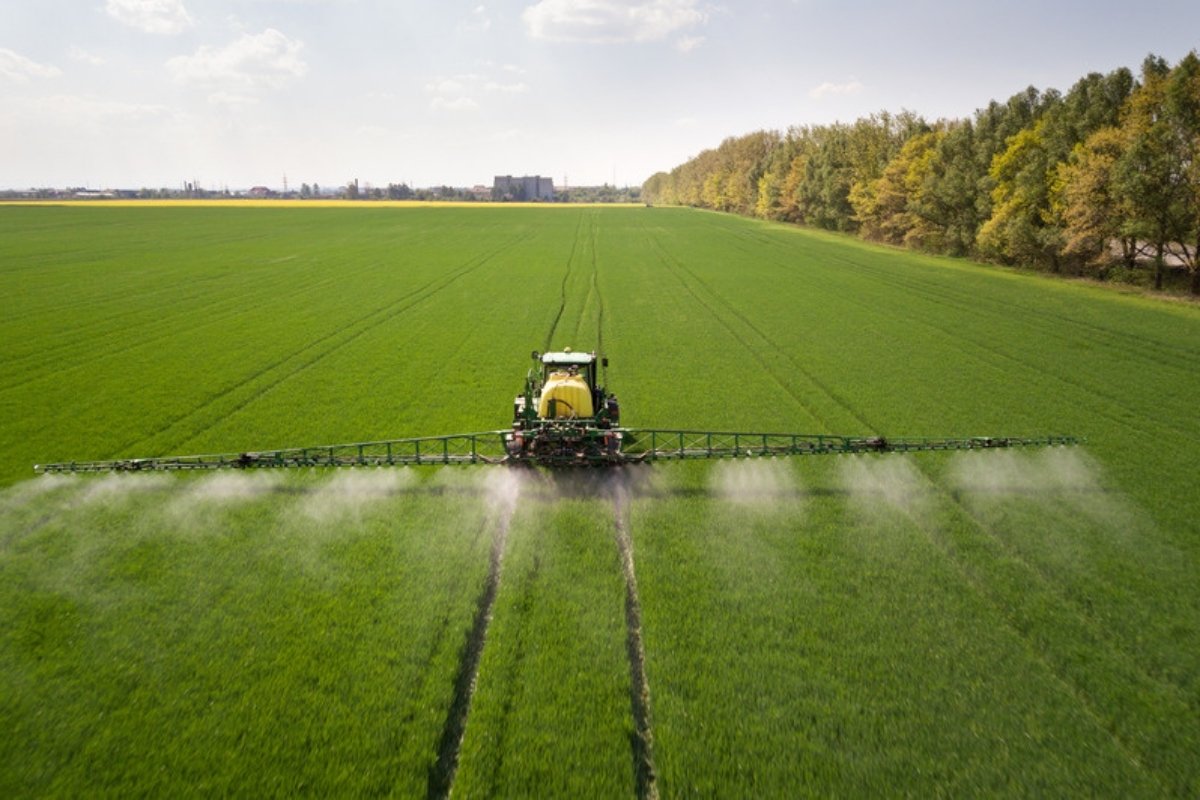
In trials across seven countries, a foliar zinc spray raised zinc in wheat grain by 84% without any loss of yield.
Zinc sprays on wheat
The strongest evidence comes from the HarvestZinc field trials. Across 23 site-years in China, India, Kazakhstan, Mexico, Pakistan, Turkey and Zambia, Zou and colleagues found that a foliar zinc spray raised wheat grain zinc from 27 to 48 mg per kg, an increase of 84%, while soil plus foliar application reached 90%. Zinc applied to the soil alone raised grain zinc by only 12%. The foliar spray caused no loss of yield, and soil zinc raised yields by about 5% overall. The effect held regardless of soil, environment, management and cultivar.
Finland's selenium in every fertiliser
Finland offers the only example of a whole country doing this. In the 1970s, the average Finnish selenium intake was extremely low, at 0.025 mg a day, because Finnish soils make little selenium available to plants. In 1984 the government decided to add sodium selenate to multinutrient fertilisers, and almost every fertiliser used in Finland since 1985 has contained selenium. According to a review of the programme, the selenium content of spring cereals rose on average 15-fold, and that of beef, pork and milk six-, two- and three-fold. Within two years, mean selenium intake had tripled and the selenium in people's blood serum had risen by 70%. The authors describe the approach as safe and effective in countries with relatively uniform soil conditions.
Soil management that keeps minerals available
A variety can only take up what the soil offers. In its review of food system strategies against micronutrient malnutrition, FAO points to the link between infertile soils and crops with fewer micronutrients. For farmers, that translates into a few practical steps:
- Test for micronutrients: a standard soil test covers nitrogen, phosphorus and potassium, while zinc, boron, manganese or selenium need to be requested
- Fertilise beyond NPK where tests show a shortage, with micronutrient fertilisers or foliar sprays
- Build organic matter with manure, compost and crop residues, which hold micronutrients and support soil life
- Rotate crops, so that the same nutrients are not drawn down by the same crop year after year
Zinc sprays in particular are a low-cost step that wheat growers on zinc-poor soils can take without changing variety.
Measuring quality alongside quantity
Most crops are still bought and sold on weight, with quality measured for a few traits, such as protein in milling wheat. Agronomists increasingly speak of "nutrient yield", the grams of a nutrient produced per hectare rather than only the tonnes of crop. If buyers paid for mineral content in the same way they pay for protein, breeders and farmers would have a direct reason to raise it. Biofortified varieties already show that farmers will grow nutrient-rich crops when the yield is competitive.
Diverse diets remain the most reliable safeguard
For consumers, the measured declines do not make modern produce unhealthy. Fruits, vegetables, pulses and whole grains are still among the best sources of vitamins, minerals and fibre. What raises the risk of deficiency is a diet built on a few staples, so a varied diet remains the most reliable protection, alongside biofortified foods where they are available.
Frequently asked questions
Can agriculture make food more nutritious again
Yes. Breeding biofortified varieties, applying micronutrients through fertilisers, and managing soil for micronutrients have all raised the nutrient content of crops in field trials and national programmes, often without lowering yield.
What is biofortification
It is the breeding of staple crops for higher levels of micronutrients such as iron, zinc or vitamin A. According to HarvestPlus, more than 493 biofortified varieties of 13 crops were available in 41 countries in 2025.
Does zinc fertiliser increase zinc in wheat
Yes, mainly when sprayed on the leaves. In trials across seven countries, a foliar zinc spray raised grain zinc by 84% with no loss of yield, while soil application alone raised it by only 12%.
Does rising CO2 make food less nutritious
Field trials suggest it does for some crops. At CO2 levels expected around mid-century, wheat grain contained 9.3% less zinc, 5.1% less iron and 6.3% less protein, while maize and sorghum were not significantly affected.
What did Finland do with selenium
Since 1984, Finland has added selenium to almost all its fertilisers. The selenium content of spring cereals rose about 15-fold, and within two years average intake tripled and blood selenium rose by 70%.
Are today's fruits and vegetables still healthy
Yes. Some nutrient concentrations have fallen, but fruits, vegetables, pulses and whole grains remain among the best sources of vitamins, minerals and fibre. A varied diet is the most reliable way to cover needs.
Important notes
Micronutrient rates and application timing are set on the basis of soil and leaf analysis, and it is advisable to consult an agronomist before any fertilisation programme.
References
- FAO. (2026). Innovate today. Nourish tomorrow. World Food Day, 16 October 2026. FAO.
- FAO, IFAD, UNICEF, WFP and WHO. (2025). The State of Food Security and Nutrition in the World 2025. Rome, FAO.
- Myers, S. S. et al. (2014). Increasing CO2 threatens human nutrition. Nature, volume 510, pages 139 to 142.
- Zou, C. Q. et al. (2012). Biofortification of wheat with zinc through zinc fertilization in seven countries. Plant and Soil, volume 361, pages 119 to 130.
- Alfthan, G. et al. (2015). Effects of nationwide addition of selenium to fertilizers on foods, and animal and human health in Finland. Journal of Trace Elements in Medicine and Biology, volume 31, pages 142 to 147.
- Aro, A. et al. (1995). Effects of supplementation of fertilizers on human selenium status in Finland. Analyst, volume 120, pages 841 to 843.
- HarvestPlus. (2026). A new innovative tool to track the progress of biofortification programs.
- HarvestPlus. (2025). 2024 HarvestPlus annual report.
- HarvestPlus. (2025). Key metrics 2024.
- FAO. Food system strategies for preventing micronutrient malnutrition. FAO.
- Science Societies. (2025). Modern wheat classes converge in grain mineral nutrition, and that's not great news. CSA News.