At Kitchen Coos & Ewes in southwest Scotland, visitors meet Highland cows and enjoy hands-on experiences
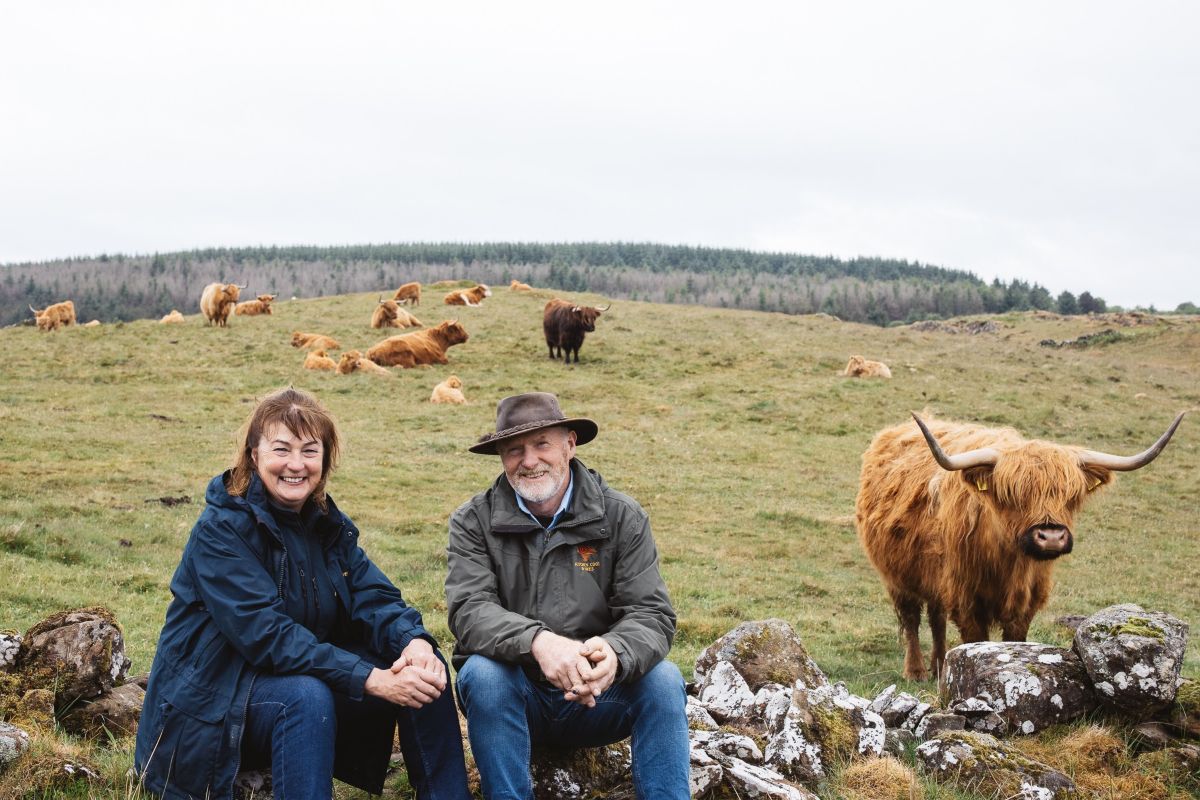
On a rocky hillside in southwest Scotland, Highland cows stand like living monuments—long-haired, horned, and unfazed by wind and rain. This is Kitchen Coos & Ewes, a working farm run by Neale and Janet McQuistin, where visitors from around the world come to meet Highland cows in their natural habitat.
Part livestock operation, part regenerative farming experiment, and part agritourism success story, the farm offers guided tours combining hands-on animal encounters, storytelling, conservation, and traditional Scottish hospitality.
Rooted in the Luce Valley for centuries
The McQuistins farm in the Luce Valley, a rugged landscape their families have known for generations. Neale is the seventh generation of his family to farm these fields, while Janet traces her ancestry in the valley back 11 generations, to 1624. Today, they are tenant farmers on land owned by the same estate family for over 300 years.
Both grew up on nearby farms just a few miles apart, absorbing the ways of agriculture as children. But while Neale was expected to farm, Janet—despite wanting the same life—was not.
“In those days, women weren’t expected to be farmers,” Janet says. “Although I wanted to be a farmer, I chose a career that would fit in with farming. I chose to be a teacher.”
Teaching allowed Janet to work around the agricultural calendar. After the couple married, they were offered the tenancy of a larger farm unit where they farmed together while raising three children—quietly holding onto a long-term goal.
“The dream always was that I would get to farm full-time,” Janet says.
Farming a challenging landscape
By conventional standards, the McQuistins’ land is difficult to farm. Two-thirds of the property consists of hill pasture, characterised by thin, wet soils and limited infrastructure.
“We’re on a particularly poor farm,” Neale says.
Early attempts with Aberdeen Angus cattle proved unsuccessful; the sleek-coated animals struggled to retain heat in the Atlantic climate.
“Instead of trying to push feed in and fertilise the farm, we started working with the farm we had and the environment we had,” Janet explains.
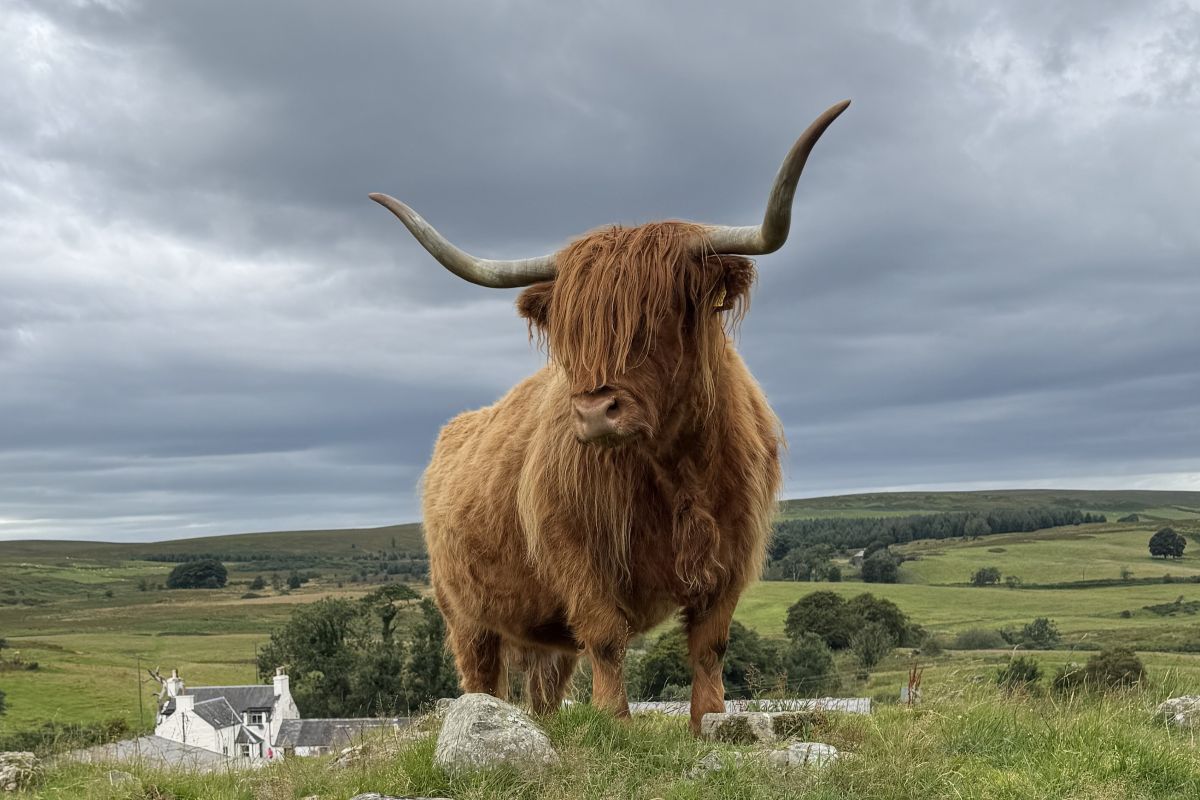
The solution was Highland cattle—an ancient Scottish breed perfectly suited to rugged terrain.
“I fell in love with Highland cows more than 20 years ago,” Neale recalls, after a fishing trip to the remote Knoydart Peninsula. “I promised myself I’d get some—and I did.”
Over time, they built a pedigree herd of Highland cattle uniquely suited to their landscape.
Letting the land set the limits
Both economic and ethical factors influenced the McQuistins' decision to adopt regenerative farming.
In the 1980s and 1990s, European subsidies rewarded livestock numbers. More animals meant more payments—often encouraging farmers to stock beyond what their land could sustain.
“This encouraged me to put on more animals than the farm was designed to accept,” Neale says. “The pharmaceutical companies were getting richer. The feed merchants were getting richer. Everybody was getting richer except me.”
When subsidy rules changed in the early 2000s, decoupling payments from livestock numbers, the couple took the opportunity to reduce their livestock numbers, stop using chemical fertilisers, and let the land recover.
And the land responded. Wildflowers returned, birdsong increased, and fungi flourished—visible signs of improving soil health.
“Our animals are healthier and happier, and Janet and me are healthier and happier,” Neale says.
Their guiding principle is simple: “If you look after the livestock under the ground, you’ll look after the livestock above the ground.”
The cows that stopped traffic
As smartphones put cameras into every pocket, the McQuistins noticed something unexpected: “Hardly anybody could drive past our Highland cows without stopping to take a photo,” Janet says.
Some visitors even crossed fences, risking injury to themselves and the animals. The couple saw both a safety issue and an opportunity: people wanted to connect with the cows.
Janet and their youngest daughter, who studied photography, began sharing images of the herd on social media. Responses poured in from around the world.
“People started asking if they could come and visit,” Neale says. “I’d always wanted to do something with tourism to secure the farm’s future. Suddenly, it felt possible.”
Building a Highland cow experience
When Neale first proposed the idea of farm tourism, funders were sceptical. “They said nobody would want to come and just see cows,” he recalls.
As tenant farmers, the McQuistins couldn’t build permanent accommodation, so they created flexible, low-impact experiences and self-financed where possible.
In 2019, they launched Kitchen Coos & Ewes with the Insta-Coo Tour, designed for social media-ready photos, followed by the Cream Tea Coo Tour, which pairs Highland cow visits with tea and cakes.
With Janet’s teaching background and Neale’s natural gift for storytelling, tours became narrative-driven experiences about the land, its history and animal behaviour.
Every visit ends in the farmhouse kitchen, where guests enjoy homemade treats baked using electricity from the farm’s own wind turbine. The turbine generates more power than the farm consumes, making the business a net exporter of renewable energy.
“We tell people the cake is calorie-free because it’s baked with wind,” Neale jokes.
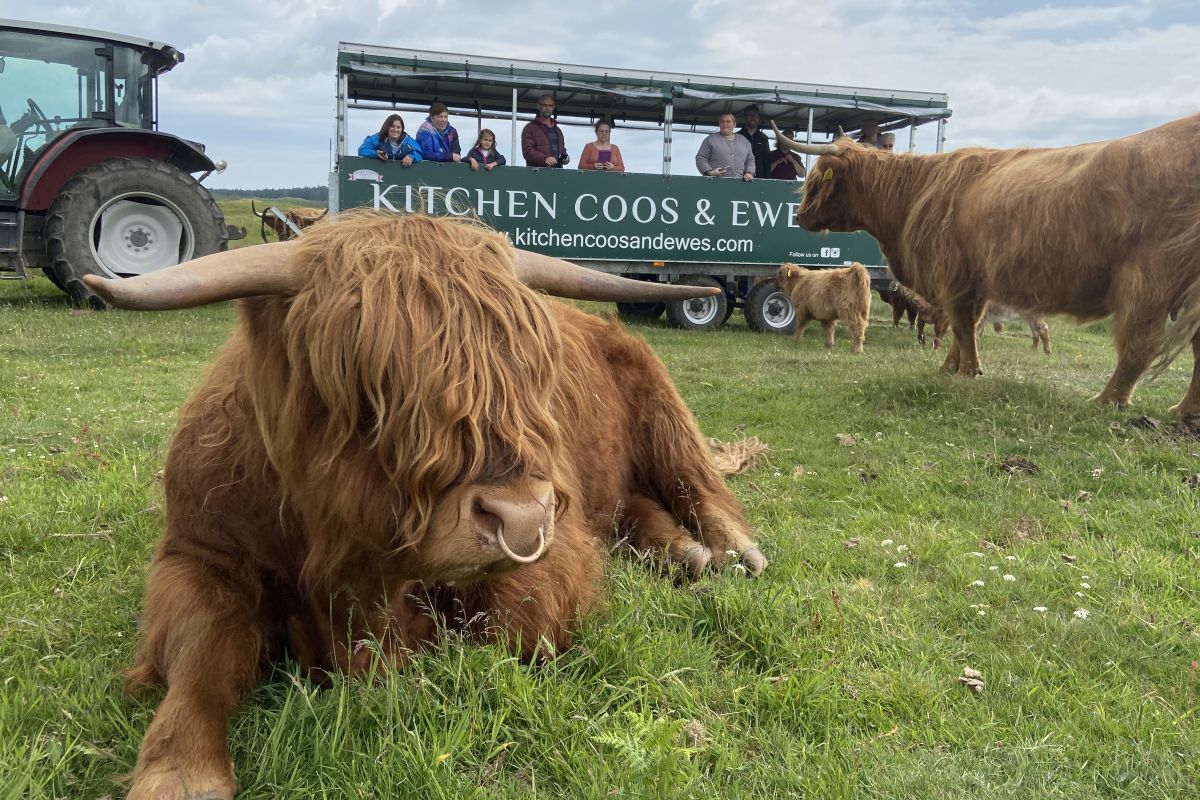
A global audience born in lockdown
If social media helped launch Kitchen Coos & Ewes, lockdown made it global. When the COVID-19 pandemic hit, the farm was forced to shut down its tourism activities.
Rather than retreat, Neale went live—broadcasting daily from the calving fields on Facebook. Viewers worldwide watched calves being born and followed individual cows like characters in a shared story.
“It allowed people to step onto this Scottish farm every morning during lockdown,” Janet says.
The exposure transformed the business and led to innovations like socially distanced walking tours.
Hands-on Highland cow tours
The turning point for the business came with the Hands-On Coo Tour.
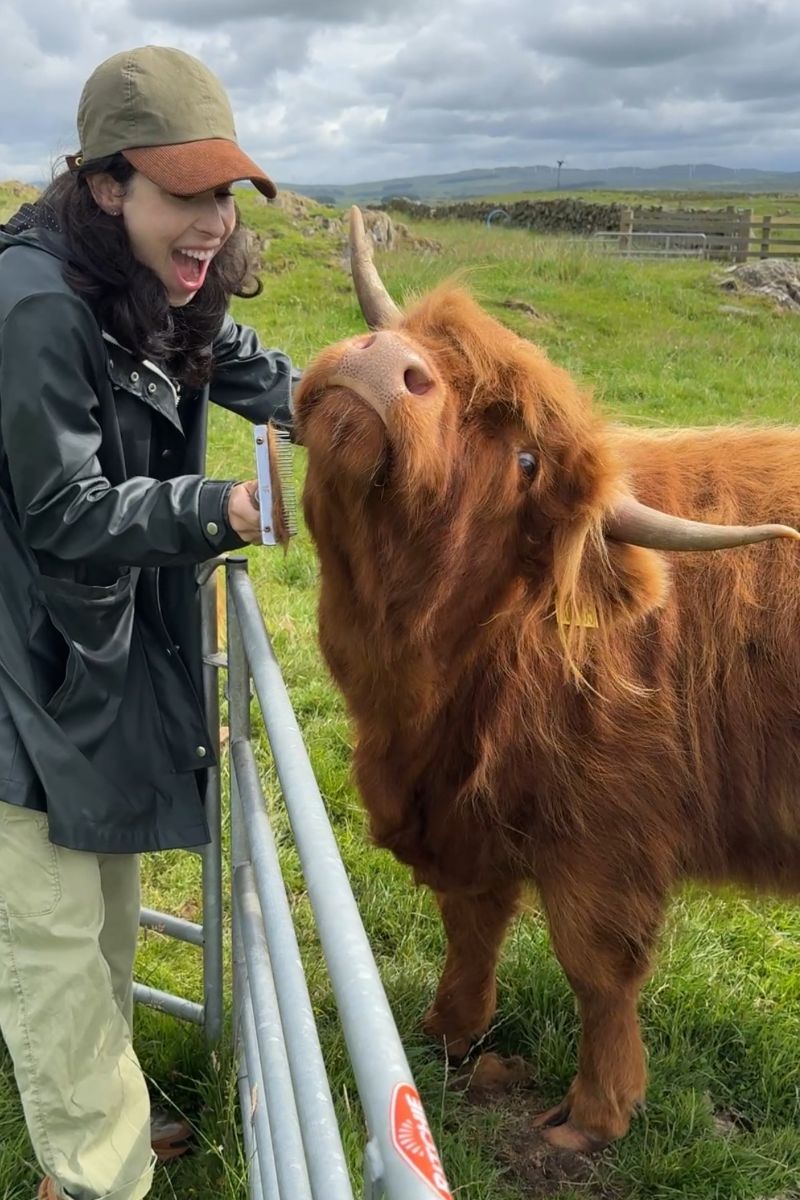
“We realised it wasn’t enough for people to just look at cows,” Neale says. “They want to touch them.”
Safety, however, was an important consideration. The McQuistins’ solution was simple: instead of penning the cows, the couple built a pen for people, right in the middle of the field.
Visitors stand inside while the curious cows approach them at their own pace. The guests groom and scratch the animals that enjoy the attention.
“That simple idea transformed our business,” Neale says. “Interactions are completely on the coo’s terms. This is their world—we are just respectful guests.”
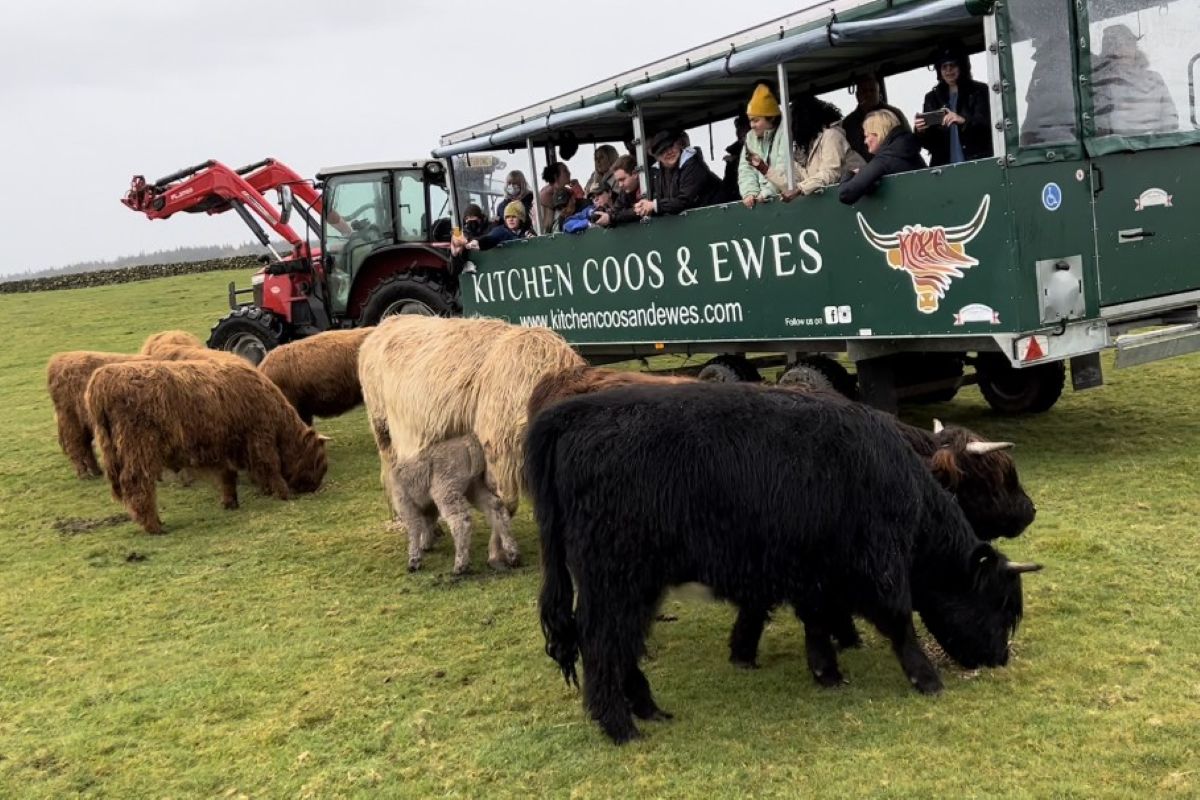
A purpose-built safari trailer, equipped for three wheelchairs, ensures accessibility for all.
The social lives of Highland cows
Part of the magic is not just seeing the animals but learning about how they live and their social structures.
“Our herd is led by a female—it’s a matriarchal society,” Janet explains. The leader, Tara, is a white Highland cow with a formidable presence. “She rules with a rod of iron,” Janet laughs. “She just needs to give another coo a look.”
Visitors learn about and observe pecking order, family bonds, and how authority depends on confidence rather than age.
“Wikipedia says the matriarch is the oldest cow,” Neale laughs. “That’s not true. It’s the one with the most sass.”
Surviving storms
The McQuistins have weathered crises before. In 2001, during the UK’s devastating foot‑and‑mouth disease outbreak, every sheep within three kilometres of an infected farm was forced to be culled. Their sheep were culled despite showing no symptoms.
“It was hard to pick up from that,” Janet says. “Lots of farmers gave up.” But they did not.
The economics of farming can be challening, and Neale is candid about it: “Without subsidies, I don’t think I’d have made a profit in any year since 1976.”
Tourism changed that equation. Unlike commodity markets, they price farm experiences themselves. Tourism became a means of survival for them.
Farming inside a UNESCO biosphere
The farm is situated within the Galloway and Southern Ayrshire UNESCO Biosphere, which encompasses unique wildlife, diverse natural habitats, communities with distinct cultural identities, and historic landmarks and heritage sites recognised as being of international importance.
The couple emphasises that for them, it's more a matter of mentality than anything else. For the McQuistins, it means linking local decisions to global challenges, especially those related to conservation.
Their grazing practices support curlew nesting habitats, helping protect one of the UK’s most endangered birds, and illustrate the link between soil health, biodiversity, and climate action.
Visitors often hear curlews and cuckoos while learning about regenerative agriculture, connecting local action to global environmental issues.
The world comes to the cows
Today, about 8,000 visitors come to Kitchen Coos & Ewes each year—about the maximum the land can support. Visitors arrive from across the UK, Germany, Australia, and virtually every corner of the globe.
Some arrive for photos, others for bucket list experiences, healing, or cultural immersion. The farm has hosted multiple marriage proposals and might be the site of a future wedding.
The scale of the baking operation has outgrown Janet’s solo efforts. She now employs a local food science graduate to meet demand—baking together around 8,000 pieces of each treat annually.
The quiet power of animals
Some of the farm’s most memorable moments defy metrics.
Once, a couple booked a private visit for their severely autistic adult son. He seemed disengaged throughout the tour until he was drawn to Neale’s collie dog in the yard.
An hour down the road, his mother phoned Neale in tears: her son had said his first full sentence in years after the visit. Neale says he still gets teary-eyed thinking about it.
On another occasion, a woman with terminal pancreatic cancer visited with her two daughters, determined to fulfil a bucket-list dream.
“For a few hours, they weren’t patients and carers,” Janet says. “They were just a family laughing together and having an adventure.”
“That’s why we do this,” Neale says simply.
Loving it still
After nearly 50 calving seasons, Neale’s enthusiasm remains undimmed. “I’m looking forward to this year as much as I did in 1976,” he says.
Janet, now farming full-time, spends her days in the hills and in the kitchen, welcoming visitors from Tokyo to Texas.
“If you’re not enjoying something,” Neale says, “you shouldn’t be doing it.”
Advice for farmers
When asked what they would say to people considering sustainable farming, Neale and Janet don’t sugarcoat it:
- Be patient: ecological change is slow, and the financial bottom line may not shift dramatically, even when the land improves.
- Be realistic: almost no enterprise is viable today without either state backing or some form of diversification, such as tourism. Expect to rely on a combination of them.
- Look for ways to align your practices with broader environmental goals, such as bird conservation, soil restoration, or renewable energy.
- “Don’t try to educate your customer, just give them what they want.” Create experiences that people actively seek out
Kitchen Coos & Ewes proves that farming can be joyful, ethical, economically viable, and deeply human, blending heritage, conservation, and visitor experiences in a uniquely Scottish way.