









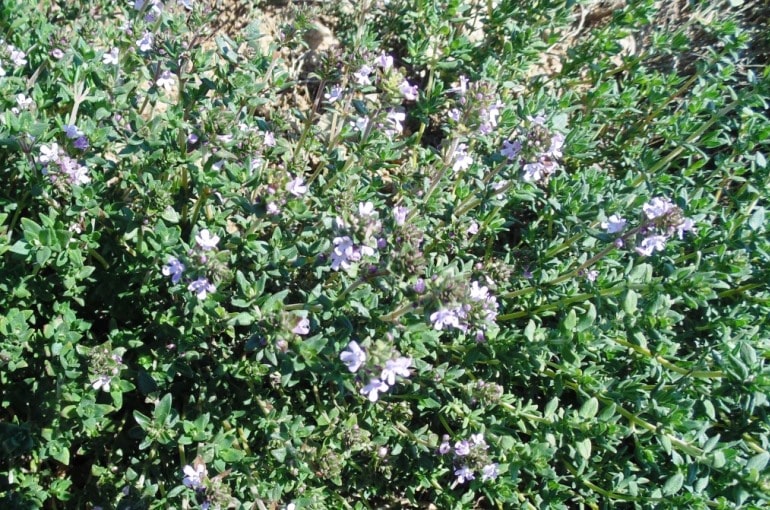
Thyme grows wild across the dry hillsides of the Mediterranean, and on a hot summer day, whole slopes are scented with it. Its flowers give bees the nectar for prized thyme honey; in the kitchen, it remains one of the staple herbs of Mediterranean cooking; and in the garden, it asks for very little, which makes it a good choice even if you are just starting.
Botanically, it belongs to the genus Thymus, in the mint family (Lamiaceae), alongside oregano, sage, mint, and lavender. The most widely grown culinary species is common thyme (Thymus vulgaris). In contrast, the wild thyme of the Mediterranean hills is Thymbra capitata (formerly Coridothymus capitatus), the main source of the famous thyme honey.
This guide covers how to grow thyme in the garden or in a pot, keep it going from year to year, and harvest it so the plant stays healthy and productive for years.
Thyme in history and the kitchen
The ancient Greeks burned thyme as incense in their temples and linked it with courage. Its strong, clean aroma kept it in use as a culinary and medicinal herb across the Mediterranean ever since, and thyme honey, with its intense flavor, has long been one of the most sought-after honeys in the world. The small flowers are among the bees' favorites, so a thyme plant in the garden doubles as a source of food for pollinators.
Types and varieties of thyme
The genus Thymus includes more than 200 species, though only a few of them turn up in gardens.
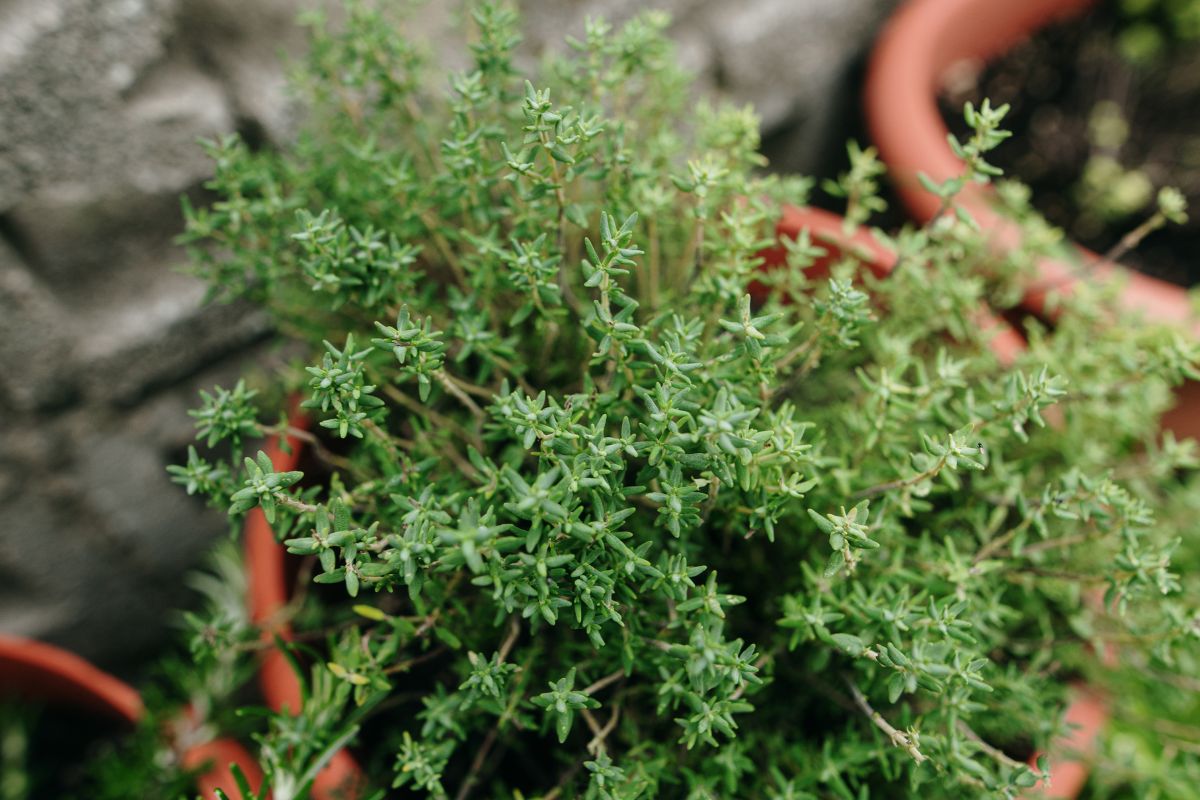
Thymus vulgaris (common thyme): the most widely grown culinary species, with upright, shrubby growth and grey-green leaves. It is also the most practical for the kitchen, since it is easy to harvest
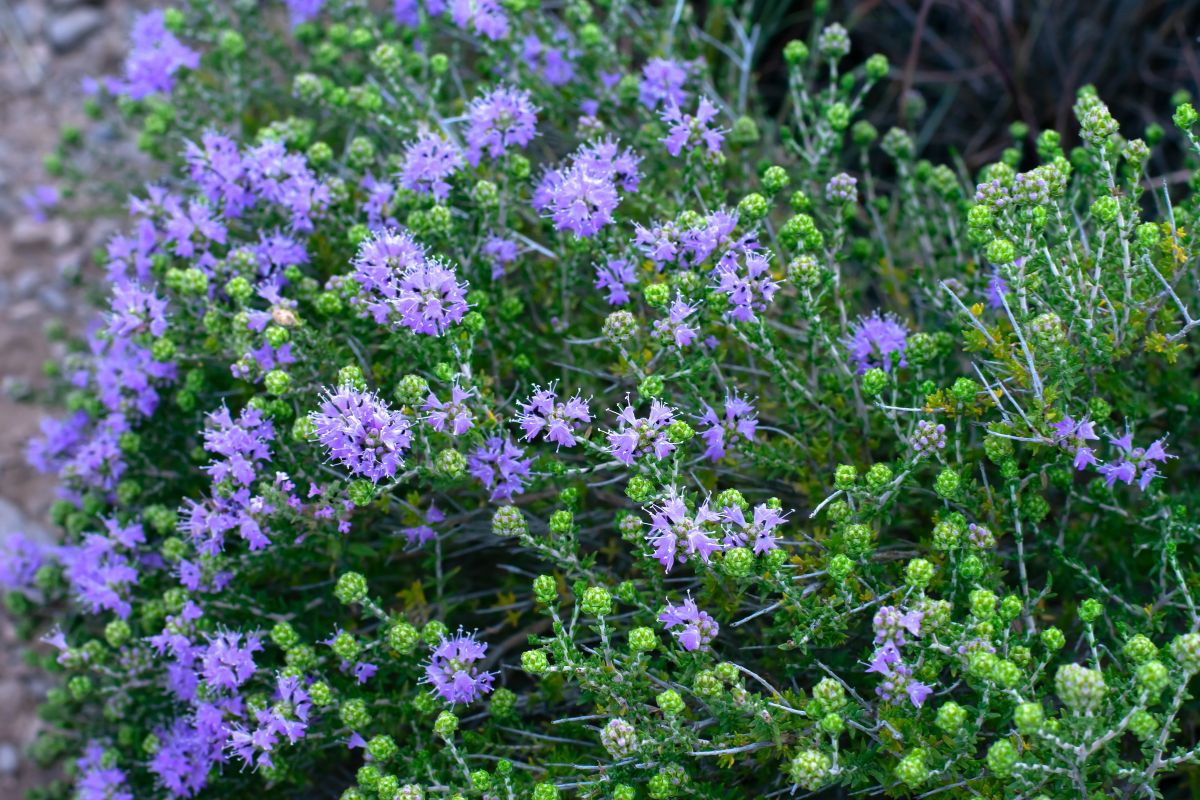
Thymbra capitata (Mediterranean thyme): the wild thyme of the Mediterranean hills, with a stronger aroma and a higher essential oil content. It is the main source of thyme honey.
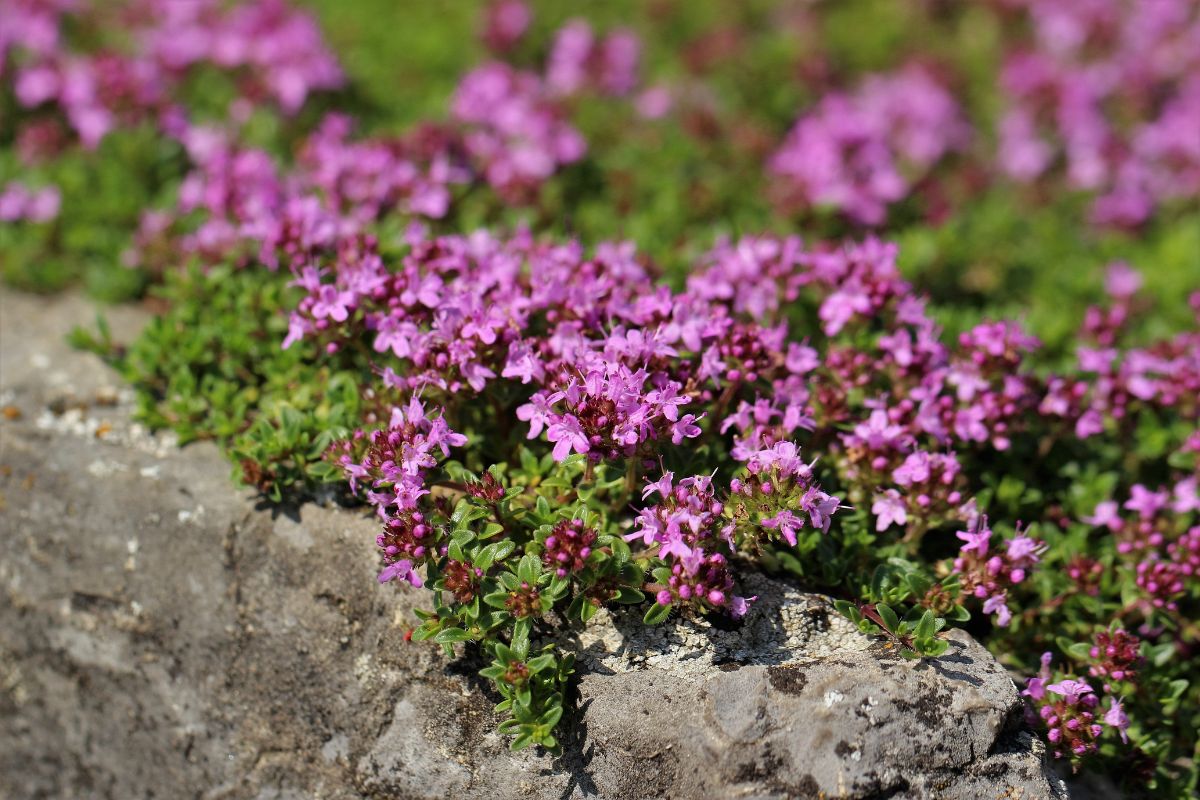
Thymus serpyllum (creeping thyme): a low, mat-forming species that spreads like a carpet. It suits rock gardens, gaps between paving, and use as ground cover.
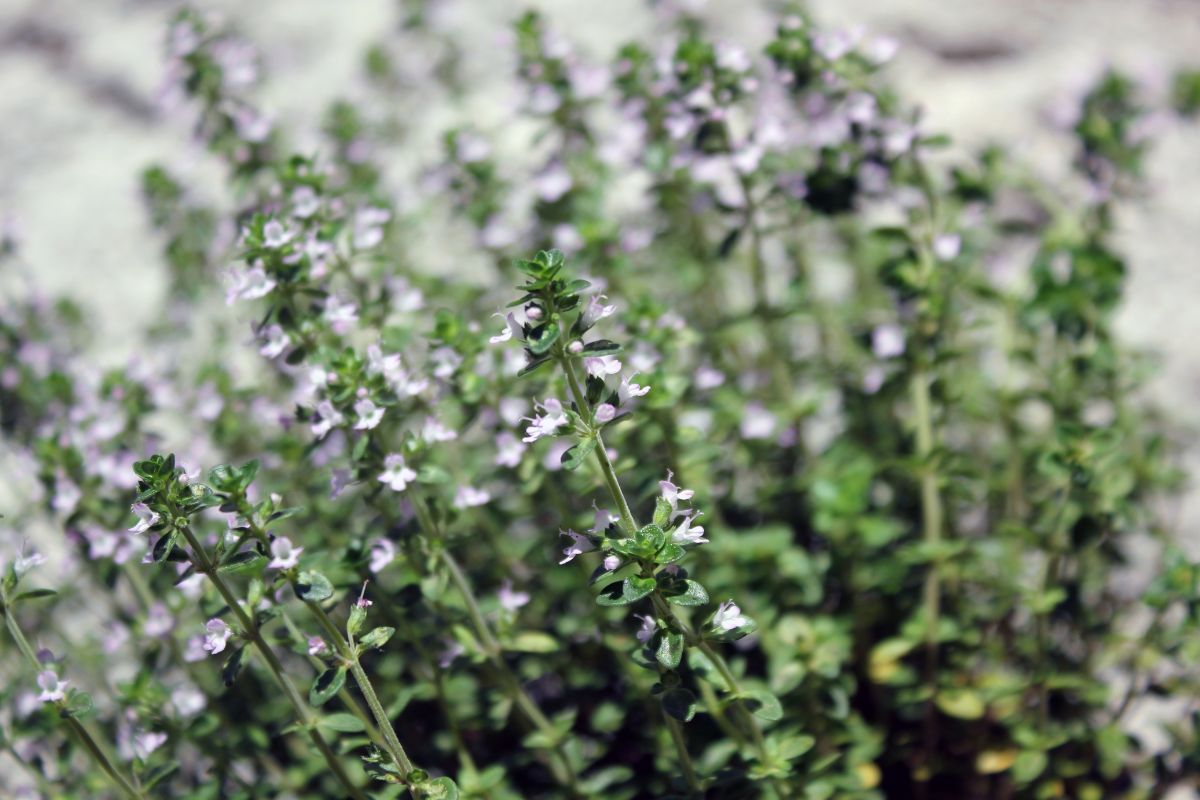
Thymus citriodorus (lemon thyme): with the scent and flavor of lemon, popular in cooking and in herb beds
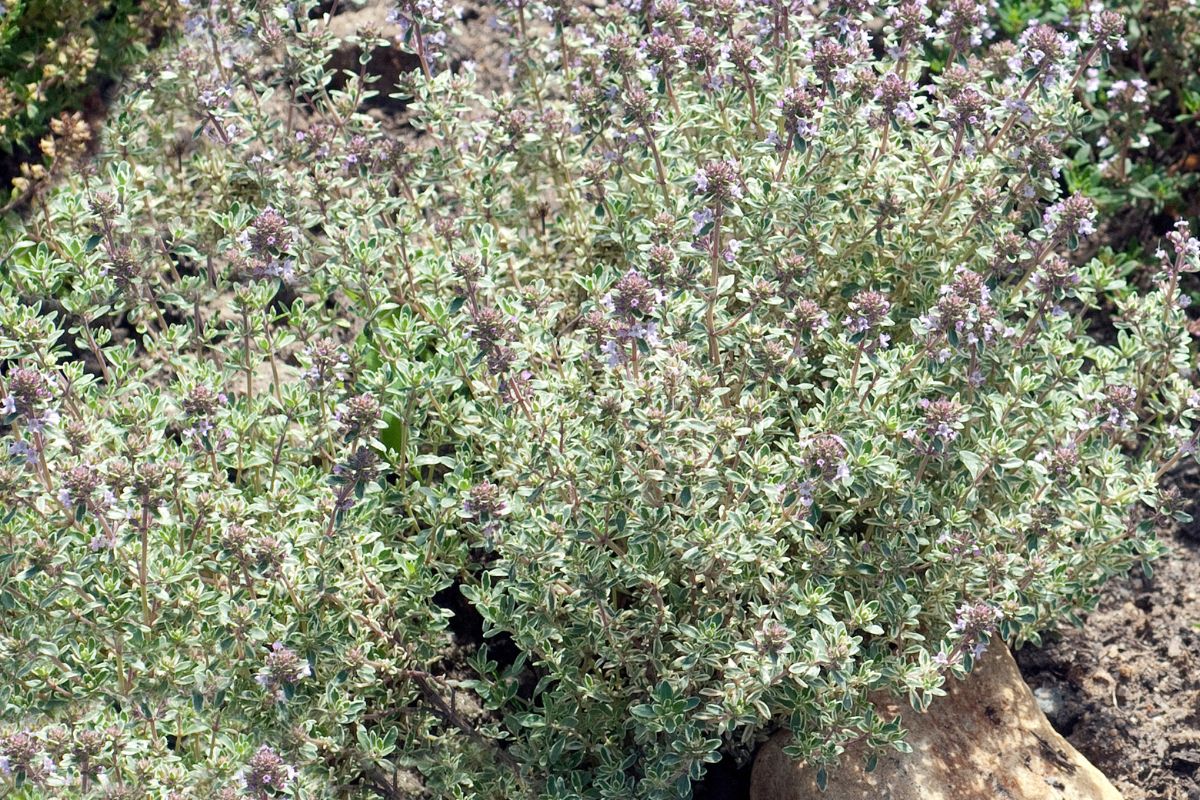
Thymus vulgaris 'Silver Posie': an ornamental variety with silver-white leaf margins
Where thyme grows best
Thyme is a Mediterranean plant, and it wants exactly the two things it gets in abundance on those hillsides, sun and dry conditions. It is hardy in a wide range of climates, roughly USDA zones 5 to 9, as long as it has plenty of sun and soil that drains freely.
Choose the sunniest spot you have. Thyme needs at least 6 hours of direct sun a day to develop its aroma and essential oils; in shade, it grows sparse and weak, losing its flavor.
Thyme will not tolerate water sitting around its roots, and it is prone to root rot in heavy, wet soil, so drainage is the point that needs the most attention. If your garden soil is clay or holds water, especially over winter, grow it in a pot or a raised bed where you can control the drainage.
Soil
Thyme prefers poor, gritty soils, much like the stony ground where it grows in the wild. In rich, fertile soil, it produces plenty of growth, but is soft and weak in flavor.
It likes a neutral to slightly alkaline pH, around 6.0 to 8.0. In heavy clay, work in coarse sand or horticultural grit to improve drainage. There is no need to add manure or rich compost.
Planting thyme
The best time to plant is spring, once the danger of frost has passed. In mild areas, you can also plant in autumn.
Thyme can be grown from seed, but for the home gardener, it is easier and quicker to start from a nursery plant or a cutting. Seed is slow and unreliable, with low germination, and the plant takes almost a year to reach a usable size.
Steps for planting in the garden
- Dig a hole slightly larger than the plant's rootball
- In heavy soil, mix coarse sand or grit into the base for drainage
- Set the plant at the same depth it was in its pot
- Leave 20 to 30 cm between plants, since thyme spreads as it grows
- Water sparingly after planting, then let the soil dry out
Growing thyme in a container
Thyme does well in pots and is ideal for balconies, terraces, and kitchen windowsills. A pot has an added advantage, since it gives you the sharp drainage the plant wants.
- Choose a pot with plenty of drainage holes, without going too large
- Use a light, free-draining mix with added sand or perlite, and avoid heavy, rich composts
- Place the pot in the sunniest position you have, ideally facing south or west
- Water only once the soil has dried out completely
Watering
Overwatering is the single most common mistake with thyme. It is a drought-adapted plant that needs far less water than most garden plants.
In the first year after planting, water only once the soil has completely dried out, so the root system can establish. During a long dry spell, a drink every few days is enough. From the second year, an established thyme in the garden barely needs watering at all, except in the hottest, driest stretches of summer.
In a pot, the soil dries faster, so check regularly, but still water only once it has dried out. Never let the soil stay constantly wet, and never leave water standing in the saucer under the pot.
Feeding
Thyme is not a demanding plant. In the garden, a small amount of balanced fertilizer in spring or autumn is enough if you want to encourage growth, though it usually does fine without it.
Avoid overfeeding, especially with nitrogen. It produces more growth, but it is soft and has a weaker aroma. The most aromatic thyme grows in poor, dry soil.
Pruning and maintenance
Regular pruning is what keeps thyme young and productive for years. Without it, the plant turns woody at the base, grows sparse, and loses its vigor.
Each spring, lightly prune to maintain its shape and encourage fresh, tender growth. After flowering, a second light prune helps it stay dense.
Never cut into the old, woody part of the plant, since new growth rarely comes from there. Always prune into the green, tender part. Avoid pruning close to the end of autumn, too, because the new tender growth is vulnerable to winter cold.
Even with proper pruning, thyme can turn woody after 4 to 6 years and gradually lose productivity. At that point, it is best to replace it with a new plant.
Harvesting
You can cut fresh thyme sprigs throughout the growing season, from spring to early autumn. The aroma and flavor are strongest just before flowering, when the plant has the highest concentration of essential oils.
Cut the tender tips of the stems with scissors, never more than a third of the plant at a time. Done this way, harvesting also serves as a light prune, encouraging new growth.
To dry thyme, cut whole stems, tie them into small bundles, and hang them upside down in a shaded, airy spot. Once they are completely dry, strip the leaves and store them in an airtight container.
How to propagate thyme
For the home gardener, the easiest methods are cuttings and division.
From stem cuttings
- In late spring or early summer, take healthy cuttings 5 to 8 cm long from the tips of the stems
- Strip the lower leaves and leave a few at the top
- Dip the base in rooting hormone
- Plant in a light, free-draining medium
- Keep in a bright spot and water moderately until it roots
By division
Mature plants can be divided in the spring. Lift the plant from the soil, carefully split the clump into smaller pieces, each with its own roots, and replant each piece separately.
Pests and diseases
Thyme is one of the toughest plants in the garden and rarely runs into serious trouble, since its aromatic oil repels many insects. Now and then, though, you may see the following.
- Root rot: the most common and serious problem, almost always from overwatering or poor drainage. The plant wilts and blackens from the base. Prevention comes down to good drainage and careful watering
- Aphids: small sucking insects that sometimes appear on tender new growth. A strong jet of water or a spray of insecticidal soap is usually enough
- Powdery mildew: a white dust on the leaves in humid conditions with poor airflow. Improve ventilation and thin the plants
For commercial cultivation
This guide is written for the garden and the home grower. If you are growing thyme as a crop, for plant material or essential oil, the agronomic side is a different subject, covered in our dedicated guides on growing thyme for profit, thyme essential oil yield, and thyme weed control.
Frequently asked questions about thyme
Can I grow thyme on a balcony? Yes. Thyme is ideal for a pot on a sunny balcony. With plenty of sun and careful watering, you will have fresh thyme for the kitchen all season.
Why is my thyme dying? The most common causes are overwatering and poor drainage, which lead to root rot. Thyme suffers far more easily from too much water than from thirst. Check whether the soil is holding water and cut back on watering.
How long does a thyme plant live? With good care and regular pruning, a thyme plant stays productive for 4 to 6 years. After that, it turns woody and is best replaced.
When is the aroma strongest? Just before flowering, in early summer, when the concentration of essential oils in the leaves is at its peak. That is also the best moment to harvest and dry it.
Does thyme die back in winter? In cold areas, the top of the plant often dies back with the cold, but thyme regrows the following spring. Avoid cutting it back hard at the end of autumn so it stays protected from frost.
Does thyme attract bees? Very much so. Its small flowers are among the bees' favorites, and they are what give us thyme honey. If you want to support pollinators, thyme is an excellent choice for the garden.
Important notes
Every garden and every plant is different. Conditions vary greatly depending on the region, sun exposure, soil type, and how well it drains.
If you suspect a serious disease or a problem that does not respond to the basic practices, consult a professional for an accurate diagnosis.
Plant protection products should be used with care and responsibility, especially on herbs grown for eating. Always try non-chemical methods first, such as natural practices and insecticidal soap. When chemical treatment is needed, use only approved products suitable for edible herbs, follow the label directions and pre-harvest intervals, and avoid spraying when bees are active, as thyme strongly attracts them.
References
- Royal Horticultural Society. How to grow thyme.
- Royal Horticultural Society. Thymus vulgaris plant details.
- Penn State PlantVillage. Thyme.