
What the numbers reveal about global agriculture's weak spots
From May 2024 to May 2025, over 5,800 food-related recalls were flagged across Europe. This is a striking reminder that food safety remains one of the biggest ongoing challenges in global agriculture. At the heart of this issue are aflatoxins, implicated in 519 recalls, and a worrying surge in contaminated fruits and vegetables, which saw a dramatic peak of 113 recalls in October 2024 alone.
Behind the numbers lies a deeper story. There are many cases of fragile and sensitive post-harvest systems, inconsistent pesticide compliance, and gaps in international trade standards. Countries like Turkey (548 recalls), Poland (311), and India (302) are feeling the pressure, with their export reputations on the line. These trends underscore a critical need for more proactive strategies—from field to export dock—if producers hope to keep up with tightening global safety expectations.
At Wikifarmer, we value food safety and conducted this analysis to help identify critical weaknesses and support producers in navigating these challenges.
Zooming out to the bigger picture in food safety
A 12% increase (from 2023) in RASFF (Rapid Alert System for Food and Feed) notifications in 2024 brought the annual total to 5,250 alerts. This upward trend points to improved monitoring and a genuine increase in contamination risks. More importantly, it signals shifting expectations: the global food system is now under a microscope.
A closer look at seasonal patterns reveals clear danger zones. October 2024 and March 2025 stood out for their spikes in fruit and vegetable recalls, tightly linked to harvest periods and poor post-harvest handling, especially in areas lacking proper drying and storage infrastructure.
Border rejections remain a significant source of alerts, with pesticide residues in fresh produce accounting for the majority. These rejections aren't just bureaucratic inconvenience; they highlight recurring lapses in compliance at the source.
Categories of products most frequently recalled at a glance
If your supply chain includes fresh produce, nuts, or poultry, here’s what the data tells us:
Fruits & Vegetables
- Why recalled? Pesticide residues (legal limits exceeded or banned substances), microbial contaminants
- Hot months: October 2024 (113 recalls), March 2025 (100)
- Insight: Emphasize pesticide management and pathogen control throughout the chain.
Nuts, Nut Products, and Seeds
- Why recalled? High aflatoxin levels (especially B1 and total)
- Vulnerabilities: Improper post-harvest drying or storage
- Insight: Use rigorous drying, monitor moisture levels, and test batches before export.
Poultry Meat & Products
- Why recalled? Predominantly Salmonella contamination
- High-risk period: May 2024 (67 cases)
- Insight: Strengthen biosecurity and hygiene from farm to slaughterhouse.
Other high-risk categories include:
- Cereals & Bakery Products: Often due to mycotoxins or undeclared allergens
- Herbs & Spices: Linked to pesticide residues, microbial contamination, and ethylene oxide presence

Graph 1: Number of food recalls per product category (2024–2025)
Fruits and vegetables: the riskiest category
Fruits and vegetables consistently dominate recall statistics, representing 19% of all alert notifications. This category faces many challenges and contamination risks: pesticide residue violations, mycotoxin contamination, pathogenic microorganisms, heavy metals, and environmental pollutants.
The prevalence of chlorpyrifos, acetamiprid, and dimethoate residues indicates widespread non-compliance with Maximum Residue Limits (MRLs), particularly among developing country exporters struggling to meet European standards.
Turkey's position is that of the leading source of recalled products: 347 fruit and vegetable recalls out of 548 total notifications. This isn't just a compliance issue. It's a symptom of broader systemic challenges in agricultural infrastructure and technical capacity that threaten the country's position as a major agricultural exporter.
Nuts and seeds: where mycotoxins rule
Nuts, nut products, and seeds represent the second most problematic category, driven almost entirely by mycotoxin contamination, accounting for approximately 7% of total notifications. Groundnuts face the highest recall rates due to aflatoxin contamination, while pistachios encounter similar challenges primarily linked to mycotoxin issues. The concentrated nature of mycotoxin distribution—where large quantities concentrate in small percentages of kernels—makes effective sorting and quality control absolutely critical for producers in this sector.
The United States dominates nut-related recalls with 126 instances, demonstrating that even advanced agricultural systems face significant mycotoxin challenges. This reality forces producers to recognize that traditional storage methods cannot guarantee protection against major storage pathogens, particularly in regions where temperature and humidity conditions favor fungal growth.
Understanding the primary threats
Mycotoxin contamination: the dominant food safety challenge
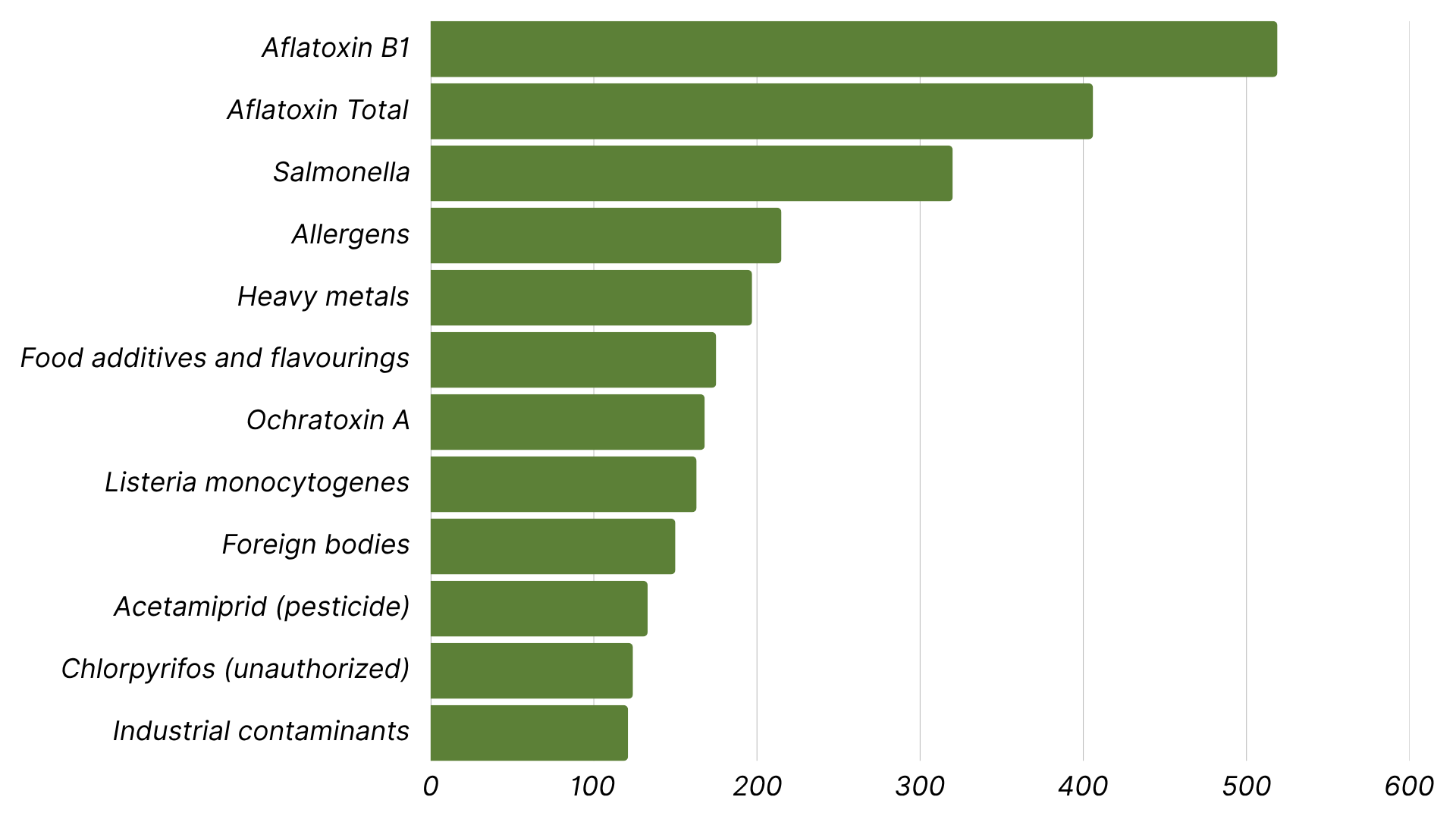
- Aflatoxin B1: 519 instances
- Total aflatoxins: 406 instances
- Ochratoxin A: 168 instances
Graph 2: Top food safety hazards for 2024–2025
These numbers reflect fundamental post-harvest handling and storage deficiencies affecting nuts, seeds, cereals, and dried fruits. Research demonstrates that proper post-harvest management can dramatically reduce aflatoxin contamination, with practical strategies including harvesting at crop maturity, rapid drying on raised platforms to avoid soil contact, appropriate shelling methods to minimize grain damage, and systematic sorting procedures.
The geographic concentration of mycotoxin issues reveals broader systemic challenges. Turkish dried fruits, including figs and apricots, consistently show aflatoxin contamination patterns that indicate post-harvest drying and storage infrastructure deficiencies. For farmers and exporters, this represents both an immediate threat to market access and a long-term challenge requiring substantial infrastructure investment.
Bacterial pathogen risks and control strategies
Salmonella contamination appears in 5% of all recalls for the period between May 2024 and May 2025. Listeria monocytogenes represents another critical bacterial threat with 163 instances, particularly affecting ready-to-eat foods and processed products.
Recent outbreaks underscore the persistent nature of these pathogens. The May 2025 Listeria contamination in ready-to-eat foods distributed across Arizona, California, Nevada, and Washington demonstrates how quickly bacterial contamination can spread across vast geographic areas. This highlights the critical importance of comprehensive environmental monitoring and robust supplier verification programs for food processors.
Pesticide residue violations
Pesticide-related recalls include authorized pesticides exceeding Maximum Residue Limits (MRLs) and unauthorized substance violations. Acetamiprid violations account for 133 instances, while Chlorpyrifos appears in both authorized (121 instances) and unauthorized substance (124 instances) categories. This distinction reveals complex regulatory landscapes where substances may be permitted in some countries while banned in others, creating significant compliance challenges for international traders.
To stay informed about the latest updates in EU legislation on Maximum Residue Levels (MRLs), read our detailed policy brief on the May 2025 EU plant protection changes: new pesticide rules and resistant crop varieties.
Geographic risk zones: where problems originate
Turkey leads in product recalls (524), mainly affecting fruits and vegetables (347), nuts (66), and spices (46). This reflects Turkey’s role as a major exporter facing ongoing pesticide and post-harvest quality issues. Aflatoxin contamination in dried fruits like figs and apricots points to weaknesses in drying and storage practices.
Poland reports 320 recalls, with poultry products making up the bulk (191). Despite EU membership, this highlights significant food safety gaps, especially in Salmonella control and biosecurity.
India has 302 recalls, mainly in spices (91), bakery products (60), fruits and vegetables (41), and nuts (41). Spice-related issues include pesticide residues and ethylene oxide contamination. Cases like pesticide-laced drumsticks reveal serious regulatory enforcement problems.

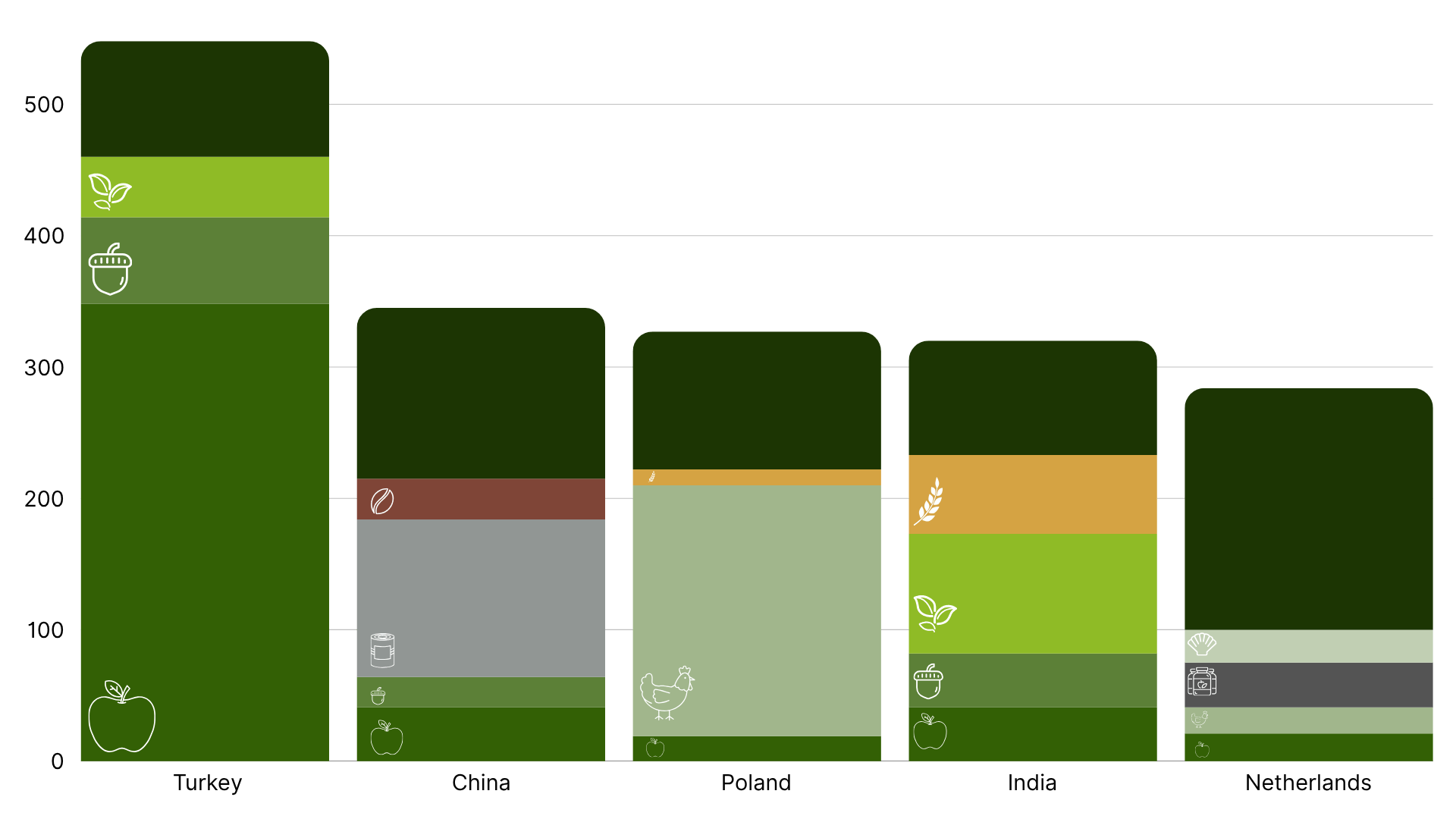
Graph 3: Food recalls (2024–2025) per product in countries with the most alerts
EU Internal Market Challenges
EU countries like the Netherlands (286 recalls), France (236), Spain (192), and Italy (187) show that food safety concerns are widespread. The Netherlands, as an import hub, often has recalls involving re-exported goods, complicating traceability. These patterns reveal the fragmented nature of food safety oversight, even within unified regulatory systems.
The human cost behind the data
These statistics don't capture the human impact. When a shipment of Egyptian oranges is rejected for heavy metal contamination, farmers lose their livelihoods, resources are wasted, and trade relationships are damaged. Similarly, when Peruvian peppers contain unauthorized pesticides, entire supply chains are disrupted, affecting everyone from small-scale farmers to major retailers.
For exporters from developing countries, the message is clear: without strong pre-export checks and an understanding of EU safety thresholds, access to premium markets may be short-lived.
Building better agricultural systems
Good Agricultural Practices Implementation
Good Agricultural Practices (GAP) are preventive, farm-to-fork methods designed to protect farmers' health, ensure food safety, and support environmental sustainability. Though standards vary by country, the core principles are consistent: safe production, responsible handling, and long-term sustainability. GAP starts with field and crop selection and continues through every stage of production and distribution. Ongoing education and training are key for effective implementation across the supply chain. For region-specific guidelines, consult your local agricultural authority.
Integrated Pest Management: The Science-Based Approach
Integrated Pest Management (IPM) provides scientifically based decision-making frameworks that balance crop protection needs with environmental stewardship and market requirements. IPM strategies emphasize diverse management tactics, including biological control agents, cultural practices, monitoring protocols, and targeted pesticide applications only when economic thresholds are exceeded.
The key to successful IPM lies in using pesticides with specific characteristics:
- Rapid knockdown of pests
- Quick environmental breakdown
- Short pre-harvest intervals
- Low re-entry intervals
- Selective action (targets specific pests without harming beneficial organisms)
- Flexibility for use under various environmental conditions
- Implementation of biological and cultural practices for long-term results
These traits allow:
- Rapid response to pest pressure
- Protection of worker health
- Compliance with environmental safety standards
Post-harvest management: where prevention pays off
Post-harvest management represents the critical control point for mycotoxin prevention and overall product quality maintenance. Research demonstrates that proper post-harvest practices can reduce aflatoxin contamination by 40-80% through systematic implementation of proven techniques.
Essential Post-Harvest Practices:
- Timely harvest at crop maturity
- Immediate removal of damaged or insect-infested materials
- Rapid drying on elevated platforms
- Proper handling to minimize grain damage
- Comprehensive sorting procedures
- Clean, well-aerated storage facilities
- Effective insect control programs
- Limited storage duration1
The heterogeneous distribution of aflatoxins within grain lots, where large toxin quantities concentrate in small percentages of kernels, makes effective sorting procedures absolutely critical for risk reduction. Manual sorting based on visual assessment can achieve substantial contamination reductions, while electronic sorting technologies offer enhanced precision for large-scale operations.
To minimize food safety risks and maintain access to high-value markets, all producers should rigorously follow label instructions for all crop protection products, adhere strictly to harvest intervals, and consistently monitor for updates to Maximum Residue Limits (MRLs) in target markets. Staying informed about regulatory changes and ensuring compliance with both national and international standards is essential for safeguarding both consumer health and your business reputation. Regular training and consultation with local agricultural authorities or certification bodies are strongly recommended to remain up to date with best practices and evolving requirements.
Strategic recommendations: what needs to happen now
For agricultural enterprises
Modern farms should invest in post-harvest tools like drying facilities, cold storage, pest control equipment, and quality testing. These reduce losses and open access to high-value markets.
Training farm workers and technical staff in GAP, IPM, post-harvest practices, record-keeping, and emergency protocols is essential. Skilled people are key to managing modern food safety systems.
For regulators and policymakers
The increasing stringency of food safety regulations worldwide necessitates proactive adaptation by agricultural producers and exporters. European markets continue to tighten pesticide residue limits while expanding the list of prohibited substances, requiring continuous monitoring of regulatory developments and rapid implementation of compliance adjustments.
International trade agreements now include detailed food safety rules. Meeting these means not just legal compliance but also third-party certifications and regular checks.
For the industry as a whole
Collaborative approaches, including industry associations, government partnerships, and international development programs, offer cost-effective mechanisms for addressing systematic food safety challenges. These collaborations enable shared investment in research and development, technical assistance programs, infrastructure development, and market access initiatives that individual enterprises cannot support independently.
Consumers want safe, traceable food. Companies with strong safety records gain trust and better market access, while repeated violations hurt their competitiveness.
Turning Insight Into Action
The data from 2024–2025 leaves no room for complacency. Food safety is often compromised. Whether driven by pesticide misuse, pathogen contamination, or poor post-harvest management—aren't just regulatory red flags; they’re missed opportunities, broken trade links, and real losses for farmers and exporters. If agriculture is to meet the growing demands of a globalized food system, then safety must become as integral as yield or quality.
At Wikifarmer, we are committed to transforming these insights into actionable knowledge. By equipping producers, processors, and exporters with practical guidance, we aim to support a food system that is not only productive but also safe, resilient, and inclusive.