


Your weekly food recall & compliance tracker w41/2025
The European Union's Rapid Alert System for Food and Feed (RASFF) registered 108 recalls affecting multiple product categories. This week's data reveals concerning trends in fresh produce safety, with pesticide residues dominating alerts and specific geographic patterns emerging that farmers and wholesale buyers must understand to protect their businesses and consumers.
Highlights at a glance
- 108 total food recalls recorded in just five days (October 6-10)
- Fresh produce accounts for 15.7% of all recalls, representing the top affected category
- 82.4% of fresh produce recalls linked to pesticide residues
- Poland leads origin countries with 13 notifications, followed by China (9) and Germany (7)
- Acetamiprid emerges as top pesticide concern in fruits and vegetables
- 10 mycotoxin-related alerts highlight contamination risks in nuts and dried fruits
Top product categories affected by food recalls
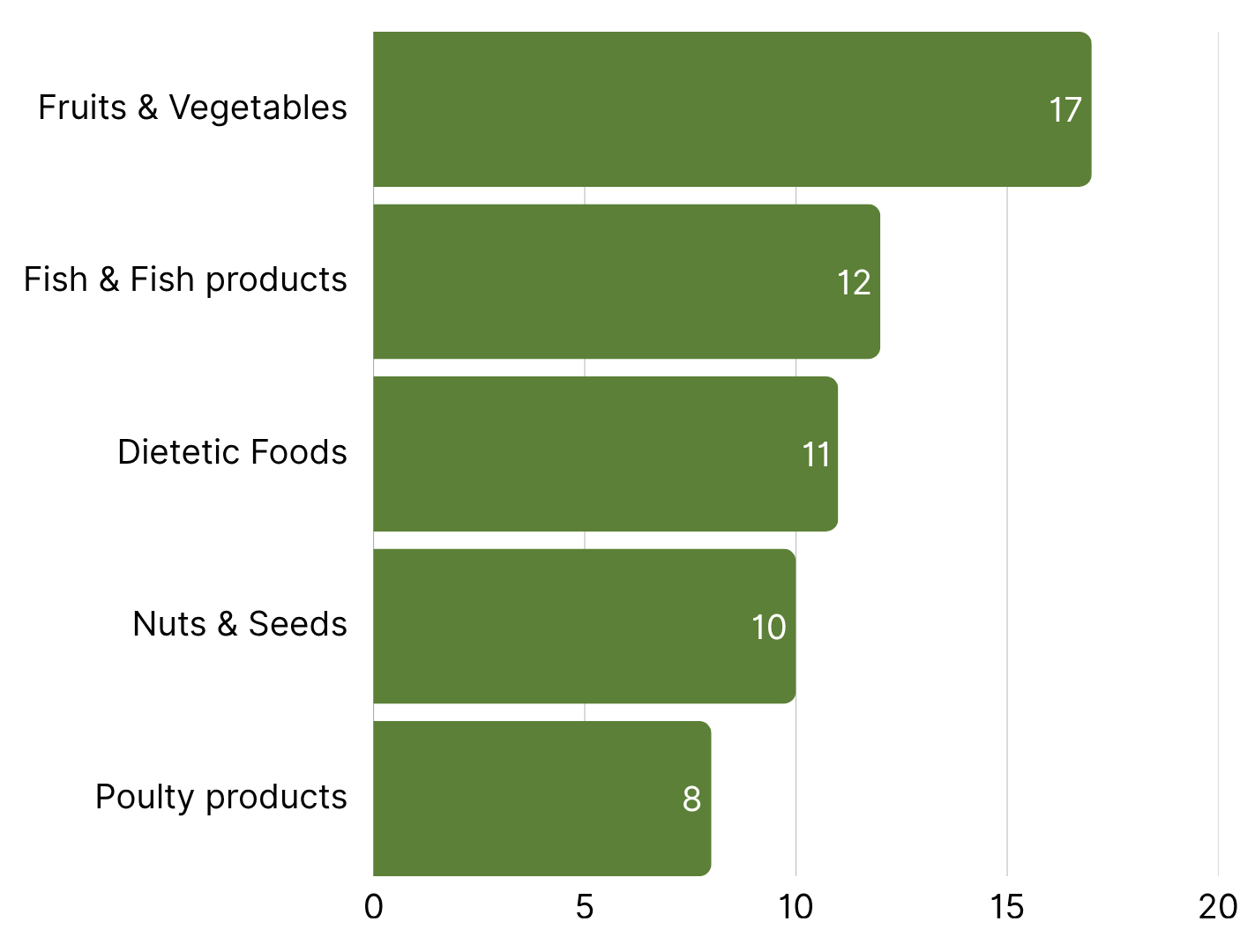
Graph 1: Top 5 Product Categories with the Most RASFF Alerts (Week 41)
The data reveals distinct patterns in food safety violations across different product categories. Fruits and vegetables topped the list with 17 notifications, followed by fish and fish products (12 alerts) and dietetic foods and supplements (11 alerts). The high concentration of fresh produce violations reflects ongoing challenges in agricultural supply chains, particularly regarding pesticide management and regulatory compliance across international borders.
Nuts, nut products and seeds recorded 10 notifications, primarily driven by aflatoxin contamination in groundnuts from multiple origins including Argentina, Nicaragua, and China. Poultry meat and products generated 8 alerts, while meat products and other mixed food products each accounted for 7 notifications.
Fresh produce focus
The fresh produce sector faced unprecedented scrutiny during week 41, with 17 recalls spanning multiple continents and highlighting systemic issues in global agricultural practices. The dominance of pesticide-related violations, affecting 14 out of 17 fresh produce alerts, underscores the critical importance of residue management for farmers and exporters targeting European markets.
Italy emerged as a surprising risk source with three separate grape recalls, all involving acetamiprid residues in both white table grapes and red globe varieties. This concentration of violations from a major EU agricultural producer demonstrates that proximity to markets does not guarantee compliance, and domestic producers face the same rigorous standards as international suppliers.
Turkey contributed three notifications, including two mycotoxin cases (ochratoxin A in dried figs and dried apricots) and one pesticide violation (acetamiprid in fresh tomatoes). The recurring mycotoxin issues in Turkish dried fruits reflect ongoing challenges with post-harvest handling and storage conditions in Mediterranean climates.
Egypt and Peru each generated two alerts, with Egypt flagging lambda-cyhalothrin in sugar apples and imazalil in mangoes, while Peru faced scrutiny for carbofuran in hot peppers and combined acetamiprid-methomyl residues in green asparagus. These patterns suggest systemic pesticide management challenges in major agricultural export economies.
Fruit and vegetable recalls in Europe
The comprehensive list of fresh produce recalls during week 41 reveals the global scope of agricultural safety challenges:
- Jujube (China): bifenthrin, clothianidin
- Vine leaves (United Arab Emirates): Multiple pesticides
- Tomatoes (Turkey): acetamiprid
- Dried figs (Turkey): ochratoxin A
- Sugar apples (Egypt): lambda-cyhalothrin
- White radish (Poland): chlorpyrifos (unauthorized)
- Green beans (Kenya): hexaconazole (unauthorized)
- Peppers (Vietnam): chlorfenapyr (unauthorized)
- Strawberries (Poland): oxamyl (unauthorized), thiacloprid
- Green asparagus (Peru): acetamiprid, methomyl (unauthorized)
- White grapes (Italy): deltamethrin
- Dried apricots (Turkey): ochratoxin A
- Hot peppers - Capsicum pubescens (Peru): carbofuran
- Oranges (Argentina): imazalil, thiabendazole
- Red globe grapes (Italy): acetamiprid
- Mangoes (Egypt): imazalil
- White table grapes (Italy): acetamiprid
Additional agricultural products faced recalls including:
- Groundnuts (Argentina, Nicaragua, China, Azerbaijan): Aflatoxin B1, total aflatoxins
- Sesame seeds (India, Nigeria): Salmonella
- Sunflower seeds (Bulgaria): Salmonella typhimurium
- Thyme (Poland): Salmonella
- Oregano (Turkey): Pyrrolizidine alkaloids
- Cumin (India): clothianidin, thiamethoxam
- Turmeric (India): Bacillus cereus
Geographic risk patterns

Graph 2: Top 5 Countries with the Most RASFF Alerts (Week 41)
The data reveals distinct geographic risk patterns that wholesale buyers and farmers must consider when sourcing products or planning exports. Poland's 13 notifications span multiple categories, from fresh produce pesticide violations to microbial contamination in processed foods, suggesting systemic supply chain challenges requiring immediate attention.
China's 9 alerts concentrated in nuts (aflatoxin contamination), fresh produce (pesticide residues), and various processed foods, reflecting the complexity of managing food safety across diverse agricultural regions. Germany and Turkey each recorded 7 notifications, with Germany's issues primarily involving processed foods and Turkey focusing on fresh and dried agricultural products.
The Mediterranean and Middle Eastern corridor (Egypt, UAE) generated 8 combined notifications, predominantly affecting fresh produce and dried fruits. This pattern suggests climate-related challenges in post-harvest handling and pesticide application in arid agricultural systems.
South American suppliers (Argentina, Peru) contributed 6 alerts, split between mycotoxin contamination in nuts and pesticide violations in fresh produce. Asian markets (China, India, Vietnam, Thailand) accounted for 17 notifications across diverse product categories, highlighting the need for enhanced supply chain oversight in long-distance agricultural trade.
Insights from our team of experts
The 82.4% pesticide violation rate in fresh produce represents a systemic failure in global agricultural chemical management, not isolated incidents. This pattern suggests widespread gaps in farmer education, regulatory enforcement, and supply chain verification processes.
The prevalence of unauthorized pesticides, including chlorpyrifos, hexaconazole, chlorfenapyr, oxamyl, and methomyl, indicates continued use of banned substances in major agricultural export regions. These violations carry severe market access consequences, including potential enhanced controls and import restrictions that can devastate regional agricultural economies.
The concentration of acetamiprid violations across multiple origins (Italy, Turkey, Peru) reflects the ongoing regulatory evolution around neonicotinoid pesticides. While acetamiprid remains authorized in the EU, the new lower maximum residue levels (MRLs) introduced in 2025 for several fruits create compliance challenges for producers accustomed to previous standards.
Mycotoxin contamination patterns in Turkish dried fruits and global groundnut supplies highlight climate-related food safety risks that will intensify with changing weather patterns. The recurring ochratoxin A issues in Mediterranean dried fruits and aflatoxin problems in tropical nuts require enhanced post-harvest management strategies and improved storage infrastructure.
For farmers and wholesale buyers, these patterns demand proactive risk management strategies including enhanced supplier verification, diversified sourcing portfolios, and continuous monitoring of regulatory changes. The food safety landscape continues evolving rapidly, with consumer protection taking precedence over trade convenience in European markets.