



European pear harvest and post-harvest orchard management
September marks a critical period in European pear orchards, as harvest season reaches its peak and farmers face crucial decisions that will determine both immediate fruit quality and long-term orchard health. With European pear production forecasted at 1.79 million tonnes for 2025/26 with a 1.4% year-on-year growth, understanding optimal harvest timing and post-harvest management practices becomes essential for maintaining profitability in an increasingly competitive market.
Learn everything you need to know about pear cultivation
Key European pear varieties and their September harvest windows
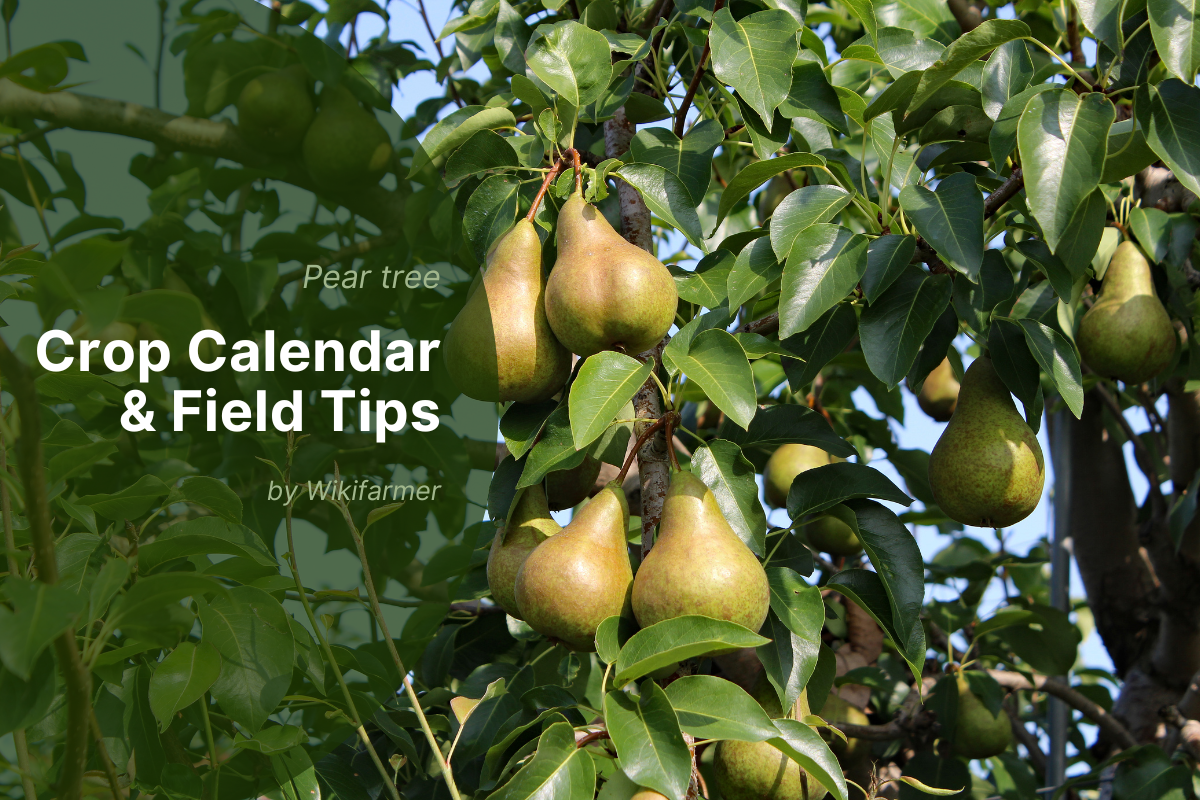
The timing of pear harvest varies significantly across European regions and varieties. Conference pears, representing 43% of total EU pear production, typically reach optimal harvest maturity from mid-September through October. In Central and Western Europe, varieties such as Williams Christ (Bartlett) and Conference are prime for harvesting during September, with Williams pears generally requiring harvest when internal pressure reaches 16–18 psi (110-120 kPa) while still green and firm.
Italy’s output is expected to fall again sharply (-24.7%), offset by substantial increases in Belgium (+32.1%) and the Netherlands (+8.1%). Conference pears will rise by +15.6% to 857,368 tonnes, while William BC production will shrink by -16.7%. Other key producers also see growth, with Spain increasing by +10.4% and Poland by +10%.
Critical maturity indicators for optimal harvest
European pear harvest success depends on recognizing specific maturity indicators rather than waiting for full ripeness. Unlike many fruits, European pears must be harvested before full ripeness to prevent internal breakdown and maintain storage quality.
Primary maturity indicators include:
- Color change: Fruit transitions from deep green to yellow-green, with lenticels (small spots) changing from white to brown
- Firmness levels: Optimal harvest firmness ranges from 67-85 N (15-19 lbs pressure), depending on variety and intended storage duration
- Streif Index: This comprehensive maturity measure combines firmness, starch degradation, and soluble solid content, with Conference pears requiring a Streif index of 0.7 for optimal long-term storage
- Separation ease: Mature pears should separate easily from the branch with a gentle twist upward (the ‘cradle test’)
Soluble solid concentration (SSC) serves as another crucial indicator, with a minimum of 10% SSC at harvest required for optimal pear quality. Most European varieties typically have a time window is typically 115 days from full bloom.
September harvest best practices
Harvest scheduling and labor management
September harvest operations require careful scheduling to capture pears at optimal maturity while managing labor efficiently. The harvest window for most European varieties spans 2-3 weeks, with different sections of the orchard potentially requiring staggered harvesting.
Key scheduling considerations:
- The most recommended approach is to begin monitoring maturity indicators 2 weeks before the anticipated harvest
- Plan for multiple harvests within the same orchard to capture different maturity zones
- It is necessary to coordinate with storage facilities to ensure immediate cooling capacity
- Address the growing labor shortage issue affecting European orchards
Proper harvesting techniques
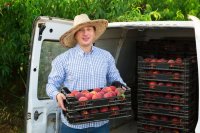
Hand harvesting remains essential for premium pear quality, as mechanical damage significantly reduces storage potential and increases susceptibility to post-harvest diseases. Proper harvesting technique involves:
- Using the ‘lift and twist’ method to minimize stem damage
- Harvesting during cooler morning hours when possible
- Handling fruit gently to prevent bruising, which accelerates ethylene production
- Using shallow picking containers to minimize compression damage
- Implementing immediate sorting to remove damaged fruit that could affect entire lots
Post-harvest cooling and storage management
Critical temperature management
Post-harvest cooling represents the most crucial factor in maintaining pear quality and extending storage life. Pears must be cooled to -0.8°C to +0.5°C (30-32°F) within 48-72 hours of harvest to slow respiration rates and prevent quality deterioration.
European storage facilities typically maintain:
- Storage temperature: -1°C to 0°C depending on variety
- Relative humidity: 90-95% to prevent moisture loss and skin shriveling
- Air circulation: Adequate ventilation to prevent CO2 accumulation while maintaining humidity
Controlled atmosphere storage protocols
For extended storage, controlled atmosphere (CA) storage provides optimal conditions by modifying gas composition around stored pears. Recommended CA conditions vary by variety:
- Conference pears: 1.5-3% O2, 0-0.8% CO2, with a 4-week delay before CA application to prevent internal browning
- Williams varieties: 1-1.5% O2, 0-0.8% CO2, can be stored for up to 4 months
- Storage duration: Conference pears can maintain quality for 6–8 months under proper CA conditions, while Williams varieties typically store for 4 months
Ripening Management Protocols
European pear varieties require cold conditioning to trigger proper ripening after storage. This process involves:
- Initial cooling: 2–3 weeks at -1°C to 0°C for Williams varieties
- Extended cooling: Up to 6 weeks for winter varieties like D'Anjou and Bosc
- Ethylene treatment: 100 µl/L ethylene at 18°C for 1-2 days when needed
Without proper cold conditioning, pears will shrivel and deteriorate without developing acceptable quality.
Essential pear orchard management tasks
Post-harvest tree care and nutrition
Following harvest, pear trees enter a critical period for nutrient accumulation and preparation for dormancy. Autumn nutrition management directly impacts next season's flowering and fruit set potential.
Key nutritional considerations:
- Maintain adequate soil moisture through autumn to support nutrient uptake
- Avoid late nitrogen applications that could stimulate new growth vulnerable to frost damage
- Monitor soil pH and adjust if necessary, as pears prefer slightly acidic to neutral soils (pH 6.0-7.0)
- Consider foliar applications of potassium to enhance winter hardiness
Since orchard conditions vary, it is always recommended to consult a qualified agronomist before making nutrition or soil management decisions.
Disease and Pest Management
September marks a critical period for preventing carry-over of diseases and pests that could impact next season's crop. European canker (Neonectria ditissima) remains a significant threat in northwestern Europe's humid climate.
September disease management practices:
- Sanitation: Remove and destroy all fallen fruit and infected plant material to reduce overwintering pathogen populations
- Canker management: Identify and prune out canker-infected branches, making cuts 15–20 cm below visible symptoms
- Copper applications: Where permitted, autumn copper sprays during leaf drop can help control bacterial and fungal pathogens
- Wound protection: Seal pruning cuts with appropriate wound sealers to prevent pathogen entry
Pest monitoring priorities:
- Continue monitoring for pear psylla, codling moth, and apple maggot which remain active through September
- Remove any damaged fruit that could harbor pest populations
- Apply appropriate treatments based on monitoring results and local extension recommendations
Limited pruning activities
While major pruning should be avoided in September, emergency pruning may be necessary to maintain tree health. Acceptable autumn pruning includes:
- Removal of dead, diseased, or severely damaged branches
- Elimination of water sprouts and root suckers
- Light thinning of overcrowded areas to improve air circulation
It is best to avoid extensive pruning in September as new growth stimulated by pruning may not harden off before winter, increasing susceptibility to frost damage.
Conclusion
September is an important period for European pear producers, requiring precise coordination of harvest timing, post-harvest handling, and storage preparation. Success depends on understanding variety-specific maturity indicators, implementing proper cooling and storage protocols, and maintaining orchard health through appropriate post-harvest management practices.
With European pear production facing ongoing challenges from climate change, market pressures, and regulatory changes, farmers who master these management practices will be best positioned for long-term profitability.
Sources
- The World Apple and Pear Association (WAPA)
- PennState Extension: Ripening European Pears from the Home Orchard
- Wageningen University: Temperature management pears
- Harvesting pears
- How to deal with European canker
- Pear (Pyrus spp.)-Trellis Rust (European Pear Rust)