
The Council of the EU and the European Parliament reached a provisional agreement on 20 October on targeted changes to the rules on the production, labelling, certification and trade of organic products. Recognition of the organic rules of 11 non-EU countries, including the United States, Canada, Argentina and New Zealand, which was due to expire on 31 December 2026, is extended until 31 December 2036. Imported products will be able to carry the EU organic logo only if they meet additional conditions, and the certification exemption for small operators selling directly to consumers rises to EUR 40,000 in annual turnover, from EUR 20,000 today. Both institutions must now endorse the deal, with the aim of having it in force before the end of 2026, according to the Council's press release.
Imported organic products will carry the EU logo only under extra conditions
The revision followed a ruling by the EU Court of Justice on 4 October 2024, which found that imported products recognised under equivalence arrangements cannot carry the EU organic logo. Under the deal, these products can still be marketed as organic and carry the logo of their country of origin, while the EU logo will be allowed only if they meet additional production and monitoring requirements beyond those covered by equivalence, for example on living soil, animal welfare and processing methods.
The Council and Parliament also dropped the Commission's proposal to allow the EU logo on products containing less than 5% of ingredients from non-EU countries that do not meet the additional criteria. Parliament's rapporteur Camilla Laureti said, according to Eunews, that her aim was a stable and predictable framework for the sector that also keeps a high level of consumer protection.
Recognition of the 11 countries is extended for ten years
Extending recognition for the 11 countries gives operators long-term predictability and avoids disruption to international trade, which matters for the EU organic sector, according to the Council. Parliament had voted for a five-year extension, according to Agence Europe, and the ten-year option prevailed.
IFOAM Organics Europe, the European umbrella body for the organic sector, welcomed the deal and said the ten-year extension gives the Commission and trading partners more time to negotiate future arrangements, while the new logo rules will require adjustments from operators, mainly on traceability and additional controls (IFOAM via Bio Eco Actual). OPTA Europe, which represents organic traders, called for the conditions to be put in place so that the new obligations on imported products can be enforced, and said it would watch how trading partners react, hoping the deal does not trigger retaliation against EU products (OPTA via Bio Eco Actual).
Small direct sellers are exempt from certification up to EUR 40,000
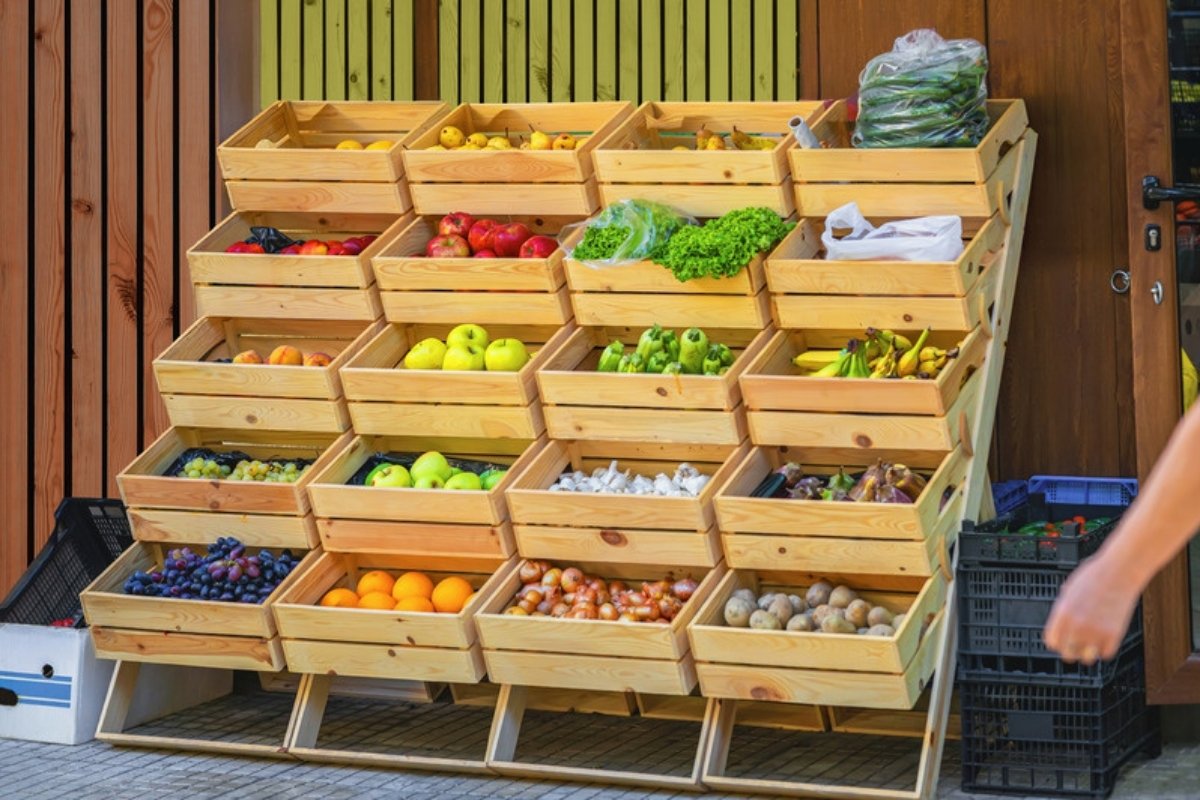
Small operators selling unpackaged organic products, such as loose fruit and vegetables, directly to consumers are currently exempt from certification if their annual turnover does not exceed EUR 20,000. Under the deal the threshold rises to EUR 40,000, calculated as the average of the previous five years, and the volume threshold from 5,000 to 10,000 kg a year. The exemption will also apply, under certain conditions, to small online retailers selling pre-packed organic products.
For a small producer selling loose organic vegetables or fruit at farmers' markets or straight from the field, the higher threshold leaves more room for sales before certification is needed, while how the exemption applies in each country will become clear once the regulation and the national implementing rules are published. According to the Council's page on organic farming, the changes in the revision are expected to cut direct administrative costs by EUR 47.8 million a year, EUR 45.9 million of it for farmers and other operators.
Temporary derogations for feed and aquaculture
The deal provides temporary flexibility for the use of non-organic protein feed for poultry and pigs, and for aquaculture juveniles, with derogations to be phased out gradually. Products already labelled under the current rules may continue to be sold until stocks run out, and transitional arrangements are foreseen for imported organic products.
The deal must be adopted by the end of 2026
The provisional agreement must be endorsed by the Council and Parliament and, after legal-linguistic revision, the regulation will be formally adopted. The aim is to complete the process before the current recognition expires on 31 December 2026, so that trade is not interrupted.
The revision amends Regulation (EU) 2018/848, in force since January 2022. According to the Council, the EU's organic area has grown by 79%, from 9.5 to 16.9 million hectares, and the EU organic logo is now the best-known food logo in Europe. The EU target remains 25% of farmland under organic farming by 2030, even though, as we have reported, EU organic farmland almost doubled in a decade but the 2030 target is still out of reach. Producers already farming organically also need to check which biostimulants are allowed in organic farming before buying inputs.
Sources
- Council of the EU. (2026). Council and Parliament strike deal on updated measures to support organic farming in the EU, press release 832/26. 20 October 2026.
- Council of the EU. (2026). Organic farming, policy page.
- Council of the EU. (2026). Regulation amending the organic farming Regulation, document 5294/26. 15 January 2026.
- Agence Europe. (2026). European Parliament and EU Council agree on update to organic farming rules. 20 October 2026.
- Eunews. (2026). Organic farming, Parliament agrees on new rules. 20 October 2026.
- Bio Eco Actual. (2026). IFOAM Organics Europe welcomes trilogue agreement on Organic Regulation revision. 20 October 2026.
- Bio Eco Actual. (2026). OPTA Europe congratulates the co-legislators on reaching an agreement on organic farming. 20 October 2026.