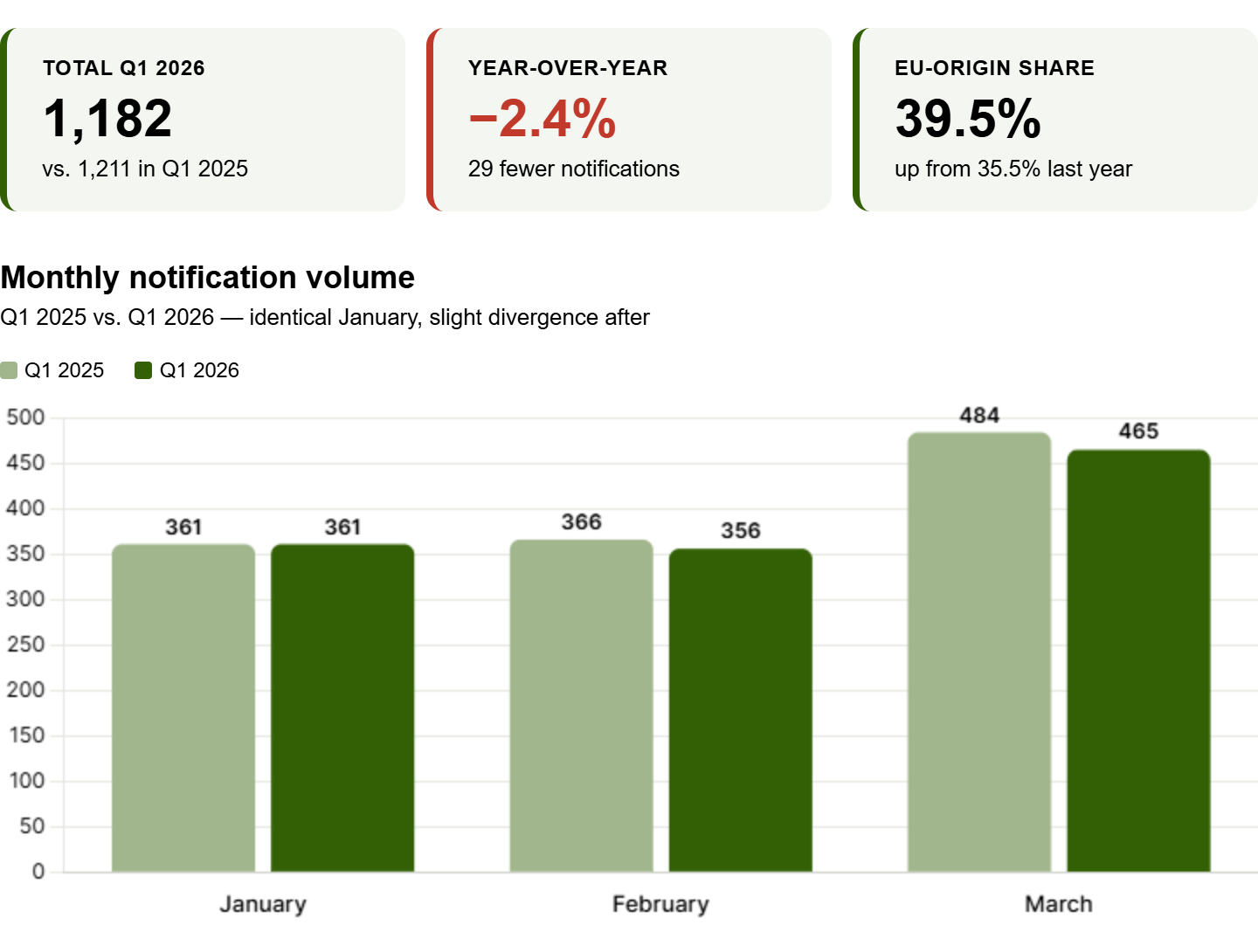
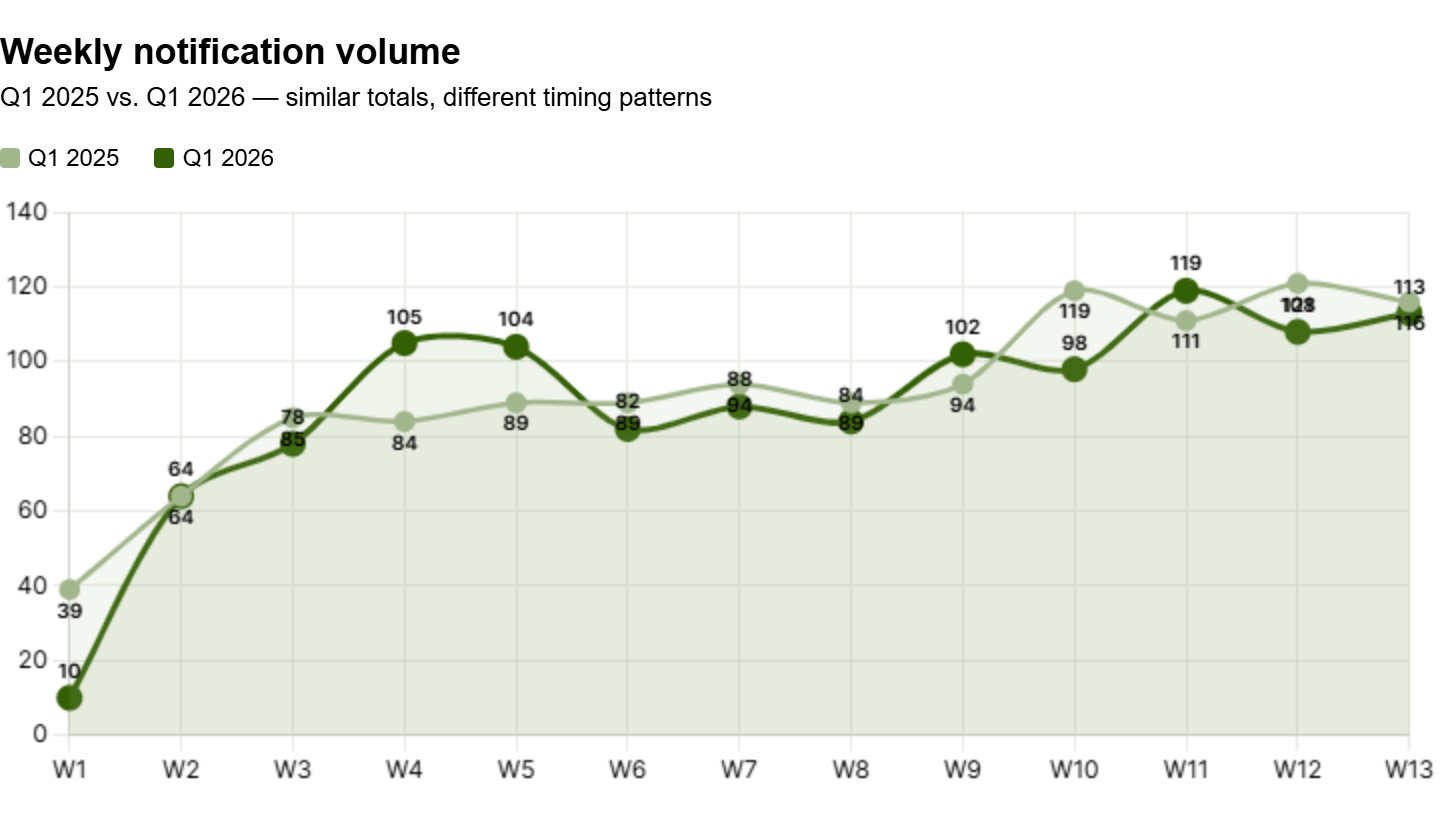
Between January and March 2026, the EU's Rapid Alert System for Food and Feed (RASFF) logged 1,182 notifications. In the same period of 2025, the system recorded 1,211. A 2.4% decline. If you stopped at the top-line number, you would conclude that European food safety enforcement is running at the same pace it was a year ago.
Food supplements went from 48 alerts to 98. Nuts and seeds dropped from 150 to 90. Turkish dried figs, a product that barely registered in the RASFF database a year earlier, produced 58 ochratoxin A notifications in 13 weeks. Romania jumped from 6 alerts to 22, with 17 of those involving Salmonella in poultry. CBD-infused brownies and gummies from Czechia appeared alongside two poisoning reports.
Highlights at a glance
- 1,182 total RASFF notifications in Q1 2026, down from 1,211 in Q1 2025 (2.4% decline)
- Fruits and vegetables rose to 292 (from 267), continuing to lead all product categories
- Supplements surged 104%, from 48 to 98, the largest single-category shift in the dataset
- Nuts and seeds fell 40%, from 150 to 90, driven by fewer Turkish nut aflatoxin alerts
- Ochratoxin A in Turkish dried figs reached 58 notifications (up from 15 in Q1 2025)
- Romania's poultry Salmonella alerts jumped from 2 to 17
- EU-origin products accounted for 39.5% of all alerts, up from 35.5%
- CBD/THC products generated 28 notifications; Czechia contributed 13
Recalls in nuts fell 40%, supplements doubled, and Turkish mycotoxin risk moved to dried figs
Fruits and vegetables held the top position with 292 notifications (up from 267, a 9.4% increase). For European wholesale buyers, this category matters most, and it grew while every other fresh produce subcategory contracted.
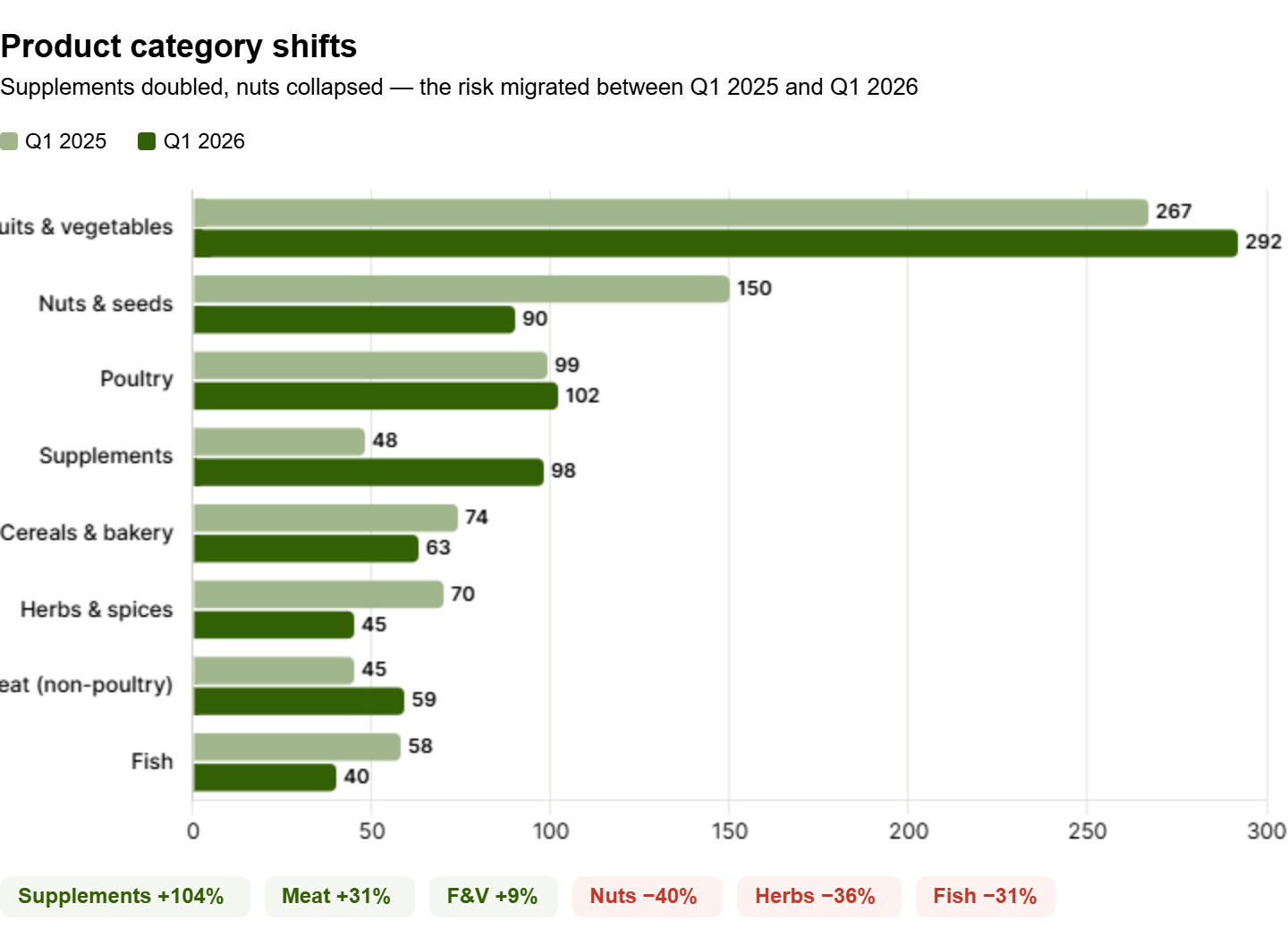
Nuts and seeds dropped the furthest. Their 150 alerts in Q1 2025 became 90 in Q1 2026, a 40% reduction. That fall tracks directly to fewer aflatoxin detections in Turkish nuts, which went from 28 alerts to just 6. The mycotoxin pressure from Türkiye, however, reappeared elsewhere. Turkish dried figs, classified under fruits and vegetables, absorbed that alert volume as ochratoxin A notifications rather than aflatoxin. Buyers monitoring the nuts category for Turkish mycotoxin risk would miss this shift entirely if they did not also track fruit and vegetable alerts.
Herbs and spices fell 35.7% (70 to 45). Cereals and bakery products declined 14.9% (74 to 63). Combined, fresh produce as a broader cluster shrank from 46.3% of all Q1 2025 notifications to 41.5% in Q1 2026.
Food supplements recorded the single largest category shift: 48 alerts became 98, a 104.2% increase. CBD and THC products from Czechia and the Netherlands, unauthorised novel food ingredients from the United States, and excessive vitamin dosages in supplements from Germany and Latvia contributed to the surge. Twenty-eight notifications specifically targeted CBD or THC products, including two from Czechia that described poisoning incidents after people consumed THC-infused brownies.
Poultry remained steady at 102 (vs. 99), but Romania's share of those alerts jumped from 2 to 17, all involving Salmonella. Non-poultry meat (beef, pork, game) rose from 45 to 59. Germany contributed 11 of those (mostly Listeria and Salmonella in processed meat), Belgium 8.
Pesticides and mycotoxins dropped while Salmonella, ochratoxin A, and CBD violations rose
Pesticide residues remained the most-cited hazard type at 421 mentions, but that represents a 21.2% decline from Q1 2025's 534. Mycotoxins fell 23.4%, from 286 to 219. Together, these two categories lost 180 hazard mentions in a single quarter.
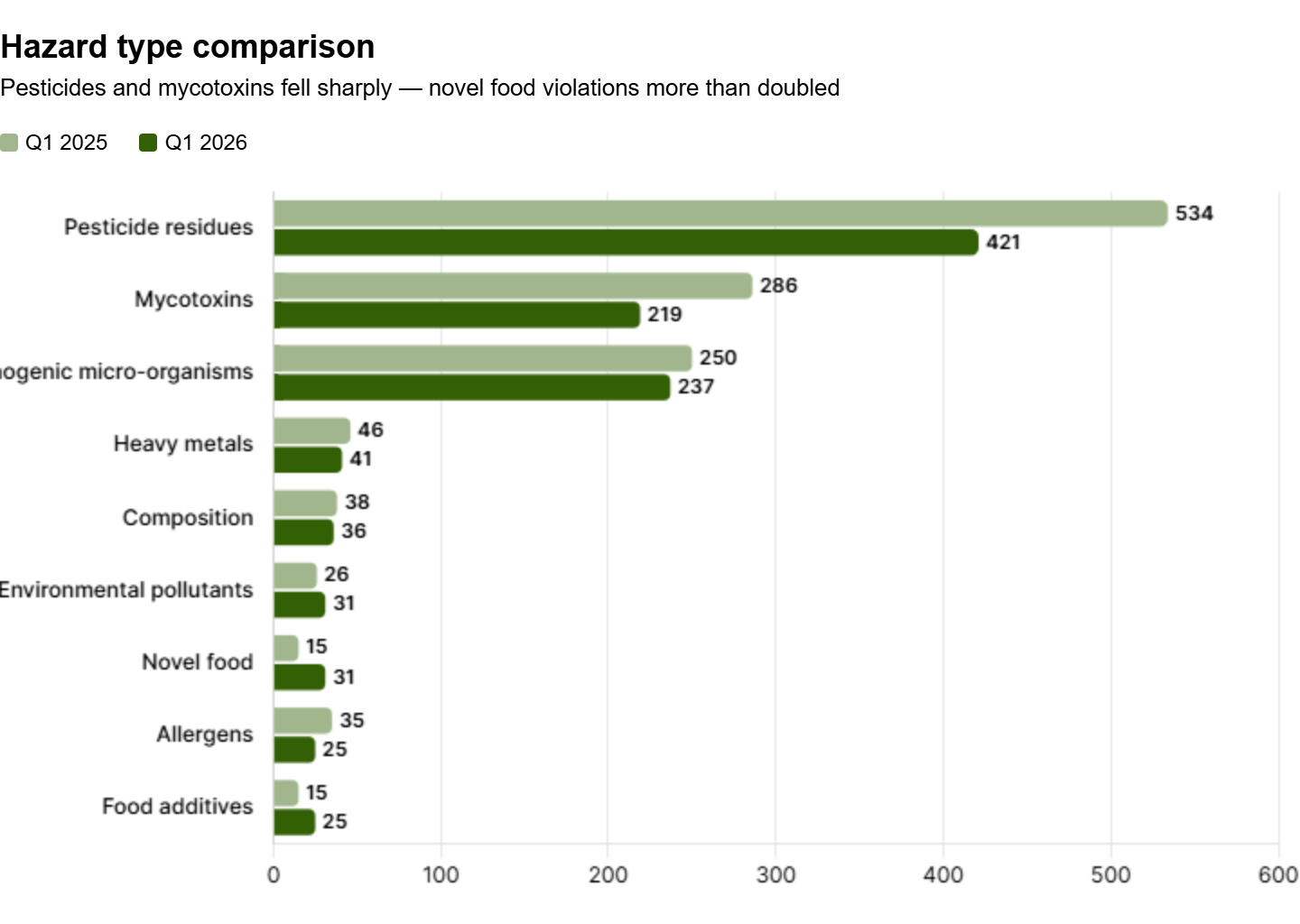
Novel food violations more than doubled, from 15 to 31. Food additives and flavourings rose from 15 to 25. Environmental pollutants increased from 26 to 31, driven by mineral oil aromatic hydrocarbons (MOAH) in cereals and oils. Organoleptic aspects (off-smell, off-taste, visual defects) went from 1 mention in Q1 2025 to 13 in Q1 2026, clustered in meat products.
At the substance level, aflatoxin B1 remained the most-cited individual hazard with 75 mentions, down 40% from 125. Ochratoxin A rose from 46 to 64 and entered the top three substances for the first time in recent quarterly data. Salmonella, counting all serovars, climbed from 47 to 65 mentions. Salmonella Infantis entered the top 10 with 29 mentions, all linked to poultry from Poland, Romania, and Ukraine.
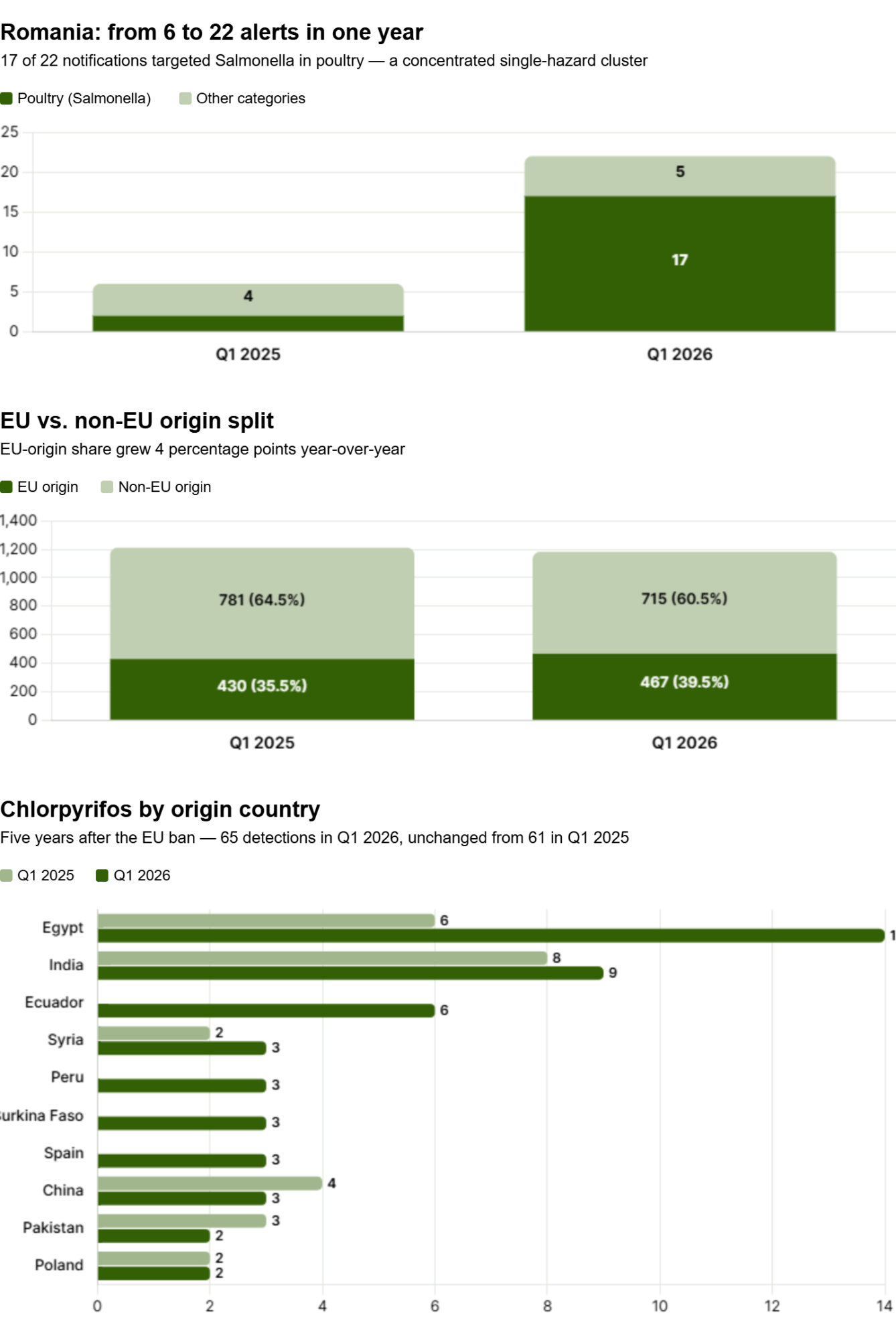
Chlorpyrifos, unauthorised in the EU since January 2020, appeared in 65 notifications. In Q1 2025, the count was 61. Five years after the ban, detection frequency has barely changed.
58 ochratoxin A alerts from Turkish dried figs
Türkiye led all origin countries with 114 notifications, down from 126. The drop came from nuts. The surge came from dried figs.
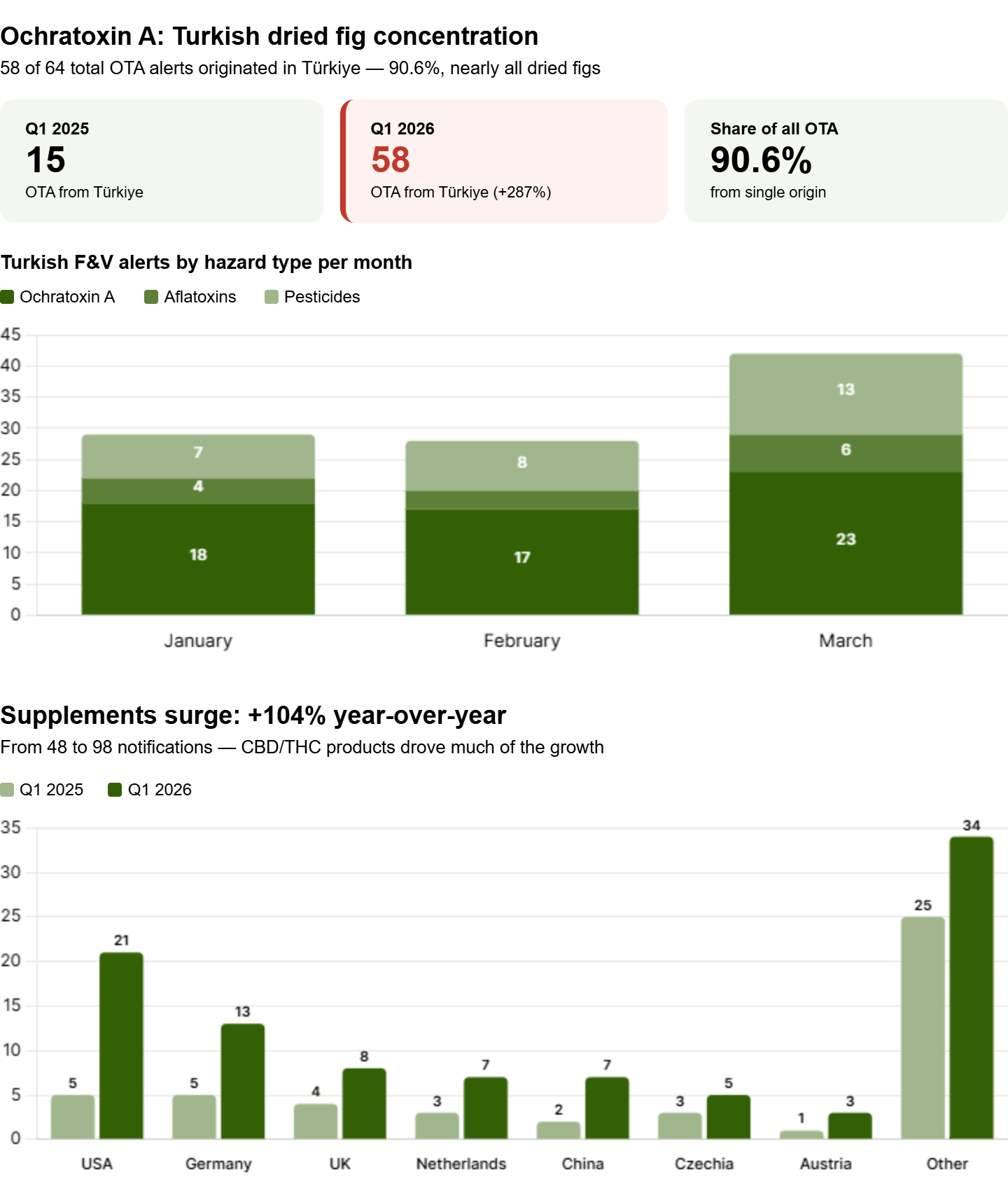
Turkish nut alerts fell from 28 to 6. Meanwhile, ochratoxin A in Turkish dried figs surged from 15 to 58 notifications. This single product-hazard-origin combination accounted for 4.9% of all RASFF notifications in Q1 2026.
For European importers of Turkish dried fruit, the practical implication is direct. Ochratoxin A testing has moved from a routine parameter to a defining one. Every shipment of dried figs from Türkiye now carries a statistical probability of exceeding EU maximum levels that is substantially higher than it was 12 months ago.
Egyptian peppers, Ecuadorian fruit, and where chlorpyrifos keeps showing up
Within the fruits and vegetables category, Türkiye contributed 93 of 292 notifications (31.8%). Most involved ochratoxin A in dried figs and fig paste. Pomegranates and fresh tomatoes from Türkiye also triggered pesticide alerts, with acetamiprid and prochloraz as the most frequently cited substances. Aflatoxins in dried figs accounted for the remainder.
Egypt ranked second at 30 notifications, with 86% in fruits and vegetables. Egyptian produce generated 79 individual pesticide hazard mentions in Q1 2026, and 14 of those involved chlorpyrifos. Egypt now produces more chlorpyrifos alerts than any other single country. In Q1 2025, Egypt had 6 chlorpyrifos notifications; in Q1 2026, that number reached 14.
Peru and Ecuador contributed 10 and 8 fruit and vegetable notifications respectively, mostly in bananas, citrus, and peppers. Ecuador's presence in the chlorpyrifos data is new: 6 alerts in Q1 2026 where there were zero in Q1 2025. Spain contributed 12 fruit and vegetable alerts; three of those involved chlorpyrifos in peppers and citrus, a reminder that the substance also persists in EU-origin produce.
Romanian poultry Salmonella surged to 17 alerts and EU-origin risk hit 39.5%
Romania recorded the largest proportional jump of any origin country. From 6 total notifications in Q1 2025, it reached 22 in Q1 2026. Seventeen of those targeted poultry meat contaminated with Salmonella (Salmonella Infantis and Salmonella Enteritidis appeared most frequently). Two involved non-poultry meat. When 77% of a country's alerts target one product with one pathogen, the problem sits in the processing chain.
UK exports also increased substantially, from 22 to 39 notifications. Twenty-two involved feed materials; another 8 targeted food supplements. Post-Brexit exports continue to face heightened RASFF scrutiny.
Poland remained the leading EU-origin source at 64 notifications, 34 of them in poultry (33 involving Salmonella). Poland and Romania combined accounted for 52 Salmonella-in-poultry alerts, more than half of all Salmonella notifications in the quarter.
EU-origin products as a whole rose from 35.5% to 39.5% of total notifications (467 vs. 430 in absolute terms). Germany (50, up from 42), Spain (45, up from 32), Belgium (36, up from 27), and Romania drove the increase.
What to expect in Q2
Ochratoxin A in Turkish dried figs at this volume could trigger enhanced import controls under EU Regulation 2019/1793 if the European Commission reviews Q1 enforcement data. Buyers should anticipate possible changes to border check frequencies for Turkish dried fruit during Q2.
Romania's Salmonella poultry cluster is too concentrated to be random. If Q2 data shows continuation, bilateral regulatory action or increased mandatory testing for Romanian poultry imports at destination becomes likely.
CBD/THC enforcement will likely intensify. Under the EU Novel Food Catalogue, CBD remains an unauthorised ingredient, and Central European markets (Czechia, the Netherlands, Austria) continue to serve as the primary entry point for these products. Twenty-eight notifications in one quarter, with poisoning incidents among them, gives regulators additional grounds for targeted inspections.