
Co-author: Ishaya Gadzama
Introduction
The nursery phase is a critical period in swine production, significantly impacting pigs' long-term growth, health, and welfare. Newly weaned piglets face numerous challenges, including separation from the sow, dietary changes, and new social environments. Effective nursery management is essential to minimize stress, promote feed intake, and ensure a smooth transition, setting the stage for optimal performance throughout the pig's life. This article draws on research to provide farmers with practical strategies for success in the nursery phase.
The Importance of the Nursery Phase
Long-Term Impact
Both weaning and end-of-nursery weights are strong predictors of finishing weights. Research indicates that each additional pound at weaning can translate to 1.8 more pounds (or 0.54 kg) at day 32 post-weaning and 2.1 more pounds (or 0.95 kg) at finishing on day 110.
Stressful Transition
Weaning is inherently stressful, causing behavioral, physiological, immunological, and microbiological changes. This stress can lead to reduced feed intake, increased susceptibility to disease, and decreased growth rates.
Gut Health
Weaning can disrupt the gut microbiome, affecting nutrient absorption and increasing the risk of diarrhea. While using in-feed antibiotics as growth promoters have been a common strategy to minimize the incidence of diarrhea and improve piglet performance in the nursery phase, this is increasingly discouraged to minimize the incidence of antibiotic-resistant bacteria.
Key Management Practices
Environmental Control
Temperature: Maintaining a warm and stable environment is crucial. Temperatures above the upper critical limit will decrease feed intake.
Cleanliness: Nursery rooms and entryways should be thoroughly cleaned and disinfected before new weaned pigs arrive. Overlooked areas like gate feet, fan inlets, and hand tools must also be sanitized.
Ventilation: Ensure proper ventilation to maintain air quality and minimize respiratory issues.
Space and Housing
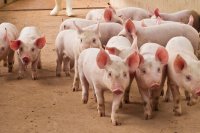
Floor Space: Adequate floor space is essential to prevent overcrowding, which can reduce feed intake and increase aggression. A minimum of 0.27 m²/pig is recommended in Brazil, and in Europe, 0.30 m²/pig (or 2.90²) ft is required for pigs between 20 and 30 kg. The free floor area should be adjusted according to the number of pigs and feeders, considering the area occupied by the feeders.
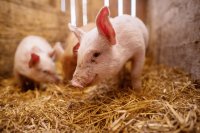
Enrichment: Environmental enrichment, such as straw, wood shavings, and hanging toys, can reduce stress and improve animal welfare.
Feeding Strategies
Feeder Space: Adequate feeder space is crucial for ensuring all pigs have access to feed. The space available per pig can affect their feeding behavior. Pigs often alter feeding patterns when feeder space is decreased, but reduced floor space can negatively impact feed intake.
Feed Quality: Use high-quality, palatable feed appropriate for young pigs. Some sources suggest that flavors and sweeteners in the diet can increase intake in the first week after weaning.
Creep Feeding: Introducing creep feed before weaning can help piglets adapt to solid feed and reduce the stress of the transition. However, research on the best way to present creep feed remains. Some studies show that floor-feeding creep feed may improve growth performance and reduce mortality.
Water Access: Ensure pigs have continuous access to fresh, clean water using appropriate drinkers. The type of drinker can affect water intake and waste.
Health Management
Probiotics: Some studies suggest that supplementing the diet of sows with probiotics can improve pig performance, increase growth rates, and reduce post-weaning diarrhea.
Zinc Oxide: Zinc oxide (ZnO) has been used to reduce diarrhea in piglets; however, its use is being restricted. Fiber sources may reduce the need for ZnO in diets by maintaining performance and decreasing zinc feces excretion.
Early Disease Detection: Regularly monitor pigs for signs of illness, such as diarrhea, lethargy, and decreased appetite. Implement a proactive treatment strategy to minimize the spread of disease.
Behavioral Considerations
Positive Handling: Provide consistent positive handling to reduce stress and facilitate easy management.
Stockperson Training: Ensure that stockpeople are well-trained in pig behavior and handling techniques.
Patience and Understanding: Be patient and understanding of pig behavior and give them enough time to move calmly.
Specific Challenges and Solutions
Fallback Pigs
Definition: Fallback pigs are those that fail to thrive after weaning, exhibiting poor growth and increased morbidity.
Strategies: To minimize fallback pigs, consider providing supplemental heat, multiple feed access points with gruel and mat feed, and more intensive observation.
Post-Weaning Diarrhea (PWD)
Cause
Post-weaning diarrhea (PWD) is often caused by the disruption of the gut microbiome during weaning.
Prevention
Strategies to prevent PWD include using dietary fiber, reducing the amount of ZnO in the feed, and improving feed intake, gut health and immunity.
Tail Biting
Risk Factors: Low floor space is a major risk factor for tail biting. Tail docking is a practice that minimizes tail biting but does not abolish this vice.
Conclusion
Optimizing the nursery phase requires a multifaceted approach that addresses environmental, nutritional, health, and behavioral factors. Farmers can help their pigs thrive, improve overall performance, and enhance the profitability of their swine operations by implementing the management strategies outlined in this article. Consistent attention to detail and a proactive approach are essential for success.
References
- Ayers, K., Bruner, L., Huber, L., Robles, D., Blackwell, T., & Levesque, C. (2021). Fine-tune nursery management to achieve optimal pig performance. Better Pork. Retrieved from Fine Tune Nursery Management to Achieve Optimal Pig Performance – Swinevetcenter
- Baker, J. E. (2004). Effective environmental temperature. Journal of Swine Health and Production, 12(3), 140-143.
- Barber, J., Brooks, P. H., & Carpenter, J. L. (1989). The effects of water delivery rate on the voluntary food intake, water use and performance of early-weaned pigs from 3 to 6 weeks of age. BSAP Occasional Publication, 13, 103-104.
- Bergstrom, J., & McKilligan, D. (2006). An evaluation of liquid feeding immediately post-weaning to improve the performance of the lightest pigs within a nursery group.
- D’eath, R. B., Arnott, G., Turner, S. P., Jensen, T., Lahrmann, H. P., Busch, M. E., ... & Sandøe, P. (2014). Injurious tail biting in pigs: how can it be controlled in existing systems without tail docking? Animal, 8(9), 1479-1497.
- DeRouchey, J., Wenlsey, M., Tokach, M., Woodworth, J., Goodband, B., & Gehbardt, J. (2022). Do mat and gruel feeding impact pig survivability. Pork Business. Retrieved from
- Dybkjær, L., Jacobsen, A. P., Tøgersen, F. A., & Poulsen, H. D. (2006). Eating and drinking activity of newly weaned piglets: Effects of individual characteristics, social mixing, and addition of extra zinc to the feed. Journal of Animal Science, 84(3), 702-711. Journal of Animal Science, 84(3), 702-711.
- Fraser, D., Patience, J. F., Phillips, P. A., & McLeese, J. M. (1990). Water for piglets and lactating sows: quantity, quality and quandaries. In W. Haresign & D. J. A. Cole (Eds.), Recent advances in animal nutrition (pp. 137–160).
- Goodband, B., DeRouchey, J., Tokach, M., Dritz, S., & Nelssen, J. (2006). Strategies for feeding weaned pigs. London Swine Conference – Thinking Globally, Acting Locally, 75-92.
- Griffioen, F., Aluwé, M., & Maes, D. (2023). Effect of Extended Photoperiod on Performance, Health, and Behavioural Parameters in Nursery Pigs. Vet. Sci., 10(2), 137.
- Hemsworth, P. H., & Wilhelmsson, S. (2024). Behavioural Principles of Pig Handling. In Livestock Handling and Transport (pp. 337–356). CAB International. Behavioural Principles of Pig Handling | Livestock Handling and Transport
- Hyun, Y., Ellis, M., McKeith, F. K., & Wilson, E. R. (1997). Feed intake pattern of group-housed growing-finishing pigs monitored using a computerized feed intake recording system. Journal of Animal Science, 75, 1443-1451.
- Laskoski, F., Faccin, J. E. G., Vier, C. M., Gonçalves, M. A. D., Orlando, U. A. D., Kummer, F., ... & Bortolozzo, F. P. (2019). Effects of pigs per feeder hole and group size on feed intake onset, growth performance, and ear and tail lesions in nursery pigs with consistent space allowance. Journal of Swine Health and Production, 27(1), 12–18.
- Laskoski, F., FACCIN, J.E.G., Bernardi, M.L., Mellagi, A.P.G., Ulguim, R.R., Lima, G.F.R., Gonçalves, M.A.D., Orlando, U.A.D., Kummer, R., Wentz, I., & Bortolozzo, F.P. (2021). Effects of different feeder and floor space allowances on growth performance and welfare aspects in nursery pigs. Livestock Science, 249, 1-10.
- Li, Y., et al. (2020). Effects of pigs per feeder hole on performance in nursery pigs.
- Mavromichalis, I. (1999). Feeding the newly weaned pig. The Pig Journal, 43, 38-50.
- Oliveira, A.L.S., Fortunato, R.T., & Molino, J.P. (2016). Environmental enrichment improves behavior and reduces stress in weaned piglets. Arquivos Brasileiros de Medicina Veterinária e Zootecnia, 68(2), 415-421.
- Patience, J. F., Beaulieu, A. D., Levesque, C., & Bench, C. (2004). Nursery management and performance. Prairie Swine Centre.
- Phillips, P. A., & Fraser, D. (1991). Discovery of selected water dispensers by newborn pigs. Canadian Journal of Animal Science, 71, 233–236.
- Purina Animal Nutrition. (2025). How to reach optimal pig nursery performance. Purina Animal Nutrition LLC.
- Silva, G.F., et al. (2023). Lignocellulose and eubiotic fiber inclusion in diets as a strategy to reduce zinc oxide level on nursery piglets. Livestock Science, 274, 105274.
- Spinler, M.S., Gebhardt, J.T., Tokach, M.D., Goodband, R.D., DeRouchey, J.M., Kyle, J.M., & Woodworth, J.C. (2023). Effect of lactation and nursery diets supplemented with a feed flavor on sow feed intake and lactation performance and subsequent weaned pig nursery performance. Translational Animal Science, 7(1), txad056.
- Vande Pol, K. D., Grohmann, N. S., Weber, T. E., Ritter, M. J., & Ellis, M. (2022). Effect of drinker type on water disappearance of nursery pigs. Translational Animal Science, 6(1), txac014.
- Wensley, M. R., Tokach, M. D., Woodworth, J. C., Goodband, R. D., DeRouchey, J. M., & Gebhardt, J. T. (2023). Strategies to minimize fallback pigs in the nursery. Journal of Swine Health and Production, 31(5), 237-241.
- Wood, C. M., Osborne, B., Meder, S., Young, A., Damon, A., Joseph, J., ... & Kuehn, L. A. (2003). The effect of toys on performance and behavior of weanling pigs housed in littermate or mixed groups. J. Anim. Sci, 81, 34.