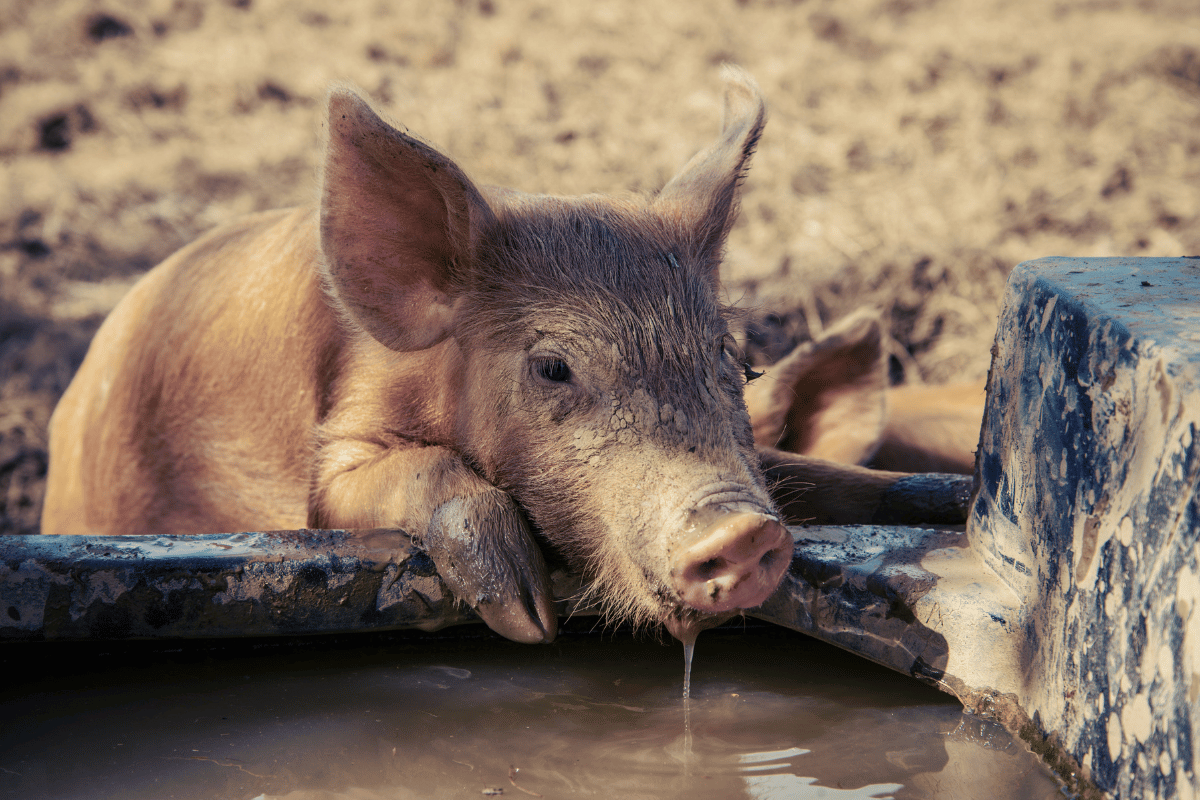
Introduction: Water is the most essential nutrient for swine
Water is indispensable for all life forms and constitutes the nutrient required in the most significant quantity by swine. As the most essential nutrient for pigs, water significantly affects their health, growth, and productivity, playing a crucial role in various physiological functions. These include nutrient transportation, waste elimination, digestion, thermoregulation, and maintaining electrolyte balance. The physiological water requirements of swine are crucial for their overall health and performance, given that water comprises about 80% of a pig’s body weight at birth and declines to approximately 50% at market weight (Nyachoti et al., 2022). (Table 1)
Daily water needs and physiological functions in pigs
Water consumption in swine production is substantial, averaging around 15 L/animal/day in some regions, making it a critical factor in efficient swine farming (Velho et al., 2012). Beyond quantity, drinking water quality is equally important, as it can significantly impact swine health and performance. Factors such as pH, hardness, salinity, iron, manganese, and microbiological levels in water can vary widely. They may exceed acceptable standards, negatively affecting pig production and even undermining antimicrobial stewardship efforts (Edwards & Crabb, 2021). Poor water quality can lead to reduced water and feed intake, ultimately impairing animal performance (Strobel, 2022).
Contemporary research provides only estimations of water requirements due to the numerous factors influencing daily water intake, particularly in rearing gilts. Nevertheless, ensuring clean and readily accessible water remains fundamental for a successful swine production system. Water serves as a transport and solvent medium for nutrients and waste products, enhancing digestive efficiency, maintaining electrolyte balance and joint mobility, regulating body temperature, and facilitating essential biochemical reactions (Nyachoti & Kiari, 2010). Thus, optimizing both water availability and quality is vital for maximizing swine health and productivity.
Importance of water quality in pig farming
Table 1. Importance of water for swine
|
Source of Water |
Key Findings (vs. Control) |
Reference |
|
Feeder water |
- Decreases time spent eating |
Nyachoti et al. (2022) |
|
Liquid feeding system |
- Newly weaned pigs consume 35% more water |
Nyachoti et al. (2022) |
|
Bore water |
- Most common water source in Australian pig farms |
Edwards & Crabb (2021) |
Factors influencing water requirements
The water requirements of pigs are contingent upon several factors, including feed composition, ambient temperature, and overall health status. Observations regarding the water consumption of pregnant sows reveal that the ratio of water to feed remains consistent in sows during their first and second farrowing, with water intake increasing further with each subsequent farrowing. Lactating animals may consume up to 40 liters of water per day. In weaning pigs and those being fattened, maximum water consumption is typically observed at the onset and conclusion of the respective periods. Ethological studies indicate that pigs often emulate one another when drinking, demonstrating a herd instinct. As group population density increases, so too does water consumption. The dynamics of this process are influenced by the type of feed and the method of feeding. Insufficient water intake leads to dehydration, adversely affecting the behavior of pigs (Azarpajouh et al., 2018).
Sources of water for pigs
Pigs acquire water from three primary sources: the moisture inherent in their feed, metabolic water, and water ingested through drinking. They require adequate quantities of water to sustain optimal production levels. Water constitutes the single largest component of the body, accounting for up to 82% of a young pig’s body weight and 55% of that of market hogs and is also a principal component of various secretions produced by the pig (e.g., milk and saliva).
The volume of water consumed by pigs fluctuates based on various factors, including the quality of the water provided, dietary composition, the animal's physiological status, environmental conditions, social dynamics, and the design and placement of watering equipment. The interactive effects of these variables may also impact water intake. Consequently, the recommended water allowances for distinct classes of pigs vary significantly due to limited information regarding the underlying physiological mechanisms that govern water consumption and challenges in assessing the influence of extrinsic factors such as ambient temperature, humidity, diet quality and quantity, frequency of provision, maintenance conditions, or stress (Komlatsky et al., 2022).
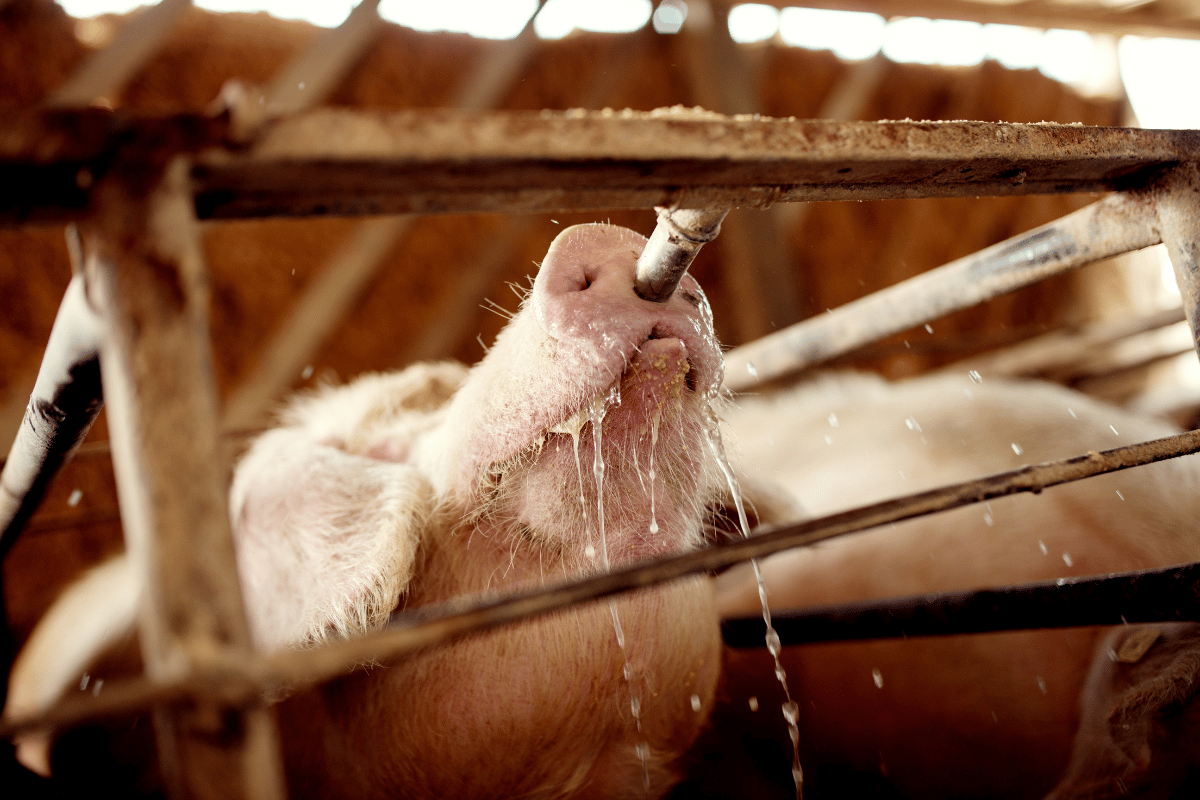
Methodologies for determining water requirements
Moreover, conventional methodologies for determining nutrient requirements cannot be directly applied to water, as pigs require it not only for tissue maintenance, body growth, fetal development, and lactation but also to perform a myriad of other physiologically significant functions, including thermoregulation, mineral homeostasis, excretion of metabolites and/or anti-nutritional substances, achieving satiety, and fulfilling behavioral needs. Thus, in practice, pigs are granted unrestricted access to water. In modern swine operations, water is primarily utilized for drinking, cleaning barns, establishing dunging habits, sanitizing equipment, and in liquid manure systems for flushing or transporting manure to storage sites. The quality of drinking water for pigs and poultry varies considerably based on the concentration and type of contaminants present. Although pigs can acclimate to certain water quality issues, it is unequivocal that poor-quality water can have a detrimental effect on performance (Nyachoti & Kiari, 2010).
Effects of water contaminants on pig performance
For most water contaminants, there is no singular threshold at which performance is compromised. This is partly attributable to the fact that the effects on animal performance at any given level are contingent upon the presence of other contaminants. Consequently, when evaluating water quality issues arising from a specific factor, it is imperative to consider the influence of other present factors. As water systems increasingly play a pivotal role in administering pharmaceuticals, the quality of water—particularly factors that may affect drug efficacy—becomes paramount.
Several management practices can mitigate total freshwater usage, including the implementation of waterers designed to reduce wastage, precise diet formulation, and the adoption of housing designs and management strategies that minimize the necessity for routine sprinkler systems for cooling. The potential adoption of technologies that enhance overall farm water usage efficiency, such as solid manure handling and water recycling, may emerge as attractive solutions for conserving water in the future (Azarpajouh et al., 2018).
References
- Azarpajouh, S., Garcia, A., Jackson, C., Karriker, L., Ramirez, A., & Johnson, A. (2018). The importance of water in pig production. CABI Reviews, 1-17.
- Komlatsky, V. I., Komlatsky, G. V., Eremenko, O. N., Elizbarov, R. V., & Aksenenko, S. A. (2022). The importance of water in pig farming. In BIO Web of Conferences (Vol. 51, p. 03009). EDP Sciences.
- Nyachoti, M., & Kiarie, E. (2010). Water in swine production: a review of its significance and conservation strategies. In 24th Manitoba Swine Seminar (Vol. 3).
- Nyachoti, C. M., Regassa, A., & Patience, J. F. (2022). Water in swine nutrition. pp. 37-63.
- Edwards, L., & Crabb, H. (2021). Water quality and management in the Australian pig industry. Animal Production Science, 61(7), 637-644.
- Velho, V. F., Mohedano, R. A., Filho, P. B., & Costa, R. H. R. (2012). The viability of treated piggery wastewater for reuse in agricultural irrigation. Journal Name, 1(1), Article 10.
- Strobel, B. P. E. (2022). Managing water for pig production. Journal Name, 29(3), 20-23.