
Co-author: Ishaya Gadzama
Introduction
Feed costs are a major expense for pig farmers, often constituting 70% or more of the total cost of pig production (Chekol et al., 2024). Protein is often the most expensive component of pig feed. There is competition between humans and livestock for common protein sources like soybeans, which can drive up costs and lead to shortages, especially during certain times of the year (Nasir et al., 2022). Some farmers resort to unconventional feeds like bakery waste, which may not provide the proper nutrition for optimal pig growth. Azolla is a promising alternative protein supplement for pigs due to its rapid growth, high protein content, essential amino acids, vitamins, growth promoters, and minerals (Yohana et al., 2023), and ability to fix atmospheric nitrogen. Azolla is regarded as a cost-effective alternative feed ingredient for livestock, including pigs, poultry, and fish (Nasir et al., 2022; Yohana et al., 2023).
What is Azolla?
Azolla is a free-floating aquatic fern that can be found in the tropics, subtropics, and warm temperate regions of Africa, Asia, and the Americas (Nasir et al., 2022). These ferns are commonly found in natural water bodies such as lakes, paddy fields, freshwater ponds, slow-moving rivers, and irrigation channels (Figure 1). Azolla forms a unique symbiotic relationship with nitrogen-fixing cyanobacteria, including Anabaena azollae and Nostoc (Yohana et al., 2023; Chekol et al., 2024). This symbiotic association enables Azolla to obtain atmospheric nitrogen, reducing the need for external nitrogen fertilizers (Yohana et al., 2023). The cyanobacteria convert atmospheric nitrogen into a form usable by the fern, and in return, the fern provides the cyanobacteria with essential nutrients and protected space within its leaf cavities (Nasir et al., 2022).

Figure 1. Azolla pinnata
Source: Azolla
Growth Rate
Azolla is well-known for its rapid growth rate. Under optimal conditions, it doubles in 5–10 days (Nasir et al., 2022). Some sources suggest that it can double its weight in 3-5 days (El Naggar and El-Mesery, 2022). This rapid growth produces substantial biomass (Chekol et al., 2024).
Cultivation
Azolla can be easily grown in controlled environments like ponds or troughs (Yohana et al., 2023). Key requirements for its cultivation include water, soil, and a pond (Nasir et al., 2022). Azolla also needs a consistent supply of phosphorus and a moderate temperature to thrive (Chekol et al., 2024). Ideal growing conditions include a temperature range of 20–28°C (68-82.4°F) (Acharya et al., 2023; El Naggar and El-Mesery, 2022), relative humidity of 65–80% (Acharya et al., 2023; El Naggar and El-Mesery, 2022), a water depth of 5–12 cm (Yohana et al., 2023; Acharya et al., 2023), and a pH between 4–7.5, although it can tolerate a pH range of 3.5–10 (Acharya et al., 2023; El Naggar and El-Mesery, 2022).
Why Azolla is Good for Pigs
Azolla is rich in proteins, with a crude protein content ranging from 20% to 30%, depending on the species (Alalade and Iyayi, 2006; Nasir et al., 2022). Azolla has a symbiotic relationship with Anabaena azollae, which allows it to fix atmospheric nitrogen, contributing to its high protein content and reducing the need for nitrogen fertilizers (Nasir et al., 2022). Azolla pinnata meal (AZM) contains 12.7% crude fiber, 2.7% ether extract, 16.2% ash, and 47.0% carbohydrate. It has a gross energy of 2039 kcal/kg. It also contains minerals such as 1.16% calcium, 1.29% phosphorus, 1.25% potassium, 0.25% or 0.35% magnesium, 23.79 ppm sodium, 174.42 ppm manganese, 755.73 ppm iron, 16.74 ppm copper, and 87.59 ppm zinc.
The cell wall of AZM has 36.88% to 47.08% neutral detergent fiber (NDF), 36.08% to 47.08% acid detergent fiber (ADF), 10.20% hemicellulose, 12.76% cellulose, and 28.24% lignin. Furthermore, the main amino acids in AZM are leucine, lysine, arginine, and valine, which are often deficient in other plant-based protein sources (Yohana et al., 2023), but it is low in tryptophan and sulfur-containing amino acids (Alalade and Iyayi, 2006). It is a good source of vitamins, such as vitamin A, Vitamin B12, and beta-carotene (Yohana et al., 2023).
How to Use Azolla in Pig Feed
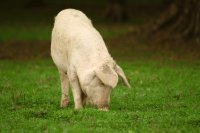
Azolla can be incorporated into pig feed in various forms (fresh or dried), depending on the needs of the farmer and the method of storage. Fresh Azolla can be fed directly to pigs after thoroughly washing it (Figure 2; Pillai et al., 2002). On the other hand, Azolla can be dried and ground into a meal, making it easier to mix into the pig feed (Paryanto et al., 2023).
The drying method can affect the nutrient content, with some research suggesting that drying at 40-60°C (104-140°F) can help preserve protein levels (Paryanto et al., 2023). Other forms of Azolla, such as sundried, powder, or pellet form, can also be used in pig diets. However, it is important to use Azolla as part of a balanced diet and not as the sole source of nutrition (El Naggar and El-Mesery, 2022). Mixing Azolla with other feed ingredients ensures that all of the pig's nutritional requirements are met (El Naggar and El-Mesery, 2022).
Using Azolla as a non-conventional feed resource for pigs
The most common species of Azolla used as animal feed is Azolla pinnata (Figure 1; Penjor et al., 2022). Other species such as A. filiculoides and A. microphylla are also used as feed sources for livestock (Fiogbé et al., 2004). Azolla can be easily digestible by livestock such as cattle, fish, pigs, and poultry due to its high protein and low lignin content. It is also valuable as a bio-fertilizer for wetland paddy (Pillai et al., 2002).
Effect of Azolla on Feed Intake and Growth Performance of Pigs
Azolla can be used to replace a portion of conventional protein sources in pig diets. Both exotic and Indigenous pig breeds can benefit from the inclusion of Zola in their diet (Acharya et al., 2023). Both exotic and indigenous pigs show good feed intake, nutrient utilization, and overall growth rates when Azolla is included in their feed (Acharya et al., 2023). Studies indicate that growing pigs can have up to 20% of their diet replaced with Azolla meal without negatively affecting their growth performance or nutrient digestibility (Duran 1994; Saini et al., 2018). In addition, Saini et al. (2018) indicated that replacing 15% of the concentrate mixture with Azolla did not negatively impact body weight gain or carcass characteristics of pigs. Another study using 30% Azolla pinnata showed comparable growth performance in weaner pigs as those fed 100% commercial feed (Penjor et al., 2022).
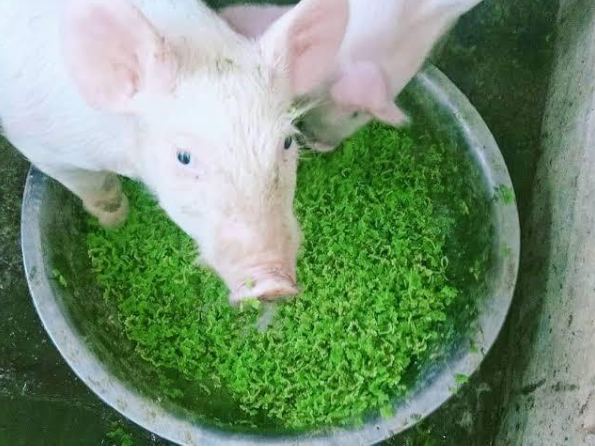
Figure 2. Pigs feeding on Azolla pinnata
Digestibility of Azolla in Pigs
The digestibility of Azolla for pigs can change depending on the breed and age of the pigs and how the Azolla is prepared. While some studies have shown that including Azolla filiculoides in pig feed can lower protein digestibility (Leterme et al., 2009), other studies have found that Azolla pinnata has high in vitro nitrogen digestibility and dry matter digestibility (Ly et al., 2002). In vitro nitrogen digestibility can also indicate how well the pig will digest the Azolla in its intestines. More research is still needed to fully understand how pigs digest Azolla.
It's important to limit Azolla to 10-15% of a pig's diet because higher amounts can negatively impact overall digestion (Leterme et al., 2009). Azolla has some antinutritional compounds like tannins and phytates that can bind to nutrients and make them less available to the pig. These compounds can make it harder for the pig to digest and absorb nutrients. To make Azolla more digestible, heat or enzymes can be processed to reduce harmful compounds and increase nutrient availability (Yohana et al., 2023). Methods like cooking, toasting, steaming, or extrusion can also help break down these substances (Yohana et al., 2023). Proper processing is key to reducing these harmful substances and increasing the digestibility and nutritional value of Azolla as feed for pigs (Yohana et al., 2023).
Azolla as a Cost-Effective Feed
Azolla can be a cost-effective alternative to traditional protein sources like soybeans, which are often expensive (Saini et al., 2018; Nasir et al., 2022; Penjor et al., 2022). The cost of producing Azolla can be relatively low, especially when using animal waste as fertilizer. Using Azolla, pig farmers can potentially lower their feed costs (Saini et al., 2018). Azolla is a native species in some Asian countries, so using local sources of Azolla can further reduce costs (Nasir et al., 2022).
The cultivation of Azolla requires less investment compared to conventional feed resources like soybeans, making it a good alternative feed source for pigs (Penjor et al., 2022). One study noted that a 15% inclusion of Azolla as a protein replacer reduced feed costs in swine rearing (Saini et al., 2018). This finding is significant because it demonstrates the potential of Azolla to serve as a cost-effective alternative to conventional protein sources in pig feed.
Conclusion
Azolla is a promising, sustainable, and cost-effective alternative feed ingredient for livestock, particularly pigs, due to its rapid growth, high protein content, and ability to fix atmospheric nitrogen. It can be used as a protein source for feeding pigs, which helps in lowering feed costs while maintaining or improving animal health and productivity.
References
- Acharya, P., Singh, Y., Sharma, A., Pattnaik, N., & Prakash, A. (2023). Azolla: An alternative feed for sustainable livestock production. International Journal of Veterinary Sciences and Animal Husbandry, SP-8(3), 10-16. Azolla: An alternative feed for sustainable livestock production
- Alalade, O. A., & Iyayi, E. A. (2006). Chemical Composition and the Feeding Value of Azolla (Azolla pinnata) Meal for Egg-Type Chicks. International Journal of Poultry Science, 5(2), 137-141.
- Chekol, A. S., Nigussie, T. Z., & Fenta, B. A. (2024). Azolla as a beneficial macrophyte for livestock feed: a review. Cogent Food & Agriculture, 10(1), 2367804.
- Durán, A. O. (1994). Raw palm oil as the energy source in pig fattening diets and Azolla filiculoides as a substitute for soya bean meal. Livestock Research for Rural Development, 6(1), 1-8.
- El Naggar, S., & El-Mesery, H. S. (2022). Azolla pinnata as unconventional feeds for ruminant feeding. Bulletin of the National Research Centre, 46(1), 66.
- Fiogbé, E. D., Micha, J. C., & Van Hove, C. (2004). Use of a natural aquatic fern, Azolla microphylla, as a main component in food for the omnivorous–phytoplanktonophagous tilapia, Oreochromis niloticus L. Journal of Applied Ichthyology, 20(6), 517-520.
- Leterme, P., Londoño, A. M., Muñoz, J. E., Súarez, J., Bedoya, C. A., Souffrant, W. B., & Buldgen, A. (2009). Nutritional value of aquatic ferns (Azolla filiculoides Lam. and Salvinia molesta Mitchell) in pigs. Animal Feed Science and Technology, 149(1-2), 135-148.
- Ly, J., Samkol, P., & Preston, T. R. (2002). Nutritional evaluation of aquatic plants for pigs: pepsin/pancreatin digestibility of six plant species. Livestock Research for Rural Development, 14(1). Retrieved from
- Nasir, N. A., Kamaruddin, S. A., Zakarya, I. A., & Islam, A. K. (2021). Sustainable alternative animal feeds: Recent advances and future perspective of using azolla as animal feed in livestock, poultry and fish nutrition. Sustainable Chemistry and Pharmacy, 25: 100581.
- Paryanto, P., Faizin, M., & Rusnaldy, R. (2023). Azolla processing technologies for an alternative feed raw material. Results in Engineering, 101313. Azolla processing technologies for an alternative feed raw material — Results in Engineering
- Penjor, T., Sherab, P., Tsheten, G., & Penjor, S. (2022). Comparative performance of weaner pigs fed commercial feed and Azolla Pinnata as feed substitute. Bhutan Journal of Animal Science, 6(1), 22-27.
- Pillai, P. K., Premalatha, S., & Rajamony, S. (2002). Azolla: A sustainable feed for livestock. Natural Resources Development Project, Vivekananda Kendra. Wageningen University & Research publication (PDF)
- Saini, K. P. S., Roy, B., Lakhani, G. P., Jain, A. K., & Ghosh, S. (2018). Effect Azola (Azola pinnata) Feeding on Growth Performance and Carcass Traits of Crossbred Pigs. International Journal of Current Microbiology and Applied Sciences, 7(6), 3813-3816. Effect Azola (Azola pinnata) Feeding on Growth Performance and Carcass Traits of Crossbred Pigs
- Tran, G. (2015). Azolla. Feedipedia, a programme by INRAE, CIRAD, AFZ, and FAO. https://www.feedipedia.org/node/565
- Yohana, M. A., Ray, G. W., Yang, Q., Tan, B., Chi, S., Asase, A.,... & Derrick, A. (2023). A review on the use of azolla meal as a feed ingredient in aquatic animals’ diets. Aquaculture Research, 2023(1), 2633412.