



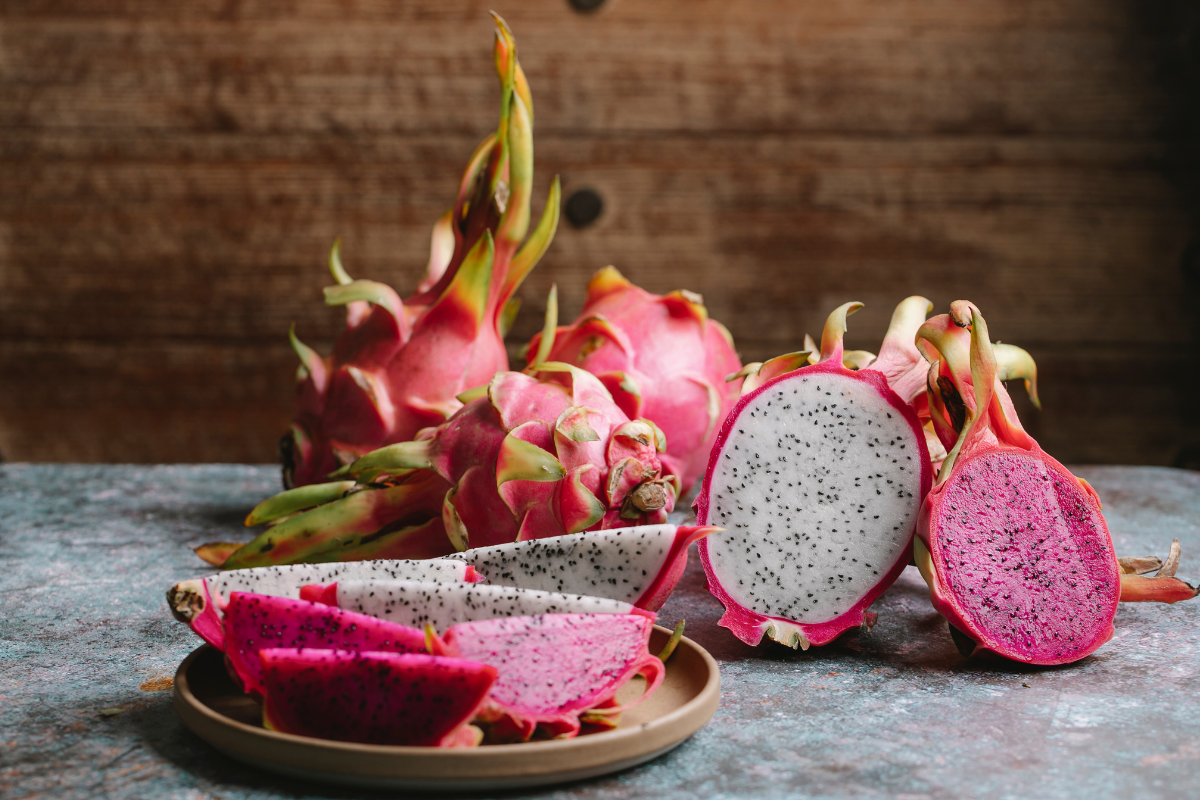
Dragon fruit, also known as pitaya, has become one of the most eye-catching and popular tropical fruits worldwide. We gathered the most frequently asked questions about dragon fruit and, through our expertise and research, compiled clear, evidence-based answers. This guide provides everything you need to know in one place about its taste, nutritional benefits, ripening signs, and how it’s grown.
How to eat dragon fruit
Dragon fruit is easy to prepare and enjoy. First, choose a ripe fruit – it should have even, bright-colored skin and yield slightly to gentle pressure. Then, slice it open: use a sharp knife to cut the dragon fruit straight down the middle. Once halved, you can scoop out the flesh with a spoon and eat it as is. Alternatively, peel off the thick rind completely and slice or cube the flesh. The sweet, seed-speckled flesh can be eaten raw or added to dishes (for example, tossed into salads or blended into smoothies).
What does dragon fruit taste like?
Dragon fruit has a mild, sweet flavor, often compared to a cross between kiwi and pear. It is not tart or intensely flavored; rather, it is subtly sweet and refreshing. The white-fleshed varieties have a delicate sweetness and a crisp, watery texture, while red- or purple-fleshed types tend to be slightly sweeter. In general, all types taste lightly sweet with a hint of melon or kiwi.
How to tell if dragon fruit is ripe
Ripe dragon fruit will have vibrant color and a slight give, similar to a ripe kiwi or avocado. Look for bright pink or yellow skin (depending on variety) that is even in color with no large brown patches or shriveling. The fruit should feel heavy for its size and yield slightly when gently pressed – it should not be rock-hard. Overly soft or leaking spots indicate over-ripeness. If an unripe fruit is firm, you can let it sit at room temperature for a few days. Once ripe, its flesh will be juicy and fragrant. In practice, the easiest method is to give the fruit a gentle squeeze – a ripe dragon fruit is just a little soft, whereas an unripe one is very firm.
Why is dragon fruit called dragon fruit?
Dragon fruit earned its fanciful name from its appearance. The bright pink or red skin is studded with overlapping green “scales,” making it look like a dragon’s hide. In fact, health experts note that its green-tipped scales “resemble a dragon”. The name “dragon fruit” (and Spanish “pitaya” or “pitahaya”) reflects this scaly, mythical look. In other languages it is sometimes called strawberry pear for its sweet taste and shape, but the dragon-like exterior is what gives it its common name.
What colors of dragon fruit are there?
Dragon fruit occurs in several vivid color varieties. The most common type has bright pink or red skin with green-tipped scales and white, speckled flesh (seen in Hylocereus undatus). A less common red-fleshed type (H. polyrhizus and related cultivars) has similar red-pink skin but deep magenta or reddish-purple flesh. A distinct yellow variety (often Hylocereus/Selenicereus megalanthus) has yellow skin and white flesh; this yellow pitaya tends to be sweeter. In short, dragon fruit can be red/pink-skinned with white or red flesh, or yellow-skinned with white flesh (all types have tiny edible black seeds in the pulp).
👉 If you’re a farmer, wholesaler, or trader looking to track dragon fruti prices and market movements, explore Wikifarmer’s Fresh Produce Price Insights — a real-time tool to help strengthen your strategy and stay ahead of market trends.
Dragon fruit nutritional value
What are the benefits of dragon fruit?
Dragon fruit is valued for its nutrients and health-promoting compounds. Key benefits include:
- High Dietary Fiber: Dragon fruit packs about 5.6 grams of fiber per cup. This high fiber content aids digestion, promotes fullness, and supports gut health.
- Antioxidant-Rich: It contains several antioxidants, including vitamin C, betalains (in red pulp), flavonoids, and carotenoids. These antioxidants help neutralize harmful free radicals, which may reduce inflammation and lower risk of chronic diseases.
- Low Calories and Hydrating: At only ~60 calories per 100 g, dragon fruit is low in calories and mostly water. It’s fat-free and very hydrating (over 85% water), making it a healthy snack for weight management.
- Prebiotic Properties: The fiber in dragon fruit can act as a prebiotic, fostering the growth of beneficial gut bacteria. This may further improve digestion and gut health over time.
Overall, dragon fruit provides a nutritious package: low calories, good fiber, several vitamins/minerals and phytonutrients that support digestive, immune, and cardiovascular health.
How much fiber does one dragon fruit have?
Dragon fruit is unusually high in fiber for a fruit. Nutritional databases indicate about 3 grams of fiber per 100 grams of dragon fruit. In practical terms, a medium fruit (around 400–500 g of edible flesh) would provide roughly 12–15 grams of fiber. This agrees with USDA data: one cup of cubed dragon fruit (≈200 g) contains about 5.6 grams of fiber. In other words, eating a whole dragon fruit can supply a large portion of the daily fiber requirement, which contributes to digestive health and satiety.
What vitamins does dragon fruit have?
Dragon fruit supplies several vitamins and minerals, though none in extremely high amounts. A 100 g serving provides roughly 5.6 mg of vitamin C, plus measurable B vitamins. In particular, it contains thiamine (B₁, about 2.4 µg/100g), riboflavin (B₂, ~2.0 µg/100g), niacin (B₃, ~12.6 µg/100g) and ascorbic acid (vitamin C, ~5.6 mg/100g). These vitamins, along with minerals like iron, magnesium and potassium, help dragon fruit contribute to overall nutrition. The vitamin C acts as an antioxidant and immune booster, while the B vitamins support metabolism. (Red-fleshed varieties also contain compounds like lycopene and betacyanins, which have additional health effects.)
How long does it take for dragon fruit to grow?
Dragon fruit plants (climbing cacti) can start producing fruit relatively quickly if propagated vegetatively. Stem cuttings usually root and grow fast; many bear their first flowers and fruit within 6–9 months of planting. By the third or fourth year, a mature plant can yield large crops (100+ kg or 220+ lbs per plant per year). Seed-grown plants are much slower – fruit production may not occur until 5–7 years after planting. Once a flower blooms (each flower opens only at night), the fruit itself takes about 27–33 days from flowering to ripen. Dragon fruit plants can flower multiple times per year in warm climates, so with proper care, a cutting can provide recurring harvests within its first year.
Sources: Authoritative horticultural and nutrition references were used to answer these questions, including university extension guides and medical/academic publications. Key information is drawn from nutrition fact sheets and plant science reviews, ensuring accurate, up-to-date details for growers and consumers alike.
👉 To deepen your knowledge about dragon fruit cultivation, don’t miss our Tropical Fruit Cultivation & Trade Course on Wikifarmer Academy.
References
Dragon Fruit: What It Is and Why It’s Healthy
Dragon fruit: How to enjoy this antioxidant-rich fruit
Postharvest Research and Extension Center: Dragon Fruit
Pitaya (Dragonfruit) Growing in the Florida Home Landscape