Food recall notifications in Europe | Week 4, January 19–25, 2026
Last week, we recorded 105 recall notifications through the RASFF portal. At first glance, the numbers look similar to previous weeks. The difference lies in how and where controls were applied.
This week shows a system working less as a reaction mechanism and more as a filter at entry points, with a high share of border rejections and a clear focus on enforceable compliance parameters. For producers and wholesale buyers, this matters because it affects availability, lead times, and supplier reliability, not just food safety outcomes.
Highlights at a glance
- 105 total notifications across all food categories
- 37 border rejections, confirming strong import control activity
- 44 notifications classified as serious
- 41 notifications linked to plant-based products (fruits, vegetables, cereals, herbs, seeds)
- Multiple cases linked to documentation, labelling, and regulatory limits, not only residues
Top product categories affected
Fresh fruits and vegetables remained the most affected category with 27 notifications, followed by:
- poultry meat and poultry products: 13
- dietetic foods and food supplements: 10
- meat products other than poultry: 7
- cereals and bakery products: 5
- nuts, nut products, and seeds: 5
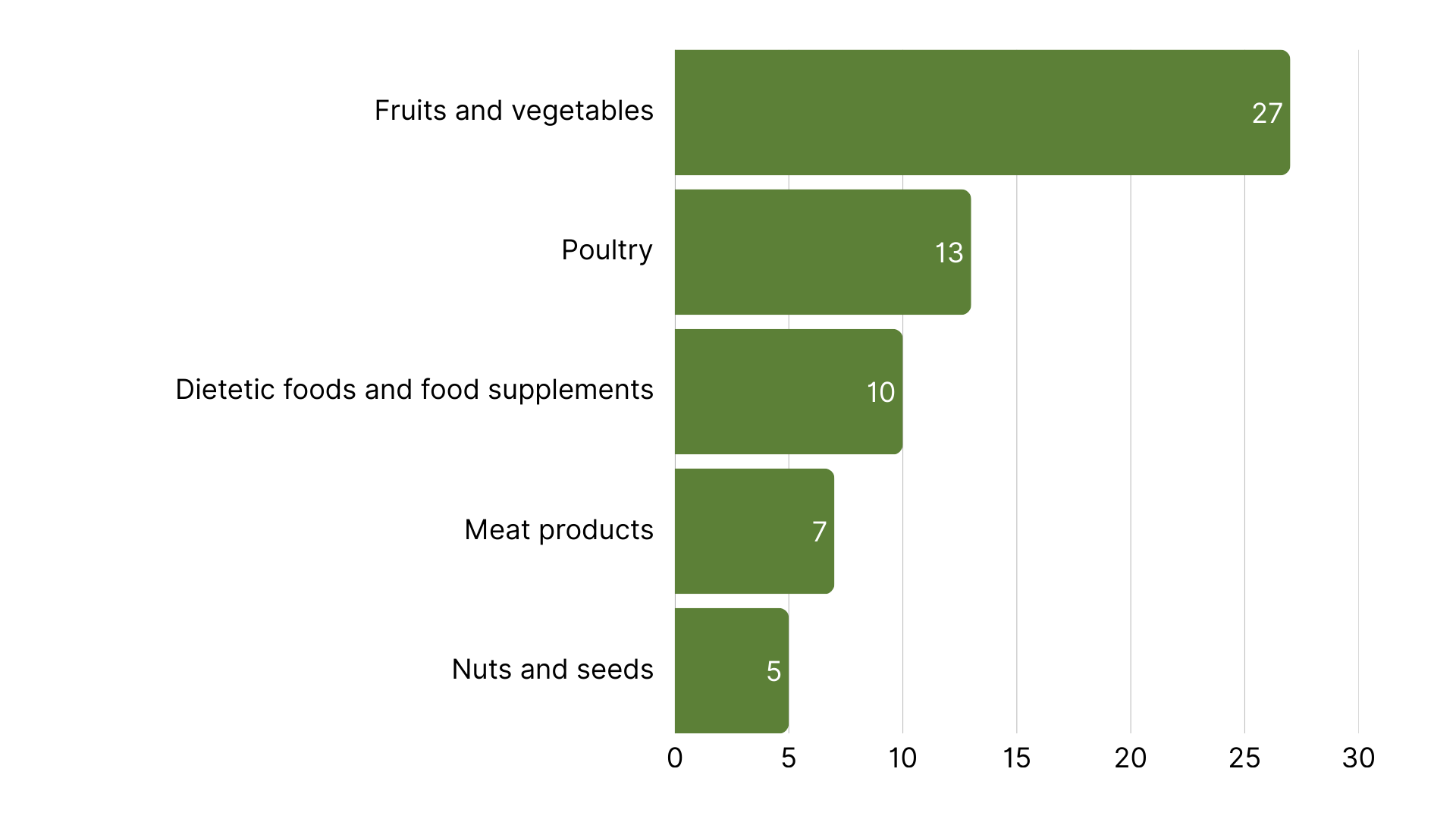
Graph 1: Top 5 Product Categories with the Most RASFF Alerts (Week 4)
From a market perspective, this confirms that fresh produce remains the most intensively controlled segment, particularly for imported goods and for products consumed without further processing.
Fresh produce focus: What stands out this week
Residues remain relevant, but they do not explain the whole picture
Pesticide residues were again the most frequent reason for notifications in fruits, vegetables, herbs, and cereals. This is expected and consistent with recent weeks.
What differentiates this week is that a significant share of interventions were triggered by non-residue issues, especially at the border.
Documentation and labelling triggered several interventions
Two examples illustrate this clearly:
- Vine leaves from Turkey were rejected due to unsatisfactory documentation.
- This type of case highlights that even when a product is physically acceptable, failures in traceability or paperwork can prevent a shipment from entering the market.
- Assorted pickles in brine from Turkey were flagged for undeclared almonds.
- This is a labelling and allergen management issue. It directly affects buyer confidence and retailer acceptance, regardless of the product’s physical quality.
Regulatory claims received scrutiny
A notable case involved buckwheat flour from Spain, labelled as gluten-free but found to contain gluten. Products carrying regulatory or consumer-sensitive claims are subject to stricter verification, and failures in this area tend to have wider commercial consequences than standard non-compliance.
Contaminants outside pesticides still appear
Although less frequent, several notifications involved contaminants that affect sourcing decisions:
- Onion (Poland): cadmium
- Cumin powder (Italy): pyrrolizidine alkaloids
Fruit and vegetable recalls in Europe
Fresh produce
- Dried figs (Turkey): Aflatoxin B1, total aflatoxins, ochratoxin A [5 notifications]
- Vine leaves (Egypt): Chlorpyrifos, chlorfenapyr, acetamiprid, boscalid, carbendazim, difenoconazole, imidacloprid, lambda-cyhalothrin, propiconazole, pyraclostrobin, spirodiclofen, thiophanate-methyl [3 notifications]
- Vine leaves (Turkey): Unsatisfactory documentation [2 notifications]
- Vine leaves (Armenia): Chlorpyrifos, dithiocarbamates, metalaxyl, penconazole, tetraconazole
- Strawberries (China): Omethoate
- Peppers (Egypt): Chlorfenapyr, chlorpyrifos, acetamiprid [2 notifications]
- Oranges (Egypt): Chlorpropham
- Pomegranate (Turkey): Acetamiprid
- Nectarines (Spain): Acetamiprid
- Grapes (Peru): Methomyl
- Bananas (Ecuador via Bosnia-Herzegovina): Chlorpyrifos
- Green beans (Kenya): Hexaconazole
- Guavas (India): Clothianidin, fluopyram, thiamethoxam
- Okra (India): Flonicamid
- Yard-long beans (Sri Lanka): Chlorothalonil
- Cauliflower (Belgium): Flonicamid MRL exceedance
- Onion (Poland): Cadmium
- Luffa (Mexico via Italy): Oxamyl
- Vegetable noodles (Germany): Undeclared celery allergen
- Pickled vegetables (Turkey): Undeclared almond allergen
Cereal products
- Brown rice (Pakistan): Aflatoxin B1, total aflatoxins
- Basmati rice (India): Chlorpyrifos, fenobucarb [2 notifications - one also flagged for MOSH/MOAH in packaging]
- Buckwheat flour (Spain): Gluten presence in product labeled "gluten-free."
- Croissants (Egypt): Import compliance issue (egg and milk content)
Herbs and spices
- Cumin powder (Italian origin): Pyrrolizidine alkaloids—serious risk, distributed across 21 EU countries
- Dill seeds (Lebanon via Sweden): Chlorpyrifos
- Dill (Uzbekistan): Propiconazole
- Cajun spice mix (Netherlands): Glass contamination
Nuts and seeds
- Pistachios (USA via Turkey): Aflatoxin B1, total aflatoxins
- Groundnut kernels (Argentina): Aflatoxin B1, total aflatoxins
- Sunflower seeds (Ukraine): Glass fragments
- Sesame seeds (Nigeria): Salmonella
- Sesame seeds (Sudan): Absence of health certificates
Geographic risk patterns
- Egypt: Notifications were concentrated in vine leaves and peppers, confirming continued scrutiny on Egyptian vegetable exports rather than isolated product failures.
- Turkey: The week was dominated by dried figs, with additional cases in vine leaves and pomegranates, underlining pressure on both processed and fresh export lines.
- China: Findings spanned strawberries, herbal products, food supplements, confectionery, and food contact materials, reflecting a wide product spread rather than a single sector issue.
- India: Issues were linked to guavas, okra, basmati rice, betel leaves, and packaged rice products, pointing to multiple crop and processing streams entering EU controls.
- Germany: Germany appeared mainly through poultry products, processed meat, and allergen-related processed foods, consistent with its role as both producer and distributor.
- Belgium: Notifications included cauliflower, meat preparations, fresh dairy products, and ready-to-eat foods, showing enforcement across both fresh and processed domestic products.
- Netherlands: Cases were tied to infant formula ingredients, spice mixes, chocolate products, and reprocessed goods, reflecting its central role in processing and redistribution.

Graph 2: Top 5 Countries with the Most RASFF Alerts (Week 4)
Why supply chain complexity is driving recalls this week
This week shows that food recalls are increasingly shaped by how products move, not just how they are produced. Many notifications involved items that are processed, repacked, relabelled, or distributed across multiple countries before reaching the market. In practice, this means that complexity itself has become a risk factor. The more steps a product passes through, the more likely a minor error becomes a market-wide issue.
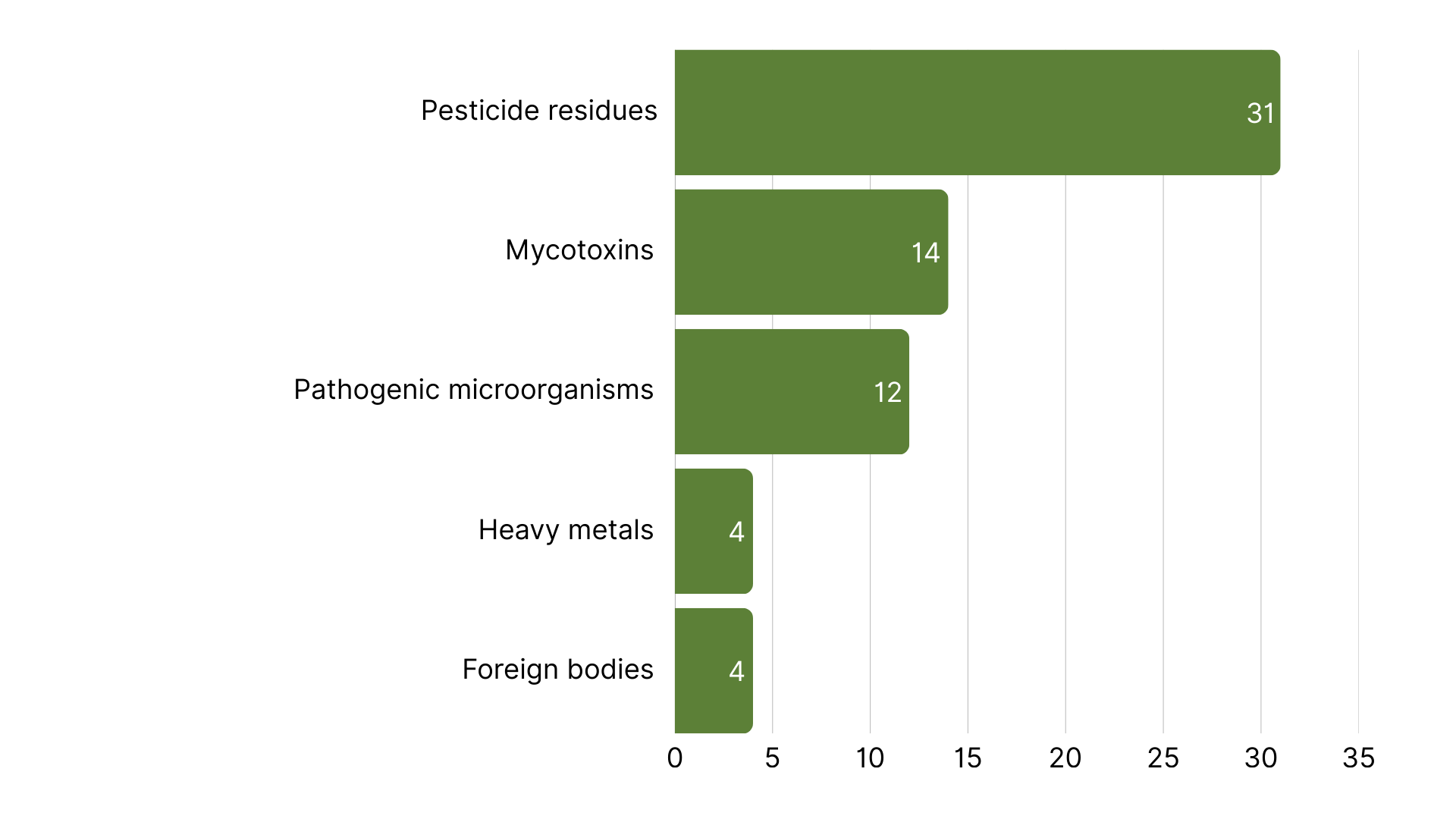
Graph 3: Top 5 food hazards in Europe, week 4, 2026
What changes this week for farmers and buyers
This week reinforces a practical reality: market access is increasingly determined by compliance execution, not only by production practices.
Residue management remains necessary, but this week shows that shipments are just as likely to fail due to documentation gaps, labelling errors, or unmet regulatory claims. These issues tend to create immediate disruption because they are identified late in the chain and leave little room for correction.
For producers, exporters, and wholesale buyers, the main lesson from this week is straightforward. Risk management must cover the full compliance chain, from field practices to paperwork and labelling accuracy. This week shows that this is where trade continuity is currently being tested.