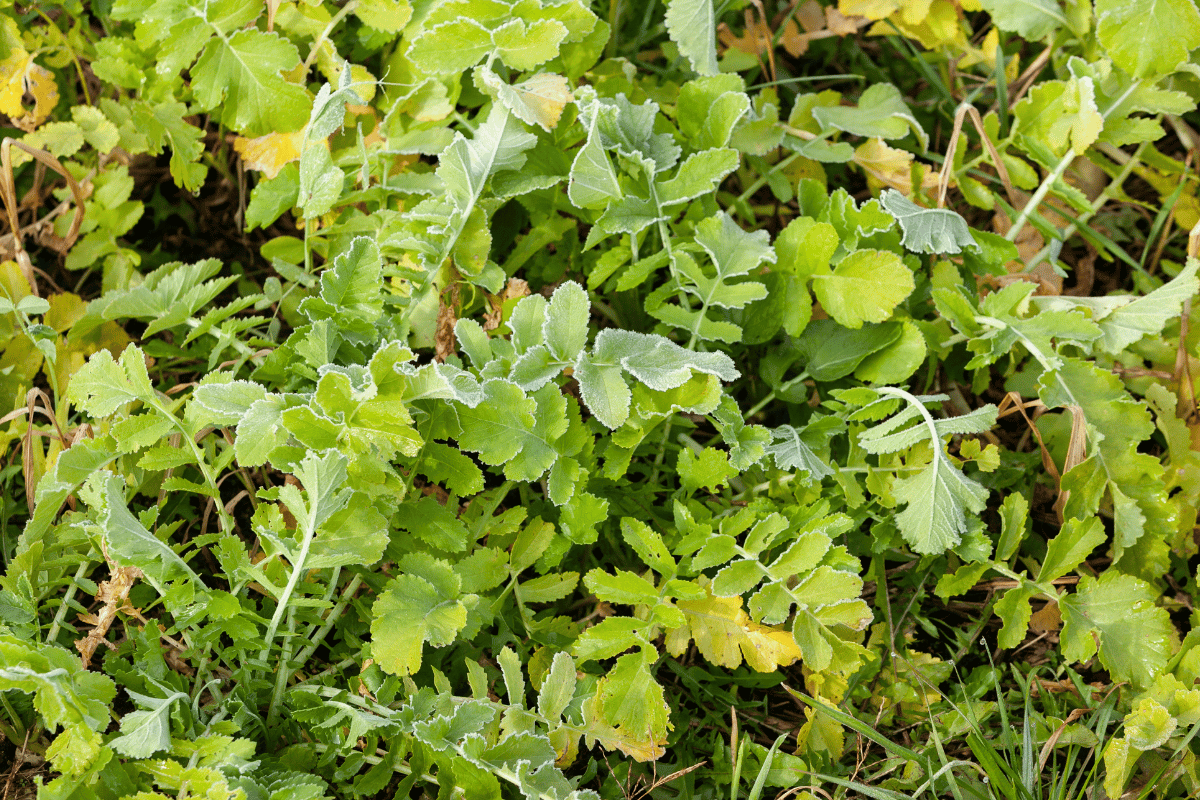
Strategic species selection for European farmers
Selecting the right cover crop for European conditions isn’t about memorizing tables of seeding rates — it’s about matching biology to the land. Europe’s farms span climates that range from the wet, short summers of Scandinavia to the dry, sun-baked fields of the Mediterranean. A cover crop that thrives in Denmark will fail quickly in southern Spain, and vice versa. Understanding your region’s climate zone, soil type, and management goals is the key to success.
In Northern Europe (zones 3–5), farmers deal with short growing windows and harsh winters, so cold-hardy species are the priority. Central Europe (zones 6–7) enjoys moderate seasons, allowing for a broader mix of legumes, cereals, and brassicas. Meanwhile, the Mediterranean zones (8–9) demand species that can withstand drought and high temperatures. Interestingly, research from the EUROLEGUME project has shown that older, traditional cultivars often outperform modern varieties in these marginal environments, especially in northern regions where every warm day counts.
Legume cover crops
Hairy Vetch (Vicia villosa)
- Seeding Rate: 25-30 kg/ha (22.3-26.8 lbs/acre) as sole crop, 15-20 kg/ha (13.4-17.8 lbs/acre) in mixtures
- Planting Depth: 2-3 cm (0.75-1.25 inches)
- Optimal Planting Window: Mid-September in northern EU, extending to early October in southern regions
- Soil Requirements: Adaptable to all soil types, pH 5.5-7.5
Performance Characteristics
Hairy vetch represents the gold standard for winter-hardy legume cover crops in European conditions. Research demonstrates nitrogen fixation capacity of 40-70 kg N/ha (35.7-62.4 lbs N/acre) when properly managed, with exceptional cold tolerance surviving temperatures to -30°C. The species shows superior overwintering survival compared to crimson clover and maintains dormancy during temporary warm spells, reducing frost-kill risk.
Management Protocol
- Inoculation: Essential in regions with limited rhizobia populations
- Companion Species: Pairs excellently with winter rye at 15 kg vetch + 50 kg rye per hectare (13.4 lbs vetch + 44.6 lbs rye per acre)
- Termination: Spring termination 2-3 weeks before cash crop planting; mechanical termination required as herbicide tolerance varies
Crimson Clover (Trifolium incarnatum)
- Seeding Rate: 110-15 kg/ha (8.9-13.4 lbs/acre) in mixtures, 20-25 kg/ha (17.8-22.3 lbs/acre) pure stand
- Planting Depth: 1-2 cm (0.4-0.8 inches)
- Critical Timing: Must be planted 6-8 weeks before first killing frost
- Soil Preference: Well-drained soils, pH 6.0-7.5
Performance Data
European research indicates crimson clover provides 12-38 kg N/ha (10.7-33.9 lbs N/acre) when properly established, with rapid autumn growth providing excellent ground cover. The species demonstrates superior early vigor compared to red clover but requires precise timing for winter survival in zones 6 and above.
Red Clover (Trifolium pratense)
- Seeding Rate: 8-12 kg/ha (7.1-10.7 lbs/acre) in mixtures, 15-20 kg/ha (13.4-17.8 lbs/acre) pure stand
- Planting Depth: 1-2 cm (0.4-0.8 inches) maximum
- Optimal Window: Late August to early September for best establishment
- Soil Requirements: Deep, well-drained soils; sensitive to waterlogging
Nitrogen Contribution
Red clover provides consistent nitrogen fixation at 20-40 kg N/ha (17.8-35.7 lbs N/acre) and offers excellent compatibility with cereal companions. Traditional frost-seeding techniques in winter wheat remain viable in many European regions.
Cereal cover crops
Winter Rye (Secale cereale)
Establishment Specifications:
- Seeding Rate: 80-150 kg/ha (71.4-133.8 lbs/acre) pure stand, 50-60 kg/ha (44.6-53.5 lbs/acre) in mixtures
- Planting Depth: 2-3 cm (0.75-1.25 inches)
- Extended Planting Window: Plantable until 28 days after first frost
- Soil Adaptability: Thrives on marginal soils, pH 5.0-8.0
Performance Advantages:
Winter rye excels in European conditions due to exceptional cold tolerance (surviving to -25°C or -13°F) and ability to germinate at temperatures as low as 1-2°C (33.8-35.6°F). Hybrid rye varieties demonstrate superior disease resistance and 10-15% yield advantages over conventional varieties, with recommended seeding rates of 175-200 seeds/m² for September planting, increasing to 220-260 seeds/m² for October establishment.
Management Considerations:
- Root System: Develops extensive root networks preventing soil compaction
- Allelopathic Properties: Residues inhibit weed germination but may affect small-seeded crops
- Spring Management: Incorporate 3-4 weeks before direct-seeding small crops
Winter wheat (Triticum aestivum)
Establishment Specifications:
- Seeding Rate: 100-150 kg/ha (89.2-133.8 lbs/acre) for cover crop use
- Optimal Planting: End of September to early October
- Soil Requirements: Well-drained soils, pH 6.0-7.5
Strategic Advantages:
Winter wheat as cover crop offers slower spring growth compared to rye, providing extended termination windows. European research confirms optimal sowing between late September and early October for maximum yield potential, with similar timing appropriate for cover crop establishment.
Brassica cover crops
Oil Radish (Raphanus sativus var. oleiformis)
- Seeding Rate: 4-12 kg/ha (3.6-10.7 lbs/acre) pure stand, 3-8 kg/ha (2.7-7.1 lbs/acre) in mixtures
- Planting Depth: 1-2 cm (0.4-0.8 inches)
- Optimal Window: Mid-August to early September
- Soil Preference: All soil types; excels in compacted conditions
Soil Improvement Capabilities
Oil radish develops large taproots that penetrate compacted layers, improving drainage and root penetration for subsequent crops. The species dies over winter and decomposes by spring, leaving soil in an easily crumbled condition. Research demonstrates a reduction in leaching of up to 70 kg N/ha (62.4 lbs N/acre) when established before late August.
Termination Benefits
Natural winter-kill eliminates termination costs while progressive decomposition provides gradual nutrient release. The species leaves soil structure significantly improved with enhanced rainfall infiltration and retention.
White mustard (Sinapis alba)
Establishment Specifications:
- Seeding Rate: 5-15 kg/ha (4.5-13.4 lbs/acre) pure stand
- Planting Depth: 1-2 cm (0.4-0.8 inches)
- Planting Window: Mid-August to mid-September
- Growth Rate: Extremely rapid; provides cover within 3-4 weeks
Pest Management Properties:
White mustard demonstrates biofumigant properties effective against soil-borne pathogens. Research indicates 40% reduction in take-all severity when used preceding wheat, due to 2-propenyl ITC compounds released from roots.
Management Cautions:
- Clubroot Risk: Avoid where oilseed rape features in rotation
- Frost Tolerance: Limited; typically winter-killed at -5°C
- Nutrient Requirements: High nitrogen demand for optimal performance
Building effective cover crop mixtures
Single-species covers are good, but mixtures can be great — if they’re designed carefully. The goal is to combine species that complement each other’s strengths rather than compete for the same niche.
A classic European example is hairy vetch and winter rye. The vetch fixes nitrogen, while the rye captures nutrients and supports the vetch’s growth habit. This combination works particularly well in zones 5–7, where winters are cold but not extreme. Another reliable pairing is crimson clover with Italian ryegrass, ideal for warmer central or southern regions. Red clover and winter wheat also remain a popular traditional choice, offering balanced biomass and nutrient cycling.
For more complex mixes, adding brassicas can help improve soil structure. A blend of oil radish, hairy vetch, and rye provides a strong combination of rooting depth, nitrogen fixation, and surface cover.
Nitrogen-Fixing Plus Scavenging Combination:
- Hairy Vetch (15 kg/ha or 13.4 lbs/acre) + Winter Rye (50 kg/ha or 44.6 lbs/acre): Optimal for zones 5-7
- Crimson Clover (10 kg/ha or 8.9 lbs/acre) + Italian Ryegrass (8 kg/ha or 7.1 lbs/acre): Excellent for zones 7-8
- Red Clover (8 kg/ha or 7.1 lbs/acre) + Winter Wheat (60 kg/ha or 53.5 lbs/acre): Traditional combination for zones 6-7
Structure Improvement Mixture:
- Oil Radish (6 kg/ha or 5.4 lbs/acre) + Hairy Vetch (12 kg/ha or 10.7 lbs/acre) + Winter Rye (30 kg/ha or 26.8 lbs/acre): Comprehensive soil improvement
Regional adaptation across Europe
Europe’s range of climates makes local adaptation crucial. What works in Bavaria may fail in Brittany. Here’s how strategies differ by region:
Northern Europe (Zones 3–5)
The challenge here is winter survival. Short seasons and long freezes mean only the toughest species succeed. Hairy vetch and winter rye are the backbone of most systems, with crimson clover reserved for milder or protected spots. Farmers should aim to plant by mid-September, ideally earlier, and slightly increase seeding rates (by about 20%) to offset potential winter losses. Keeping mixes simple, two or three hardy species, helps ensure reliability.
Central Europe (Zones 6–7)
This zone offers the most flexibility. All major legume and cereal species can thrive if timed correctly, and brassicas add real value for soil structure. Four- or five-species mixtures are realistic here. A common “high-performance” combination includes hairy vetch, crimson clover, winter rye, and oil radish. For those focusing on biomass, red clover with winter wheat and white mustard makes a robust mix.
Mediterranean Regions (Zones 8–9)
In southern Europe, heat and drought are the main limitations. Hairy vetch struggles under these conditions, so species like common vetch (Vicia sativa), berseem clover, and spring oats are better choices. Farmers can plant later (even into late October) as long as autumn rains arrive. Drought-tolerant species with strong early root growth are critical, and irrigation may be needed in especially dry years to ensure establishment.
Establishment and field management
Successful cover cropping starts with the seedbed. Small-seeded species such as clovers and mustards need a fine, firm surface to ensure good seed-to-soil contact, while larger seeds like vetches and peas can handle slightly rougher ground. The most common reason for poor stands is seeding too deep, anything over 2 cm (~ inches) for small seeds usually reduces emergence dramatically.
Soil temperature is another key factor. Germination generally requires soil above 8°C (46.4°F), with air temperatures staying above 5°C (41°F) for at least a week. Farmers should target sowing dates roughly 40 to 50 days before the first expected killing frost. As a general rule, aim for mid-August to mid-September in the north, late August to early October in central areas, and September to late October around the Mediterranean.
Termination and spring management
Cover crops should typically be terminated six to eight weeks before planting the next cash crop. This window gives residues time to decompose and release nutrients while preventing interference with spring fieldwork. Termination timing affects nutrient cycling: plants killed before flowering have a balanced C:N ratio (around 24:1), which favors rapid decomposition. Waiting until after bloom increases carbon content and can temporarily tie up nitrogen.
Mechanical termination methods are increasingly popular in Europe. Flail mowing remains the most common, especially for high-biomass rye and wheat covers. Roller-crimping is gaining traction in conservation systems, as it leaves mulch on the surface and minimizes soil disturbance. Light cultivation can also work, provided it doesn’t destroy soil structure.
For most legumes, mowing or rolling is sufficient. Brassicas, on the other hand, often die naturally over winter, saving labor and costs.