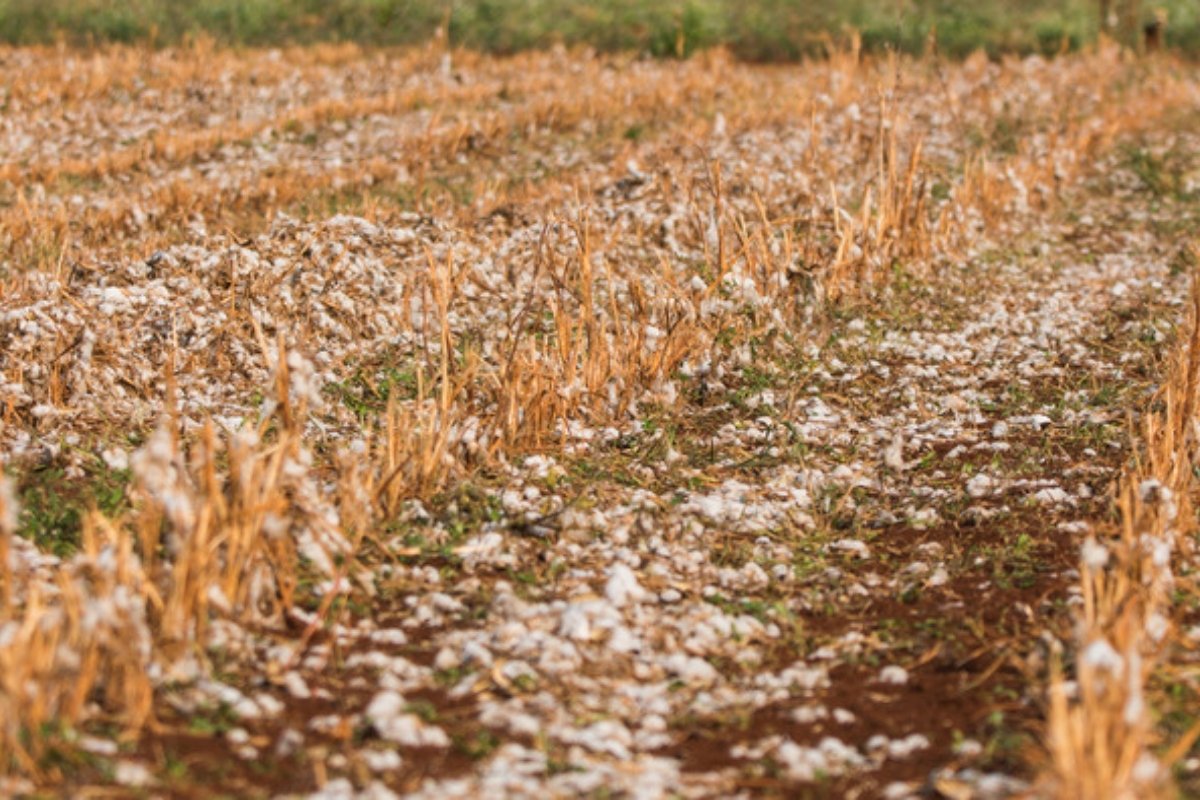
From boll opening onwards, no treatment is needed against cotton bollworm or pink bollworm, because mature bolls are no longer vulnerable. Work against both pests moves to the field after harvest, when part of the population enters diapause in the soil and in crop residues. The fewer insects that survive the winter, the smaller the first generation that new cotton crops will face in spring, which is why autumn stalk shredding and ploughing are considered a key control factor for the following season.
How cotton bollworm overwinters
Cotton bollworm, Helicoverpa armigera, overwinters as a pupa in the soil, down to a depth of 10 cm. Before pupating, the larva digs a pupal chamber and a tunnel through which the moth will later emerge, and that tunnel is the insect's weak point, because if it is destroyed the moth cannot reach the surface.
Pupal diapause is controlled by photoperiod and temperature, so larvae that pupate as days shorten and autumn temperatures drop stay in the soil until spring. The pest also attacks other crops such as maize and tobacco, so pupae are present in fields that did not grow cotton this year.
How pink bollworm overwinters
Pink bollworm, Pectinophora gossypiella, overwinters as a diapausing larva inside bolls, in ground litter or in the soil. Diapause is triggered when day length falls below 13 hours and is favoured by cool temperatures, in other words at the very end of the growing season.
Most diapausing larvae develop in late-season bolls that add nothing to yield but are a source of the pest the following year. In Xanthi, northern Greece, pink bollworm was again more common this year, though without heavy infestations so far, so this season's residues matter for the 2027 population.
What stalk shredding achieves
Stalk shredding and fine chopping of cotton residues are done immediately after harvest and prepare the field for ploughing, so that residues are fully worked into the soil. Against pink bollworm they also act directly, since the larvae sit inside the bolls and residues being shredded.
Stalk shredding, disking, ploughing and winter irrigation cause high mortality of larvae overwintering in bolls, trash and soil, and in the United States stalk destruction and residue plough-down were part of the programme that eradicated the pest.
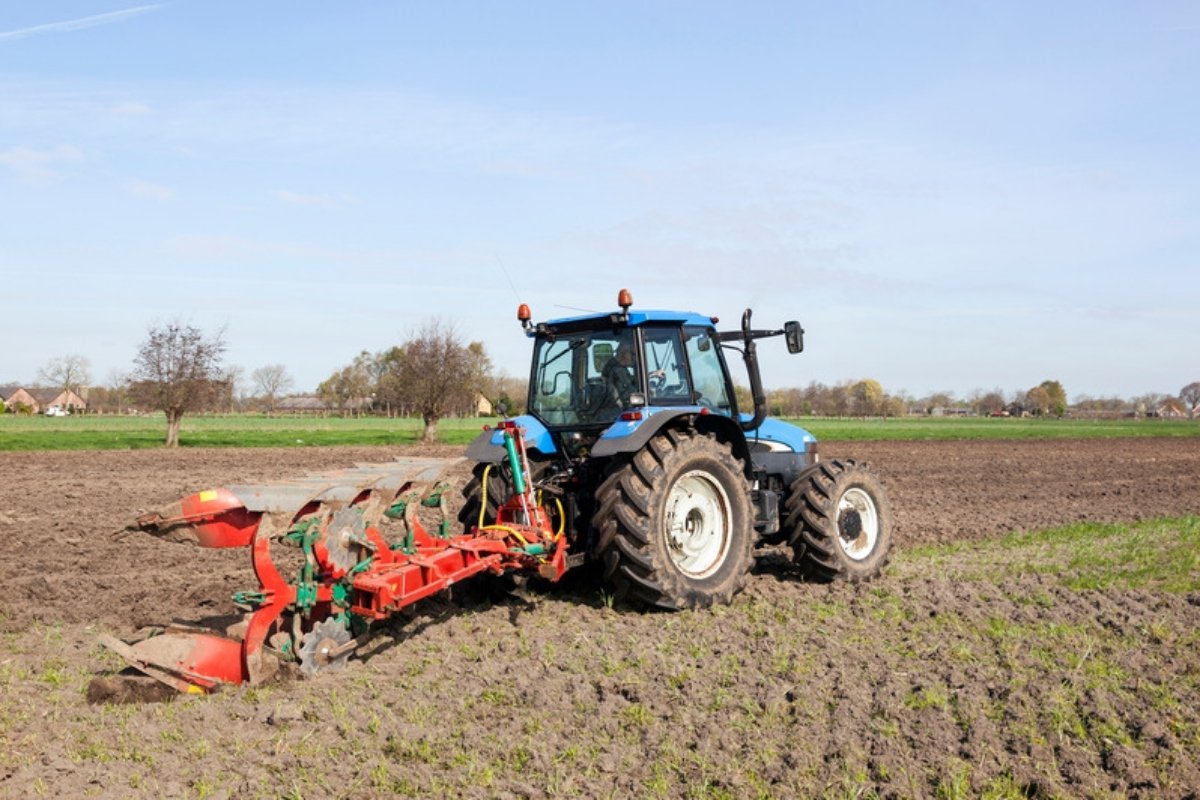
A reversible mouldboard plough, the implement that inverts the soil and buries overwintering pupae
Why ploughing is done with a mouldboard plough
Shredding is followed by mouldboard ploughing to 20 to 25 cm in autumn, in every field that grew cotton, whatever the next crop. In maize or tobacco fields where cotton bollworm appeared and which may go into cotton next year, ploughing goes deeper, to 30 to 35 cm.
Inverting the soil destroys part of the pupae outright, exposes others to harsh weather, buries the rest at 20 to 25 cm, from where moths cannot get out, and wrecks the emergence tunnels. Rippers, cultivators and disc harrows do not invert the soil and for that reason are not considered effective controls for either pest.
How deep cultivation needs to go
In Australia, where destroying pupae after harvest is a mandatory part of resistance management for Bt cotton, growers are asked for cultivation at least 10 cm deep and 30 cm wide on each side of the plant row to break up the emergence tunnels, without any requirement for inversion.
The Greek recommendation is stricter, since it calls for inversion with a mouldboard plough, and for pink bollworm, US experience also counts disking among the methods that reduce the population. The sources therefore disagree on the implement, but they agree that cultivation must disturb the whole zone where pupae sit, meaning the top 10 cm across the full width of the row, and that a shallow pass leaving undisturbed strips does not work.
In fields under conservation tillage, deep inversion conflicts with soil and water conservation, so the choice of implement is made with an agronomist and according to pest pressure in the area.
| Operation | When | What it achieves |
|---|---|---|
| Stalk shredding and fine chopping | Immediately after harvest | Kills pink bollworm larvae in bolls, prepares residues for incorporation |
| Mouldboard ploughing to 20 to 25 cm | Autumn, in every cotton field | Destroys, exposes and buries pupae, wrecks emergence tunnels |
| Ploughing to 30 to 35 cm | Autumn, in maize or tobacco with bollworm going into cotton | The same, for pupae from other host crops |
Source: Directorate of Agricultural Economy of Xanthi and Plant Protection Centre of Kavala, 4th cotton bulletin, 23 September 2026
Pressure from both pests during the season and action thresholds before boll opening are covered in cotton bollworm and pink bollworm before boll opening, while autumn ploughing closes the cycle before the next one starts.
Frequently asked questions
Is spraying for bollworm needed after boll opening
No. From boll opening onwards treatment is not necessary, because the bolls are mature and no longer attacked.
Where does cotton bollworm overwinter
As a pupa in the soil, down to 10 cm, in fields of cotton, maize or tobacco.
Where does pink bollworm overwinter
As a diapausing larva inside bolls, in residues or in the soil. That is why stalk shredding and residue incorporation reduce its numbers.
How deep should cotton fields be ploughed after harvest
To 20 to 25 cm with a mouldboard plough, and to 30 to 35 cm in maize or tobacco fields that had cotton bollworm and will be sown with cotton.
Can a ripper or disc harrow replace ploughing
Under the Greek recommendation no, because they do not invert the soil. In Australia, cultivation at least 10 cm deep that destroys the emergence tunnels is considered enough.
When should post-harvest ploughing be done
In autumn, straight after harvest and stalk shredding, when pupae and larvae have already entered diapause.
Important notes
Conditions vary by region, soil type, rotation and year, so the above is a general guide and a starting point for planning field work. For the implement and cultivation depth in each field, working with an agronomist gives the safest decision.
Cultural methods come first, and stalk shredding with ploughing reduces the pest population without any plant protection products. When chemical control is needed the following season, use only products authorised for cotton and follow the label instructions.
Sources
- Directorate of Agricultural Economy of the Regional Unit of Xanthi, with the Plant Protection Centre of Kavala, 4th technical plant protection bulletin for cotton, 23 September 2026 (in Greek).
- USDA APHIS, Pink bollworm eradication plan in the U.S..
- Henneberry T. J., Integrated systems for control of pink bollworm in cotton, 2005.
- Effects of resistance to Bt cotton on diapause in the pink bollworm, Pectinophora gossypiella, PMC.
- Bisexual attract-and-kill, a novel component of resistance management for transgenic cotton in Australia, PMC.
- Geographic variation in diapause induction and termination of the cotton bollworm, Helicoverpa armigera, PubMed.
- The Beatsheet, Queensland Department of Primary Industries, Helicoverpa management.