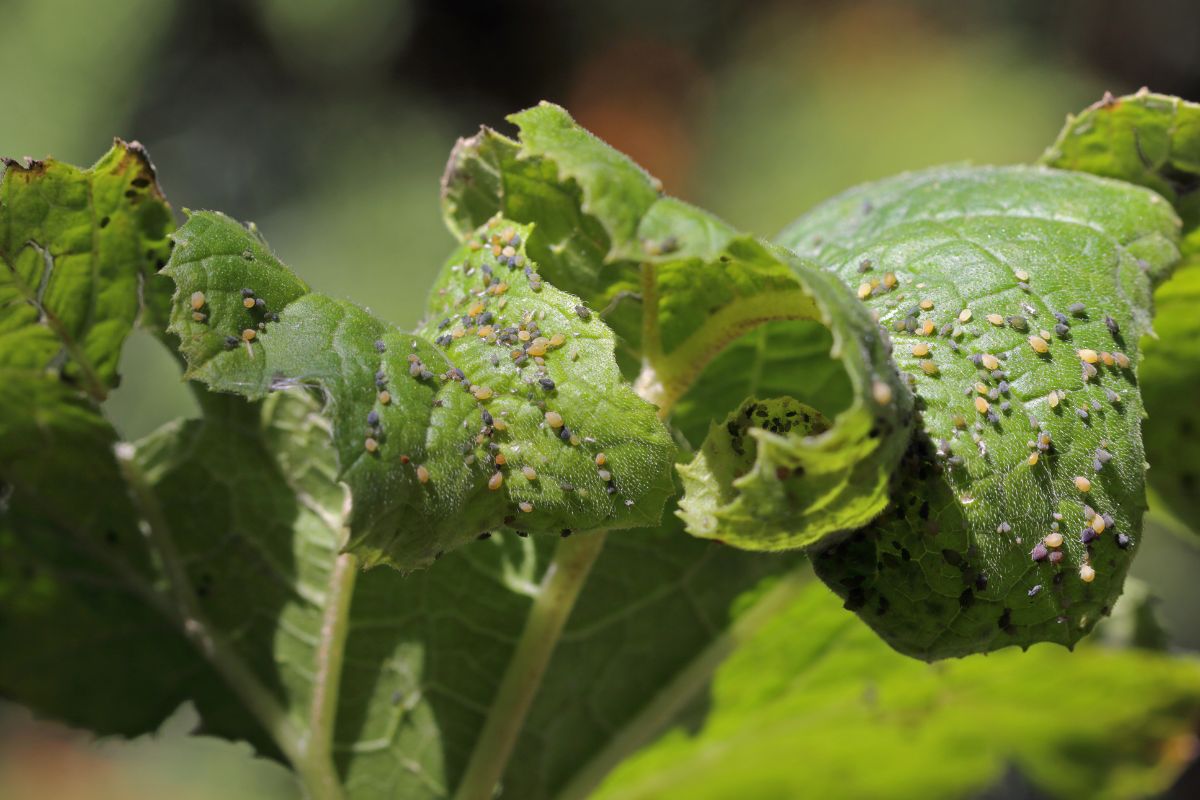
The first bulletin of the 2026 season from the Drama Regional Plant Protection Service in northern Greece (ref. 165698/8152, dated 20 May 2026) tells cotton growers something they don't always hear from an official agency. Do not spray for aphids. The reasoning behind that recommendation is more useful than the recommendation itself, because the same logic applies wherever cotton meets its first aphid colonies of the season.
Aphid populations and natural enemies in cotton this season
Cotton in the Drama region is at growth stages BBCH 10 to 12. Plants range from cotyledon to two true leaves. Scouting found sporadic colonies of Aphis gossypii at very low density, alongside two natural enemies already at work.
The first is the parasitoid wasp Lysiphlebus fabarum. It lays eggs inside aphids, and the parasitized ones are easy to spot once you know what to look for. They turn brown, swell slightly, and stay glued to the leaf or stem like small mummies. Their presence in the field means dozens or hundreds of aphids have already been neutralized, and that the wasp population is doing its job.
The second is the seven-spot ladybug (Coccinella septempunctata), the top aphid predator of the season. A single adult eats several dozen aphids a day, and its larvae eat even more. Ladybugs in young cotton mean the system is balancing itself, and a spray now would break that balance.
When a spray is justified
Action thresholds for cotton aphids depend on growth stage.
Before square formation, a spray is justified only when aphid populations stay high for seven consecutive days. Not one visit, not one sample. Seven days of sustained pressure.
After square formation, the threshold becomes more measurable: 25 aphids per leaf on average, across a sample of 100 leaves taken from different parts of the field. Not a few plants with heavy colonies, but a real average across 100 leaves.
Anyone who has applied these thresholds in practice knows the cases that genuinely cross them are rarer than they first appear.
Why an early spray triggers a mite outbreak later
The Drama bulletin spells out, as a general recommendation, that growers should avoid unnecessary sprays during this period because they increase the risk of spider mite infestation later in the season. The mechanism is straightforward. Broad-spectrum insecticides used against aphids also kill the predatory mites that feed on spider mites. Once those predators are gone, spider mites find an empty field and multiply within weeks. A minor problem on cotyledon leaves becomes a major problem by late June, and the cost of mite control runs far higher than whatever aphid pressure was avoided.
This is one of the better-documented cascading effects in cotton entomology, and it has shaped IPM thinking on the crop for decades. Integrated pest management starts from this exact insight: do not destroy what is keeping the next pest in check.
What to do instead of spraying
Monitor. Walk the field every few days. Track whether colonies are growing or holding steady. Note whether parasitized aphids are increasing. Look for ladybugs, lacewings, hoverflies, and other beneficials. Decide based on what is happening this season, not on what worked last season.
Record-keeping matters here, even if no spray ends up being applied. Where chemical treatment does eventually become necessary, plant protection product prescriptions must be kept for three years and application dates logged in a field diary, ready to be shown on inspection. Building the habit of recording field observations alongside any treatment makes future decisions sharper.
When intervention becomes necessary
If colonies do remain high for seven sustained days, or if a post-square sample crosses 25 aphids per leaf, an intervention is justified. At that point, the choice of active ingredient matters. Selective products that spare beneficials should be preferred where available, and resistance management requires rotation between mode-of-action groups. Application must be carried out by a certified professional user, with full personal protective equipment specified on the label.
For a sustained-aphid season, an active beneficial population is the most important asset cotton has. Sometimes the best decision a grower makes is the spray they don't apply.
Every plant and growing environment is unique. Conditions vary considerably with region, exposure, water quality, soil pH and overall plant health.
If you suspect a serious nutrient deficiency or disease that doesn't respond to basic practices, consult a qualified agronomist for accurate diagnosis.
Plant protection products must be used with care and responsibility. Always try non-chemical methods first (cultural practices, insecticidal soap, summer oil). When chemical intervention is necessary, use only approved products and follow label instructions.