
The moment early cherries start changing color, harvest is days away. At the same moment, the fruit becomes susceptible to three different pests at once. A 2026 technical bulletin from the Kavala Regional Plant Protection Centre (no. 17/13-05-2026) tracks the timing for northern Greece, but the principles apply to any sweet cherry orchard in the Mediterranean basin and across temperate Europe.
Cherry fruit fly and the window that matters
The European cherry fruit fly (Rhagoletis cerasi) is the most serious insect pest of the crop. It completes one generation per year. Adults emerge from late April to early May, depending on temperatures, and females lay eggs inside the fruit. Larvae develop there, eventually drop to the ground, and overwinter as pupae.
The decisive factor for a spray is not the calendar date but the fruit's color change. Once the cherry begins shifting from green to its varietal color, it becomes susceptible to oviposition. A single spray is recommended in that window. The choice of active ingredient is what makes or breaks the season for early varieties.
The criterion that matters most is the pre-harvest interval (PHI). With early varieties only 5 to 10 days from picking, a product with a 14-day PHI simply does not work. Read the label carefully, cross-check against your national register of approved plant protection products, and pick an active ingredient with a short enough PHI to be both effective and legal at harvest.
Spotted-wing drosophila, the harder enemy
Spotted-wing drosophila (Drosophila suzukii) is a more recent invader in much of Europe and significantly harder to manage. The damage is almost invisible at first. The larva feeds inside the fruit, secondary fungi and bacteria move in, and what looked like a sound cherry collapses into rot within days.
Monitoring traps in northern Greece have been picking up moderate adult numbers this season. The bulletin recommends a combined treatment with the cherry fruit fly, especially in later varieties and orchards with a history of drosophila pressure. In practice, this means choosing an active ingredient with activity against both insects. Several registered products cover both, but the choice must be verified against the current national register every season because registrations change.
Cherry leaf spot, managing this season and the next
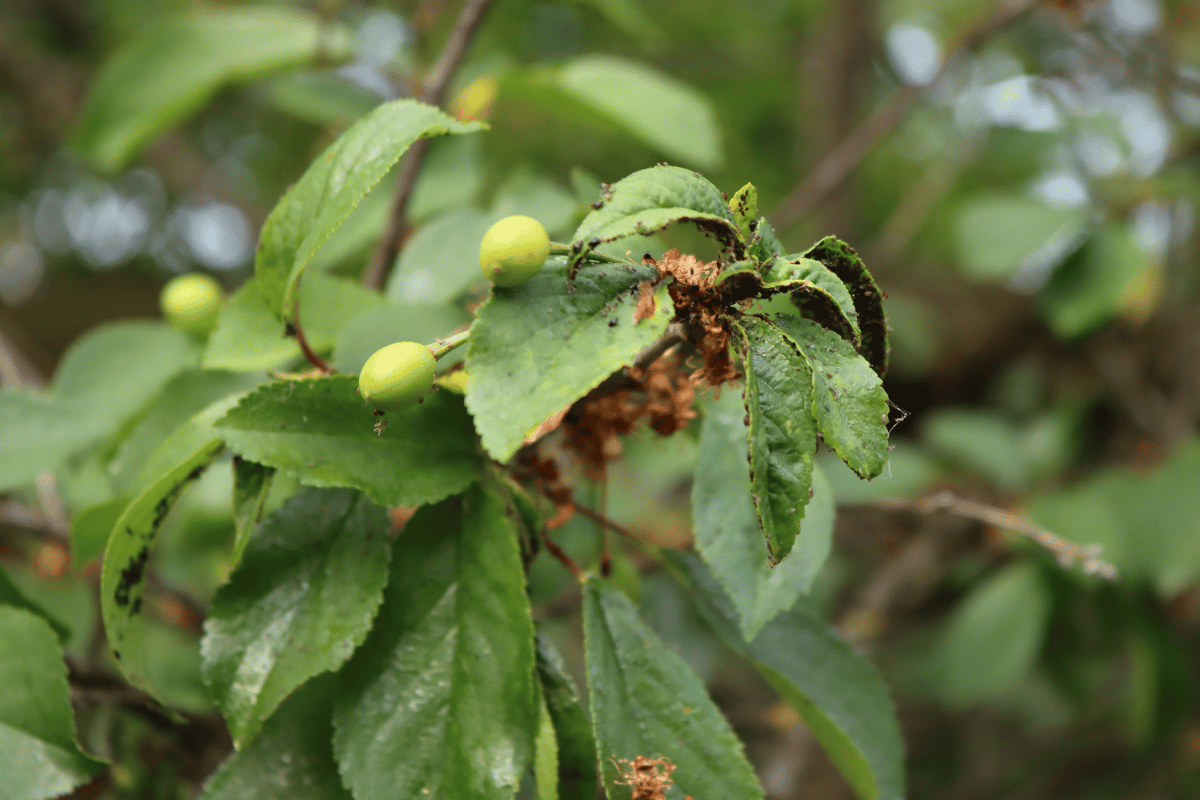
Cherry leaf spot, or cylindrosporium (Blumeriella jaapii), thrives in seasons with frequent rain. Optimal infection temperatures are 14 to 23°C, which matches the conditions across most cherry-growing regions in spring. The fungus overwinters on fallen leaves and releases spores in spring that are carried by rainwater to new leaves. Dark spots appear 10 to 15 days after infection, and the fungus cycles through repeated infections until autumn.
The damage extends beyond the current season. Significant defoliation before harvest produces softer fruit, lower soluble solids, and uneven ripening across the canopy.
Where symptoms appear, registered fungicides containing dodine are available. The 14-day PHI is the constraint here. If harvest is closer than that, the treatment goes in immediately after picking, to protect the leaves for next year's crop. That post-harvest spray is one of the most underused tools in cherry orchard management. It costs little and protects the buds and stored carbohydrates the tree needs for the following season.
Cultural practices that lower pressure on everything
Sprays alone never carry an orchard through the season. Two cultural practices reduce pressure on all three pests at once.
Clean harvest. Every cherry left on the tree or on the ground at the end of the season is a breeding site for the next generation of fruit flies and Drosophila. Residues should be picked up, removed from the orchard, or incorporated into the soil to break the cycle.
Pruning for airflow. When the canopy is open and leaves dry quickly after rain or dew, the fungus cannot germinate. A properly pruned cherry tree handles a wet spring with far fewer fungicide sprays than a dense, shaded one.
A broader view of cherry tree pests and diseases helps put the season's pressure into context. Most pests cherry growers face follow patterns that can be planned for, not just reacted to.
Compliance and operator safety
Every plant protection treatment must be carried out by a certified professional user, with the dosage and protective measures specified on the label. Full PPE is non-negotiable, especially in the hot conditions of late spring cherry orchards. That means a spray suit, an appropriate respirator for the toxicity class of the product, and chemical-resistant gloves. Records of application date, product, dose, and parcel must be kept for the legally required period in your country.
In early varieties, one well-timed treatment in the color-change window can be the difference between harvest in a week and watching fruit rot on the tree. The principle is simple: get the PHI right, monitor your traps, and prune for airflow before the rain arrives.
Every plant and growing environment is unique. Conditions vary considerably with region, exposure, water quality, soil pH and overall plant health.
If you suspect a serious nutrient deficiency or disease that doesn't respond to basic practices, consult a qualified agronomist for accurate diagnosis.
Plant protection products must be used with care and responsibility. Always try non-chemical methods first (cultural practices, insecticidal soap, summer oil). When chemical intervention is necessary, use only approved products and follow label instructions.