

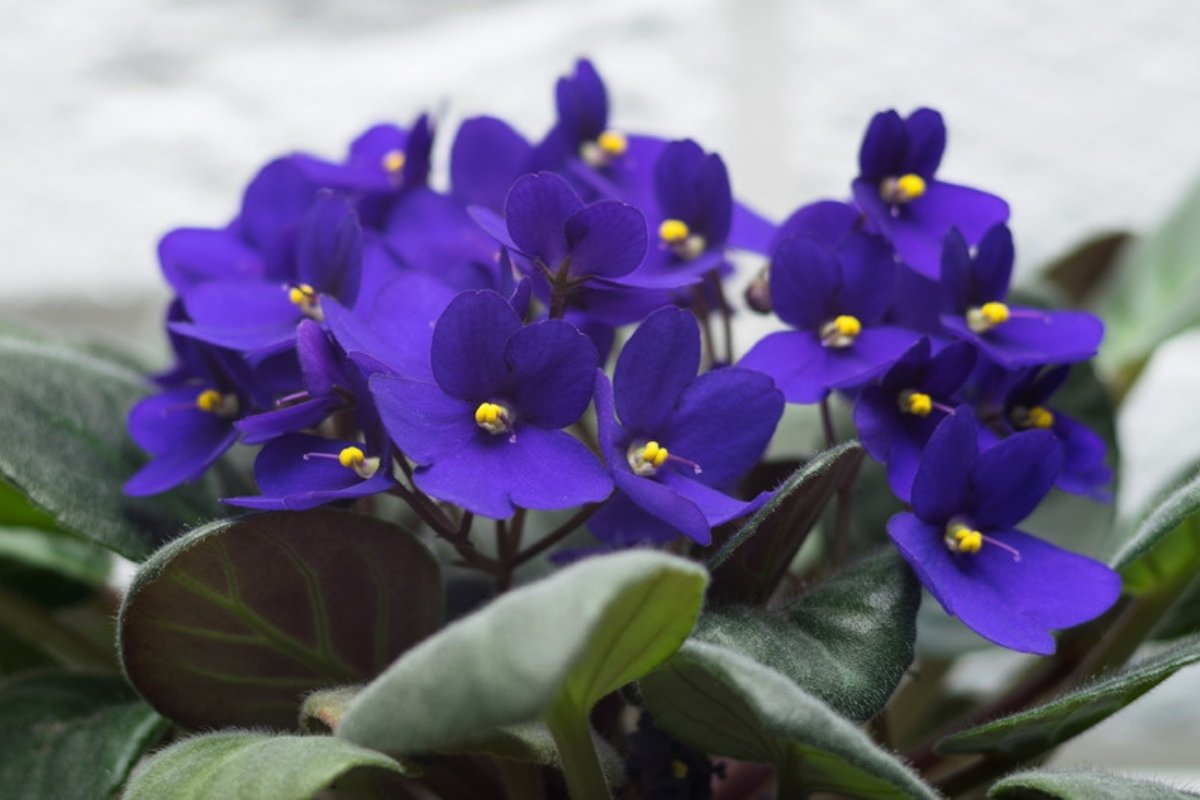
The African violet is a houseplant that flowers almost all year, as long as it gets plenty of light without scorching sun, room-temperature water that stays off the leaves and a pot slightly snug for its roots. Most of its problems, from leaf spots to stopping flowering, come down to one of these three. It propagates easily from a single leaf, and a few months separate the leaf from a flowering plant.
The African violet is not a violet
The African violet was discovered in 1892 in Tanzania by Baron Walter von Saint Paul, after whom Saintpaulia is named, while the epithet ionantha means violet-flowered. It belongs to the Gesneriaceae family, not the violet family, and after genetic analysis it has been moved into the genus Streptocarpus as section Saintpaulia.
With garden stock, Matthiola incana, which Greek nurseries sell as "violet", and with the sweet violet it shares only a name. Stock flowers need sun and a cold winter to bloom and grow in the garden rather than indoors.
Light decides whether it flowers
African violets need more light than most growers realise, but not hours of direct sun. The best spot is near an east- or west-facing window, and at a south-facing window a sheer curtain filters the light. Virginia Tech puts the need for good growth and flowering at light for 8 to 12 hours a day, while under artificial light the University of Minnesota recommends 14 to 16 hours of light and 8 to 10 hours of darkness for flowering.
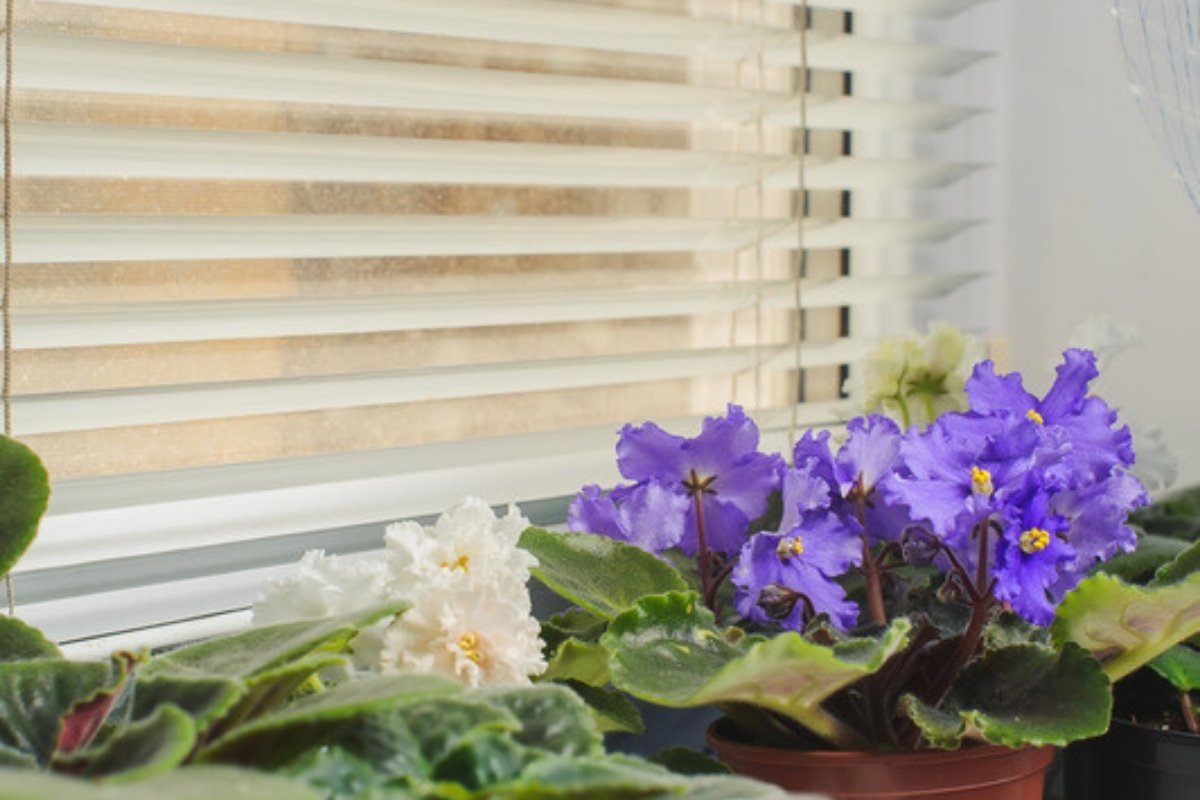
A bright windowsill with filtered light suits African violets best.
Thin, dark green leaves on long stalks mean too little light, while small, crinkled, leathery and yellowed leaves mean the plant is getting too much. Lack of light, together with cold, is the most common reason an African violet stops flowering.
Normal room temperatures suit it
African violets grow best at 16 to 24°C by day and 16 to 18°C at night, and according to the University of Minnesota, if you are comfortable, your African violet is comfortable. What harms it are sudden changes, such as cold draughts from a window in winter or a spot above a radiator, so in winter it is moved a little away from the glass.
Water must stay off the leaves
Yellow or white rings, spots and streaks on the leaves are caused by cold water touching warm leaves, so watering water is always at room temperature or slightly warmer. The safest method is bottom watering, standing the pot in a bowl with a few centimetres of water until the surface of the compost is moist, then emptying the surplus.
The compost is kept evenly moist but never soggy, and the plant should never sit in water, because African violets are very susceptible to root and crown rot. Overwatering is one of their most common problems. Once a month a thorough watering from above, with plenty of water running out of the holes, flushes out fertiliser salts that build up in the compost.
The pot should be small and shallow
African violets flower best when slightly rootbound, and a plant with a 30 cm leaf span needs a pot of about 10 cm, roughly a third of its width. Shallow pots suit its root system, and repotting is usually done once a year.
The compost should be light and fast-draining, with materials such as perlite that keep air around the fine roots. On clay pots, salts that build up on the rim burn the leaf stalks resting on them, so plastic pots or a rim protector solve the problem.
Feeding is weak and frequent
Iowa State University recommends fertiliser formulated for African violets or a balanced general fertiliser at half or a quarter of the normal strength, because too much fertiliser gives vigorous leaves and poor flowering. Diluted liquid feed goes on with watering, and a gradual loss of leaf colour together with slow growth usually shows the plant needs feeding.
It propagates easily from a single leaf
For propagation, a healthy mature leaf from the middle of the rosette is cut with about 2.5 cm of stalk. The stalk is set in a moist mix such as sand with vermiculite or damp perlite, and the container is covered with a clear lid or bag to keep humidity high, in a bright spot out of direct sun.
After a few weeks small plantlets appear at the base of the stalk, which are separated and potted up once they have grown. It takes 6 to 9 months to reach a flowering plant. Suckers that appear in the leaf axils are removed while small, so the plant keeps a single crown, and they can also be rooted.
The most common African violet problems
| Symptom | Likely cause | What to do |
| No flowers | Low light, cold, too much fertiliser, oversized pot | Brighter spot, weaker feeding |
| Yellow or white rings on the leaves | Cold water on the leaves | Room-temperature water, bottom watering |
| Soft, rotting crown | Overwatering, rot | Less water, start a new plant from a leaf |
| Thin dark leaves, long stalks | Too little light | Closer to the window |
| Small, crinkled, yellow leaves | Too much light | Sheer curtain or further from the glass |
| Burnt leaf stalks at the pot rim | Fertiliser salts | Flush with water, plastic pot |
| Fine webs in the leaf axils | Mites | Isolate, rinse, insecticidal soap |
Sources: Iowa State University, University of Minnesota, Virginia Tech, Clemson University, South Dakota State University Extension.
Lower leaves that slowly dry as the plant grows are normal ageing and are removed. When insects or mites appear, Iowa State University recommends rinsing the plant with room-temperature water, isolating it from other plants and treating it with insecticidal soap.
Frequently asked questions
Why is my African violet not flowering?
Usually because of too little light or low temperatures. Other causes are an oversized pot and too much fertiliser, which gives leaves instead of flowers.
How should an African violet be watered?
With room-temperature water, preferably from below, standing the pot in a bowl with a few centimetres of water. Water stays off the leaves, and the plant never sits in water.
Where should I put an African violet at home?
Near an east- or west-facing window, with plenty of light but no scorching sun, away from cold draughts and radiators.
How is an African violet propagated?
From a leaf. A healthy leaf with about 2.5 cm of stalk is set in damp perlite or sand with vermiculite under a clear cover, and within a few weeks it produces plantlets at the base.
What pot does an African violet need?
Small and shallow, about a third of the width of the leaf span, with drainage holes and light compost. African violets flower best when their roots are slightly snug.
Why does my African violet have spots on the leaves?
Yellow or white rings and spots are usually caused by cold water touching the leaves. They do not go away, but they do not harm the plant, and new leaves come in clean with correct watering.
Important notes
Every plant and every environment is unique. Conditions vary considerably with region, exposure, water quality, soil pH and the overall health of the plant. The guidance above is general and a starting point.
If you suspect a serious nutrient deficiency or a disease that basic practices do not resolve, contact an agronomist for an accurate diagnosis.
Plant protection products should be used carefully and responsibly. Always try non-chemical methods first (cultural practices, soft soap, summer oil). When chemical intervention is needed, use only approved products and follow the label instructions.
Sources
- Smithsonian Gardens. Care of African violets.
- New York Botanical Garden, Mertz Library. What are some tips for growing African violets?.
- Iowa State University Extension and Outreach. African violets bring winter color indoors with proper care.
- Iowa State University, Yard and Garden. All about African violets.
- University of Minnesota Extension. African violets.
- Virginia Cooperative Extension (2025). African violets.
- Clemson University, Home and Garden Information Center (2025). African violet.
- South Dakota State University Extension (2026). African violet, houseplant how-to.