A practical guide for farmers and wholesale buyers
Summary
Melons are often rejected at wholesale markets due to three main issues:
- Low sugar content and poor maturity
- Physical damage during harvest or transport
- Decay and diseases caused by pathogens
Understanding and addressing these problems helps farmers reduce post-harvest losses and helps buyers maintain high product standards. This article explains why melons get rejected and offers actionable solutions for both producers and wholesalers.
The scale of the problem
Melon rejection is costly. In some regions, post-harvest losses reach 10–40%. In Australia, 26% of consumers reported a poor melon-eating experience, contributing to an 8% drop in sales and a 22% decline in purchases. European markets set clear standards: minimum 8% sugar (Brix), firm texture, and no visible defects. Failing to meet these leads to rejection.
1. Low sugar content and immature fruit
The issue
Melons that don’t meet minimum sugar content standards are often rejected. Most European markets expect at least 8°Brix, while premium segments may require 10–12°Brix. Since melons stop accumulating sugars after harvest, timing is critical. Inadequate maturity directly affects flavor and shelf-life, leading to negative consumer experiences.
Industry standards:
- Cantaloupes: fruit should reach ≥10°Brix
- Rockmelons: 50% of the total produce ≥ 11°Brix
- Honeydew: 70% ≥ 11°Brix
Solutions
- It’s better to base harvest timing on multiple indicators, such as fruit slip, skin color change, and slight softness at the blossom end (especially for cantaloupes). Research suggests that harvesting 65–70 days after transplant tends to result in higher Brix levels.
- Portable refractometers are recommended to assess sugar content in the field. Sampling from the equatorial zone of the fruit is considered more accurate.
- Adequate potassium and magnesium levels should be maintained throughout the growing season, as these nutrients support sugar transport and fruit firmness.
- Choosing varieties with proven high sugar accumulation traits for the local climate may also improve consistency.
2. Physical damage and defects
The issue
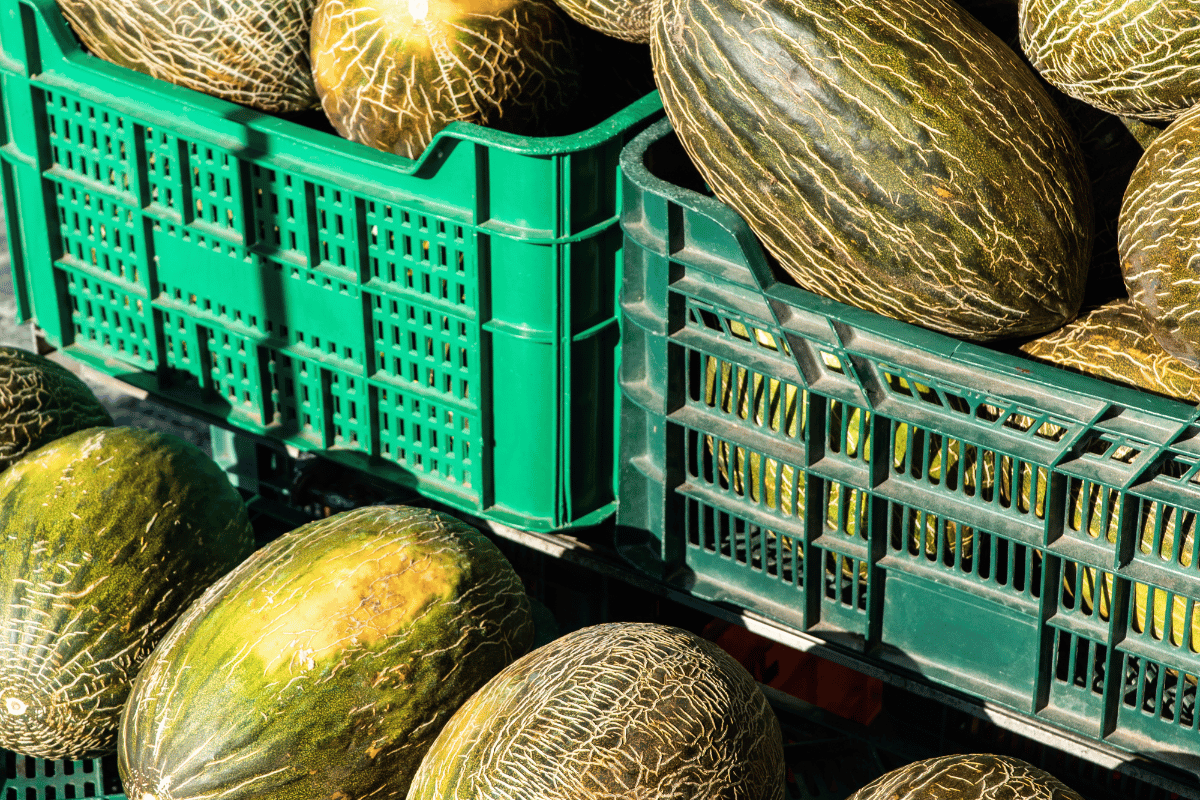
Due to their high water content (90–95%) and soft flesh, melons bruise and break easily. Dropping them, stacking poorly, or rough transport can cause cracks, bruises, and internal breakdown. Even slight damage can make fruit unmarketable.

Photo by WUR
Solutions
- It’s better to use padded bins or soft-handling systems to reduce the risk of internal bruising. Minimizing drops and impacts is strongly recommended.
- Leaving a short stem on watermelons (around 2 inches) has been shown to reduce moisture loss and cracking.
- Using well-designed cartons with dividers or cushions can help prevent fruits from knocking against each other.
- Vibration damage during transit may be reduced through optimized loading patterns and by avoiding overfilled or loosely packed containers.
- Pre-cooling melons soon after harvest (to 4–6°C with 85–90% relative humidity) is recommended, as firmer fruits are more resistant to damage.
3. Decay and pathogen-related issues
The issue
Fungal and bacterial diseases develop during growing, storage, and shipping. Common culprits include:
- Fusarium spp.
- Macrophomina, Pythium, and other rot-causing fungi
- Bacterial fruit blotch (Acidovorax avenae)
Other non-pathogen issues like chilling injury (from storing melons too cold) and hollow heart (from poor pollination) also cause rejection.

Photo by WUR
Solutions
- An integrated disease management approach is recommended. This includes crop rotation, selecting resistant varieties, and applying fungicides when necessary.
- It’s better to maintain proper storage conditions: 2–5°C for cantaloupe, 7–10°C for honeydew and watermelon. Relative humidity should remain at 90–95%.
- To avoid contamination, harvesting and packaging equipment must be regularly sanitized. Tools that contact the fruit should also be cleaned frequently.
- Where allowed, post-harvest treatments such as hot water dips or hydrogen peroxide washes may help reduce pathogen load on fruit surfaces.
For farmers: practical steps
- Field testing using refractometers should be integrated into routine quality checks.
- Harvest teams are more effective when trained on maturity indicators and gentle handling techniques.
- Investments in pre-cooling and cushioned packaging systems tend to reduce losses.
- Disease and pest monitoring, combined with well-timed control measures, is highly recommended.
- Ongoing support from agricultural advisors or extension services may enhance outcomes.
For wholesale buyers: best practices
- Quality standards are more effective when they include clear metrics like Brix thresholds and defect tolerance.
- Incoming inspection protocols should include visual checks, Brix testing, and sampling for disease symptoms.
- Providing suppliers with feedback on rejection reasons can improve consistency over time.
- Temperature- and humidity-controlled storage facilities tend to reduce decay and extend shelf life.
- Educational outreach to growers regarding quality expectations often strengthens supplier relationships.
Why it matters
Reducing melon rejection boosts profits and market access. The Australian melon industry found that better quality control increased consumer satisfaction and repeat purchases. Even a 1% reduction in post-harvest losses can significantly improve farm income.
Final thoughts
Most melons are rejected for predictable reasons: low sugar, physical damage, or disease. These can be avoided with the right harvest timing, careful handling, and solid post-harvest practices. Farmers and buyers both benefit from clear standards and regular communication. Long-term, a focus on quality builds better markets and more resilient supply chains.
References
Quality improvements in the melon supply chain