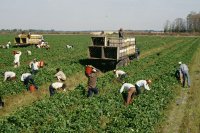
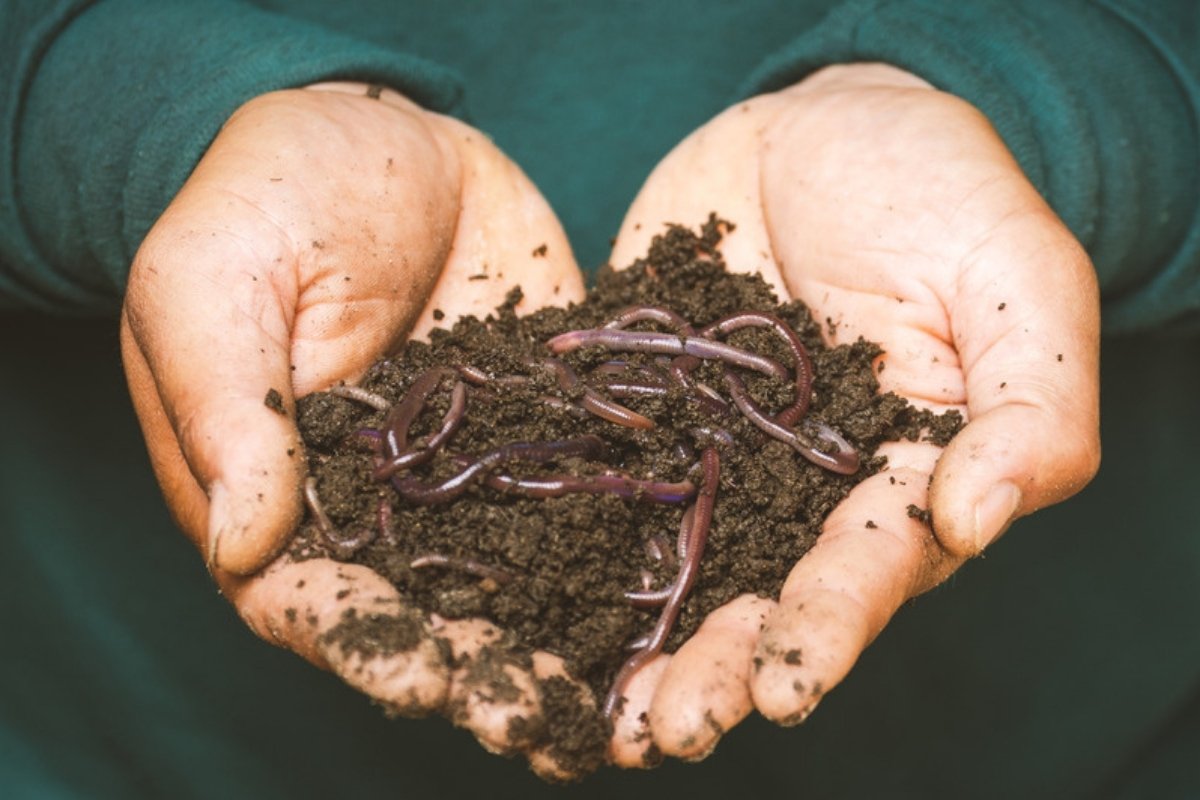
When people talk about regenerative agriculture, the conversation often starts with new products, sensors, artificial intelligence or expensive technology. A farmer does not need any of these to start improving the soil. Sometimes the first step is simpler, which is to look carefully at what is already happening in the soil.
A field can receive fertiliser year after year and still be out of balance. Some nutrients are taken up by the crop, while others stay in the soil, become unavailable to plants, move with water or are lost in runoff. The scale of that loss is large. Globally, only about 47% of the nitrogen added to cropland ends up in the harvested crop, and more than half is lost to the environment. Adding more fertiliser does not solve every soil problem.
That is why it is worth asking a basic question first. What is already in my soil, and why is the crop not making full use of it?
Looking beyond NPK
Nitrogen, phosphorus and potassium are important, but they are only part of the picture.
Soil also contains organic matter, minerals, water, air, roots and a large community of microorganisms, and these parts work together. Microorganisms break down organic material and take part in nutrient cycling. Roots interact with the microorganisms around them. Water and soil structure influence how nutrients and oxygen move through the soil.
So when we talk about soil health, a fertiliser report is not enough on its own. We should also look at how the soil is functioning.
The microorganisms already in the soil
Every farm has its own microbial community, which has developed under the local climate, soil, crops and farming practices.
This is what makes the idea of a microbial consortium interesting. Instead of relying on a single microorganism, a consortium uses a community of microorganisms that may perform different functions together.
There is an important caution, though. Material collected from healthy-looking soil is not automatically a useful agricultural culture. It may contain many different microorganisms, and nobody can tell their functions simply by looking at the culture, which is why testing matters.
Exploring your own soil microorganisms
At a basic experimental level, local soil can be the starting material for studying the microorganisms already present. A simple carbon source such as jaggery provides readily available food for microbial growth, and salt can be used to change the conditions during an enrichment experiment. The salt belongs to the experiment only. It should never be applied to the field, where it would damage both soil and crop.
The sequence runs from local soil to enrichment, then observation, testing and finally evaluation in the field. The useful part is learning what happens to the microbial community under controlled conditions, rather than producing a "miracle liquid" to pour onto crops.
Visible growth, bubbles or a change in colour do not prove that a culture will improve a farm. Proper microbial counts and characterisation are far more useful wherever a laboratory is available.
An uncharacterised culture can multiply harmful organisms as easily as useful ones. For food crops, and above all for crops eaten raw, unknown cultures should never be applied casually. The Codex code of hygienic practice for fresh fruits and vegetables asks growers to control every potential source of microbial contamination in primary production, organic inputs included. Any biological treatment used on a farm should be tested responsibly, ideally with an extension service or laboratory, and evaluated for both safety and effectiveness.
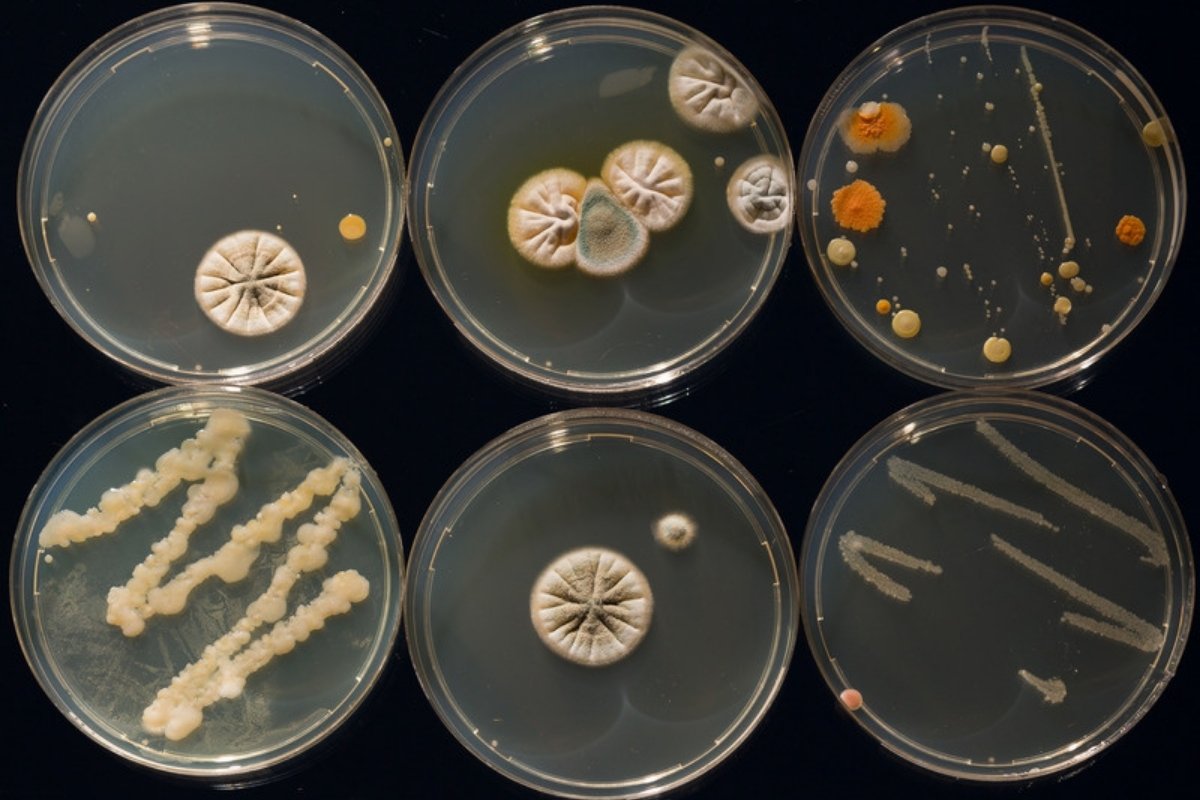
Proper microbial counts and characterisation in a laboratory say far more about a culture than visible growth or a change in colour.
Where regeneration comes in
The connection lies in the way nutrients move through the farm.
Crop residues and other organic materials feed soil organisms. Microbial activity drives decomposition and nutrient transformation. Plants take up available nutrients, produce biomass and eventually return some organic material to the soil. It is a cycle rather than a one-way process.
This does not mean fertiliser is always unnecessary. If a soil is genuinely deficient in a nutrient, fertiliser may be needed. The aim is to match external inputs to the actual needs of the soil and crop, instead of assuming that more input always produces a better result.
Other regenerative practices can work alongside this approach: keeping the soil covered, reducing erosion, improving water management, using suitable crop rotations, integrating trees where appropriate and returning useful organic material to the soil.
How do we know if it worked?
Many on-farm experiments go wrong at this point. A farmer sees greener leaves and concludes that a treatment worked, when there could be many reasons for the change.
A better approach is to keep records and, where possible, compare treated and untreated areas. Useful observations include:
- crop growth and yield,
- fertiliser use,
- soil organic matter,
- available nutrients,
- soil pH,
- water infiltration,
- root development,
- soil structure,
- input costs.
Even simple records kept over several seasons become valuable. A smartphone photograph of the same part of a field every month can tell you something, and a soil test taken at regular intervals can tell you more. GIS, satellite imagery and sensors add another layer when the farm actually needs them.
Five questions to start with
Regenerative agriculture does not have to mean buying more technology. It can start with five questions:
- What is happening?
- What is causing it?
- What can we change?
- What happened after we changed it?
- Should we continue, modify or stop?
This is where digital agriculture can quietly help. A phone, a spreadsheet or a mapping tool makes it easier to record what happens, and more advanced systems can analyse larger areas, but the principle stays the same. The goal is to understand the farm better, without making farming more complicated.
Healthy soil is soil in which nutrients, organic matter, water, roots and biological activity work together, rather than soil that simply contains nutrients. For regenerative agriculture, that may be the most important starting point. Understand what is already there before deciding what needs to be added.
Sources
Codex Alimentarius. Code of hygienic practice for fresh fruits and vegetables, CXC 53-2003. FAO and WHO.
Lassaletta, L., Billen, G., Grizzetti, B., Anglade, J., and Garnier, J. (2014). 50 year trends in nitrogen use efficiency of world cropping systems, the relationship between yield and nitrogen input to cropland. Environmental Research Letters, 9(10), 105011.