


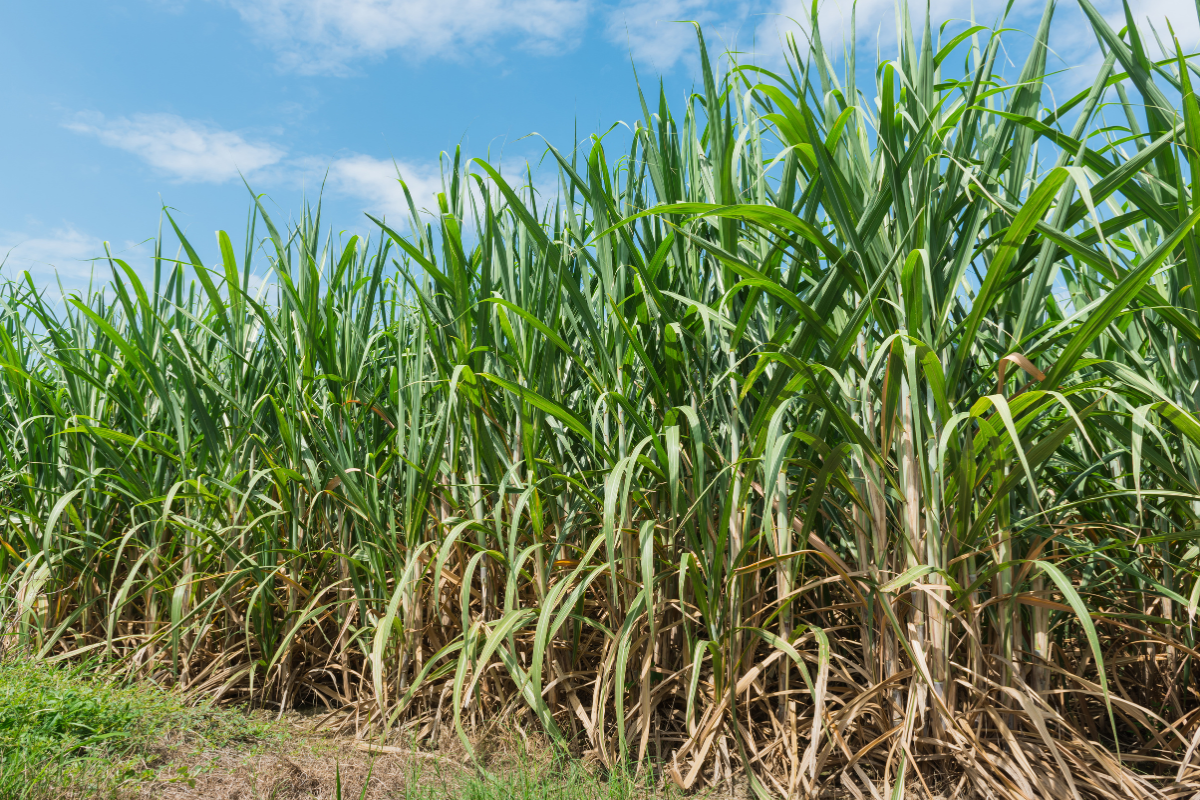
Sugarcane is a long-duration crop that needs a continuous supply of nutrients through its growth cycle. Because it produces an enormous amount of biomass, it removes considerable quantities of nutrients from the soil with every harvest. If those nutrients are not properly replenished, soil fertility declines season by season, and with it both productivity and the long-term health of the field.
Good sugarcane production is not only about choosing a suitable variety or managing irrigation well. Healthy soil and balanced nutrition matter just as much. And effective nutrient management does not mean applying more fertiliser. It means understanding what the soil already contains, knowing what the crop needs, and supplying nutrients in the right amount, at the right time, and in the right place.
During my time at the Ayub Agricultural Research Institute (AARI) in Faisalabad, I had the opportunity to observe sugarcane research and field practice closely. That experience taught me that scientific recommendations become genuinely useful only when they connect with real field conditions.
Start with the soil, not the fertiliser bag
One of the most important steps in nutrient management is soil testing. Farmers often repeat the same fertiliser programme every season, or borrow recommendations from a neighbouring field. Soil fertility, though, can vary considerably from field to field.
A soil test shows what the soil actually holds and whether nitrogen, phosphorus, potassium, or other nutrients are needed, and it prevents unnecessary applications. The FAO recommendations for Pakistan put it in the same terms: fertiliser requirements should account for soil fertility, the previous crop, soil texture, irrigation, organic manure use, variety, and the target yield.
Soil testing changes the question from "how much fertiliser should I apply?" to "what does my soil actually need?" That change alone improves fertiliser use efficiency and cuts unnecessary input costs.
Understanding the major nutrients
Sugarcane requires a range of nutrients, but nitrogen, phosphorus and potassium carry the most weight.
Nitrogen drives vegetative growth, leaf development, tillering and biomass. Adequate nitrogen is essential, but more nitrogen does not automatically mean more yield. Unbalanced nitrogen use raises production costs and nutrient losses, so it should follow soil conditions and crop requirements rather than habit. The imbalance is not hypothetical: FAO's analysis of Pakistan found the national nutrient use ratio running at roughly 1: 0.28 : 0.01 for N, P₂O₅ and K₂O, meaning that for every hundred kilograms of nitrogen, barely one kilogram of potash was being applied.
Phosphorus matters most during early establishment, supporting root development and early growth. It should not be applied automatically, though. A soil test shows whether the field needs it at all.
Potassium regulates water relations, enzyme activity, plant strength and stress tolerance. A crop that produces this much biomass removes large quantities of potassium at harvest, so maintaining potassium levels is part of keeping the field productive, and it is precisely the nutrient that national figures show is being neglected.
Micronutrients such as zinc, iron, and boron become important when deficiencies occur, and they should be applied based on soil or plant analyses and local recommendations rather than by default.
Organic and mineral fertilisers work together
Fertility management should not lean on mineral fertilisers alone. Farmyard manure, compost, press mud and properly managed crop residues all add organic matter and improve soil condition.
Integrated nutrient management combines organic and mineral sources based on the needs of the crop and soil. Research on sugarcane in the Indo-Gangetic plain found that farmyard manure at 20 tonnes per hectare, combined with soil-test-based fertiliser application, gave the highest cane counts and built up soil organic carbon and available nutrients compared with mineral fertiliser alone.
Organic materials also improve structure and nutrient cycling. Their nutrient content varies, though, so they are not an automatic replacement for mineral fertiliser. The two complement each other as parts of one balanced strategy, and some growers take the combination further still with organomineral fertilisers in regenerative sugarcane systems.
Timing and placement matter
Even the correct fertiliser becomes less effective if it goes on at the wrong time or in the wrong place. Nutrients should be available when the crop can actually use them.
For sugarcane in Pakistan, FAO recommends applying phosphorus and potassium together with one-third of the nitrogen at planting, with the remaining nitrogen applied in two later splits. It also recommends incorporating 20 to 25 cartloads of well-decomposed farmyard manure per hectare during soil preparation, at least a month before planting.
Placement matters as much as timing. The recommendation is to place fertiliser in the furrows below the seed setts, while avoiding direct contact between fertiliser and the setts.
A simple principle holds it all together. Right source, right rate, right time, right place. Follow those four, and the crop gets its nutrients when it can use them, while losses and costs fall.
Common nutrient management mistakes
- Applying fertiliser without knowing the soil's fertility.
- Running the same fertiliser programme on every field.
- Leaning on nitrogen while neglecting the other nutrients.
- Assuming one fertiliser will always produce more yield.
- Applying nutrients at the wrong crop stage.
- Ignoring organic matter and long-term soil health.
- Forgetting the nutrients removed with every harvest.
- Waiting for severe deficiency symptoms before acting.
These habits raise costs and feed the imbalance FAO has documented in Pakistan, where nitrogen has historically dominated at the expense of everything else. The aim is not to use more fertiliser. It is to use it in balance.
Ratoon sugarcane needs more, not less
Nutrient management matters most in ratoon sugarcane, the crop that regrows from the stubble after the plant crop is harvested. The previous crop has already removed its share of nutrients, so replenishment decides how the ratoon performs.
The FAO recommendations for Pakistan are specific here: a ratoon crop needs about 30% more fertiliser than newly planted sugarcane, with the nitrogen applied in two splits, half together with the phosphorus and potassium at sprouting and the other half about two months later.
A farmer should not simply repeat the plant crop's programme, though. Soil fertility, crop condition, moisture and local recommendations all belong in the ratoon plan.
What field experience taught me
My time at AARI reinforced one lesson above the others. Agricultural recommendations must be scientifically sound, but also practical enough for a farmer to implement.
Farmers do not need complicated fertiliser calculations. They need clear guidance on why a nutrient matters, when it should go on, and how a soil test helps them decide.
Healthy soil is the foundation of sustainable sugarcane production. Soil testing, balanced NPK management, sensible use of organic materials, proper timing and placement, and particular attention to the ratoon crop all serve the same goal, which is not to apply the maximum amount of fertiliser but the right nutrient, in the right amount, at the right time, in the right place. Healthy soil today means a more productive sugarcane field tomorrow.
Sources
Food and Agriculture Organization of the United Nations (2004). Fertilizer use by crop in Pakistan. Land and Plant Nutrition Management Service, FAO, Rome.
Pal, R., Singh, O., Sanghera, G. S., and Gupta, R. K. (2021). Influence of INM on sugarcane productivity and soil fertility under the Indo-Gangetic plain. The Indian Journal of Agricultural Sciences, 91(5), 703-707.