
A farmer once told me something that stayed with me. He said, "I watered this farm yesterday. By this afternoon, the soil will be dry again."
He had done what he thought was right. He watered the crops, checked them the next morning and expected the soil to remain moist. But the sun had other plans, and by the afternoon the surface was already drying out.
Many farmers experience this, especially in hot weather when the soil is left bare. We sometimes think the solution is simply to add more water. There is a better question to ask first. What if we could slow the escape of water already in the soil?
This is where mulching comes in.
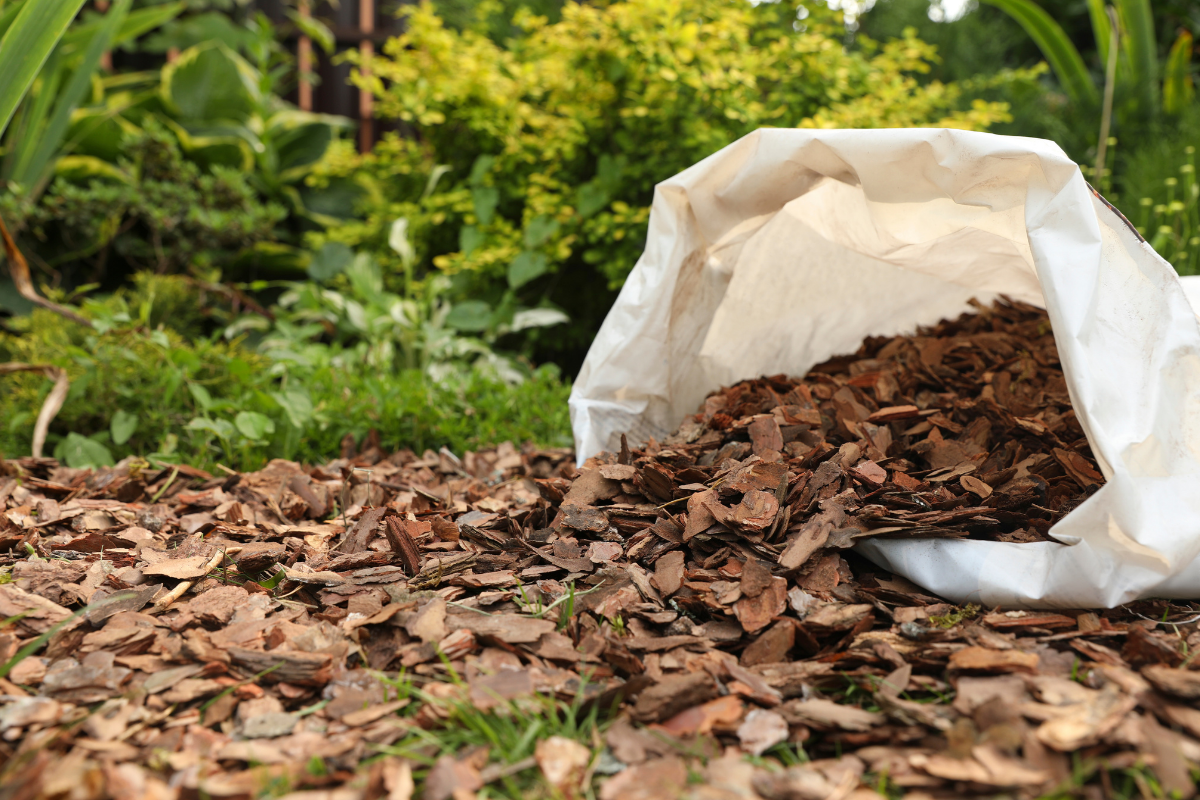
Mulch is simply a layer of material placed on the soil surface. It could be dry grass, straw, leaves, crop residues or other suitable materials. Think of it as putting a cover over the soil. When soil is left bare, sun and wind quickly draw moisture from the surface. A layer of mulch reduces how much soil is directly exposed, and with it the evaporation. Research has consistently shown that mulching conserves soil moisture, reduces evaporation and protects the soil surface, which is why it is used as a water-saving practice across dryland agriculture.
But you cannot just throw anything on the soil and expect good results. The material you use, the amount you apply and the way you apply it all matter.
What can you use as mulch?
One of the best things about organic mulch is that it does not always have to be purchased. Sometimes the material you need is already lying around the farm. Dry grass, straw, leaves, maize stalks, chopped crop residues, palm materials and suitable wood materials can all serve.
A farmer harvesting maize may look at the stalks and see waste. Another farmer looks at the same stalks and sees soil cover. That change in thinking is where mulching begins.
Crop residues can be left on the soil or chopped and spread where protection is needed. Consider first whether those residues are needed for livestock feed, bedding or other uses, because competition between these uses is one of the main reasons farmers cannot always leave large amounts of residue on the soil.
Dry grass and straw
Dry grass and straw are practical choices for many crops. They are usually easy to find, easy to spread, and give good cover. Be careful about where the material came from, though. Grass carrying mature weed seeds brings weeds onto the farm while you are trying to protect it, and clippings that may have been exposed to chemicals you do not want near your crops should stay out.
Crop residues
Maize stalks, leaves and other residues make useful mulch, and chopping the larger pieces makes them easier to spread into an even layer.
There is also evidence from Nigeria that residues do more than cover the soil. In a study on three agricultural soils in the southwest, Adekalu, Olorunfemi and Osunbitan found that elephant grass mulch reduced runoff and soil loss while increasing apparent water infiltration. For farmers dealing with heavy rainfall, this matters because the mulch takes the force of the falling rain instead of letting it strike bare soil.
Leaves
Dry leaves make good mulch, especially around fruit trees and other perennials, and as they break down, they return organic material to the soil. Do not assume every leaf is suitable simply because it came from a plant. Visibly diseased material should not be spread around healthy crops, where it risks carrying the problem with it.
Wood chips and sawdust
Wood chips break down more slowly than soft plant materials, which makes them useful where longer-lasting cover is needed.
Sawdust needs more care. Woody materials are high in carbon, and the microorganisms breaking them down can temporarily draw on the nitrogen around them. This matters most when woody material is mixed into the soil rather than laid on top, so know what you are applying and where it came from.
How thick should the mulch be
Farmers often hear one number and apply it everywhere, and that is not the best approach. The right thickness depends on the crop, the mulch, and the size of the material.
For many situations, about 5 to 10 cm is a useful starting range, with finer materials needing a thinner layer and coarse materials tolerating more. Extension guidance from Virginia Tech recommends roughly 2 to 4 inches for larger-particle mulches, less for fine ones, and warns against letting organic mulch build past about 4 inches.
So rather than asking for the exact thickness, ask how much cover this material gives without creating another problem. A thin layer that leaves most of the soil exposed does little. A very thick one causes its own problems, particularly if it compacts or stays excessively wet. Young vegetables and small crops need a thinner layer. Trees and shrubs can take a thicker one spread over a wider area.
One mistake should be avoided completely. Do not pile mulch against the stem or trunk. You may have seen trees surrounded by a great mound of mulch with the trunk disappearing into the middle. It looks like care. In reality it keeps the base of the plant wet and invites decay. Leave a clear space around the stem or trunk and spread the mulch outward instead.
How to apply it
Remove large weeds first, then make sure the soil holds enough moisture, because a thick layer of mulch over very dry soil simply seals in the dryness. Apply after irrigation or after sufficient rainfall, which is exactly what the Virginia Tech guidance recommends: mulch over soil with good moisture, never over dry soil.
Spread the material evenly rather than heaping it in one place while the rest of the root zone stays exposed. For vegetables, mulch goes between plants and along the rows, leaving space around each plant. For trees, spread it outward across the root zone rather than gathering it at the trunk.
And remember that mulch does not replace irrigation. If the crop is already under serious water stress, mulch does not put water back into the root zone. The water still has to get there, and the mulch's job is to keep it there for longer. That is why mulching works best as part of a wider water strategy, alongside watering deeply and less often rather than a little every day.
What to avoid
- Material carrying mature weed seeds, where you can avoid it.
- Plant material that may introduce disease to healthy crops.
- Mulch piled against stems or tree trunks.
- Unnecessarily thick layers, and never bury the crop itself.
- Mixing large amounts of fresh woody material into the soil without considering the effect on nitrogen availability.
- Fresh grass clippings applied green. They compact into a dense wet mat that behaves nothing like loose dry mulch. Let them dry first.
Which mulch should you choose
There is no single mulch that suits every farm, and that is one of the main lessons of the research. A review of 189 studies on mulching materials and methods concluded that the choice should follow the crop, the farming practices and the climate.
So before spreading anything, ask three questions. What material do I have? What crop am I protecting? How much cover does the soil need?
A vegetable farmer may find clean straw or dry grass practical. A fruit grower may use leaves, grass, residues or wood materials. A maize farmer may simply leave some residue on the field instead of removing everything.
The goal is to use the right material, in the right amount, in the right place, and the evidence backs that caution. A meta-analysis of 74 studies with 1,310 yield observations from 19 countries found that mulching improved yield and water-use efficiency in maize and wheat by up to 60%, but the effect varied with crop, temperature and water availability. One of its findings is directly useful here: straw mulching performed better in warmer conditions while plastic performed better in cooler ones, which favours organic mulch in hot climates. The researchers' own conclusion was that mulching has to be managed to the conditions of the farm.
Mulching is not a blanket you put on the soil and forget. It is a way of understanding what your soil needs and using the materials around you to protect it. Saving water on a farm does not always begin with finding another source of water. Often it begins with making better use of the water already there, and one of the simplest ways to do that is to stop leaving the soil unnecessarily bare.
Sources
Kader, M. A., Singha, A., Begum, M. A., Jewel, A., Khan, F. H., and Khan, N. I. (2019). Mulching as water-saving technique in dryland agriculture. Bulletin of the National Research Centre, 43, 147.
Erenstein, O. (2002). Crop residue mulching in tropical and semi-tropical countries, an evaluation of residue availability and other technological implications. Soil and Tillage Research, 67(2), 115-133.
Adekalu, K. O., Olorunfemi, I. A., and Osunbitan, J. A. (2007). Grass mulching effect on infiltration, surface runoff and soil loss of three agricultural soils in Nigeria. Bioresource Technology, 98(4), 912-917.
Garrity, M., and Tierney, M. (2025). Mulching, purpose, benefits, and essential information. Virginia Cooperative Extension, SPES-661P.
Kader, M. A., Senge, M., Mojid, M. A., and Ito, K. (2017). Recent advances in mulching materials and methods for modifying soil environment. Soil and Tillage Research, 168, 155-166.
Qin, W., Hu, C., and Oenema, O. (2015). Soil mulching significantly enhances yields and water and nitrogen use efficiencies of maize and wheat, a meta-analysis. Scientific Reports, 5, 16210.