


Plant Proteins Today, Sustainable Future Tomorrow
What is plant protein?
Protein is an essential nutrient that fuels the growth and metabolism of all living organisms. That which is derived from plants is by far the most abundant source available globally and is highly significant in the formulation of diets for both livestock and humans. The human demand for plant protein within a particular region of the world is often closely aligned with the relative economic development of that region, with populations in less developed regions sourcing their protein requirements directly from plant-based sources.
Within Europe due to the relative affluence of the region, plant proteins tend to be a source of nutrition for livestock, which in return provides animal-based protein sources for human consumption. Oilseeds are by far the most commonly grown protein source for the livestock industry within Europe. For human consumption in many forms the most common cultivated crop is durum wheat.
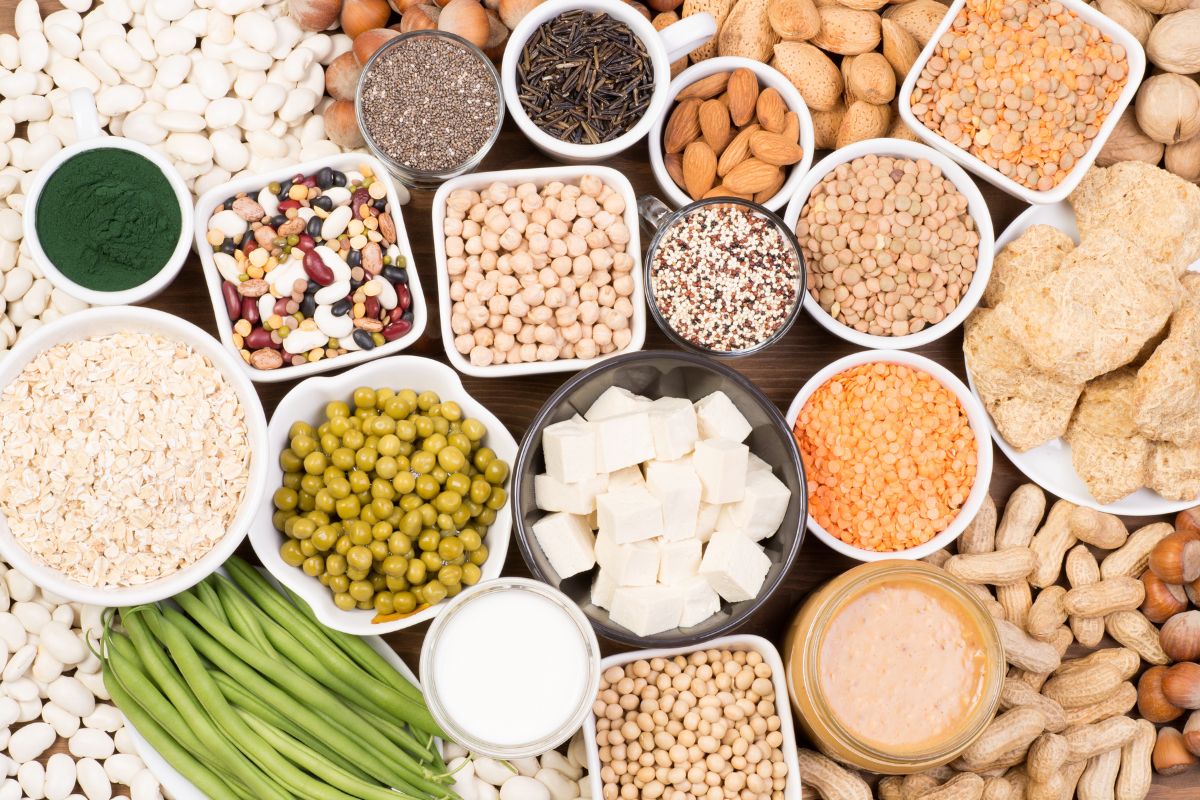
Other high yielding protein crop alternatives suitable to the pedoclimatic conditions within Europe are faba beans, field peas, lentils, lupins, chickpea and soybean are the most commonly grown.
Increasing demand for plant protein in Europe
As mentioned above the livestock sector is one of the biggest consumers of plant protein in Europe with almost 70% of all plant protein available in the EU. A big part of it although is imported in soybean meal form.
The demand from consumers globally and in Europe is also increasing significantly. This trend is influenced by rising health consciousness, environmental concerns, and the need for alternative protein options to meet the dietary requirements of a growing population.
Cultivation Trends
• Expansion of Protein Crops: The European Union (EU) is projected to increase its production of oilseeds and protein crops to 34.9 million tonnes by 2035. This growth is primarily driven by a 22% increase in soybean production compared to 2022–2024 levels, largely due to expanded cultivation areas and supportive EU policies.
• Rise in Pulse Production: Pulses are expected to see a 9.9% increase, reaching 4.9 million tonnes by 2035, reflecting a shift towards more sustainable and plant-based protein sources.
• Land Use Shifts: There is a notable transition in land use from traditional cereals and rapeseed to soybeans, other oilseeds, and pulses. This change is driven by decreased demand for cereals in feed and biofuel production, coupled with a growing preference for plant-based proteins.
Market Dynamics
• Protein Supply and Demand: In the 2023–2024 period, the EU's arable crop sector supplied 64 million tonnes of crude protein, with roughage being the primary source, followed by cereals and oilseeds. However, dry pulses contributed only 1.1 million tonnes, highlighting a reliance on imports to meet the total demand of 71 million tonnes.
• Self-Sufficiency Levels: The EU achieves approximately 75% self-sufficiency in protein sources, indicating ongoing dependence on imports, particularly for oilseed meals and pulses.
Consumer and Industry Trends
• Growing Demand for Plant-Based Proteins: Consumer interest in plant-based proteins is on the rise, driven by health considerations and environmental concerns. This trend is leading to increased incorporation of plant-based proteins in various food categories, including ready meals, meat substitutes, and dairy alternatives.
• Market Growth Projections: The European plant protein market is anticipated to grow at a CAGR of 6.16%, expanding from USD 4.34 billion in 2025 to USD 5.85 billion by 2030.
Facing challenges across the food chain.
From the farmers' perspective, the challenges they face before even start cultivating are:
- variety shortage (to adapt to diverse climates) & limited investment in breeding
- limited seed supply - related to the low demand by farmers, lack of registered varieties, insufficient seed multiplication and distribution channels
- lack of plant protection products – even essential products that exist are unregistered for these types of crops and, therefore, unavailable for use.
During cultivation and production, the main challenges are the lack of agronomy expertise (farm advisory support, education, and training), which leads to low yields.
Yield productivity gaps and instability are also big problems. Factors that lead to this are the lack of inputs, lack of knowledge, abiotic stress, and climatic factors.
Another significant challenge is the limitations in food technology and techniques. Technologies exist to alter the texture of plant-based ingredients (e.g., thermo-extrusion and wet spinning). However, more techniques are needed to ensure good sensory properties (e.g., taste, texture, and flavor) and functionality (e.g., viscosity, reliability) in end-use applications, along with improved sustainability, resource efficiency, food safety, and affordability.
Furthermore, there are gaps in processing infrastructure (for example, advanced equipment and sustainable systems customized for extracting plant-based materials). The current infrastructure required for processing plant-based ingredients includes extraction, separation, thermal treatment, and drying equipment.
Labeling concerns are also a problem, and the marketing standards do not currently ensure sufficient information for consumers. EU-wide definitions of vegan and vegetarian food products, certification for plant-based foods, and an EU-wide front-of-pack sustainability labeling scheme have been called for.
Last but not least, there's a nutritional, culinary, and environmental knowledge gap among consumers regarding plant-based proteins, leading to confusion and concern. Consumers' preferences are still developing, but many show apathy and resistance to embracing a more plant-based diet, often citing concerns about the sensory attributes of plant-based products, e.g. not being as tasty as traditional offerings.
A New Approach to Growing Protein Plants. The Path to Protein Sufficiency
As the European Union heavily depends on imported plant protein for food and livestock feed, the VALPRO Path project recognizes the urgency to build a self-sustainable Europe. With a focus on harnessing plant protein production, this transformative initiative aims to facilitate a seamless transition from traditional practices to innovative approaches.
Despite growing awareness around the benefits of plant proteins, the European agriculture sector still faces major hurdles in this area. The majority of protein crops grown in Europe — such as peas, lentils, chickpeas, and faba beans — are used for animal feed. This not only minimizes their value but also diminishes their potential for human nutrition and sustainability.
The project aims to change this perspective. It brings together a consortium of research institutions, AgTech companies, farmers, and food processors across multiple countries and its goal is to design, test, and implement new circular business models for the cultivation and processing of protein-rich crops, supporting both environmental goals and economic viability.
In this initiative, Agricolus, as a technology provider, supports agronomic monitoring and data collection of Innovative Production Systems (IPS) to optimize crop operations and improve outcomes.
Using a precision agriculture platform to reshape protein crop cultivation
The precision agriculture platform of one of the project partners (Agricolus) gives some deep expertise to the table. Its role centers around two key Innovative Production Systems (IPS):
- IPS2: In collaboration with the University of Turin (UNITO) and Beotanics Ltd. within the cultivation of peas. With UNITO, agronomic data and farming operations have been collected on experimental pea fields, mapping the entire crop cycle to optimize future operations. This systematic approach allows for the analysis of existing agricultural practices and improves the productivity of the crops.
- IPS3: Analyzing weather and satellite data, integrated with drone images, to study correlations in cases of lodging damage. This process is supported by TEAGASC (Agriculture and Food Development Authority of Ireland), providing information on crop growth and detailed phenological data.
Taking advantage of its digital platform, it is responsible for collecting, organizing, and analyzing a rich dataset from pilot farms.
The data being gathered regarding their type are:
- Growth and yield measurements
- Soil health and Soil Organic Matter (SOM) parameters
- Emissions tracking and biodiversity indicators
- Remote sensing via satellite and drone imagery
- Weather data and field operations
All of this data is collected in real-time and fed into a centralized digital ecosystem, allowing researchers and farmers alike to monitor performance, identify trends, and make better data- and time-based decisions.
Furthermore, the Research and development team is working on improving crop models and creating clear, easy-to-use data to help farmers better understand their fields and increase their production.
Finally, yet importantly, the data collected and managed serve as the backbone for life cycle assessments (LCA), economic feasibility studies, and the development of tailored agronomic protocols for various European regions.
In addition, Agricolus supports:
- Creating "narrative labels" that tell the sustainability story behind each product.
- Collaboration with the AKIS (Agricultural Knowledge and Innovation Systems) platform to ensure how the data knowledge will be shared across the project.
- Public engagement through educational webinars and training sessions.
Moving Forward with Smart and Sustainable Farming
Ultimately, VALPRO Path is not just about improving crop yields — it's about transforming how we understand, produce, and value plant-based proteins. It’s about equipping farmers with the knowledge they need, while giving confidence about the quality of the food they eat and the sustainability of it to the final consumer.
To learn more about VALPRO Path project, visit ValProPath project.
References
- Heba Elsalahy (ZALF), Maeve Henchion (TEAG), Ana Abrahao (TEAG), Richard Lynch (TEAG), Gabriele Miserendino (CONFAGRICOLTURA) and Alessandro Iachetti (CONFAGRICOLTURA), Moritz Reckling (ZALF), Value chain gaps in plant-based protein production in Europe – A literature review
- Research: Plant Protein
- Ana Abrahão, Heba Elsalahy, Moritz Reckling, Jesko Zimmermann, Richard Lynch & Maeve Henchion, Feeling the pulse - Gaps in the EU Plant-Based Protein Value Chain ( ValProPath project )
- Reducing Plan Protein Deficit EU — European Commission, Agriculture