How to grow and care for night-blooming jasmine
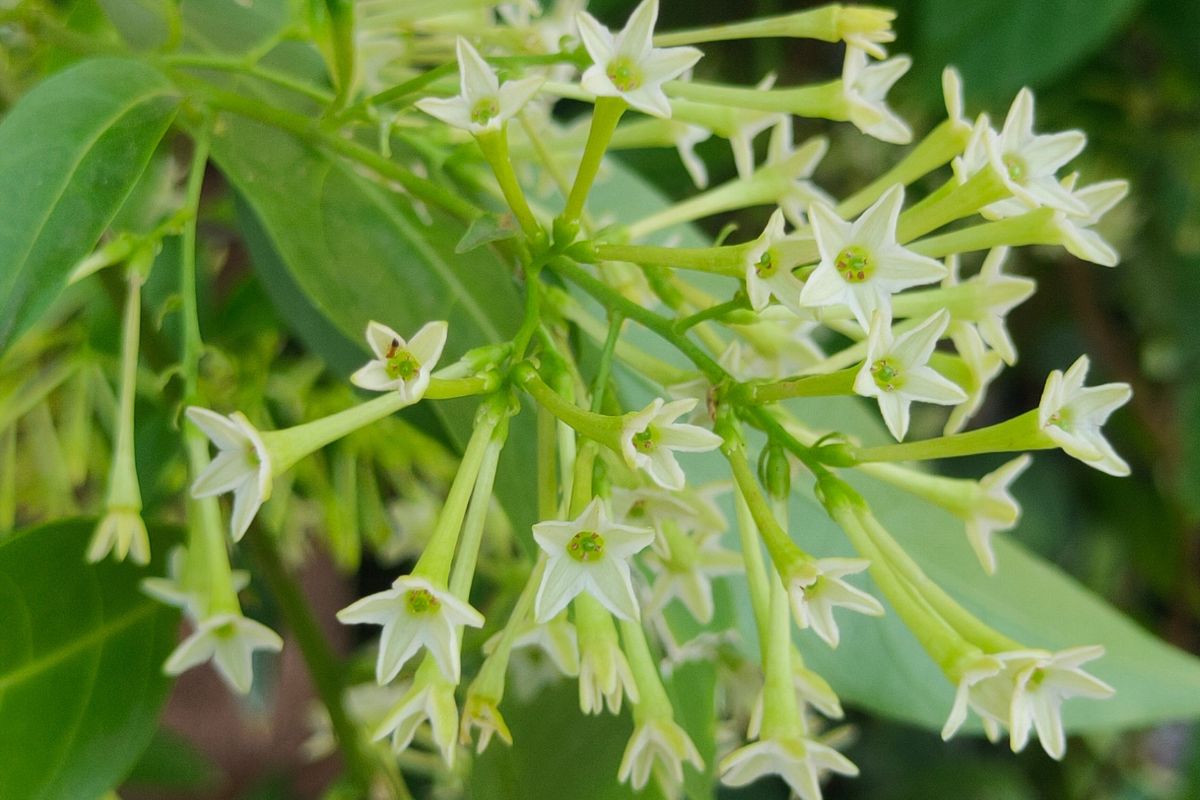
Night-blooming jasmine (Cestrum nocturnum) is one of the most fragrant plants you can grow outdoors. The small tubular cream-white flowers are easy to miss during the day, but once the sun goes down they open and release a sweet, heady scent that can travel surprising distances. That's where its evocative common name comes from, Lady of the Night.
Despite the name, it isn't a true jasmine. It belongs to the nightshade family (Solanaceae), the same family as tomatoes, potatoes and peppers. The real jasmines (Jasminum spp.) belong to a completely different family. The confusion comes purely from the fragrance.
This guide covers everything you need to grow night-blooming jasmine successfully in the garden or in a container. It also covers two important points to be aware of, the toxicity of the plant and the intensity of the fragrance, which can be overwhelming for some people.
Botanical characteristics
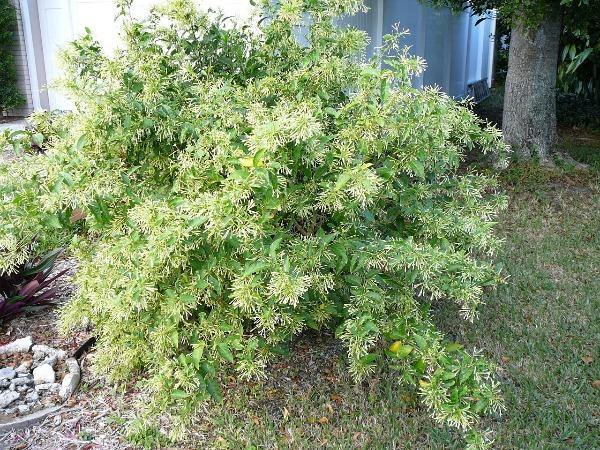
Night-blooming jasmine is an evergreen shrub that reaches 2-4 metres in height and roughly the same in spread under good conditions. It grows quickly and sometimes unpredictably, with stems that tend to sprawl outwards rather than form a neat shape.
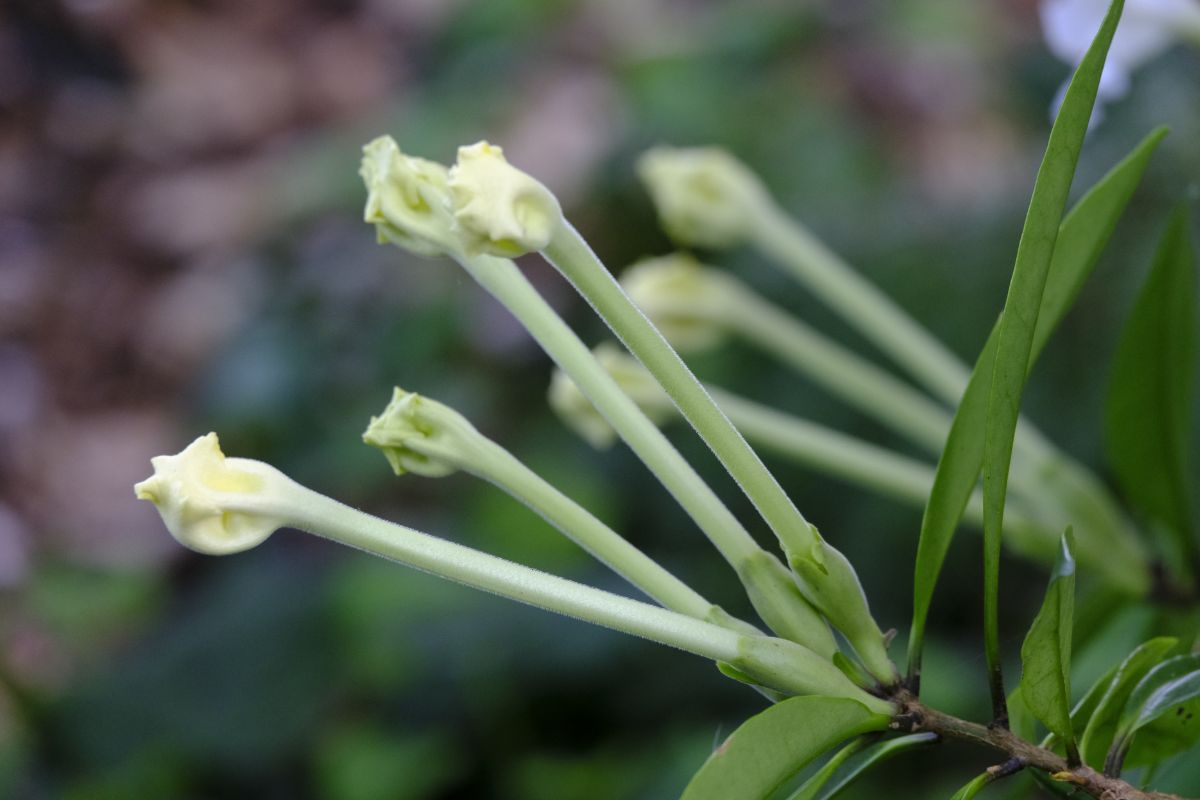
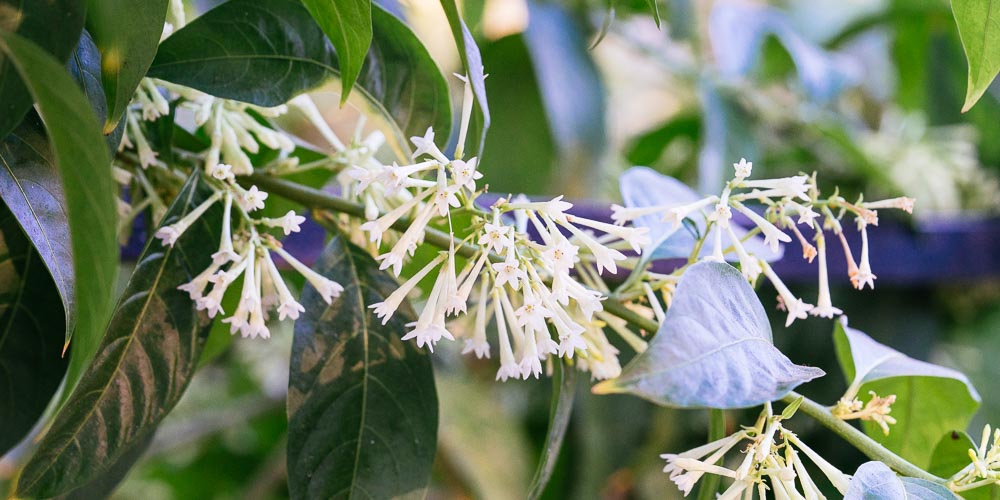
The leaves are oval, smooth, light green and arranged loosely along the stems. Flowers appear in clusters at the tips of branches from late spring into early autumn, in successive flushes. Each flower is small (around 2 cm), tubular, and pale yellow or cream-white. After flowering, the plant produces small, white, non-edible berries about 1 cm in diameter.
The plant's signature trait is that its flowers stay closed during the day and open at dusk, releasing their famous fragrance through the night hours. That scent has earned it a reputation as one of the most powerfully fragrant plants in the world.
Where to grow night-blooming jasmine
Night-blooming jasmine is a subtropical plant native to the West Indies, the Caribbean and Central America. It grows outdoors year-round in USDA zones 9-11. In cooler regions it can still be grown, but usually in a container that can be moved under cover for the winter.
General guidance by climate.
- Warm Mediterranean and subtropical climates: outdoors in the garden year-round. It's a popular landscape shrub in these regions because it's easy to grow
- Mild temperate climates: plant in a sheltered position against a south- or west-facing wall, which stores heat during the day. In a hard winter the foliage may die back but usually regrows from the base in spring
- Cool temperate and cold climates: best grown in a container that can be brought into a frost-free space during winter
Mature plants tolerate brief frosts to around -5°C without major damage. In colder spells they may lose their leaves and tender shoots, but the plant usually regrows from the base in spring.
For positioning, choose a spot with full sun or light shade. In deep shade it doesn't flower reliably. The ideal position offers around 6 hours of light per day. In very hot regions, a little afternoon shade is welcome.
Very important note on location: because the fragrance of night-blooming jasmine is so intense and is released at night, think carefully about where you plant it. Right next to a bedroom window, balcony or outdoor dining area, the scent can become overwhelming. A better choice is a corner of the garden where the perfume drifts in subtly rather than fills every breath.
Soil
Night-blooming jasmine isn't fussy about soil. It grows in a wide range of soil types, from sandy to clay, as long as drainage is reasonable. The ideal pH is neutral to slightly alkaline (6.5-7.5), but it tolerates slightly acidic conditions too.
Before planting, work in some well-rotted compost or manure for better growth and richer flowering. On heavy clay soils, add coarse grit to improve drainage.
Planting
The best planting time is spring (March-April) or early autumn (September-October) in mild regions. Avoid planting during the hottest summer months when a young plant struggles to establish.
Planting in the ground
- Dig a hole twice the diameter of the rootball and the same depth
- Loosen the soil at the bottom and mix in well-rotted compost
- Position the plant so the top of the rootball sits level with the surrounding soil
- Backfill with soil, firm gently, and water in well
- Apply a layer of compost or pine bark mulch around the base to retain moisture
Growing in a container
Night-blooming jasmine does very well in a large container, particularly on patios and balconies where you can enjoy the fragrance in the evening.
- Choose a pot at least 40-50 cm in diameter with plenty of drainage holes
- Use a good-quality potting mix with about 20% perlite or coarse grit for drainage
- Avoid an oversized pot. A large volume of damp compost around the roots increases the risk of rot
- In colder regions, container growing gives you the option to move the plant under cover during winter
Watering
In the garden, water young plants regularly for the first year until they establish. After that, mature plants are fairly drought-tolerant and need supplemental watering mainly during prolonged dry spells in summer.
For container plants, water when the top 2-3 cm of compost feels dry. A thorough soaking when needed is far better than a little water often.
Overwatering is one of the most common causes of problems. Night-blooming jasmine doesn't tolerate waterlogged roots, especially in pots. If you see yellow leaves and slow growth, too much water is often the cause.
Feeding
Night-blooming jasmine has moderate feeding needs. In the garden, an annual mulch of well-rotted compost or manure around the base in spring is usually enough.
For richer, longer-lasting flowering, supplement with a balanced fertiliser for flowering plants every 3-4 weeks during spring and summer. Choose a formulation with higher phosphorus and potassium relative to nitrogen. Too much nitrogen pushes leaf growth at the expense of flowers.
For container plants, use a liquid feed every two weeks during the growing season.
Pruning
Night-blooming jasmine grows quickly and becomes unruly without pruning. Annual shaping is important.
The best time to prune is late winter or early spring, before new growth begins. In milder regions you can also do a light prune after each flowering flush to encourage further blooms.
In your annual prune, remove dead and weak branches, crossing stems and anything that spoils the shape. On mature plants you can do a harder cut, reducing the overall height by a third or more. Night-blooming jasmine tolerates hard pruning very well and regrows quickly.
Propagation
The most reliable and widely used method is from cuttings.
From stem cuttings
- In late spring or early summer, take 10-15 cm semi-ripe cuttings from healthy current-season stems
- Strip the lower leaves and leave 2-3 pairs at the top
- Dip the base in rooting hormone
- Insert into a mix of peat-free compost and perlite
- Cover with a clear plastic bag to maintain humidity
- Keep in a bright but shaded position at around 20°C
Rooting usually takes 4-6 weeks. Pot on into individual containers once roots are well established.
From seed
A less common but workable method. Sow seeds in spring in a well-drained mix at 13-18°C. Germination is patchy and seedlings grow slowly.
Pests and diseases
Night-blooming jasmine is fairly tough but can pick up a few common pests, especially when stressed.
Aphids: small green or black insects on tender new growth. Rinse off with a strong jet of water or spray with insecticidal soap.
Whitefly: tiny white moth-like insects that fly up when you touch the plant. The nymphs on the underside of the leaves secrete honeydew. Treat with insecticidal soap and yellow sticky traps.
Spider mites: in hot, dry weather. Leaves develop fine yellow stippling and tiny webs appear on the undersides. Spray with water under pressure and raise humidity around the plant.
Scale insects: small brown or whitish scales along the stems. For small infestations, remove with a cotton bud dipped in rubbing alcohol. For larger ones, spray with horticultural oil.
Sooty mould: a black film on the leaves that grows on the honeydew left by sap-sucking insects. Deal with the underlying pest first, then wipe the leaves with mild soapy water.
Root rot: the most serious disease, caused by overwatering or poor drainage. Very difficult to reverse once established. Prevention with good drainage and careful watering is everything.
Leaf spot: usually in wet weather or on plants in waterlogged soil. Remove affected leaves and improve air circulation.
Plant toxicity
Night-blooming jasmine is a toxic plant. As a member of the nightshade family, all parts of the plant (leaves, stems, flowers and berries) contain alkaloids that can cause serious symptoms if eaten. Symptoms of poisoning include gastrointestinal upset, fever, rapid heartbeat and neurological symptoms.
Specific points to keep in mind.
- Avoid planting where small children play and might put berries or leaves in their mouths
- It's toxic to pets (dogs, cats) according to authoritative sources
- Wear gloves when pruning or handling the plant, as the sap can irritate skin
A note on the fragrance
Night-blooming jasmine has one of the most intense fragrances in the plant world. For some people, particularly those with asthma, hay fever, allergies or general sensitivity to strong scents, prolonged exposure near the plant can trigger headaches, nausea, breathing difficulty and irritation of the nose and throat.
You don't need to avoid the plant entirely because of this. Just don't plant it right next to a bedroom window or enclosed seating area where you spend many evening hours. In an open garden the scent disperses well and is genuinely lovely.
Is night-blooming jasmine invasive?
In subtropical climates like Hawaii and parts of the Caribbean, Cestrum nocturnum has been classified as an invasive species that spreads from gardens into natural ecosystems. In most temperate regions the climate keeps it well-behaved, but it's still good practice to remove berries before they drop in areas with sensitive native flora nearby, to prevent birds from spreading the seeds.
Frequently asked questions
Why isn't my night-blooming jasmine flowering? The most common reasons are insufficient sun (it needs at least 6 hours a day), too much nitrogen fertiliser, a young plant that hasn't established yet, or hard frost that damaged the recent growth. Under the right conditions a mature plant produces successive flowering flushes from spring through autumn.
How long does the fragrance last each night? The flowers open at sunset and close in the early morning hours. The fragrance peaks during the first part of the night, especially on warm, humid evenings. On dry, breezy nights the scent is much subtler.
Can I grow night-blooming jasmine indoors? It isn't an ideal houseplant, but it can be kept on a bright balcony or sunroom. Indoors, the fragrance can become overwhelming. If you need to overwinter it inside, choose a cool, bright spot away from radiators.
Does night-blooming jasmine attract mosquitoes? No, this is a common misconception. The plant attracts night pollinators like certain moths and flies, but it doesn't draw mosquitoes any more than any other flowering plant.
How fast does it grow? It's one of the fastest-growing garden shrubs. Under good conditions it can put on 60-100 cm in a single year and reach mature size (2-3 m) in 3-4 years.
Is it actually a jasmine? No. Despite the common name "night-blooming jasmine", it has no botanical relationship with true jasmine. It belongs to the nightshade family (Solanaceae, the same as tomato, potato and pepper), while true jasmines (Jasminum spp.) belong to the olive family (Oleaceae). The similarity is only in the fragrance.
Important notes
Every plant and every garden is unique. Conditions vary significantly depending on your region, exposure, water quality, soil pH and the overall health of the plant. The guidance above is general and a starting point rather than a strict rule.
Given the toxicity of night-blooming jasmine, if you have small children or pets in the household, think carefully about whether it's the right plant for the location. In the event of accidental ingestion, contact a poison control centre or your veterinarian immediately.
If you suspect a serious nutrient deficiency or disease that doesn't respond to basic remedies, consider talking to a horticulturist for accurate diagnosis.
Use plant protection products with care. Try non-chemical methods first wherever possible (cultural practices, insecticidal soap, horticultural oil). When chemical intervention is needed, use only products approved for ornamental garden use, follow the dosage on the label exactly, and avoid spraying when pollinators are active in the garden.
References
- Royal Horticultural Society. Cestrum nocturnum (lady of the night) plant details.
- Missouri Botanical Garden. Cestrum nocturnum plant finder.
- NC State Extension. Cestrum nocturnum.
- University of Maryland Extension. Growing Container Plants Outdoors.
- University of Hawaii Cooperative Extension. Invasive plant species: Cestrum nocturnum.