
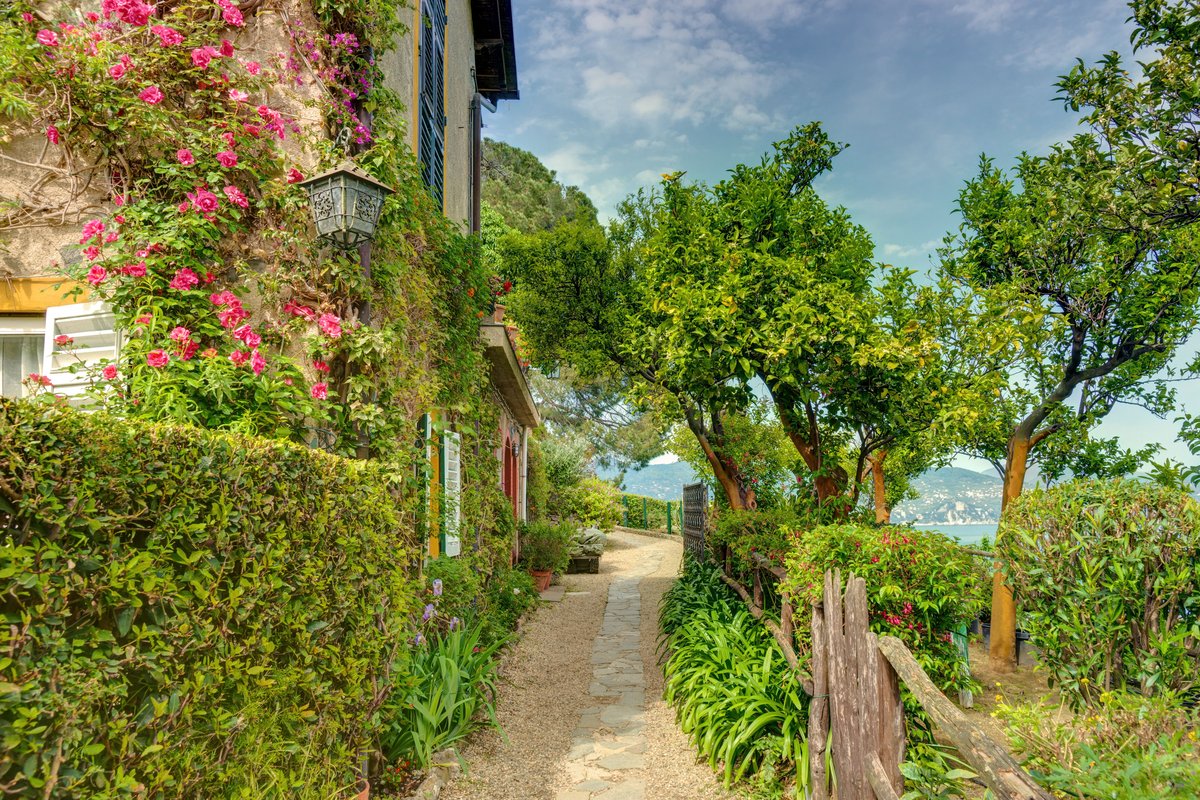
Summers are getting longer and hotter, rain is becoming scarce, and as a result we witness long and intense periods of drought. Observations and climate models both show drought increasing under global warming. Mediterranean gardens are affected too, because they need more irrigation, and where irrigation water is of poor quality and too little rain falls to wash the salts out, salts build up in the soil and can damage plants. Consequently, we need gardening practices that use less water while maintaining soil health, and we should choose plants that are naturally resistant to drought.
Characteristics of a suitable plant for a low-water garden
Ornamental species suited to a low-water garden share these characteristics:
- Tolerance to drought
- A deep root system
- Small, aromatic or oily leaves
- Hairs or a waxy surface on the leaves
Do's and don'ts of establishing plants for low-water gardens
- Plant climate-appropriate plants in autumn or winter. Choose ornamentals adapted to the Mediterranean climate and avoid planting close to summer, so that the roots can develop before the heatwaves. Native plants of the Mediterranean basin are the best choice, and selecting them also benefits the environment because less transport is needed.
- Water infrequently but deeply while plants establish. Some plants naturally develop a deep root system, and proper irrigation can help them do so. In the early stages of establishment it is preferable to water infrequently but deeply, since this helps the plant develop deeper roots that reach moisture lower in the soil and eventually makes it more resilient to drought.
- Adopt environmentally friendly techniques to maintain good plant health. For example, mulching fallen leaves in place is beneficial for soil health and therefore for the plants' wellbeing. Another helpful and sustainable practice is harvesting rainwater, which reduces the use of external water sources, especially in summer when irrigation matters most.
- Accept seasonal variation in the garden. Value the changes in the plants' appearance that come naturally with the seasons. In winter, deciduous ornamental species remain leafless, but their branch structure is fascinating to look at, while evergreen trees and shrubs keep the familiar picture of greenery. Both should be embraced, since together they show the natural beauty of the garden.
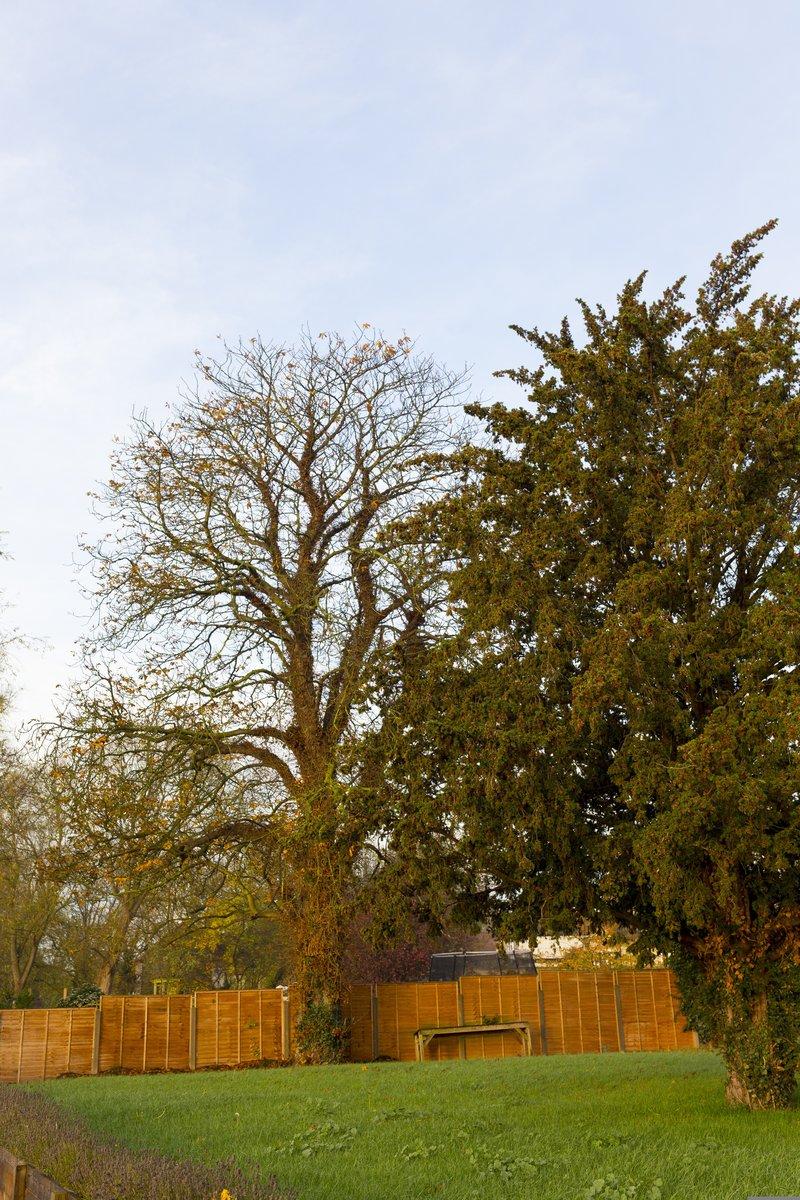
The branch structure of a deciduous tree in autumn, next to an evergreen.
Ornamental species that suit a Mediterranean garden
Most of the species below are native to the Mediterranean and adapted to its climate, so they can easily be used in a garden with the conditions described above.
Deciduous trees
- Acer monspessulanum. Also known as the Montpellier maple, this tree is native to the Mediterranean basin, from Portugal and Morocco to Turkey and Syria.
- Celtis australis. A tree that can grow up to 25 metres tall, with edible fruit that look like berries.
- Cercis siliquastrum. Known as the Judas tree. In spring its flowers display a bright pink colour that is very noticeable.
Evergreen trees
- Acer sempervirens. A maple from southern Greece and Turkey.
- Arbutus unedo. A small tree or large shrub best known for its fruit, which look like strawberries and give it the name strawberry tree. It is native to the Mediterranean area and western Europe.
- Cedrus atlantica. A cedar native to the Atlas Mountains of Morocco and Algeria. Its blue-needled forms, grouped as the Glauca Group, have impressive foliage that can add an interesting element to your garden.
- Cedrus libani. A cedar native to the mountains of the eastern Mediterranean region.
- Ceratonia siliqua. Known as the carob tree, native to the Mediterranean and with edible fruit.
- Chamaerops humilis. Despite looking like a tropical palm, it is native to the Mediterranean. Known as the dwarf palm, it is popular in landscaping.
Deciduous shrubs
- Euphorbia dendroides. A tree-like shrub with impressive yellow flowers and deep green foliage.
- Pistacia terebinthus. A tall shrub or small tree that can be found from Portugal to Turkey.
- Spartium junceum. A deciduous shrub common in the Mediterranean region. It is almost leafless, but it produces striking yellow flowers on cylindrical branches.
Evergreen shrubs
- Buxus sempervirens. A flowering evergreen shrub found in the Mediterranean area from Morocco to Turkey.
- Clematis cirrhosa. A flowering, climbing shrub.
- Lavandula angustifolia. A small aromatic shrub known to most as lavender.
- Nerium oleander. A shrub native to the whole Mediterranean basin, with a range that extends to countries such as Myanmar and China. All parts of the plant are highly toxic if eaten, so it should be kept away from children, pets and livestock. Its bitter taste usually discourages animals from eating it, and oleander is widely used in landscaping.
- Santolina chamaecyparissus. An evergreen shrub with grey leaves that give off a rich aroma.
Sources
Bonhotal, J., & Schwarz, M. (2024). Improving turf and soil health, reducing energy use and assessing tick populations by mulching leaves in place. Compost Science & Utilization.
Dai, A. (2013). Increasing drought under global warming in observations and models. Nature Climate Change, 3(1), 52-58.
de Sá Silva, A. C. R., Bimbato, A. M., Balestieri, J. A. P., & Vilanova, M. R. N. (2022). Exploring environmental, economic and social aspects of rainwater harvesting systems: A review. Sustainable Cities and Society, 76, 103475.
Missouri Botanical Garden. Cedrus atlantica (Glauca Group). Plant Finder.
NC State Extension. Nerium oleander. North Carolina Extension Gardener Plant Toolbox.
UC Statewide IPM Program. Conditions and locations favoring salt damage to plants. University of California Agriculture and Natural Resources.
Zegada-Lizarazu, W., Garcia-Apaza, E., Ephrath, J., & Berliner, P. (2007). Above and below ground development of Acacia saligna shrubs grown under different irrigation frequencies in an arid environment. Plant and Soil, 297(1-2), 157-169.