


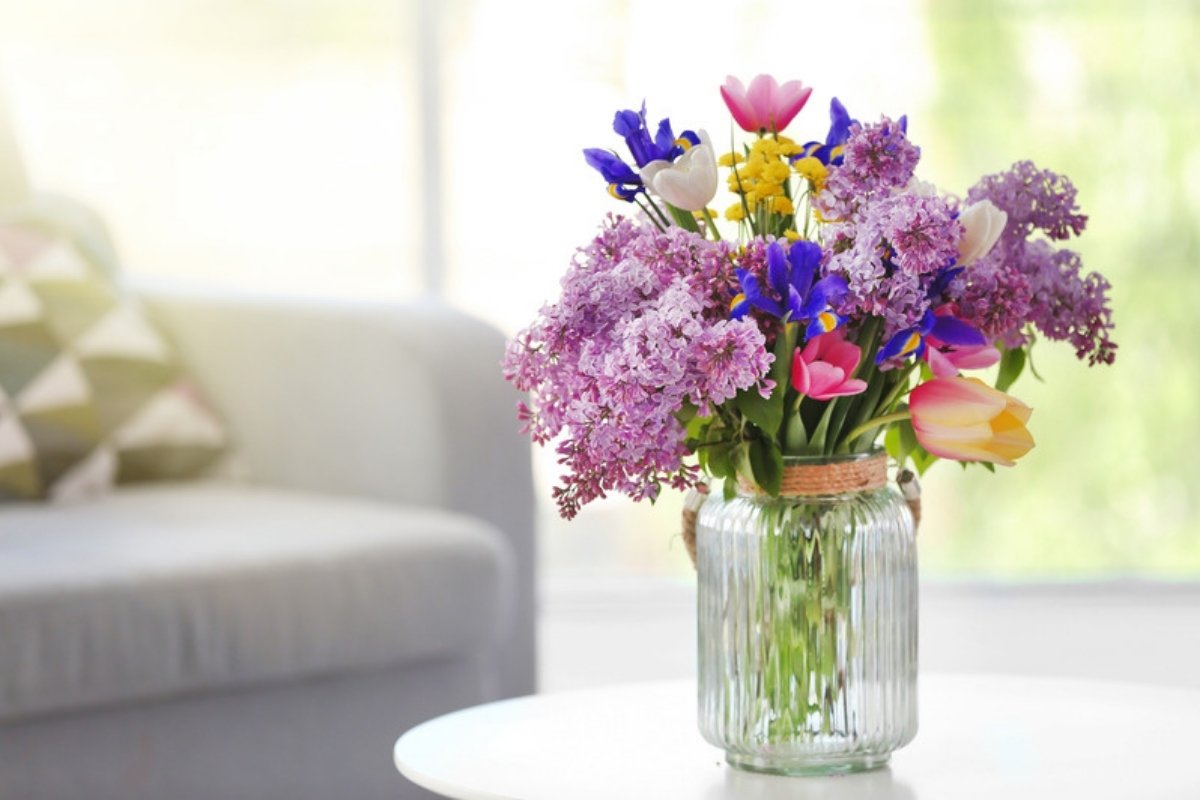
How long can a cut flower last in a vase, and how can you make it last longer? Most of us have asked or heard these questions, and some of us have asked the florist what they put in the water to keep the flowers fresh, and what we are doing wrong. Sometimes the answer is that it is not your fault. The life of a cut flower is not decided only by how it is treated in the vase, but by a series of decisions that begin at harvest.
Quality starts in the field
The first thing that determines the quality of a cut flower is its condition in the field. Mistakes in irrigation, temperature and growing conditions cannot be undone later, so nothing a florist or a customer does can fully make up for poor initial quality.
The second critical decision is when to harvest. The best harvest stage differs between species and affects how the flower opens and how it looks. Roses, for example, are harvested at the bud stage to give a longer vase life.
Where quality is lost after harvest
A lot can go wrong between the field and the shop, and researchers have identified several handling mistakes that damage cut flowers and shorten their life.
Temperature: most people know that cut flowers keep best in the cold, since that is how florists store them. Before that, though, the flowers travel from where they were harvested to the shop, often by several means of transport. At every stage a cold chain should be maintained, with most cut flowers kept close to 0°C. When the temperature rises, the flowers respire faster, and respiration is part of how they age. Not every species wants the same cold, however. Chilling-sensitive tropical flowers such as anthurium, bird-of-paradise, ginger and tropical orchids are damaged by low temperatures and are best kept above about 10°C, while some others, such as gerberas and zinnias, prefer slightly warmer storage than most.
Water balance: many cut flowers wilt quickly unless they are kept at high humidity, around 95%, which reduces water loss and extends vase life. Water uptake can also be blocked by bacteria. They grow in the water on the material released from the cut stems, and the slime they produce plugs the vessels that carry water up the stem. Regularly disinfecting the containers the flowers are carried and stored in, and using clean water, keeps the problem under control.
Ethylene: this natural plant hormone regulates growth and many physiological processes, including the ageing of flowers and leaves. Not every flower is equally sensitive to it. Roses, for example, are sensitive to ethylene as their buds open but do not produce much of it as they age, while carnations produce ethylene as they age and after pollination, which hastens their wilting. In many species, ethylene from outside the flower also speeds up ageing. At home, it comes from fruit such as bananas, apples, pears, peaches and avocados, especially when overripe or damaged, and from smoke from candles or fireplaces, or vehicle exhaust drifting in from outside.
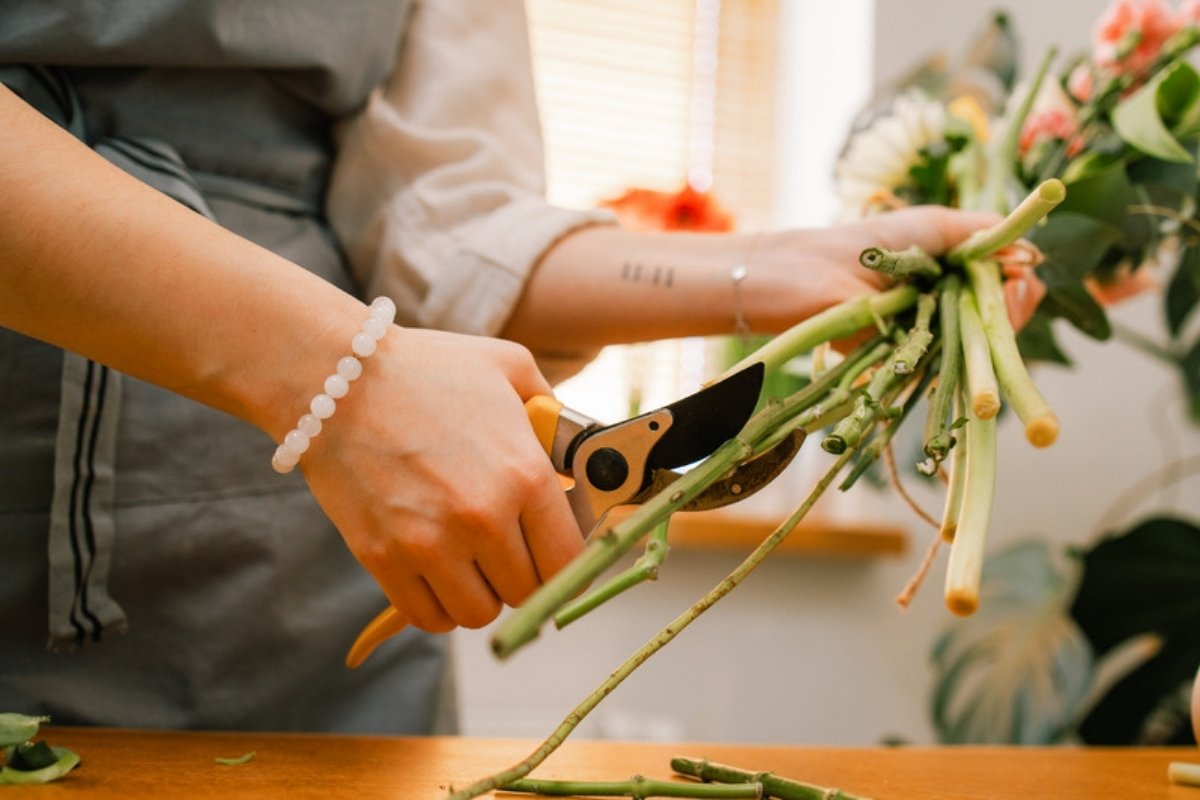
Trimming stems properly is one of the practices that let florists extend the vase life of cut flowers.
What the florist can do
The florist is the last link before the flower reaches the customer, and several practices extend vase life:
- keeping flowers at the right temperature for each species,
- storing each species correctly,
- keeping containers and coolers clean,
- trimming stems properly,
- changing the water in the vases regularly,
- removing foliage that would sit below the water line,
- using flower food,
- keeping sensitive flowers away from sources of ethylene.
Flower food is a preservative that typically contains sugar to feed the flower, a biocide to hold back bacteria, and an acidifier that lowers the pH of the water and helps it move up the stem. Used correctly, it can extend vase life considerably.
Looking after flowers at home
Vase life is not a fixed trait of the flower. It is the result of every decision from harvest to the shop, and even a perfectly cared-for flower loses quality quickly if a few simple things are ignored at home.
Use a clean vase: together with changing the water every one or two days, this keeps bacteria from building up.
Match the water level to the flower: some species need a deep vase and others only a little water. Gerberas, for example, need just a few centimetres, which helps keep their stems from bending, and clean water matters as much as the depth.
Keep flowers cool: avoid direct sunlight and sources of heat, since most cut flowers last longer in cooler conditions.
Use flower food: add it if it came with the bouquet, or use a commercial preservative for the best result.
Keep flowers away from the fruit bowl: ripening fruit gives off ethylene that shortens the life of sensitive flowers.
Sources
Reid, M. S. Handling of cut flowers for export. University of California, Davis, Postharvest Technology Center.
Scariot, V., Paradiso, R., Rogers, H., and De Pascale, S. (2014). Ethylene control in cut flowers, classical and innovative approaches. Postharvest Biology and Technology, 97, 83-92.
UMass Amherst Center for Agriculture, Food and the Environment. Harvesting and handling cut flowers.