
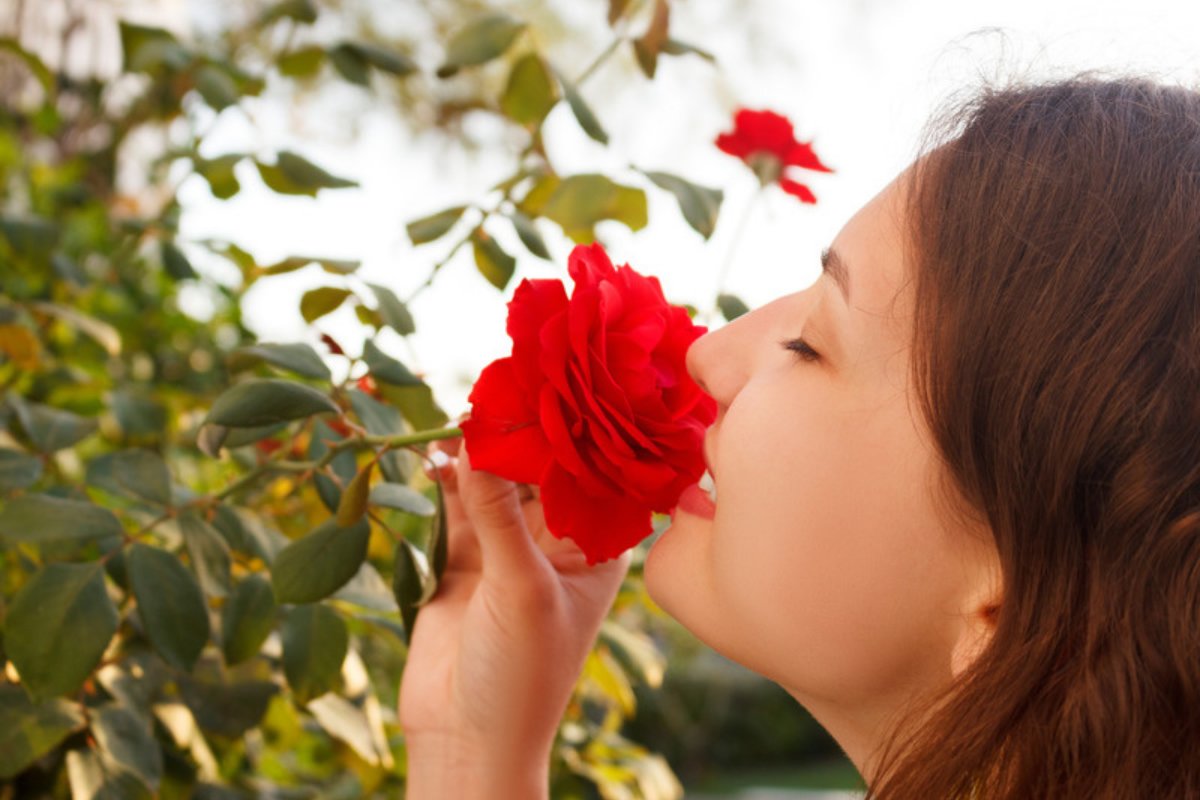
The rose is probably the most recognisable flower in the world, as much for its scent as for its shape. Scents are tied to emotions and memories, which is why the smell of a rose can make people feel at home, and rose oil has long been used in perfumery and cosmetics. Yet many of the roses sold in flower shops today have little or no fragrance. The reasons lie in how modern cut roses were bred, in the chemistry of rose scent and in what happens to the flower between the greenhouse and the vase.
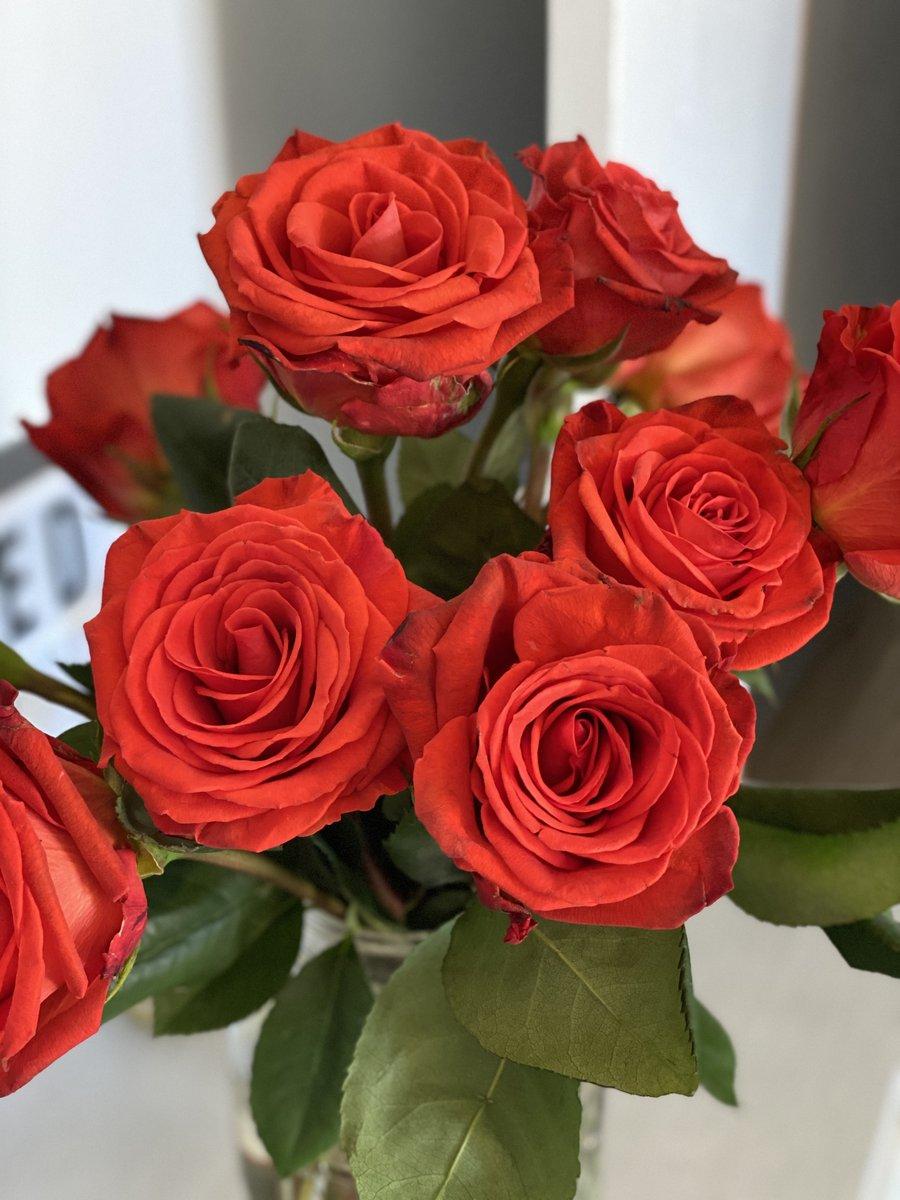
Cut roses in a vase. Photo: Styliani Samara
How modern cut roses were bred
Most roses grown commercially for cut flowers are hybrid tea types (Rosa × hybrida). 'La France', introduced in 1867, is generally regarded as the first hybrid tea. Its parents are not known with certainty, and it became the model for a new class of roses. Modern cut roses are the result of many generations of crossing, in which breeders selected for stem length, bud shape, bright colour and long vase life.
Fragrance was rarely a priority in that selection. According to a review of the genetics and biochemistry of rose scent, most modern cultivars grown for cut flowers now have little fragrance as a result of breeding preferences. The same review notes that the exact cause of the loss is still unknown, and that scent does not appear to stand in the way of a longer vase life.
The compounds behind rose fragrance
The scent of a rose is a blend of many volatile organic compounds, or VOCs, which fall into three main groups.
Terpenoids: the largest group, including geraniol, nerol, linalool and citronellol, which give the classic floral rose note.
Phenylpropanoids and benzenoids: led by 2-phenylethanol, which smells of rose, and 3,5-dimethoxytoluene, which is behind the tea scent of many modern roses.
Fatty acid derivatives: such as cis-3-hexenol and cis-3-hexenyl acetate, which add a green, leafy note.
The amount and proportion of these compounds differ from one cultivar to another, so each variety has its own scent profile.
Fragrant roses that are grown for cutting
Most commercial cut roses were selected for appearance and vase life, but some cultivars combine a strong scent with flowers that hold up well when cut. Several of the best known are hybrid teas and floribundas, two of the main types of garden roses, grown for cutting by specialist growers rather than in the greenhouses that supply most flower shops.
'Mister Lincoln': a hybrid tea with velvety, deep red flowers and a strong damask fragrance.
'Yves Piaget': a Meilland rose in vivid pink, with fringed petals that resemble a peony and a strong, fresh citrus scent. It is also traded as a cut rose.
'Jeanne Moreau': a white Meilland hybrid tea with large flowers and a strong fragrance that won awards in Geneva and Saverne.
'Sugar Moon': a pure white hybrid tea with a sweet, citrusy fragrance.
'Sweet Madame Blue': a floribunda with lavender petals, a magenta centre and a strong citrus and spice scent.
'Stiletto': a hybrid tea in deep magenta with a strong fragrance of tea, damask and honey.
Scent changes with the time of day and growing conditions
A naturally fragrant rose does not release the same amount of scent all day. In 'Fragrant Cloud', the emission of two scent compounds, geranyl acetate and germacrene D, follows a daily rhythm and peaks early in the light period. Under continuous light, the rhythm of germacrene D stopped, which shows that light drives part of the pattern directly.
Conditions while the flower develops also matter. Light regulates the production of germacrene D and geranyl acetate, and temperature changes how roses make some scent compounds, with high summer temperatures switching on an alternative pathway for 2-phenylethanol, according to the review by Shi and Zhang.
Cold storage can weaken rose scent
Cut roses are kept cold after harvest to slow ageing, respiration and water loss. Cold has a cost for scent, though. In a study on 'Crimson Glory', 24 hours at 6 °C reduced the volatile compounds released by the flowers by 65% compared with flowers kept at 25 °C. After a further 24 hours at 20 °C, emission rose again but stayed below normal, so prolonged or poorly managed cold storage can leave a rose with less scent even after it is back at room temperature. The study covered one cultivar under one set of conditions, and the effect is likely to differ between cultivars and storage regimes.
Sources
Dudareva, N., Pichersky, E., and Gershenzon, J. (2004). Biochemistry of plant volatiles. Plant Physiology, 135(4), 1893-1902.
Hendel-Rahmanim, K., Masci, T., Vainstein, A., and Weiss, D. (2007). Diurnal regulation of scent emission in rose flowers. Planta, 226(6), 1491-1499.
Shi, S., and Zhang, Z. (2022). Genetic and biochemical aspects of floral scents in roses. International Journal of Molecular Sciences, 23(14), 8014.
Xie, L., Bai, X., Zhang, H., Qiu, X., Jian, H., Wang, Q., Wang, H., Feng, D., Tang, K., and Yan, H. (2023). Loss of rose fragrance under chilling stress is associated with changes in DNA methylation and volatile biosynthesis. Genes, 14(3), 692.
Royal Horticultural Society. Rosa 'Mister Lincoln' and Rosa Sugar Moon. RHS Plants.